Note: The following post originally appeared eight years ago, in April 2012, as that year's elections were moving forward, under the same title except for one word — the year…
In some ways the most dangerous kind of politician is a man who is good at PR and nothing else
writes
Paul Johnson in his monumental
History of the American People.
No, he was not talking about the current occupant [Barack Obama] of the White House (his book was written in 1999,

after all — before Obama had even published his (first)
autobiography), but about John F Kennedy, and I am speaking as a former
Kennedy devotee and Camelot maniac. (Yes, even if
the book was written before 911 and even the George W Bush presidency, it is a must-read — as you will see below.)
I was coaxed into pulling
Paul Johnson's masterpiece from my shelves again, as I read
Instapundit's
review of the PJMedia piece on what the Wikileaks memos say about the
2008 election, getting increasingly angry as I read through the
J Christian Adams original.
What we do know is this: First, that people in  the McCain campaign thought they had evidence of election tampering
that cost McCain the election. Second, that McCain thought it best for
the country to do nothing about it, in part because of fears of mob
violence.
the McCain campaign thought they had evidence of election tampering
that cost McCain the election. Second, that McCain thought it best for
the country to do nothing about it, in part because of fears of mob
violence.
Interestingly,
Glenn Reynolds calls his link to
J Christian Adams' article "Bad Call." That turns out to be entirely appropriate, in view of the fact that
Bernie Marcus recently pointed out (video) that
the Republicans play the rules of … golf. In golf, if you miss a putt or you touch the ball, you call
a shot on yourself. We're playing the game of golf. The Democrats are
playing ice hockey. It's a killer game. And that's the difference in
politics.
This brings to mind uncounted parallels with the 1960 election, rarely
if ever disclosed in mainstream history books, and which I only learned
through
Paul Johnson's
History of the American People, the reading of which sometimes made my eyes pop out as previously-undisclosed facts (of the unpalatable sort) were revealed.
As I re-read part of the book this morning, it turns out that there are many more parallels than you would at first assume.
Just consider:
By all historical standards, Nixon should have been an American media
hero. He was a natural candidate for laurels in the grand old tradition
of self-help, of pulling yourself up by your own bootstraps. He came
from nowhere.
Think of John McCain, who should have been — and who was! — an American
hero for other reasons, linked to dramatic combat, horrific jail
conditions (with — very — violent wardens, of a decidedly racist bent),
and the ever-present risk of death in a foreign country. (In France,
while both of Obama's autobiographies became best-sellers, McCain's
autobiography, with its full life (written past the age of 60) and with
all the drama of its war "adventures", was not even translated.)

Yet, from start to finish, the media, especially the 'quality' press,
distrusted [Nixon], consistently denigrated him, and sought to destroy
him, indeed in a sense did destroy him. At every crisis in his career —
except the last — he had to appeal above the heads of the media to the
great mass of the ordinary American people, the 'silent majority' as he
called them.
When I first read Paul Johnson's book, incidentally, I remember
thinking, But of course! What has always been described as an unsavory
character trait in Richard Mulhouse Nixon
— his alleged paranoia — turns out perhaps not to have been so
paranoid at all and to have been provoked by those who claimed to be
innocent bystanders, if not the actual entirely-innocent victims of "Tricky Dick"… (If only for Paul Johnson's description of Watergate — which he likens, persuasively, to a witch hunt — you must read A History of the American People.)
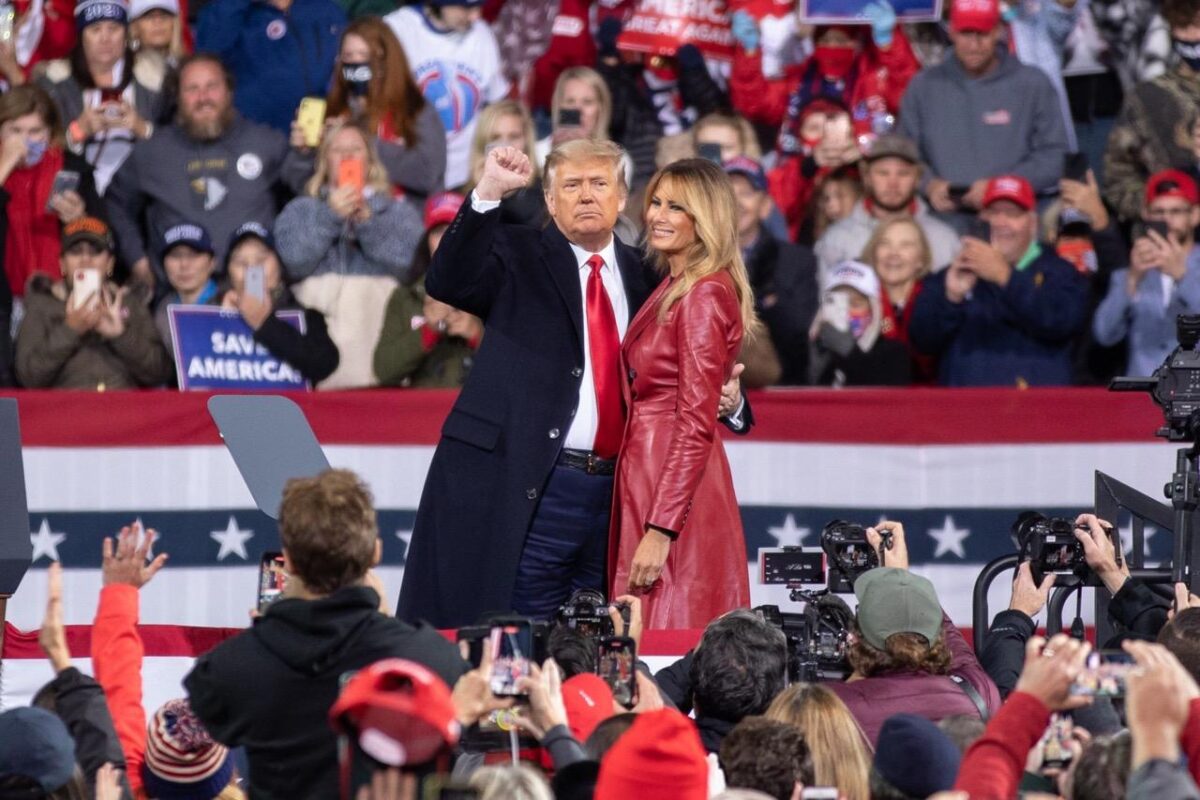
[2020 update: and cannot similar lines be written about Donald Trump?]
By contrast, the media did everything in its power to build up and
sustain the beatific myth of John F. Kennedy, throughout his life and
long after his death, until it finally collapsed in ruins under the
weight of incontrovertible evidence. The media protected him,
suppressed what it knew to be the truth about him, and if necessary lied
about him, on a scale which it had never done even for Franklin
Roosevelt.
C'mon. Don't tell me that I really need to point out the parallels here
with Barack Hussein Obama, the anointed One come to save America and
Americans from their own demons.
And this was all the more surprising because Kennedy had most of the
characteristics of an American anti-hero. … the running theme of the
Kennedy family [was] how to turn money into political power … Maximum
use was made of Jack's war career in all his campaigns. … Old
Joe set about making Kennedy first a congressman, then a senator, then
president. This train of events is worth studying because it shows the
extent to which money paved the way to political power in
mid-20th-century America …
Again: need I really point out the parallels with Obama, and his
war-chest(s), along with his billion-dollar campaigns and his spending
sprees? At this point of the book,
Paul Johnson brings an interesting aside:
As Tip O'Neill put it: …
'I'd have to say that [Jack] was only nominally a Democrat. He was a
Kennedy, which more than family affiliation. It quickly developed into
an entire political party, with its own people, its own approach and its
own strategies.'
The man who got it right at the time was the British Prime Minister
Harold Macmillan. He grasped the important point that electing a
Kennedy was not so much giving office to an  individual
as handing over power to a family business, a clan, almost a milieu,
with a set of attitudes about how office was to be acquired and used
which at no point coincided with the American ethic. Having paid his
first visit after Kennedy's election as President, Macmillan was asked
on his return what it was like in Kennedy's Washington.
individual
as handing over power to a family business, a clan, almost a milieu,
with a set of attitudes about how office was to be acquired and used
which at no point coincided with the American ethic. Having paid his
first visit after Kennedy's election as President, Macmillan was asked
on his return what it was like in Kennedy's Washington.
'Oh,' said he, 'it's rather like watching the Borgia brothers take over a respectable North Italian city.'
But let's get back to the election of 1960 (as you read the few next
parts, remember all the nasty things you have heard through the years
about
Tricky Dick).
Nixon had deliberately decided to keep Catholicism out of the campaign,
and succeeded in doing so. The day after the result, he said to his
aide Pete Flanigan:
'Pete, here's one thing we can be satisfied about. The campaign has
laid to rest for ever the issue of a candidate's religion in
presidential politics. Bad for me, perhaps, but good for America.'
In fact, Kennedy's catholicism won him the election … In the Northern
industrial states, where the margins were very close, the swing of the
Catholic vote to a Catholic candidate made all the difference.
Think of McCain opining that the election of a black man was good for
America — which it undoubtedly was. But regarding America's alleged
nightmarish racism, note that it was precisely Barack Obama's race that
won him, or that helped win him, the election — as much among minorities
as among liberal whites pining to demonstrate their status as "good"
whites.
Unfortunately, there is a more ominous parallel between 1960 and 2008
(although not necessarily in the states specifically mentioned), which
should overshadow
Nixon's
(and McCain's) satisfaction with the (respective) result(s), along with
pride in his (in their) countrymen. Indeed, why be satisfied with a
result (and why be proud of your country) if the result was the product
of cheating?
This was a crooked election, especially in Texas and Illinois, two
states notorious for fraud, and both of which Kennedy won. In Texas,
which gave its twenty-four college votes to Kennedy, by a margin of
46,000 votes (out of 2.3 million), one expert made the calculation that
'a minimum of 100,000 votes for the Kennedy-Johnson ticket simply were non-existent.'
… (in one polling station, where only 4,895 voters were registered, 6,138 votes were counted as cast)
Then again, perhaps there does turn out to be a parallel between 1960 and 2008 in regards to one of the states mentioned: …
In Illinois, Nixon carried 93 of the state's 102 counties, yet lost the
state by 8,858 votes. This was entirely due to an enormous Democratic
turnout in Chicago, under the control of the notorious Democratic city
boss and mayor, Richard Daley. Daley gave Kennedy the Windy City by the
astonishing margin of 450,000 votes, and the evidence was overwhelming
that fraud was committed on a large scale in Kennedy's favor.
An interesting side-note:
The mafia played an important part in this fraud. Afterwards, its boss
Giancana often boasted to Judith Campbell, the mistress he shared with
the President, 'Listen, honey, if it wasn't for me your boyfriend
wouldn't even be in the White House.'
I don't suppose the mafia helped Obama in 2008; however — No, I wouldn't
want to call into question the honesty and the civility of members of
ACORN and of the Black Panthers (for fear of being labeled a racist,
natch).
While reading
History of the American People
the first time, I remember thinking: it can't be possible that the MSM
history books wouldn't mention this, so probably the fraud was tiny,
and/or hard to prove, and not worth mentioning, so perhaps
Paul Johnson is exaggerating, if ever so slightly. Then I came to this part:
If Nixon, instead of Kennedy, had carried Texas and Illinois, the shift
in electoral votes would have given him the presidency, and the evidence
of electoral fraud  makes it clear that Kennedy's overall 112,803 vote plurality was a
myth: Nixon probably won overall by about 250,000 votes. Evidence of
fraud in the two states was so blatant that a number of senior figures,
including Eisenhower, urged Nixon to make a formal legal challenge to
the result. But Nixon declined. … A legal challenge … would have
produced a 'constitutional nightmare' and worked heavily against the
national interest.
makes it clear that Kennedy's overall 112,803 vote plurality was a
myth: Nixon probably won overall by about 250,000 votes. Evidence of
fraud in the two states was so blatant that a number of senior figures,
including Eisenhower, urged Nixon to make a formal legal challenge to
the result. But Nixon declined. … A legal challenge … would have
produced a 'constitutional nightmare' and worked heavily against the
national interest.
Doesn't this sound like the Wikileaks memo stating that "McCain felt the crowds assembled in support of Obama and such would be
detrimental to our country and it would do our nation no good for this to drag out like last go around" —
Bernie Marcus's dependable, mature golf player acting responsibly to prevent the ice hockey players from going berserk?
Just as interesting is the passage preceding the story of the 1960
election, which explains the downplaying of the Republican candidate
while the extolling of the Democrat's alleged virtues. As you read the
following passage, think also of all the ways that Rupert Murdoch has
been demonized over the years, as has his Fox News network.
We come now to an important structural change in America. America had
always been, from the earliest time, a democratic society, in that men
(and indeed women) paid little attention to formal rank, even where it
existed. Every man felt he had the  right to shake hands with every other man, even the President … But
this democratic spirit was balanced by the tribute of respect to those
who, for one reason or another — experience, learning, position, wealth,
office, or personality — had earned the title of 'boss.' The balance
struck between egalitarianism and deference was one of the most
remarkable characteristics of America, and one of its great strengths.
right to shake hands with every other man, even the President … But
this democratic spirit was balanced by the tribute of respect to those
who, for one reason or another — experience, learning, position, wealth,
office, or personality — had earned the title of 'boss.' The balance
struck between egalitarianism and deference was one of the most
remarkable characteristics of America, and one of its great strengths.
The Sixties brought a change. In the space of a decade, the word 'boss'
passed almost out of the language, certainly out of universal usage.
Deference itself deferred to a new spirit of hostility to authority. It
became the fashion to challenge long-established hierarchies, to revolt
against them or to ignore them. Nowhere was this spirit more manifest
than in the media …
The gradual but cumulatively almost complete transfer of opinion-forming
power from the owners and commercial managers of TV stations to the
program-makers and presenters was one of the great new facts of life,
unheard of before the 1950s, axiomatic by the end of the 1960s. And it
was gradually paralleled by a similar shift in the newspaper world,
especially on the great dailies and magazines of the East  Coast, where political power, with few exceptions, passed from
proprietors and major stockholders to editors and writers. Owners like
Hearst and McCormick (of the Chicago Tribune), Pulitzer and Henry Luce
(of Time-Life), who had once decided the political line of their
publications in considerable detail, moved out of the picture and their
places were taken by the working journalists. Since the latter tended
to be overwhelmingly liberal in their views, this was not just a
political but a cultural change of considerable importance. Indeed it
is likely that nothing did more to cut America loose from its
traditional moorings.
Coast, where political power, with few exceptions, passed from
proprietors and major stockholders to editors and writers. Owners like
Hearst and McCormick (of the Chicago Tribune), Pulitzer and Henry Luce
(of Time-Life), who had once decided the political line of their
publications in considerable detail, moved out of the picture and their
places were taken by the working journalists. Since the latter tended
to be overwhelmingly liberal in their views, this was not just a
political but a cultural change of considerable importance. Indeed it
is likely that nothing did more to cut America loose from its
traditional moorings.
… The change could be seen in 1960, in the way the East Coast media (the New York Times and Washington Post, Time and Newsweek), handled the contest between Nixon and Kennedy.
The final word?
There is a sense in which Kennedy, who loved to use words like
'bearing,' 'results,' and 'in,' was a professional sportsman, a
political huckster, and a propagandist rather than a serious statesman
Related: From November 2008:
Stealing the Election: The 1960 and the 2008 Contests Compared
• I knew Richard Nixon, Richard Nixon was a friend of mine, and you, Barack are no Richard Nixon (thanks to
Instapundit)
• The Watergate Cover-Up Trial: Justice Denied? (thanks to
Instapundit)
There were real crimes and real criminals. But newly found
documents suggest a denial of due process of law to the defendants, a
move that did the Constitution no favors.