Behind the Façades in France: What expats and the mainstream media (French and American alike) fail to notice (or fail to tell you) about French attitudes, principles, values, and official positions…
Remember Johnny Carson? Can you imagine one of the candidates for the governor of one of America's 50 states (winner or loser) appearing on Johnny's Tonight Show? Well, a couple of decades after King of Late Night TV's retirement, Stacey Abrams appeared on one of his successors' evening shows: and the (repeatedly failed) Georgia candidate did so no less than four times!
Do you remember any politician who turned up as a guest on the shows
of Johnny Carson, Jay Leno, or David Letterman? I didn't think so. There were a
few, I'm sure, and I learned later (only thanks to YouTube) that governor Reagan did show up on Carson —
back in the 1970s — while I remember Barack Obama making an appearance as president chez David Letterman. (Thanks for the Instalink, Sarah Hoyt, a wise woman who points out that ALL OUR CURRENT POLITICIANS ARE THEATER KIDDIES or, if you prefer, Cosplayers.)
But besides a small handful, not many come
to mind…
By contrast, politicians are just about the only people that do come to mind with regards to Stephen Colbert, with the
possible exception of Jon Stewart who famously went head-on — to Colbert's utter bemusement — against the left's narrative on the Covid virus.
In fact, the statistics given were truly mind-boggling — some 180 politicians appeared on Colbert, all of them Democrats, with the single solitary Republican among them turning out to be a RINO as well as a fellow TDS sufferer, to wit Dick Cheney's daughter Liz.
It turns out that another one of Europe's patented humanists, a compassionate leftist who doubled as a valiant foe of ths United States, proves to be little more than a scammer, one of hardly believable (i.e., of criminal) magnitude (gracias a la Señora Sarah Hoyt de Instapundit). Washington Examiner's Jose Lev Alvarez breaks the story:
Spain’s National Court made history last week by placing former Socialist Prime Minister Jose Luis Rodriguez Zapatero under investigation for allegedly leading a criminal network engaged in influence peddling, money laundering, document forgery, and related offenses.
(Filed in the Rules for thee, but not for me department.) Do you remember how Zapatero won his (dubious) victory as prime minister in the first place? Besides a horrific terrorist action that killed or injured 2600 people, anti-Americanism — and betrayal of the White House (in time of war) — was central to the socialist's victory (details below).
… Investigators are also examining alleged links to Venezuelan regime
money tied to PDVSA oil schemes and the CLAP food program, whose
corruption devastated ordinary Venezuelans. … This scandal reveals Zapatero as one of former Venezuelan dictator Nicolas Maduro’s most valuable international assets.
… Zapatero’s alleged ownership [of the Orinoco Mining Arc gold mine] implicates him in [an] ecological and humanitarian catastrophe.
… As prime minister, Zapatero supplied Iran with dual-use technology and authorized Spain’s largest-ever arms export
… The scandal indicts Spain’s Socialist establishment. As Prime Minister Pedro Sanchez’s
government faces its own corruption controversies, Zapatero’s exposure
underscores how “dialogue” and “progressive” internationalism [not to mention heroic anti-Americanism] can
conceal both personal enrichment and willful blindness to dictatorship.
I often say that the dream of the world's leftists is to make
a world where all citizens are de facto welfare recipients (an update
from the serfs and the peasants that they used to be during feudalism
and in prior eras).
This, far from incidentally, in turn explains why
there is so much anti-Americanism in the world, since statists in the
United States as well as in the rest of the world are enraged that
Americans (i.e., common citizens) made a rich and successful country with the minimal involvement of politicians and bureaucrats — and not only that but indeed
made it the richest and the most successful country on the planet.
Spain — and "the mafia that governs" the country — provides one heck of a perfect example of that. Recall how Zapatero became Spain's prime minister in the first place. In August 2004 (most 2004 hyperlinks now broken), the International Herald Tribune's John Vinocur went back over his (dubious) victory while characterizing the mindset of the
European press perfectly: "its logic running that since intelligent
Europe hates [George W Bush] so, how could any decent, non-fascistic American contemplate voting Republican?"
• José Luis Rodríguez Zapatero,
Spain's prime minister, says he does not want to talk about Islamic
terrorism. … "I never talk about Islamic terrorism, but international
terrorism," Zapatero told Le Monde in an interview marking his first 100 days in office.
A couple of background details enter here. Zapatero's
Socialists got elected in March after a murderous Madrid railway
station bombing that was undoubtedly planned by Islamic terrorists to
affect the election's outcome. An extreme long shot before the attack,
the Socialists had campaigned on the theme that Spain would pay for José María Aznar's backing of the United States in Iraq. …
A bit like newspapers that avoid the word "cancer" in obituaries with the explanation that they are sparing sensitive readers, [the secularist] Zapatero
is keeping Islamic fundamentalists out of the discussion of terrorism
because, he says, Islam is a religion with hundreds of millions of
followers "which, like all the religions in the history of humanity,
involves an element of religious fanaticism."
The detoxed Spain of José Luis Rodríguez Zapatero, it was pledged, was going to rush back into the family-like warmth of the European Union,
and rush home its troops from Iraq. In a whoosh, it would rejoin the
community of the just, and end what the new Socialist government called
the country's miscast role as superpower-adjunct of the Americans.
Promise keepers, the new guys did what they said they would in their
first full week on the job. For which they got something short of an
international standing ovation.
Frankly, the left exploited this tragedy. … All the polls were clear: without these attacks, which the left capitalized on, we would have won the elections. What's terrible is that instead of blaming the terrorists, they blamed the government!
… every day, it becomes clearer that the terrorists achieved their objective: to manipulate the electoral process. This is a crucial point for all democracies to consider—insofar as this phenomenon risks recurring. The decision to withdraw Spanish troops from Iraq, which was made in violation of Spain's international commitments and the promises Mr. Zapatero himself had made during the election campaign, was considered by the terrorists to be a significant victory. And when terrorists achieve a victory, they become stronger…
If you ask me if Chamberlain resembles Zapatero, I would answer… that Chamberlain had more depth and even more courage than Zapatero! Indeed, after having collaborated with the Nazis, Chamberlain, at least, had the courage to leave with dignity.
By standing up to the accursed Republican in the White House, Zapo, also known as Bambi and (on this blog) as El Zap and el caniche de Chiraque, was described as a totemic figure for the Spanish left, who, like his successor Pedro Sánchez, was/is hailed as a humanist champion, another paladin in Europe's pantheon of heroes giving lessons on civility and compassion and peace-making and humanity to America's neanderthals.
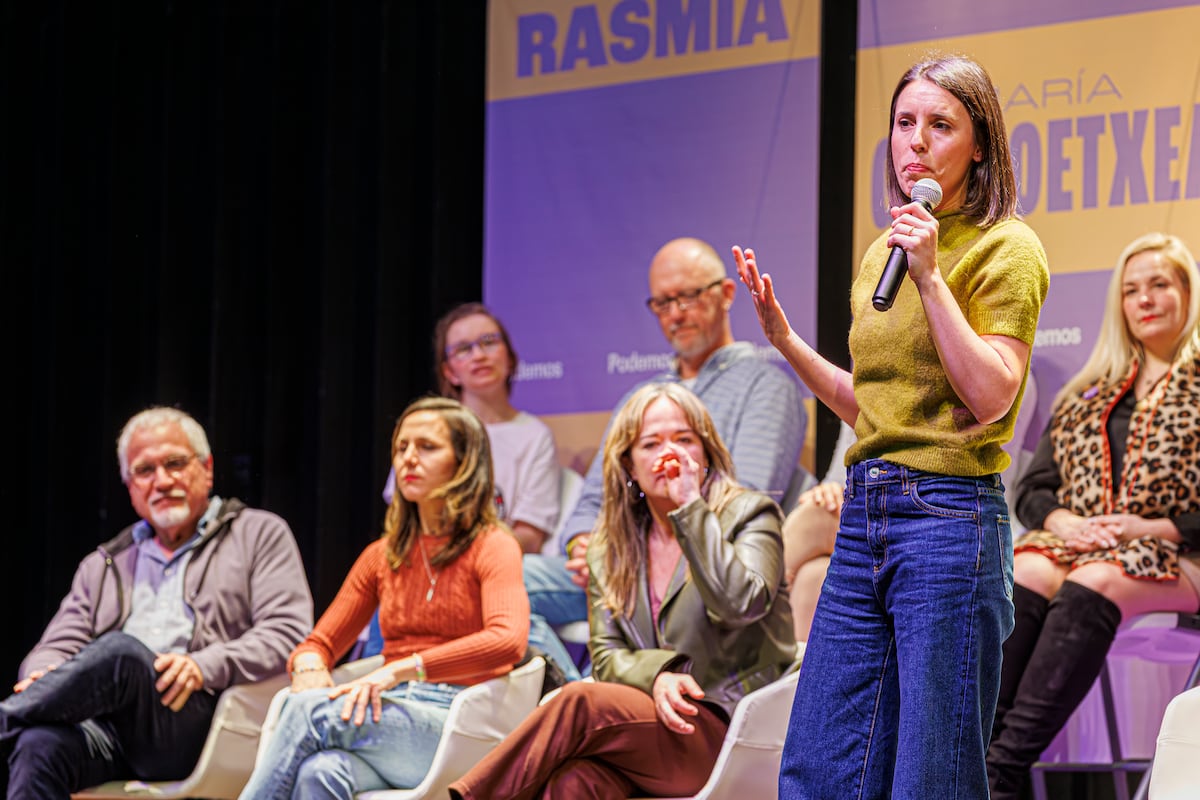
But also to Europe's neanderthals, it turns out: Likewise blinded to any problematics associated with Islam, Pedro Sánchez (following in the footsteps of Tony Blair and duly lionized in the New York Times for being "Trump's nemesis") has allowed half a million illegal aliens in Spain, many of them Muslims, to become regularized. At a Podemos party rally in Zaragoza, to "chilling" applause, a drama queen like Irene Montero bellowed at the top of her lungs:
“We have obtained papers and regularization. And now we are
going to go for citizenship or change the law so that they can vote, of
course. Hopefully, replacement theory, hopefully we can rid this country
of fascists and racists with migrants, with working people.”
Cross the Atlantic: As California and other states seem to be heading in the direction
of fraud-soaked Minnesota (the home for many Scandinavian immigrants in
the 19th century), it appears that the various welfare systems
throughout the American nation might be little more than a scam.
But
for the statists, American and foreign alike — whether they turn out to
be true believers or hypocritical conspirators — the international
situation is far worse than that.
In view of the fact that the global left's major talking point —
that leftists like the Democrats and all the Socialist-leaning Europeans
— are far more tolerant and compassionate than the egotistical brutes
in the capitalistic United States (or, at least, then the neanderthals of America's Republican Party), it would be highly problematic if the welfare systems throughout the rest of the West — and the rest of the world — proved to be a scam as well.
That
is what might be happening in the region — Scandinavia — whose
countries are often lauded as the very top model of a healthy government
and a healthy nation. Certainly, Norway's reputation for honesty and
humility, for good governance, and for “least corrupt in the world” rankings has been taking broadside after broadside in the wake of the Epstein Scandal.
And if Norway turns out to be so filled with (for want of a better word) corruption, can Sweden and Denmark be far behind?
A true friend of America, Philippe Karsenty seems to have become a feature on BFMTV, appearing no less than half a dozen times in the space of about one week, which in turn seems to be bringing him a measure of celebrity (or, in the eyes of the left, of infamy), earning him the mockery of French humorists in the vein of Colbert and Kimmel.
When the many guests, most of them left-leaning, asked whether the Strait of Hormuz is on a "Groundhog Day" loop (videos at all the links), the spokesman for the Comité Trump France strikes back at the TDS sufferers, who claim that Donald Trump has made no headway in the Iran war, with outright incredulity (3:43-5:55, 9:51-10:55, 11:40-12:33, 13:41-14:58).
BFM TV 18 mai 2026 - Trump menace de frapper
The following day, Philippe Karsenty appeared on BFMTV's 60 Minutes (Soixante Minutes in French) to answer questions whether POTUS47, (falsely) nicknamed TACO, chickened out in the face of Iran (2:17, 12:26-15:38, 23:52-25:00, 29:52-30:55), saying Trump is the only American president who has "shown courage" against what is nothing less than "the Iranian devils."
BFM TV 19 mai 2026 - Face à Marc Fauvelle, avec le général Palomeros et Maya Khadra - Trump, la guerre et l’OTAN
A week later, the spokesman for the Comité Trump France was back on BFMTV (4:24-7:17, 18:50-19:13, 20:20-21:05, 22:00-23:23, 29:06-30:10, 33:45-34:07), telling his fellow guests that it is time to stop allowing the ayatollahs' terrorist régime to blackmail the rest of the world. He also reveals the bombshell news item that the Trump administration is counting on the fact that, within a matter of months, Netanyahu will be out of a job, with some other person in the seat of Israel's PM… Surprisingly, Olivier Truchot and Alain Marschall let Philippe have the last word…
Marschall Truchot : Trump, la paix c’est pour aujourd’hui ou pour demain ? - 25/05
Marschall
Truchot, du lundi au jeudi de 17h à 19h avec Olivier Truchot &
Alain Marschall. Deux heures pour faire un tour complet de l’actualité
en présence d’invités pour expliquer et débattre sur les grands sujets
qui ont marqué la journée.
| Durée : 34:07 Par Olivier Truchot & Alain Marschall
That same evening, Philippe warns of a catastrophe should Tehran's "apocapytic power" be allowed to survive and continue its racket (5:10, 6:06-8:14, 9:50-10:40, 13:26-14:00), stating that "I do not understand — and I tell that very objectively — why there is not an international coalition to force Iran to back down" with the ultimate aim of bringing an end to the Ayatollahs' government once and for all.
Marschall Truchot : Vers un accord... sans accord sur le nucléaire ? - 25/05
Marschall
Truchot, du lundi au jeudi de 17h à 19h avec Olivier Truchot &
Alain Marschall. Deux heures pour faire un tour complet de l’actualité
en présence d’invités pour expliquer et débattre sur les grands sujets
qui ont marqué la journée.
| Durée : 14:44
The following night, the spokesman for the Comité Trump France was back on BFMTV (1:13:45-1:28:00).
ÉMISSION DU 26 MAI 2026
Revoir en intégralité l'émission "BFM Grand soir" du 26 mai 2026 présentée par Maxime Switek sur BFMTV.
2h41min
Finally, Philippe Karsenty provocative statement that "Free Palestine" is the modern era's "Heil Hitler" (it means nothing less than the eradication of the Jews) was brought to the attention of France's humorists, the country's equivalents of Stephen Colbert and Jimmy Kimmel. It has led the spokesman for the Comité Trump France (the name of the organization brought instant laughter) to be ridiculed on Radio Nova by the likes of Guillaume Meurice, a man who was fired from France-Inter for anti-semitism. Philippe wasn't too upset, though, and seemed to bear no grudges as this "beacon of thought piercing the darkness" did not deny the skit was passably amusing:
Plein de phrases sorties de leur contexte ou coupées pour me ridiculiser mais c'est assez bien fait et plutôt drôle
BFM TV 19 mai 2026 - Face à Marc Fauvelle, avec le général Palomeros et Maya Khadra - Trump, la guerre et l’OTAN
Uploaded on May 19, 2026
Trump, made in France - La chronique de Guillaume Meurice
La période est sombre. Heureusement des phares de la pensée percent les ténèbres, comme par exemple Philippe Karsenty, porte-parole du “Comité Trump France”
La chronique de Guillaume Meurice dans La dernière du dimanche 24 mai 2026 sur Radio Nova.
Immigration, once presented as a chance for [the West], renovation of an old culture, fruitful interbreeding, and cross-pollination (botanical metaphor used by people who have never done biology) is over.
While immigrants can, of course, contribute a lot to their host country, there is no particular reason why collectively their contribution would be positive in terms of social cohesion or prosperity; it is not because one crosses a border that miraculously one finds oneself endowed with economic productivity, an entrepreneurial sense, or a citizen behavior above the average of the indigenous people. It may even be that the reverse is true because of the difficulties or at least the time taken to acquire the cultural and linguistic codes.
In an amazing news development regarding Trump's Venezuela raid in January, Instapundit's Stephen Green has linked to an eye-opening post on X Twitter by @WhatJosueSays.
Intelligence reports stated Maduro “feared” taking Trump up on his deal, because he was scared to be executed by his Cuban handlers
When he was captured, he was being guarded by around 30-40 Cubans
Now why on earth would the president of a sovereign country be guarded and “handled” by guards from other countries?
Because the only colonizers and imperialists for the past 67 years, are the same ones who have blamed the US for these actions:
The Cuban Regime
This brings back another event from Latin America, an event linked to The Legend of the Squandered Sympathy that has been used to bash Uncle Sam for over half a century — with the tragedy of the 911 attacks 28 years later being diluted for happening to occur on the same date as Pinochet's overthrow of Allende 28 years prior (if that isn't superstition, I don't know what is) — and the Chilean leader's death allegedly, directly or indirectly, at the hands of the CIA and other members of Washington's Yanqui imperialistas. (Gracias por el Instavínculo, Señora Sarah…)
A shocker of a new book launched in France trashes the myth that
Chilean president Salvador Allende was killed by Pinochet’s forces or by
CIA operatives during the coup against Allende’s Unidad Popular
government on September 11, 1973. Allende’s Cuban bodyguard, Patricio
de la Guardia, the book apparently charges, shot Allende in the head
when he heard Allende say that he wanted to surrender, reports Eduardo McKenzie
(in Spanish). De la Guardia also killed Allende’s Chilean bodyguard,
and then left the burning building for the Cuban Embassy with some other
Cuban buddies.
Here's the ringer: At the end of his 2005 post, kaqchikel even warns Venezuela's president — at the time, Maduro's predecessor — of the danger of his Cuban guards.
Hugo Chavez, who also boasts Cuban bodyguards, better take notice of this book quickly.
Just in case you are an independent who believes that there is, or at least that there may be, validity to Pinochet's actions against Allende being denounced as illegal and despicable (just like Trump's actions against Maduro being demonized as illegal and despicable), please remember that perhaps the truth ain't that simple. Take a couple of minutes to read, for instance, an excerpt from The truth about the Chilean Revolution, which this blog reviewed 21 years ago:
In Latin America, José Piñera, armed with evidence including "the momentous Agreement of 23 August 1973 … widely unknown outside Chile", opines that because
President
Allende became a tyrant when he broke his solemn oath to respect the
Constitution and the Chilean laws [and because] his government [had]
fomented the creation of armed militias … the origin of the Pinochet
government is that of any revolutionary one, in which only the use of
force was left in order to remove a tyrant [and to] "put immediate end"
to these constitutional violations.
It must be agreed that this was, in fact, an unequivocal call to
remove by force the President who had initiated the use of force with
the purpose of imposing a communist dictatorship.
…the truth
demands recognition that former President Pinochet led a legitimate
rebellion against tyranny and that the origin of Chile's civil war
--and its victims-- lies with former President Allende and his marxist
Socialist party. … The Economist said it clearly at the time:
"The
temporary death of democracy in Chile will be regrettable, but the
blame lies clearly with Dr. Allende and those of his followers who
persistently overrode the Constitution" (September 15, 1973).
It’s wrong to say that the CIA, the armed forces, and the bourgeoisie alone brought down the Allende government. It’s obvious we need to admit we made critical economical and political errors that were as decisive if not more decisive
No less a figure than the president of the Partido Socialista, Núñez went on to conclude that
we know another Allende-like experiment would only be a collossal failure.
Intelligence reports stated Maduro “feared” taking Trump up on his deal, because he was scared to be executed by his Cuban handlers
When he was captured, he was being guarded by around 30-40 Cubans
Now why on earth would the president of a sovereign country be guarded and… https://t.co/PcD0uxJEx9
The Economist has been featuring a multi-chapter series, called America at 250.
Needless to say, the magazine "founded in 1843 to champion [American]
ideals [such as] open markets,
free societies and human progress" has turned left in the past few
decades and you can recognize the (occasionally entertaining) sophomoric
asides in its tongue-in-cheek "arch, authoritative, occasionally
patronising review." However, a couple of items are quite informative,
such as the weekly's report from 1861 on the outbreak of civil war at Fort Sumter or Amity Shlaes's piece on FDR — Franklin Roosevelt: Brilliant commander-in-chief, terrible chief executive. That said, almost every entry can be sure to contain one of the left's simplistic talking points.
Why anyone would want to leave Britain is beyond us. But in 1776 the 13 colonies declared their own version of Brexit, only with
muskets. Out of this act of youthful defiance came a great liberal
experiment. Ideas borrowed from the Enlightenment—natural rights, the
rule of law, government by consent—became the scaffolding for a new country.
America would go on to fascinate, inspire and occasionally exasperate The Economist,
founded in 1843 to champion many of those same ideals: open markets,
free societies and human progress. To mark the republic’s 250th
birthday, we offer not fireworks but something far more British—a
review. An arch, authoritative, occasionally patronising review.
Over seven chapters—one a month until July 4th—we’ll scroll through America’s triumphs and hypocrisies, booms and busts.
What is interesting is that one reader from Brazil brings up a 19th C figure who has been lost to history. Emiliano Mundrucu participated in a revolution in Brazil 200 years ago in an attempt for several estados to secede from what was then an empire (yes, under an emperor).
After the failure of the Confederation of the Equator, Emiliano Mundrucu was forced to flee for his life and emigrated to the United States, where he did not remain calm and inactive, far from it. (Obrigado pelo Instalink, Sarah…)
A historical precedent
Chapter 3 of your America at 250 series
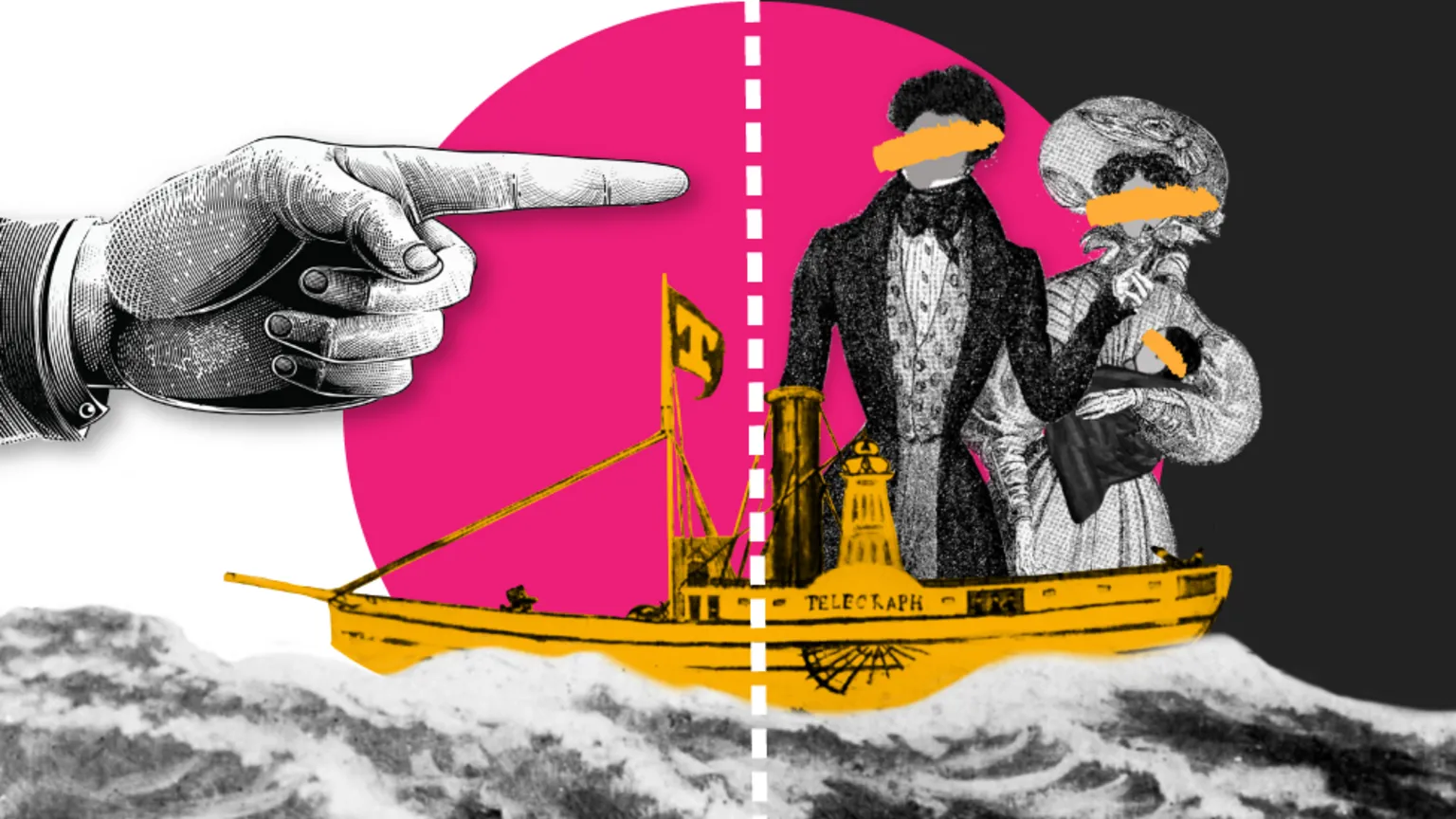
(March 28th) mentioned the saga of Homer Plessy, a black shoemaker from
New Orleans who was arrested in 1892 for refusing to “retire to the
coloured car” on a train. His case went to the Supreme Court; Plessy v Ferguson questioned whether racial-segregation laws at the time were constitutional (the court found that they were).
Sixty
years earlier, in 1832, a little-known episode happened in Boston, when
Emiliano Mundrucu, a Brazilian national, sued a boat captain for breach
of contract for not allowing Mundrucu’s family to sit in a comfortable
cabin because they were black, despite paying the highest fare. A jury
in 1833 ordered the captain to pay $125 in damages to Mundrucu, but the
decision was reversed by the Massachusetts Supreme Court. Some scholars
consider it to be the first lawsuit challenging racial segregation in
America.
Mundrucu
was one of the military leaders of the 1824 secession movement in
Brazil called Confederation of the Equator, a republican uprising aimed
at forming a federation of provinces in the north-east. It was inspired
by the American revolution. The movement was defeated and Mundrucu was
sentenced to death, but he managed to escape and seek refuge in Boston.
Related: The Economist book review of Separate: The Story of Plessy v Ferguson, and America’s Journey from Slavery to Segregation. By Steve Luxenberg. W.W. Norton; 624 pages; $35.00.