For years, in the process of reading a book or a periodical, I would regularly get mildly irritated by the absence of the serial comma, as it seems an important detail not to leave out.
Little could I then have imagined that that would be nothing compared to the overuse, especially since the beginning of the internet age, if not the outright misuse, of square brackets (and/or parentheses) inside quoted material.
When quoting people, the reader might be tempted to think that some writers at times seem to combine something akin to outright zealotry with a failure to think one's sentences, or one's articles, through. But let's be generous and just assume that the writers — or their editors — may simply have been too much in a hurry to get the piece out (which, needless to say, is no bad thing, far from it).
Now, understand that is not something that keeps me from sleeping at night, but it is like the proverbial pebble in the shoe that makes an otherwise enjoyable reading (slightly) less satisfying.
The basic rule is that if the brackets come at the periphery of the quote (at the beginning or at the end), they are almost always unnecessary ("almost", I will be giving you a handful of examples to the contrary at the end of this post) — especially if it concerns a tiny, inconsequential word (like "a" or "the"). The less important the word are the more annoying the brackets are.
When brackets are clarifying definite articles, indefinite articles, and other fluff words — particularly (but not always) when they come at the beginning of the sentence — they can simply be left out of the quote altogether by having the quote (ever so slightly) shortened thanks to the opening quotation mark being moved up a word or two.
What these brackets tell the reader, when they make an an uppercase letter lowercase or vice versa, is no more than the information that the original sentence quoted did start with a particular word, or did not start with that particular word.
In other words, this is often little more than grammatical information of not a whole hell of a lot of importance.
Often, brackets can be easily avoided by playing and juggling around with the sentence. The Punctuation Guide provides an example:
In many cases, brackets can be avoided by reframing the quotation.Awkward: “Why can’t we do the same thing [provide government-funded grants to independent filmmakers] in this country?” Christina Black asks.Recast: Citing filmmaking grants provided by the Australian government, independent filmmaker Christina Black asks, “Why can’t we do the same thing in this country?”
And never forget that the final entry in The Punctuation Guide's Top Tips reads:
As I mentioned, it is common sense that is being appealed to, not formal rules, and, as you will see below, what Jordan Penn's Guide calls rewriting often means little more than moving an opening quotation mark from one word to the neighboring word following it — thereby eliminating the need for the unseemly pair of brackets in the first place.The easiest way to solve a vexing punctuation problem is to avoid it. If you aren’t sure how to properly punctuate a sentence—or if the proper punctuation results in a convoluted, confusing, or inelegant sentence—rewrite it. Perhaps as more than one sentence.
A few years ago, I decided to start noting by copying and pasting the phrases in a (never-sent) draft email along with the URL addresses. Now, the list has grown so long (as you will see below) that I think it's time to get it out there once and for all.
To repeat: in most of the following examples, it is not (or not only) formal rules I am appealing to, it is common sense.
The rest of this post will work as follows:
The "offending" sentence will be quoted twice — once, the way it appeared, and, below that, with what I consider not a correction but an (but a slight) improvement. To make the exact part of the sentence that is focused on easier to spot, I have used a basic color-coded system. Three colors are used (which ought not to be confused with link colors):
• There two instances of the "offending" phrase, with the "offending" parts a will be colored a red-brownish color (RGB [224, 102, 102]) in the same place to show the change; the two sentences are separated by a green arrow (→) from the first to the second pointing to what would, in my opinion, be the better alternative.
• Orange is used sparingly, to show FYI-type examples of interest with no need for improvement or correction.
Now, please note something: the excerpts of a text is printed only with regards to this topic, i.e., totally irrespective of whether I agree with its content or not.
As it happens, many if not most of the examples come from articles that I agree with, and in addition from writers whom I like and whom I admire, so: here is hoping they will forgive me for using their oeuvre in the context of improving writing…
Actually, when you think about it, calling them zealots may be unfair, as they just as probably may have been in a hurry (aren't most of them journalists?), and that to write — let's go ahead and admit it — a (far) more interesting article than… the… current post (!). (As it happens, the "zealotry" may not even be the work of the journalist with the byline at all, it may have been a rewrite due to an editor or a fact-checker's intervention.)
 Then again, we must face — or, rather, I must face — what seems to be the painful truth that the zealot is none other than… myself and that, at least according to Science Alert's Fiona MacDonald (and to scientists at the University of Michigan), "People who constantly point out grammar mistakes are pretty much jerks."
Ouch.
That stings.
Well, what can I say to that? That's me, I guess. Somewhere I'm a jerk. Or a zealot. Certainly it cannot be denied that I am more of an introvert than an extrovert. In my defense I am not "constantly point[ing] out" grammar mistakes, or even only this particular grammar mistake, to people. There is the present post, true enough, but it is also, or it is also supposed to be, a one-time thing. (Incidentally, Science Alert also has a Nenagh Kemp post titled "Text-messaging isn’t, like, ruining young people’s grammar.")
On the other hand, you do feel you have a point when a British leftist (The Guardian’s data editor, Mona Chalabi, no less) comes charging, calling good grammar yet another form of “white privilege” (!) and stating that Correcting Grammar Is Racist, Classist, and Censorious, no less (cheers to Ed Driscoll).
Whatever the case: Far from appearing only on blogs and in marginalized media, the examples come from all over the internet, including such illustrious publications as the New York Times, the Washington Post, and the Wall Street Journal.
One final remark regarding editorial content clarifying original material:
I wish to express my heartfelt wish that
everybody would stop using parentheses once and for all
and start making exclusive use of square brackets.
1) When are square brackets necessary?
 In this Nick Sibilla report for the Institute for Justice, the brackets are necessary:
Pennsylvania’s Commonwealth Court Judge Dan Pellegrini criticized that state’s civil asset forfeiture law as “amount[ing] to little more than state-sanctioned theft.”Because of the structure of the sentence, the verb has been changed and the brackets show that the text quoted was (slightly) different.
Likewise in this Stephanie Gurmann quote:
Manhattan dentist Alina, 33, explained that: ‘The excitement of the whole thing was the seduction… [protagonist Anastasia Steele] is attracted to the fact he [Christian Grey] takes control.’Even a bracketed "a" or a "the" would be appropriate here — if either word appeared towards the center of the quote.
Incidentally, notice that (for what it's worth) there are two slightly different uses of the brackets in the Stephanie Gurmann quote above; in the first, the words bracketed — protagonist Anastasia Steele — replace one word or more (most probably the pronoun "she") that is no longer necessary and has therefore been omitted; in the second — Christian Grey — the words bracketed help identify a pronoun — he — that (for whatever reason) has been allowed to remain in place.
Wouldn't Mr. Spock say: "Illogical"?
2) Examples of When Brackets Are Unnecessary and Could Easily be Jettisoned
The following section is by far the longest section of this post, replete with examples from the media gathered here and there over several years. You may find the examples interesting and even fascinating (?), but, truth to tell, the section is so long, you will be going ever more quickly over them.
This is where the color section fits in: you can jump from one reddish example to the next (alighting occasionally on an orange one), skipping over all the blabla in-between.
When you've had your fill, head down to (the much shorter) section 3) by scrolling down — or by CMD F'ing "3)" — to find the section of (only) a handful of examples when brackets on the periphery do turn out, after all, to be necessary.
Section 3 is followed by the last two sections (4 and 5), which are hardly any longer than that segment is… (The examples tend to get more fun towards the very end…)
And so, without further ado, let's start with a couple of easy and straightforward entries:
As the Post editorial today states, “[The] Obama administration has declined to counter increasingly aggressive efforts by Iran.”writes (The Washington Post's own) Ed Rogers. Why not simply:
As the Post editorial today states, the “Obama administration has declined to counter increasingly aggressive efforts by Iran.”Even if you did choose to retain the brackets, there is no reason to capitalize the bracketed mid-sentence "The"; the brackets point towards what is your editorial correction, Ed, do they not? 100% under your authority, so to speak. Couldn't the word within the brackets therefore be rendered lower case "the" from the outset?
In section 5, we will see more instances of this, examples of totally illogical, and/or totally unnecessary, and/or totally counter-productive uses of brackets.

On drawing what he calls the wrong lesson from the Trayvon Martin affair, a Hot Air correspondent informs us that
the disdain for police which is on display is better illustrated when Capehart cites “[t]he reprehensible reaction by law enforcement to the protests in Ferguson last summer.”How about:
the disdain for police which is on display is better illustrated when Capehart cites the “reprehensible reaction by law enforcement to the protests in Ferguson last summer.”Note that if Jazz Shaw had simply kept the capital letter in the word "The" the way the quoted material was originally written, had he left it the way it was, that would have been far from a mistake or made the sentence in any way unreadable:
the disdain for police which is on display is better illustrated when Capehart cites “The reprehensible reaction by law enforcement to the protests in Ferguson last summer.”I think it is more distracting (if that is the word) to introduce a pair of brackets than to obliterate their use by retaining the capital letter (which is excusable/understandable since it is at the beginning of a quote). Still, putting the entire word outside the quote seems to be the ideal solution that makes everyone happy.
the disdain for police which is on display is better illustrated when Capehart cites the “reprehensible reaction by law enforcement to the protests in Ferguson last summer.”

In a Federalist story about the Clinton Foundation, Sean Davis quotes PunditFact's Louis Jacobson:
“[T]he foundation says it does most of its charitable work in-house,” Jacobson writes, “and it’s not credible to think that the foundation spent zero dollars beyond grants on any charitable work, which is what it would take for Limbaugh to be correct.” →
The “foundation says it does most of its charitable work in-house,” Jacobson writes, “and it’s not credible to think that the foundation spent zero dollars beyond grants on any charitable work, which is what it would take for Limbaugh to be correct.”
 In a Washington article entitled Obama admits that his handling of the Libya war was his worst mistake – but not that it was unconstitutional, Ilya Somin writes that
Then-Senator Obama put it well back in 2007, when he stated that “[t]he President does not have power under the Constitution to unilaterally authorize a military attack in a situation that does not involve stopping an actual or imminent threat to the nation.” →
Then-Senator Obama put it well back in 2007, when he stated that the “President does not have power under the Constitution to unilaterally authorize a military attack in a situation that does not involve stopping an actual or imminent threat to the nation.”
 In an American Thinker outline of his book TWA 800 (The Crash, The Cover-Up, The Conspiracy), Jack Cashill recollects the downing of a Boeing 747-100 airliner in July 1996:
“This was Bill Clinton’s Benghazi moment,” I said. “They [the Clintons] just wanted to kick this can down the road until after November so it would not affect the outcome of the [1996] election.” When CNN released the transcript the next day, someone had edited out my answer. →
“This was Bill Clinton’s Benghazi moment,” I said. The Clintons “just wanted to kick this can down the road until after November so it would not affect the outcome of the [1996] election.” When CNN released the transcript the next day, someone had edited out my answer.
“[h]e will be remembered as a president who, with the best of intentions, tried and failed to end stark, acrimonious polarization in Washington” (Sean Wilentz, Princeton) →
he “will be remembered as a president who, with the best of intentions, tried and failed to end stark, acrimonious polarization in Washington” (Sean Wilentz, Princeton)Further down, we have
Douglas Brinkley (Rice), far from acknowledging Obama’s purposeful deceptions, went so far as to refer to Obama’s “unflappable integrity” on the way to describing Obamacare as “[h]is greatest long-term victory.” →
Douglas Brinkley (Rice), far from acknowledging Obama’s purposeful deceptions, went so far as to refer to Obama’s “unflappable integrity” on the way to describing Obamacare as his “greatest long-term victory.”
 Here is a similar example from the Daily Caller:
The president’s decision to selectively enforce immigration laws directly contradicts a public statement he made in March 2011. Back then, Obama said he thought “[t]here are enough laws on the books by Congress that are very clear in terms of how we have to enforce our immigration system that for me to simply through executive order ignore those congressional mandates would not conform with my appropriate role as president.” →
The president’s decision to selectively enforce immigration laws directly contradicts a public statement he made in March 2011. Back then, Obama said he thought there “are enough laws on the books by Congress that are very clear in terms of how we have to enforce our immigration system that for me to simply through executive order ignore those congressional mandates would not conform with my appropriate role as president.”

Marina Shifrin quotes a University of Colorado-Denver study claiming that some women may be deemed “too hot to hire” in more masculine workplaces.
The news service also pointed out other traditionally masculine job categories that were found to discriminate against good-looking women: “They (women) were also overlooked for categories like director of security, hardware salesperson, prison guard and tow-truck driver.”Instead of feeling duty-bound to quote the entire sentence, including the "They", followed by a(n ever so slightly) distracting (as well as entirely unnecessary) explanation in brackets "(women)", simply specify the subject and start the quoted part of the sentence a couple of words later — thus:
The news service also pointed out other traditionally masculine job categories that were found to discriminate against good-looking women: The women “were also overlooked for categories like director of security, hardware salesperson, prison guard and tow-truck driver.”Note that after the colon, and before the (rump) news quote, Marina Shifrin had a number of options, regarding capital letters and the necessity for the "the": The women, the women, Women, and women (not to mention an entirely different synonym for women).

Two examples in Dan Lewis's Now I Know article about the San Diego Zoo’s Bornean orangutan — one who kept breaking out of his “escape proof” habitat. Every time opportunity struck during the summer of 1985, Ken Allen (1971/1972-2000)
made his way to freedom. Each time, he was returned to his enclosure. But don’t feel too bad — according to the zoo (per TIME), “[Allen] never seemed to mind being led back into his enclosure — he just seemed to enjoy the challenge of finding a new way out!”
“[Allen] never seemed to mind being led back into his enclosure” →
Allen “never seemed to mind being led back into his enclosure”Further down, we get a Bonus fact:
Ken Allen’s escapes proved harmless, but they could have been very dangerous. Bornean orangutans are known to rape human women. In 1996, actress Julia Roberts was almost one such victim. She made her way to Borneo to shoot In the Wild, a documentary on these apes in their homeland. While filming, an orangutan attacked the actress. actress. As Salon reported, “[o]ne male took a shine to her and grabbed her as she walked along a path. Luckily, a film crew was present, though it took five men to free her from the ape’s grasp.”Is it truly vital for the reader to know the word "one/One" was in the original sentence?
As Salon reported, “[o]ne male took a shine to her and grabbed her as she walked along a path" →
As Salon reported, one "male took a shine to her and grabbed her as she walked along a path"

One sentence in another Dan Lewis Now I Know article, concerning litigation on Florida beaches to "save" turtles endangered by cars allowed to drive onto the sand (Yertle The Litigant), states that
in one of the court cases involving the turtles, Volusia County asserted that Reynolds and Alexander, in the words of the court, “[were] not interested in saving the turtles” at all.Obviously, we can infer that the original assertion was in the present tense: accused of opportunism, Shirley Reynolds and Rita Alexander, in the words of the court, "are not interested in saving the turtles”. Simply solve this grammatical "problem", avoiding the square brackets in the process, by putting the re-tensed verb outside of the quoted phrase (outside the quotation marks) and writing that
in one of the court cases involving the turtles, Volusia County asserted that Reynolds and Alexander, in the words of the court, were “not interested in saving the turtles” at all.

In a piece comparing aspects of Barack Obama's younger days with those of Ted Cruz, a Townhall columnist explains how
… veteran journalist Martin Kramer compiled an extensive laundry list of articles and attributions describing Khalidi as "a PLO spokesman," "a director of the Palestinian press agency [Wafa]" (where his wife, Mona, also worked), and "an American-educated Palestinian who teaches political science at the American University of Beirut and also works for the P.L.O." →
… veteran journalist Martin Kramer compiled an extensive laundry list of articles and attributions describing Khalidi as "a PLO spokesman," "a director of the Palestinian press agency" Wafa (where his wife, Mona, also worked), and "an American-educated Palestinian who teaches political science at the American University of Beirut and also works for the P.L.O."
 In a story on Marcia Lucas, aka "The ‘secret weapon’ behind Star Wars", Frank Chung quotes Michael Kaminski, the author of the book, The Secret History of Star Wars, as claiming that the former Marcia Griffin 'has been “practically erased from the history books at Lucasfilm” as a result of her divorce from George Lucas.
“[She] is mentioned only occasionally in passing, a background element, and not a single word of hers is quoted; she is a silent extra, absent from any photographs and only indirectly acknowledged, her contributions downplayed,” he writes. →
She “is mentioned only occasionally in passing, a background element, and not a single word of hers is quoted; she is a silent extra, absent from any photographs and only indirectly acknowledged, her contributions downplayed,” he writes.In a related excerpt from the above-mentioned book, Michael Kaminski himself writes that
Lucas' close friend Steven Spielberg, whom Lucas would be working with on the Indiana Jones sequel as the divorce was occurring, remembers the time: "[The divorce] pulverized him. George and Marcia, for me, were the reason you got married, because it was insurance policy that marriages do work...and when that marriage didn't work, I lost my faith in marriage for a long time." →
Lucas' close friend Steven Spielberg, whom Lucas would be working with on the Indiana Jones sequel as the divorce was occurring, remembers the time: The divorce "pulverized him. George and Marcia, for me, were the reason you got married, because it was insurance policy that marriages do work...and when that marriage didn't work, I lost my faith in marriage for a long time."
A Foreign Policy blog on the publication of Stanley McChrystal's 2012 memoir:
"[McChrystal] deliberately helped cover up Pat's death and he has never adequately apologized to us for doing that," Mary Tillman, Pat's mother, told ABC News in 2011.Simply move the opening quote one word over (past the proper name), and you can drop the brackets; thus:
McChrystal "deliberately helped cover up Pat's death and he has never adequately apologized to us for doing that," Mary Tillman, Pat's mother, told ABC News in 2011.
Although there is 0% doubt who the woman Eric Berry is referring to below is — there is no other woman in his Hip Hollywood report about the disgraced soccer star Hope Solo — the journalist reaches for brackets to replace (in all probability) the word "She" when he writes that
“(Solo) repeatedly hurled insults at the officers processing her arrest, suggesting that two jailers were having sex and calling another officer a ’14-year-old boy,’” the official arrest report revealed.How about, simply:
Solo “repeatedly hurled insults at the officers processing her arrest, suggesting that two jailers were having sex and calling another officer a ’14-year-old boy,’” the official arrest report revealed.(Although it would dubiously have been a mistake to retain "She", as no other female of note is discussed in Eric Berry's article.)

In a PJ Media report on Sarah Silverman endorsing Democrat presidential candidate Bernie Sanders, we learn that
"[Sanders] has proven that Citizens United is not a necessary evil," she claims. "It's just evil." →
Sanders "has proven that Citizens United is not a necessary evil," she claims. "It's just evil."
In a Conservative Tribune article, Fox News insiders claimed that the right-wing network’s architect, Roger Ailes, was being slowly pushed out of the picture.
“(Ailes) seems detached and removed,” an unnamed Fox News personality was quoted as saying. →
Ailes “seems detached and removed,” an unnamed Fox News personality was quoted as saying.
A Newsmax story reporting the election of Pope Francis I explains that Cardinal Jorge
Bergoglio has been a strong opponent of Argentina's Kirchner government, largely because "(President Cristina) Kirchner has been at war with the Church."Simply move the opening quotation mark further to the left:
Bergoglio has been a strong opponent of Argentina's Kirchner government, largely because President Cristina "Kirchner has been at war with the Church."(Just like I myself did at the outset of this particular entry, when I spoke about Cardinal Jorge "Bergoglio" and not about "(Cardinal Jorge) Bergoglio".)

The Washington Examiner's always excellent Ashe Schow has an article on Sabrina Rubin Erdely that is full of (entirely appropriate) instances of "[Erdely]" because it replaces shes in the middle of quoted material (actually, I would say, a few might seem dispensable). But notice that the one below, coming at the beginning of a quote as it does, is unnecessary. (And "she" would have worked just fine.)
Alex Pinkleton, who was interviewed for the Rolling Stone story, said she was skeptical of Erdely during their talks “because it seemed like she was unwilling to listen to anyone besides Jackie.” Pinkleton added that “[Erdely] did have an agenda and part of that agenda was showing how monstrous fraternities are and blaming the administration for a lot of these sexual assaults.” →
Alex Pinkleton, who was interviewed for the Rolling Stone story, said she was skeptical of Erdely during their talks “because it seemed like she was unwilling to listen to anyone besides Jackie.” Pinkleton added that Erdely “did have an agenda and part of that agenda was showing how monstrous fraternities are and blaming the administration for a lot of these sexual assaults.”
In that perspective comes a story from Chattanooga of a man cleared of fake rape charges:
"(It's) surreal, it still kind of is," said Bradshaw to NewsChannel9's Briona Arradondo. "You're glad for it to be over, and the truth came out. In the end, that was my main concern." →
It's "surreal, it still kind of is," said Bradshaw to NewsChannel9's Briona Arradondo. "You're glad for it to be over, and the truth came out. In the end, that was my main concern."
Which brings us to The Daily Caller's Matt Lewis, the author of The silent war on noncollege-educated white men, who has interviewed the wife of Instapundit's Glenn Reynolds:
“[T]he incentives to marry have changed for men,” explains [Men on Strike's Helen] Smith, “and they are no longer willing to risk so much more than in previous years to gain potentially less.” →
The "incentives to marry have changed for men,” explains [Men on Strike's Helen] Smith, “and they are no longer willing to risk so much more than in previous years to gain potentially less.”Notice, incidentally, that the first pair of brackets in the top quote —“[T]he incentives” — is Matt Lewis's, while the second one — "[Men on Strike's Helen] Smith" — is mine (something that would make my examples, and this post, too confusing if I did more of those, so I have resisted doing so in all other instances).
We will discuss this — brackets by different authors or brackets one degree removed, if you will — in more detail (albeit briefly, yes I swear) towards the end of this post.
 The improvement of Eagle Rising's piece below additionally solves the (slight) visual weirdness of seeing two quotes next to each other:
According to Hardie, in order to enforce his homofascist version of “social justice,” armed “LGBT squads” are “vital.” “[I]t is also vital for LGBT communities to wield police power backed by the force of law. In other words, we must not only demand ‘gay rights,’ but we must also demand ‘gay power.’” →
According to Hardie, in order to enforce his homofascist version of “social justice,” armed “LGBT squads” are “vital.” It "is also vital for LGBT communities to wield police power backed by the force of law. In other words, we must not only demand ‘gay rights,’ but we must also demand ‘gay power.’”
It is not only proper names or "he" and "she" and "the" and "it" that can lose their brackets; other, and longer, types of phrases can do so as well.

The Hollywood Reporter's Michael Walker:
"[Keyboardist] Dave Bryan of Bon Jovi and many other musicians told me that when they saw that picture, that's what they wanted," says Gruen. →
Keyboardist "Dave Bryan of Bon Jovi and many other musicians told me that when they saw that picture, that's what they wanted," says Gruen.
Regarding police officers accused of racism, Fox News' Perry Chiaramonte:
“When I saw the video, those officers were nothing but professional,” she said. “[The incident] just didn’t lend itself to racial profiling. →
“When I saw the video, those officers were nothing but professional,” she said. The incident “just didn’t lend itself to racial profiling.
One part of a SkyNews report on Fox News about North Korean threats to lay waste to Washington with a submarine-launched nuclear missile in a menacing propaganda video describes it as follows:
As the US Capitol building burns, a message flashes up on the screen in Korea: “If US imperialists budge an inch toward us, we will immediately hit them with nuclear (weapons).” →
As the US Capitol building burns, a message flashes up on the screen in Korea: “If US imperialists budge an inch toward us, we will immediately hit them with nuclear” weapons.

Regarding Clinton Nostalgia (It’s Very Real and Very Dumb), a Freedom Daily writer remembers that
In 1995, Sudanese officials contacted the US government to discuss bin Laden’s possible deportation back to his native Saudi Arabia. “They [the Saudis] were afraid it was too much of a hot potato, and I understand where they were,” Clinton later said. →
In 1995, Sudanese officials contacted the US government to discuss bin Laden’s possible deportation back to his native Saudi Arabia. The Saudis “were afraid it was too much of a hot potato, and I understand where they were,” Clinton later said.
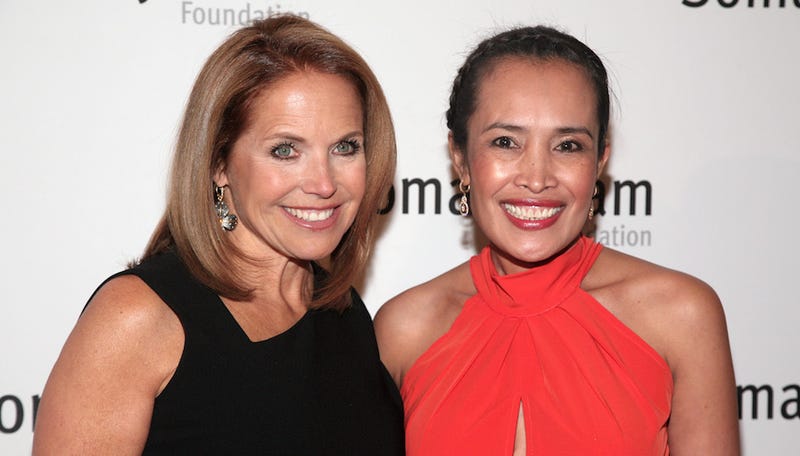
In a Newsweek exposé about Cambodia's Somaly Mam, we learn that
those who have worked with Mam in Cambodia say there is a vast difference between the image she puts forward in the media spotlight and the one she shows in Phnom Penh. “[With donors], she’s very polished and very on and very charming…exceedingly charming,” says Candace Blase, who worked as a volunteer psychologist for AFESIP in 2011. “And when people are not there, she can be tyrannical; she’s moody, she’s erratic, she’s entitled.” Blase adds that she saw Mam ordering the girls she looks after to carry out personal chores for her.Can't the square brackets be tossed'n'lost, here?
With donors, “she’s very polished and very on and very charming…exceedingly charming,”
 Here comes a multi-page article in the California Sunday Magazine from Graeme Wood:
Balint, the cultural historian, concurs. “[The Somerton Man] cuts a lonely figure, and people want to rescue him,” she says. “But we had lots of people like him: returned soldiers with shell shock, people who came back and were strangers to their own families. Some of them would just get up, disappear, and go on walkabouts.” →
Balint, the cultural historian, concurs. The Somerton Man “cuts a lonely figure, and people want to rescue him,” she says. “But we had lots of people like him: returned soldiers with shell shock, people who came back and were strangers to their own families. Some of them would just get up, disappear, and go on walkabouts.”

In another of Dan Lewis's Now I Know newsletters, concerning problems with the International Date Line for islands in the middle of the Pacific Ocean, we learn that on one day at the end of the 19th century, the island of Samoa decided to jump from the east side of the International Date Line to the western side (because "during the late-1800s, Samoa's main trade partners were located on the west coast of the United States"), thus resulting in the addition of an extra day to their year:
As the New York Times reported, "[the 1892] shift took place on the American Independence Day — so the Samoans could celebrate July 4 twice." →
As the New York Times reported, the 1892 "shift took place on the American Independence Day — so the Samoans could celebrate July 4 twice."
 In a (must-read) Lucky Gunner piece on Self-Defense Myths That Just Won’t Die (11 Experts Weigh-In) — oh, and that dash in the middle of the verb "weigh in" is pointless, by the way, and may have come from an earlier draft when the phrase served as an adjective (the "weigh-in experts"?) — Melody Lauer reports that
Rob Pincus believes that the emphasis must go. “[Timed drills] only measure skill performance, not skill application,” says Pincus. →
Rob Pincus believes that the emphasis must go. Timed drills “only measure skill performance, not skill application,” says Pincus.In a Boston Herald article about the latest feminist scandal, sexual harassment at… comic conventions (!) — in which we discover that the "kind of behavior that needs to be modified is somebody taking a photo of you bent over while you're signing a print" — we further learn that
“It makes it feel safer for the person being harassed to report it and also for bystanders who witness (inappropriate behavior),” Keyhan said. →
“It makes it feel safer for the person being harassed to report it and also for bystanders who witness" inappropriate behavior, Keyhan said.
 3) Are parenthetical words at either end of a sentence always wrong?
No.
A) Let our first example be a hypothetical one:
One of William Safire's most famous phrases, written for and used in a vice presidential speech (Spiro Agnew's), was his "nattering nabobs of negativism." Imagine that you are quoting one specific interview or speech in which Safire (or Agnew?) mentions that very phrase but where for some reason (he's human, remember, and, oh yes, so is Agnew — well they were, they used to be, when they were alive), he inadvertently leaves one key word out. In that case it would make sense to — helpfully — insert the word inside the quote and consequently use the brackets to show it is Safire's term (or Agnew's) instead of your own, that it is the pundit's (or the vice-president's) term.
To be clear, here we would use "[nattering] nabobs of negativism"
instead of nattering "nabobs of negativism".

B) By the same token, the New York Times's Wesley Morris speaks about how an entreaty by the musician Prince
conjures images of a man standing at the sex grill in a “[bleep] the cook” apron.The "bleep" or the "f*ck" or whatever is part of the apron's 3-word message, so it may deserve to stay.
C) Another example where a pair of brackets ought to remain is provided by the Gatestone Institute's Soeren Kern who is quoting reports inside a series of bullet points where the authorities that be are stating the urgent actions that must be undertaken by "us", i.e., by (us) the British people and the British government, in response to the alarming survey which found that "more than 100,000 British Muslims sympathize with suicide bombers and people who commit other terrorist acts." ("Moreover, only one in three British Muslims (34%) would contact the police if they believed that somebody close to them had become involved with jihadists.")
• "[W]e have to adopt a far more muscular approach to integration than ever, replacing the failed policy of multiculturalism... Britain's liberal Muslims are crying out for this challenge to be confronted. ...

D) USA Today brings another example that also isn't so clear-cut:
Observed Mattis: "(Iran's Ayatollah Ali Khamenei) summed it up very well when he said those who say that the future lies in negotiations, not in missiles, are either ignorant or traitors. ... That is the Supreme Leader. I think we should take him at his word."The Warrior Monk giving credit (sorta) to America's number 1 enemy? Let the sentence stay as is (albeit with brackets, preferably, not parentheses).
E) In a further example, a "people" story which comes to us thanks to PJ Media and which is much less alarming than the report above, we are again shown a speech that is so personal and emotional that it would sound unreal to correct it.

In her movie Part of Me, Katy Perry addresses her divorce, essentially stating the Love Myth. “I thought to myself, ‘When I find that person that’s going to be my life partner, I won’t ever have to choose [between my partner and my career].’ ”"Between my partner and my career" (notice, incidentally, the absence of brackets for the capital B ([B]) in this sentence of mine that you are reading at this very moment) is what Katy Perry means in an interview where she did not mention that very phrase. If we followed our rule, blindly that is, the final part of the actress's quote would be rendered quite oddly — especially because of the personal pronouns.
See how the two possible "corrections" won't do. Not at all:
‘When I find that person that’s going to be my life partner, I won’t ever have to choose’ between her partner and her career.Or
‘When I find that person that’s going to be my life partner, I won’t ever have to choose’ between Katy Perry's partner and Katy Perry's career.Neither of the "corrections" (sic) will do.

F) The Texas Standard's Rhonda Fanning provides a further example where the brackets are far from unwelcome:
Tabo says courts can make exceptions under certain circumstances and in those cases, gag orders don’t violate The First Amendment. “[But] the standard is supposed to be quite high,” she says.Outside of the parenthetical quote, the "but" (a sort of a "hang on a minute") might be either part of the journalist's (part of Rhonda Fanning's) commentary as the Texas Standard author of the entire piece (as she might be trying to invalidate at least part of her subject's message) or it might be part of The Center for Legal Pedagogy's Tamara Tabo at Houston's Texas Southern School of Law, i.e., Tabo's own "hang on a minute" — as it indeed is, and therefore making the pair of brackets far from unwelcome.
Keep as is.

G) Similarly, a New York Sun editorial quotes a sentence from National Federation v. Sebelius.
The court quoted its own language in an earlier case, in which it ruled that “[t]hough Congress’ power to legislate under the spending power is broad, it does not include surprising participating States with post-acceptance or ‘retroactive’ conditions.”The retention of the bracketed conjunction inside the quote shows that the qualifier is not the New York Sun's, but was part of the language in the Supreme Court's decision.
 H) The last example will show even more the occasional necessity
 It is emphatically denied that the Duke of York had any form of sexual contact or relationship "with (the woman)," the statement continued.There is no mention of the woman's name anywhere in the Fox News report — identified in court papers only as "Jane Doe No. 3" — so here the parentheses seem to be (more or less delicately) informing the reader that the original text concerning one of Prince Andrew's alleged victims does mention her real name here. Consequently, "with" the woman or with the woman (leaving the now meaningless quotes — quotes for just for one word, and a simple "with" at that?! — entirely out) would give us far less information.
There is another alternative: the material quoted, i.e., the original statement, may contain the brackets (or the parentheses). Here, there may be room for some misunderstanding, but either way we have more information than we would without the brackets/parentheses and/or the quotes…
This brings us directly to the next section…
4) Brackets One Degree Removed and Ellipses; Plus, Can It Be Even Worse Abroad?…

In a New York Times piece about Monica Lewinsky, Jessica Bennett quotes Gloria Steinem (with a slightly awkward end bracket/comma/end quotation mark):

“I’m grateful to [her],” Ms. Steinem said, “for having the courage to return to the public eye.” →
“I’m grateful to" her, Ms. Steinem said, “for having the courage to return to the public eye.”Take a moment to think about the following:
How would, how could the following brain-teaser work out?
Suppose someone external to the New York Times (such as myself!) quotes the above extract, without having mentioned the older feminist before (such as in… the present post), so… SO… so that spelling out her full name seems required:

“I’m grateful to [her],” [Gloria] Steinem said, “for having the courage to return to the public eye.”There are two pairs of brackets, but notice the difference between them: the first is the New York Times journalist intervening in her subject's quote — we are simply quoting a piece exactly verbatim as it appeared as such in the Times — while the second is an outsider (i.e., me) intervening in the text from the journalist's article.
 How can the
reader tell which is which, or, indeed, how can he figure out that there
is a difference at all — whether both pairs of brackets might have been Jessica Bennett's or whether both might
have been the outsider's quoting the Times article? How can the reader tell which is
which, that is, without coming to a lengthy and unnecessary stop in the
middle of his reading?
How can the
reader tell which is which, or, indeed, how can he figure out that there
is a difference at all — whether both pairs of brackets might have been Jessica Bennett's or whether both might
have been the outsider's quoting the Times article? How can the reader tell which is
which, that is, without coming to a lengthy and unnecessary stop in the
middle of his reading?In other words: what if one set of brackets is one degree removed (while the other is not)?
I provided an example earlier in this post, when The Daily Caller's Matt Lewis interviewed Men on Strike's Helen Smith. I have run into a problem of a similar nature — where I was quoting a person's quotation which included an additional editorial aside — in brackets, of course. (I wish I could remember where, but I can't.) What — if anything — to do? Nothing, it turned out. This was taking zealotry too far. I just changed the wording inside the original brackets; given that there were brackets in the first place, it didn't really matter whether the content thereof was the quoted author's or mine.
Here is another example, from Travel+ Leisure's list of the world's unfriendliest cities
(“Bobby Kennedy was right!” said a T+L reader. “[It’s] a city with Southern efficiency and Northern charm”)Was the monthly magazine quoting the T+L reader's letter verbatim—including his or her clarification of an RFK quote—or was the monthly magazine clarifying the T+L reader's letter? Indeed, is the second part of the sentence a direct quote of JFK's brother (which might demand quotes within quotes), or is it a paraphrase?
The Punctuation Guide provides an answer to this:
Still, that also brakes the flow of the sentence, but sometimes there are few other alternatives…If the material being quoted already contains brackets, this should be noted.Richardson finds support for his position in an earlier study by the Somesuch Foundation: “The authors acknowledge that ‘during the four years he [George Clinton] was president, average real wages were flat.’” (Brackets in original.)
In the Washington Post, meanwhile, Eugene Volokh provides an interesting example of one pair of square brackets within another:
Defendants have indicated their strong disagreement with this position, though they have not yet offered any evidence on this point in this case.The main pair of brackets seems to exist in order to show that a footnote was at the bottom of the page (here moved to the point of the text where the original asterisk or footnote number pointed to the bottom of the page), while the second, the inner, pair gives additional information to the original author's information in said footnote. And there does not seem to be a better way to get around this.[Footnote: … Defendants recently offered medical evidence in [an accompanying] case.] But regardless of the characteristics that distinguish men and women for “medical” purposes, Supreme Court and Fourth Circuit precedent supports Defendants’ position that physiological characteristics distinguish men and women for the purposes of bodily privacy.
Similarly, ellipses — (…) or, if you prefer, […] — are hardly necessary at either end of a quote. I could not find many instances thereof (which is a good thing), but here are a couple.
From the Foundation for Economic Education's Richard M. Ebeling piece on How Roman Central Planners Destroyed Their Economy:
A Roman of this period named Lactanius wrote during this time that Diocletian “ . . . then set himself to regulate the prices of all vendible things. There was much blood shed upon very slight and trifling accounts; and the people brought no more provisions to market, since they could not get a reasonable price for them and this increased the dearth [the scarcity] so much, that at last after many had died by it, the law was set aside.” →From Freedom Daily:
A Roman of this period named Lactanius wrote during this time that Diocletian “then set himself to regulate the prices of all vendible things. There was much blood shed upon very slight and trifling accounts; and the people brought no more provisions to market, since they could not get a reasonable price for them and this increased the dearth [the scarcity] so much, that at last after many had died by it, the law was set aside.”
“…[O]ne of the reasons why America is such a diverse and inclusive nation is because we’re a nation of immigrants,” said the president. →
“[O]ne of the reasons why America is such a diverse and inclusive nation is because we’re a nation of immigrants,” said the president. [Another option: One “of the reasons why…”]
 I like the following example, because it provides a couple of different lessons, all linked to The Punctuation Guide's Top Tip on rewriting sentences:
“… (April Smith) confessed to damaging and ripping out the signs. She stated her husband told her to lie and that she’s just so angry with (Gov) Scott Walker due to the fact that she was a school teacher,” the deputy wrote in the incident report. Walker’s collective-bargaining reforms, known as Act 10, checked the power of public employee labor unions and elicited the ire of many state and local government workers.Notice that the ellipses are unnecessary in any case (whether "April Smith" remains bracketed or not) and that you can also get rid of another pair of parentheses — the "(Gov)" (or the "[Gov]") — by moving Walker's title to the following sentence (let's spell out the title while we're at it, just for the fun of it):
April Smith “confessed to damaging and ripping out the signs. She stated her husband told her to lie and that she’s just so angry with Scott Walker due to the fact that she was a school teacher,” the deputy wrote in the incident report. Governor Walker’s collective-bargaining reforms, known as Act 10, checked the power of public employee labor unions and elicited the ire of many state and local government workersLater, M D Kittle quotes from the report again:
“(Smith) did appear to have glassy and bloodshot eyes and slurred speech,” the deputy stated in her report.Why not change it to:
Smith “did appear to have glassy and bloodshot eyes and slurred speech,” the deputy stated in her report.

In an otherwise outstanding piece, Joe R. Hicks (or his USA Today editors) keeps bringing in totally unnecessary ellipses.
This report from the aptly named Media, Diversity and Social Change Initiative at University of Southern California-Annenberg's School for Communication and Journalism argues that these industries have “… an inclusion crisis.”Get rid of those unnecessary ellipses, lose 'em:
Will Smith seems to think so. In announcing that he too would be joining his wife in boycotting, Smith said “… This is so deeply not about me. This is about children that are going to sit down, and they’re going to watch a show, and they’re not going to see themselves represented.”
Smith said “This is so deeply not about me” (or, alternatively,(PS: By the way, in French, ellipses are called "three small periods." But why call the "trois petits points" (or points de suspension) small? Aren't periods, or points, or dots, or whatever, small — by their very nature? Pourquoi "petits" ? Les points sont des points — un point c'est tout. Ils sont déjà rien, sinon petits. Pourquoi pas "trois points", tout simplement ?)
Smith said this “is so deeply not about me”) and, prior to that,
these industries have “an inclusion crisis.”
À ce propos…
Speaking of which…
The misuse, or overuse, of brackets/parentheses is not only a problem in English, far from it; it is actually worse in other countries where editors seem to think that, instead of refraining from interrupting the flow of the sentence,
 they must make a massive display of inserting a
note ascertaining the fact that an editor has been at work here, of
sliding in a colon, and of covering the works (the words?) with italics.
they must make a massive display of inserting a
note ascertaining the fact that an editor has been at work here, of
sliding in a colon, and of covering the works (the words?) with italics.(Adding "—Ed" also occurs inside English-speaking parentheses, of course, and is sometimes called for, but that single short syllable (for Editor's Note) hardly echoes such multi-syllabic horrors as France's NDLR (Note de la Rédaction).)
Check out l'interview par Adrien Cadorel du "policier du Raid ("Antoine") qui a défié Amedy Coulibaly" lors de l'assaut après prise d'otages de l'Hyper Cacher:
En apprenant le vendredi matin qu'ils avaient été localisés à Dammartin-en-Goële (NDLR : en Seine-et-Marne), non loin de là où nous avions stoppé nos recherches, nous avons ressenti une certaine frustrationOur reading, our reading of a rather straightforward phrase, is interrupted by a (laborious) Note From The Editors; and is followed by a (braking) colon; before we are finally brought to the bit of importance (sic) — all of it in screaming italics. (In French, incidentally, as you can see above, a space is inserted both after the colon and before it; likewise, a space is also supposed to precede as well as follow both an exclamation point and a question mark.)
Won't French readers agree that a slight simplification of Adrien Cadorel's Le Parisien article is called for? Square brackets (which do not occur in natural speech) would do the work of providing all that information simply and straightforwardly. Ne dirait-on pas que la version simpifiée (tant soit peu) ci-dessous empêche le freinement voire l'interruption de la lecture?
En apprenant le vendredi matin qu'ils avaient été localisés à Dammartin-en-Goële [en Seine-et-Marne], non loin de là où nous avions stoppé nos recherches, nous avons ressenti une certaine frustration• Related: Should the Semicolon follow the diastole, the trigon, the interpunct, and the diple?
5) When the use of brackets and other punctuation marks is outright wrong
At times, even the most prominent of writers goes overboard in trying to be more catholic than the Pope, making mistakes that make you wonder what the devil can they (or their editors or their fact-checkers) have been smokin'. This happens among the best of authors and among the most renowned of periodicals.
Having said that, shall we get started with a couple of weblogs?

In a PJ Media article arguing that Barack Hussein Obama "is an expatriate by training, lineage, disposition, and sentiment, as well as by cognomen" (“The bottom line is that an Obama by any other name would smell as foul. The president’s name, however, is a dead giveaway. It has a multicultural chime but not a presidential one. It may register as glamorous or romantic, a harbinger of the novel or the harmlessly picturesque, and it certainly possesses greater panache than 'Barry Soetoro' ”), the author writes:
Obama has admittedly not gone that far, but he has inflated the number of Muslims living in the U.S. from 2.5 million to seven million and has erroneously pronounced that “[S]ince our founding, American Muslims have enriched the United States." →
Obama has admittedly not gone that far, but he has inflated the number of Muslims living in the U.S. from 2.5 million to seven million and has erroneously pronounced that since “our founding, American Muslims have enriched the United States."This is where we seem to be heading into overzealous territory. The brackets show that the PJ Media article has turned a lowercase s into an uppercase S. But — given that the quote comes smack in the middle of the PJ Media author's own sentence — his very own sentence — doesn't this mean that the Obama quote also came in the middle of a sentence in his own speech? …meaning that the transformation of the case (from lower to upper), and therefore the brackets, were superfluous from the very beginning?! Can this mean anything but the following: the s could have remained lowercase and the brackets could have never been brought into the picture?! Logically, it follows that the following option would have been the correct one from the outset:
Obama has admittedly not gone that far, but he has inflated the number of Muslims living in the U.S. from 2.5 million to seven million and has erroneously pronounced that “since our founding, American Muslims have enriched the United States."(Had one sentence in Obama's speech started with the word since — or, rather, with obviously an upper-case Since — then the PJ Media article ought to have read "has erroneously pronounced that “[s]ince our founding, American Muslims" with brackets around a lowercase s, and in that case the first alternative given above — "has erroneously pronounced that since “our founding, American Muslims" — would have been the preferred one.)
 Here we have a small example from the Wall Street Journal's Daniel Henninger (the examples following promise to be more fun):
The question raised by the article is whether imposing pay-for-performance measurements on individual physicians does more harm than good: "[C]lose attention must be given to whether and how these initiatives motivate physicians and not turn physicians into pawns working only toward specific measurable outcomes, losing the complex problem-solving and diagnostic capabilities essential to their role in quality of patient care, and diminish their sense of professional responsibility by making it a market commodity."Here is what seems to be Daniel Henninger's reasoning behind his use of square brackets:
1 ) the original sentence started earlier than the shorter part he wants to quote
2 ) ergo, since we want to quote the sentence from somewhere around the middle of our own sentence (albeit following a colon), we will reflect this change by adding a capital letter — duly bracketed — that, for obvious reasons, was not in the original.
However, isn't the entire thing unwarranted? Since the quoted sentence does not start in the middle of the quoting individual's (Daniel Henninger's) sentence, either — and being preceded with a colon need in no way change this fact — the necessity for a bracketed upper-case letter seems to be superfluous: the very fact that we are starting the quote with a lower-case letter ("more harm than good: 'close attention…'") shows the reader, in as perfect fashion as any, that the quoter (Daniel Henninger) has not used the beginning of the original sentence.
This forms the basis of the two following examples which are, shall we say, "mathematically" impossible.
First notice that The Washington Post's George F Will sentence below could be amended to the one immediately below:
Roberts says “we must respect the role of the Legislature” but “[A] fair reading of legislation demands a fair understanding of the legislative plan.” →
Roberts says “we must respect the role of the Legislature” but a “fair reading of legislation demands a fair understanding of the legislative plan.”Similarly, notice that Elizabeth Price Foley's sentence below could be amended to the one immediately below:
But as the Wall Street Journal points out,
Both George F Will's sentence and Elizabeth Price Foley's have been improved — at least if our little lose-the-brackets rule is to be believed — have they not?[T]he report has the feel of that infomercial footage of the people who can’t crack an egg or perform routine household tasks until they acquire this or that as-seen-on-TV product. →But as the Wall Street Journal points out, the
report has the feel of that infomercial footage of the people who can’t crack an egg or perform routine household tasks until they acquire this or that as-seen-on-TV product.
But check out the two pundits' brackets again: upon re-reading, not only are they unnecessary in the first place, they turn out to have been outright wrong in the first place, and that according to any rule you choose to call out.
Take the Elizabeth Price Foley piece first: either the word "the" did start a sentence (taking an upper case T) in the WSJ's original Review & Outlook piece or the word "the" did not start that sentence. Since the quoted WSJ sentence is made part of the previous (of Elizabeth Price Foley's) sentence, as one phrase following another in the same sentence — witness the comma prior to the blockquote in the original! — there is quite simply no need to bring in a bracketed "[T]he" in the first place. Either the original was (lower-case) "the", in which case no brackets are necessary, or else the original was (upper-case) "The", in which case the only reason for resorting to brackets would be to amend the word to a (lower-case) "[t]he".
It is the same with the previous Washington Post sentence. (In any case, putting the "the/The" and the "a/A" entirely outside the quote solves all possible problems.)
I hardly need tell you, by the way, that George Will and Elizabeth Price Foley are outstanding writers — as are many of the people quoted here — so do not allow these (tiny, perhaps one-time) examples of grammatical errors (if they can even be called that) prevent you from reading their outstanding columns and books. And that, on a regular basis…
Let's get to more fun examples:
 In a story on Joe Miller's Restoring Liberty blog regarding the National Enquirer's dubious claims that Ted
Cruz had had cheated on his wife, one sentence read:
In a story on Joe Miller's Restoring Liberty blog regarding the National Enquirer's dubious claims that Ted
Cruz had had cheated on his wife, one sentence read:“I knew nothing about it, I know nothing about it, ,” [Trump] said Monday on Fox and Friends.Since the word "Trump" (or "he") is outside of the quoted material in any case, there is hardly any way that the very words in the very article by the piece's very own author would ever warrant brackets. (Besides that, I can't think of any reason why two commas following each other would be necessary, with a space between them or not, be it in English or in any other language…)
“I knew nothing about it, I know nothing about it,” Trump said Monday on Fox and Friends.

Needless to say, if a word is entirely outside material that you are quoting, that word is… your… own… wording — simple, right? — and of course that word does not need to be bracketed at all. (Or all the words in your article could be bracketed, either individually, collectively, or in groups.) Correct?
Well, don't say that to Katie Halper, at least not when the Raw Story contributor is seething with fury at members of the conservative movement. Following the Charlie Hebdo bloodbath in January 2015, Katie Halper penned "46 examples of Muslim outrage about Paris shooting that Fox News can’t seem to find" (no news so far about any posts Katie wrote in reply to the November 2015 bloodbath in Paris and the March 2016 massacre in Brussels, not to mention the June 2016 attack in Orlando):
23. Indonesia’s Foreign Ministry: [Indonesia] “condemns the attack” and “sends condolences to the government and people of France.Not only are the brackets around Indonesia unnecessary — unless it's inside the quotation marks, it's her very own choice of word, after all — Katie Halper was apparently so outraged that she forgot to provide an ending quotation mark for her second quote. (As it happens, here she could have removed the brackets from Indonesia and added them to the first instance of "and", thereby retaining just one quote, instead of two, thus:
Indonesia “condemns the attack [and] sends condolences to the government and people of France.”)
But the previous entry turns out to be even worse:
22. Morroco’s King Mohammed: [He], ‘‘strongly condemned the odious, cowardly terrorist attack.”Is Katie Halper too infuriated to think
 or has she been partaking of a particular form of Moroccan hashish?! The
word "He" is outside the quote in any case, precluding entirely the
need for brackets, while that very pronoun is followed by a comma (?!) — a
comma jumping boorishly in between subject and verb.
or has she been partaking of a particular form of Moroccan hashish?! The
word "He" is outside the quote in any case, precluding entirely the
need for brackets, while that very pronoun is followed by a comma (?!) — a
comma jumping boorishly in between subject and verb.
Let us bring this post to an end with what is probably the most incomprehensible use and the most farfetched use of brackets/parentheses I have ever witnessed. I regret to say that it comes from Fox News' Steven Edwards:
“The(y) are almost without doubt people who want Netanyahu to be defeated,” said Jonathan Spyer, research fellow at the Global Research in International Affairs (GLORIA) Center in Herzliya, Israel.

"THE(Y)"?!
"THE[Y]"?!?!
What on Earth can "the[y]" tell the reader, what can it point to, regarding the original sentence?!
As should be obvious by now (if not, you need to go back to the top and read the whole post through again!), the solution is to have the quoted part of the sentence advanced to the following word (to: They "are almost…"), because that would end any controversy arising regarding what is but a detail, bringing the flow of the reading to an abrupt stop over something that is likely far from important.
Again, go back the KISS principle:
“The(y) are almost without doubt people” →
They “are almost without doubt people”But what the devil?! What word or what expression can "the(y)" be replacing?! Or rather, the "(y)"?! Was it "the interferers" previously mentioned? Was a phrase that started with the definite article ("the") transformed into an expression using the nominative plural pronoun of "(s)he" (ergo, "they")? And that, only because (in English, at least) the two words (the/they) look so much alike? I can't even think of another reason.
Well, this post has been going on for far too long — a huge bravo to you if you have read all the way through (if your pot of coffee is empty, you need to go pour yourself a double whiskey now) — so, with that, we will bring this to a close.
Remember:
When in doubt, check out The Punctuation Guide.