Century-plus old failed Marxist tripe and revolutionary violence.A former official of one of the country's most-powerful unions, SEIU, is detailing a secret plan to "destabilize" the country.
But you know, they’re just out there ‘defending working people’ and baby girls, puppies, and tax auditors too... The nearly unintelligible lout goes on:
Specifically, the plan seeks to destroy JP Morgan, nuke the stock market, and weaken Wall Street's grip on power, thus creating the conditions necessary for a redistribution of wealth and a change in government.For example, 10% of homeowners are underwater right their home they are paying more for it then its worth 10% of those people are in strategic default, meaning they are refusing to pay but they are staying in their home that's totally spontaneous they figured out it takes a year to kick me out of my home because foreclosure is backed up
And if that doesn’t sound enough like he crawled out of Ed Asner’s ass:
If you could double that number you would you could put banks at the edge of insolvency again.We have a very simple strategy:
ABILITY TO BE... It has nothing to do with what they have, even if he does fantasize he’s entitled to it. This is somewhere between adolescent spite and the kinds of clepto-revolutions that are based on the idea that the lumpenproletariat would surrender their well-being and their freedoms if they can be bought off with high-minded sounding promises about getting something out of following ‘the leader with the great new idea’.
- How do we bring down the stock market
- How do we bring down their bonuses
- How do we interfere with there ability to be rich...
The idea, however, tested for more than a century failed, and produced nothing but totalitarianism, social nihilism, misery, and at some-point everywhere it was tried, the need to be defended with mass murder of the ‘liberated’.
Lerner, by the way, likes to take the form of a “socially concerned reformer” when he shows up on CNBC, and pens articles that are meant to be caring and thought-provoking at the hive of the Queen of aggregation, The Huffington Post.

Behind the Façades in France: What expats and the mainstream media (French and American alike) fail to notice (or fail to tell you) about French attitudes, principles, values, and official positions…
Tuesday, March 22, 2011
The Left’s Love of Vengeance
Gadaffi's BFF

For days there has been no mention made in NorKland of goings on in Libya. The Colonel knows how his true friends are.
The Weather Forecast in Japan and
the Weather Forecast in France
 • Japanese weather girl: A few clouds here, a few clouds there…
• French weather girl: Spring is here
(Yes: At times, one may well ask what is the point with some of Plantu's cartoons…)
Paris Sera Toujours Paris - II

For those of you getting sentimental for the city of lights, art, fashion, etc., etc.™®©, ¡No Pasarán! Brings you truth in advertising.
Monday, March 21, 2011

Although It Is Not Said Openly, Hiroshima Also Played a Purifying Role, IE the Baptism of a New Japan, the Event that Put an End to 50 Years of Crimes
Hiroshima was a horrific event, but in the memory of the nation, it also represents the baptism of a new Japan, the event that put an end to fifty years of crimes. Out of this evil came a good, a Japan which repudiated the horrors of militarism and nationalism, engaged in repentance, and focused on growth. Although it is not said so openly, Hiroshima also played a purifying role. If the Japanese committed crimes, they also suffered what no other nation has ever suffered and thus, in the collective unconscious, they have somehow paid their dues.
 Naturally, an article coupling Japan's nuclear plant disaster with 1945's dropping of the atomic bomb on Hiroshima had to appear in Le Monde and so it does, thanks to Philippe Mesmer.
 Pour les 239 225 hibakusha encore de ce monde, l'enchaînement des événements à la centrale de Fukushima et l'extension progressive des zones de retombées radioactives rappellent ce matin d'été ensoleillé, chaud et humide, déchiré par l'éclair d'une explosion d'une violence inouïe, suivie pour certains d'une perte de conscience avant un réveil dans un paysage de cendres, traversé par des survivants hagards, brûlés au dernier degré, la peau en lambeaux, torturés par la soif. Ils se souviennent aussi des jours de pluie noircie par les cendres contaminées, des années à souffrir dans les hôpitaux où les médecins pronostiquaient une mort prochaine. Soixante-cinq ans plus tard, ils n'ont rien oublié.
… "Le pire est à craindre pour les habitants de la région. Le problème est que peu de gens peuvent comprendre, car ils ne connaissent pas les dommages causés à la santé par les radiations."La situation suscite également des réactions de colère, comme celle de Kohta Kiya, qui avait 3 ans au moment de l'attaque atomique de 1945,
et qui est aujourd'hui le secrétaire général de la Confédération préfectorale des survivants de la bombe A. "Le gouvernement a fait preuve d'inconscience. Je ne comprends pas comment on peut construire des centrales nucléaires sur un territoire aussi sujet aux séismes." Lui craint de voir la région de Fukushima devenir comme les alentours de la centrale de Tchernobyl, en Ukraine, qui reste une "zone morte avec au centre des matériaux toujours actifs, vingt-cinq ans après".
Philippe Mesmer's article is coupled with Gaëlle Dupont's interview of Jean-Marie Bouissou (directeur de recherche au Centre d'études et de recherches internationales de Sciences Po, historien du Japon contemporain, et l'un des meilleurs spécialistes du pays), who states that "La presse ne mène pas le débat" and who gives another viewpoint on the dropping of the atomic bombs.
Hiroshima a été une horreur, mais c'est aussi, dans la mémoire du pays, le baptême d'un nouveau Japon, l'événement qui a mis fin à cinquante ans de crimes. De ce mal est sorti un bien, un Japon qui avait renié les horreurs militaristes et nationalistes, se repentait et se développait. Même si ce n'est pas dit ouvertement, Hiroshima a aussi joué un rôle de purification. Dans l'inconscient collectif, si les Japonais ont commis des crimes, ils ont aussi subi ce qu'aucun autre peuple n'a jamais subi et ont donc, en quelque sorte, payé.
Sunday, March 20, 2011

The 5 W’s of kissing à la française
A general rule of thumb: if two people tutoient each other (address each other with the familiar tu instead of the more formal vous), faire la bise is in order. When in doubt, a handshake probably won’t ruffle any feathers.
 Treating us to a map showing how many pecks on the cheek (1, 2, 3, 4, or more) to give in which region of France, Canada's Maria Foley gives a rundown of the five W's of France's kissing culture…
 The first time I moved to France, as a teenager, I was blissfully unaware of the seismic cultural shifts that were in store for me. …
One day I was in town doing some shopping when I spied a girl I’d met at a party the previous week. “Salut, Thérèse,” I called out, waving happily.
She looked at me blankly for a second before smiling politely in recognition. "La Canadienne," she murmured, leaning close, and closer, and then -- just as I started wondering if she was going to whisper in my ear -- kissing me on the cheek. Twice.
My first French kiss. I can still feel the shock.Many years later, the double kiss would become a standard greeting between my friends and me. But at that time, being kissed by another girl -- and a stranger at that -- was not something I was used to.
What I didn’t realise is that, to the French, la bise is not really a kiss. Not the way we Anglos define it, anyway. There’s nothing remotely sexual about it, any more than a hearty handshake could be construed as "holding hands".
Knowing something and being comfortable with it, however, are sometimes very different things.
It has been Declared Art
The 1961 winner of the Golden Upturned Nose at the Pan-European Kinematik Uber-superior Fillum Festival!
Saturday, March 19, 2011
The Bearded Clam Speaketh
“We believe that atomic energy is a blessing given by God,”
- Mahmoud Ahmadinejad
French Intervention Better

• Alain Juppé: We are ready!
In contrast with his cartoons on UN intervention — with its smiles, bon enfant-ness, and joy incarnate — and on U.S. intervention — with its hatred, death, and destruction (See UN Intervention Good, U.S. intervention Bad) — Plantu's cartoon on French intervention is something between the two (the French fighter is more realistic than the UN plane but with less focus than the U.S. plane on its killing capacities, while its pilot's neutral expression avoids the evil look of his American counterpart) and thus reflects, sans doute, the golden middle road.
What does the French cartoon symbolize but a policy that — naturellement — is inherently sober, somber, lucide, eminently responsible?…
Austria is not exclusively made up of tolerance romantics; there are also people sick and tired of the one-way street tolerance babble
 Austria
 is not exclusively made up of tolerance romanticsNews Real blog quoted Ewald Stadler as saying (danke zu Ben), as the BZÖ parliamentarian addressed the Turkish ambassador as well as members of "the governing coalition, with your romantics of tolerance and ‘devotion’ to human rights."
There are also people sick and tired of the one-way street tolerance babble.
Friday, March 18, 2011
UN Intervention Good,
U.S. Intervention Bad

Compare Plantu's March 18, 2011, cartoon regarding Libya to his cartoon regarding Iraq of exactly seven years earlier (March 19, 2004)… See any difference?
 In case it needs to be spelled out:
• U.S. intervention (notice the focus on the (realistically-drawn) plane's undercarriage and its bombs as well as the hatred in the pilot's face) brings death and destruction, killing innocents (one of whom is holding a sign with the pacifists' dove symbol) and terrorists alike, and results only in weeping, wailing, and gnashing of teeth;
• while UN intervention (notice the focus on the plane's body — with its far more cartoonish rendering and its pacifist UN logo along with its refraining from dropping any bombs at all — as well as the good spirits on that pilot's face) brings but smiles, joy, and profound happiness, and — get this — doesn't even kill bad guys (Muammar Qaddafi), but only cuts the (evil capitalist oil) legs from under them…
Update:
UN Intervention Good,
U.S. Intervention Bad,
French Intervention Better
When the Shinkansen Hits the Fan
What to make of a society that can build robots that play the violin, but not one that can take the place of a man climbing into a reactor chamber? The answer from Germans is always the same: panic. No, Germany doesn’t get hit by earthquakes. But it regularly gets hit by seismic waves of extreme and indulgent panic like the one that has just rolled over the country shortly after the monster quake hit Japan.
Otherwise Geiger counters are selling like bad ideas in the land that coined and added to its' wildly successful imports, the term angst.
The German news folks have all hightailed it down south to Osaka and are reporting from there (or maybe they’re in Taiwan by now).
Their rescue teams have headed back to Germany after declaring that there is no one left in Japan to be rescued.
Qaddafi in June 2008: Hints That He and Other "Arabs and Africans Are Involved" in Contribution Drives for Obama's Presidential Campaign
Is it possible that Obama's reluctance to interfere in the Libyan crisis has something to do with secrets?
 asks fellow blogger Damien, for reasons that will soon become clear…
Instapundit quotes Foreign Policy's Joshua Keating as reporting on the Qaddafi régime's response to the French government's recognition of Libya's rebel forces.
Saif al-Islam: “Sarkozy must first give back the money he took from Libya to finance his electoral campaign. We funded it and we have all the details and are ready to reveal everything. The first thing we want this clown to do is to give the money back to the Libyan people.”If Muammar Qaddafi used his oil revenues to help finance a candidate in a French election, overtly or covertly, what are the chances that he at least tried doing something similar regarding an election campaign taking place inside the world's superpower? Today, that is little more than speculation…
But recall the transparency problems regarding how the Barack Obama campaign got its contributions and the fog surrounding whom exactly he got his money from (sounds kinda like the unions' way of raising funds), including from foreigners living abroad…
 To return to the accusations against France, Foreign Policy's Joshua Keating states, rightly, that
 Saif isn't exactly brimming with credibility at this point, but this isn't the first time these sorts of accusations have been made against Sarkozy. … It will be interesting to see if Saif can back up his big accusations.In the wake of the toppling of the Afghanistan and Iraq régimes, how far-fetched is it for people in some quarters of the world to prefer to have a man (or a woman) in the White House who would be less a Bush or a Reagan or a McCain (or a Palin) and more a head of state in the Jimmy Carter mold, such as the Democrats' Obama, who would indeed go on to prove, once he was in the Oval Office, to be less of a Commander-in-Chief than an Apologizer-in-Chief…
And, as it turns out, there is more than a little evidence to back up the speculation: back in June 2008, E-nough's Damien reported on a speech (broadcast and translated by Memritv), which was held by none other than the "Brotherly Guide of the First of September Great Revolution of the Socialist People's Libyan Arab Jamahiriya". (We will look away from Gaddafi's birther credentials, even though from his perspective, calling Obama a Kenyan, an African, and/or a Muslim is hardly a smear — far from it.)
There are elections in America now. Along came a black citizen of Kenyan African origins, a Muslim, who had studied in an Islamic school in Indonesia. His name is Obama. All the people in the Arab and Islamic world and in Africa applauded this man. They welcomed him and prayed for him and for his success, and they may have even been involved in legitimate contribution campaigns to enable him to win the American presidency.


“We’ve got to ask young Arabs to extend their hands” to their Iranian counterparts challenging the mullahs, says Bernard Kouchner
Through three months of Arab revolt against autocratic leaders, it’s become commonplace to say that the only clear strategic winner from the changes so far is Iranwrites John Vinocur in the International Herald Tribune, as the Islamic Republic is
supposedly picking up windfall political fruit as if sitting in an armchair.
Condensed, the argument goes like this: There has been only profit for Iran from the ouster of Hosni Mubarak, who represented an Arab bulwark against Tehran’s nuclear weapons ambitions and the mullahs’ allies, Hezbollah and Hamas. Conversely, and beyond its hopes for democracy in the Middle East, the United States and some of its Western friends have reaped potential grief in the destabilization their old regional power relationships.On the ides of March 2011, that assessment appears incomplete and almost mild. Rather, there’s a developing sense of foreboding.
Col. Muammar el-Qaddafi has increasingly real chances of putting down the rebellion against him in Libya. Before his boss could try to paper over what he said last week, James R. Clapper Jr., President Barack Obama’s director of national intelligence, testified before Congress that the dictator’s forces “will prevail” in the long term.
Apart from twisting the neck of the theories of inexorable popular rage certain to engulf all the region’s tyrants (Just you wait, Tehran!), this shard of very possible truth places the West’s hesitant, stuttering position on Libya parallel to its halting response to the threat of Iranian nukes — and reassures Iran’s leaders of their wisdom in moving to crush their own protesters.
A second naïve premise is also collapsing.
It was the Pollyanna-ish (and calming) assumption of some analysts that while pocketing the disarray from the Arab upheaval, Iran was too clever to meddle in creating more of it. Now, for the first time, we’re told this isn’t so.
… [The] account of active Iranian troublemaking in Bahrain, a country of basic strategic importance to America, is significant. Add to that a surge of new notions of Western impotence — plus an emboldened Iran — if the Libyan colonel prevails.And this: Last month, Britain provided a new urgency in the assessment of Iran’s nuclear weapons timetable. Defense Minister Liam Fox has said “it is entirely possible” that Iran could produce a nuke in 2012.
So what to do? No decisive response on Iran, the ultimate Middle Eastern issue, is coming from Western capitals.
Their lack of focus on it, their nervousness about linking the Arab revolts with Iran through urging young Arab democracies to back Iran’s protest movement, is striking.
…This generalized timidity is not escaping attention. Bernard Kouchner, the former French foreign minister, put his finger on it in a conversation last week.
He said, “We’ve got to ask young Arabs to extend their hands” to their Iranian counterparts challenging the mullahs. “The French government should propose it. The question of Iran and the Arab revolt has not been joined as one.”
… Senator John Kyl … accused the administration of failing to go beyond “the first grade” level in assisting the Iranian opposition in the manner the United States had helped Poland’s Solidarity protesters in the years before the fall of the Berlin Wall.

Thursday, March 17, 2011
Plantu Likens the Le Pens' Front National Threat to America's 911 Tragedy
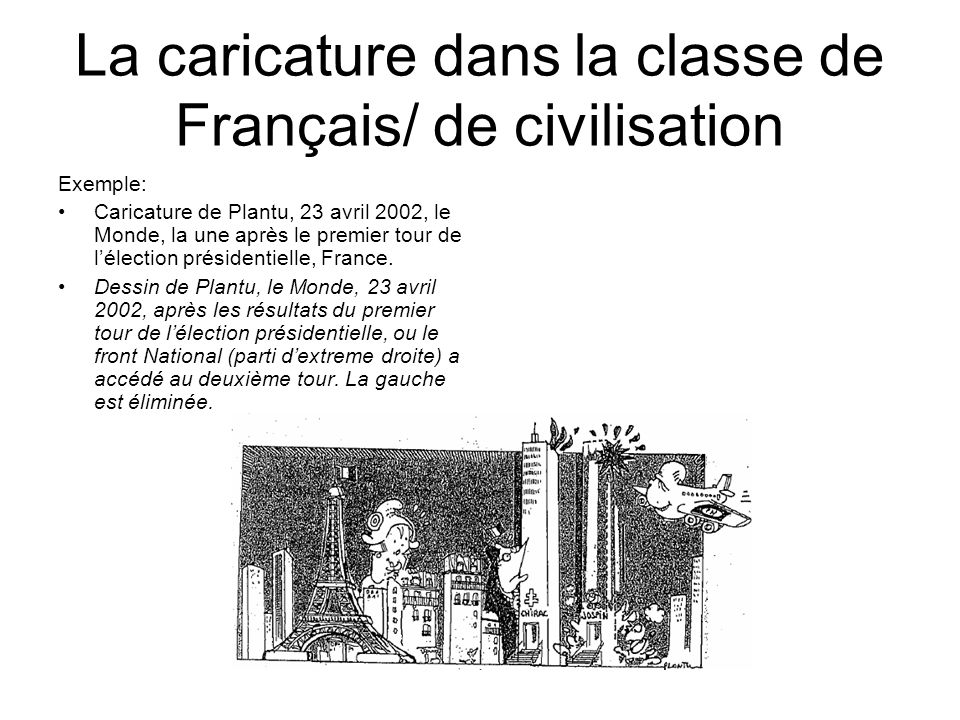
 Another subject that Plantu reminisced about in Le Monde Magazine was the recent poll that gave the Front National's Marine Le Pen a commanding lead regarding voting intentions in the presidential contest next year. This reminded Plantu, of course, of 2002, when, to everybody's consternation, Marine's father (Jean-Marie Le Pen) beat the socialists' Lionel Jospin (then France's incumbent prime minister) for the run-off in the second round against incumbent President Jacques Chirac.
Of notice, however, has been Plantu's tendency over the years to use the 9-11 disaster to illustrate all kinds of alleged tragedies (both in America and elsewhere), and thus diminish the importance of the American deaths on that date…

From our Bulging Never-ending Fake Crisis File
Bee crisis could define 21st century.
An international panel of scientists found that more than a dozen factors, ranging from insecticides that damage a bee's memory to climate change...In other words, the suspects with the highest propensity of getting the study's author either a) props or 2) moolah. Cabbage. Jack. Bling-bling.
Elsewhere, in the excuse and catalyst vehilce department:
Globe and Mail
If certain agricultural practices and public policies are changed, says Marie-Pierre Chauzat, one of the report’s lead researchers, a full-scale bee crisis can be averted.Else-elsewhere...
Middle class fad for bee keeping sees doubling in number of hivesIt's right up ther with the middle-class habit of getting passionate about 'crices' one only understands how to ritually imbibe in by reading the right papers.
Joining the Debate on French TV Regarding Peter King's Islamist Hearings
 Jeudi dernier, j'étais parmi les intervenants dans le débat de France 24 sur les "hearings" de Peter King à Washington sur le terrorisme islamique…
Il va de soi qu'on a accusé les Américains (ou les conservateurs) d'être des Islamophobes…
 Etats-Unis : un autre débat sur l'Islam
(Partie 1 et Partie 2)
Un vent d'islamophobie est-il en train de souffler sur les Etats-Unis ? Une audition est prévue aujourd'hui au Congrès sur l'ampleur de la radicalisation au sein de la communauté musulmane américaine. Cette radicalisation, est-ce une réalité ? Comment vivent les musulmans aux Etats-Unis ? Pourquoi ce débat aujourd'hui. Débattre sur l'Islam serait devenue une tendance, une mode ?

• Chip SEWARD, Membre du Bureau, Democrats Abroad France
• François DURPAIRE, Historien à l’Université Paris 1 La Sorbonne et co-auteur de « L’Amérique d’Obama »
Emission préparée par Yi Song et Perrine Desplats
Wednesday, March 16, 2011


25 Years Later, Plantu Declares That the War-Monger Ronald Reagan Was Right

The uprising in Libya gave Plantu the idea to choose Moammar Gadhafi, which brought him back to the 1980s and the conflict which opposed the "Messenger of the Desert" to Ronald Reagan (in the wake of Libya's involvement in the bombing of a Berlin discotheque attended by American servicemen)… Declareth Plantu:
They cannot say that they hadn't been warned, long ago, that Colonel Qaddafi was a tyrant and an international terrorist. On several occasions, American president Ronald Reagan warned the Europeans who… already then… preferred to close their eyes [literally: to look at their shoes].Well, that's swell — maybe, in 2028 (if he's still around), Plantu will have a page in Le Monde Magazine (if it's still around) on how George W Bush was right to take on the Taliban and Saddam Hussein and how the Europeans were wrong to keep their eyes closed.
Because at the time, of course, all was different: notice Plantu's eternal saliva drop from Reagan's mouth showing how the drooliong president is old and senile. Notice also how the April 1986 cartoon (bottom left) depicts the war-mongering American (from whose aircraft-carrier-like head of hair a fighter takes off) and the war-mongering sheik flank the worried peace-loving (and innocent-looking) European in-between them.
Tuesday, March 15, 2011
Chernippon

If the death penalty does deter, then the two sides in the argument over the death penalty have similar moral problems
Simplifying greatly, you could say that the early part of that debate was dominated by sociologists who found no deterrent effect, and the latter part has been dominated by economists, who have found that every execution deters a number of murders, with most studies finding that it deters between 5 and 15 murders.In an earlier study on the subject of the death penalty and deterrence (where we learn for instance that one "common mistake is to compare states with death penalty laws to states without them", ignoring "the fact that the states with the laws do not always impose the death penalty"), Jim Miller used the case of BTK serial killer Dennis Rader as an illustration.
If the death penalty does deter, then the two sides in the argument over the death penalty have similar moral problems. Supporters of the death penalty must admit that it is possible that some innocents will be executed. Opponents of the death penalty must admit that it is possible that, without the death penalty, more innocents will murdered than would be murdered otherwise. (And each side tends to believe that what is possible never happens, or almost never happens.)
Paris Sera Toujours Paris

For those of you getting sentimental for the city of lights, art, fashion, etc., etc.™®©, ¡No Pasarán! Brings you truth in advertising.
Monday, March 14, 2011
Plantu and Japan's Tsunami
 After a week of absence, Plantu returns to the fold (although his cartoon is basically the same Hokusai spin-off as the Kap cartoon that Le Monde printed the previous issue)…
No, it's not true that Europe does not have the death penalty because its systems are more insulated from populist impulses than the U.S. government
You seldom hear conservatives note, disapprovingly, that "America is the only industrialized country in the world that doesn't have X." It's not hard to figure out why, since X usually involves European (or Canadian or Japanese) big government.
But liberals sometimes imagine that America's peculiar lack of, say, nationalized health care, tough gun control, decent child care, widespread mass transport, or substantial arts funding is a sign of political underdevelopment. And so they bemoan America's uniqueness.
Particularly on the death penalty … The flood of capital punishment horror stories … has left anti-death-penalty liberals more convinced than ever that, on this issue at least, American political culture is inferior to its counterparts across the Atlantic.If only it were that simple. It's true that all of America's G-7 partners, save Japan, have abolished capital punishment, but the reason isn't, as death-penalty opponents usually assume, that their populations eschew vengeance. In fact, opinion polls show that Europeans and Canadians crave executions almost as much as their American counterparts do. It's just that their politicians don't listen to them. In other words, if these countries' political cultures are morally superior to America's, it's because they're less democratic.
…Differences in the way survey questions are framed complicate direct comparisons with Europe. …you find very few European countries where the public clearly opposes it, and there are a number where support is very strong. … There is barely a country in Europe where the death penalty was abolished in response to public opinion rather than in spite of it.
…Differences between European parliamentary government and the American separation-of-powers system also play a role. Parliamentary government may provide voters with more ideological variety, but it is much more resistant to political upstarts, outsiders, and the single-issue politics on which the death penalty thrives. In parliamentary systems, people tend to vote for parties, not individuals; and party committees choose which candidates stand for election. As a result, parties are less influenced by the odd new impulses that now and again bubble up from the electorate.
…Basically, then, Europe doesn't have the death penalty because its political systems are less democratic, or at least more insulated from populist impulses, than the U.S. government. And elites know it. Referring to France, a recent article in the UNESCO Courier noted that "action by courageous political leaders has been needed to overcome local public opinion that has remained mostly in favour of the death penalty."
…all over the industrialized world, it turns out that the men and women on the street like the death penalty. It's just that in Europe and Canada elites have exercised a kind of noblesse oblige. They've chosen a[n allegedly — ES] more civilized and humane political order over a fully popular and participatory one.

Sunday, March 13, 2011
The Axis of Feeble
Castro's reforms envision a growing "non-state" retail and farming sector and more efficient state-run companies. They are expected to be approved at a Communist Party congress in April.While others STILL don't get it:
The massive lay-offs have reportedly come under fire during tens of thousands of meetings held across the island as a prelude to the congress.
The program is being described as a "reorganization" of the labor force because in theory laid-off workers are declared "available" and offered other jobs or they can lease fallow state land or become self-employed.
Yet despite these failures of the EU project-greater prosperity, peace, and international influence through increased economic and political unification-many liberals in America continue to pursue policies, both domestic and foreign, that are moving the United States closer to the EU paradigm. Indeed, many on the Left approve of the European model as something to emulate. Partly, this reflects the place Europe has traditionally held in the imagination of some Americans. Like the Yankee ingénues in a Henry James novel, they have admired the Old World of sophistication, culture, and civilization that contrasts with the New World of crude, go-getting, frontier brashness. But these days, this admiration more fundamentally reflects the belief that Europe provides a more humane and sophisticated set of social and political values.Elsewhere in Hypocracy Watch... Is there something to this humaneness-sophistication-superiority PR meme that I'm missing about globalization being an American invention, and being unthinkably bad?
Rumours that Renault is considering plans to delocalise production for some of the models made for its low-cost brand Dacia to Morocco have prompted concern in Romania. "Morocco threatens 'Romanian made' Dacia," headlines Gândul, which reports that there are two reasons why the carmaker could delocalise: first and foremost, "management's exasperation with union demands for annual bonuses of 700 lei (175 euros) and an extra of 500 lei (125 euros) per month;" and secondly, the poor state of Romanian road system, which has made it expensive to export cars from the country. Hourly rates of around five euros per hour that Renault could expect to pay in Tangier are considerably less than the 8 euros per hour it currently pays in Romania. However, the Bucharest daily notes that the plant in Mioveni was nonetheless responsible for 2.5 billion euros in exports in 2010, or 7% of Romania's export revenue. Gândul also points out that Dacia currently employes 150,000 people in Romania, of whom 20,000 work at Mioveni.And you thought it was their superhuman intelligence, organizational skills, and engineering that made them what they are today.... I suggest that they import Wisconsin's Democrat societal-crash-test-dummies for a while. After all, they're using the rhetoric of unshod children starving in the street were it not for mommie's 6 hour a day, 10 month a year, $87K per year job which a trsined chimpanzee can do on auto-pilot.
A conservative is a liberal who just got mugged, and a liberal is a conservative who just got arrested
There is a straightforward reason as to why the baby-boomer generationis becoming more conservative (“As boomers wrinkle”, January 1st). As the old joke puts it, a conservative is a liberal who just got mugged, and a liberal is a conservative who just got arrested. As one ages, the likelihood of being mugged increases while the likelihood of being arrested decreases.
Frank Lowther
Los Angeles
Saturday, March 12, 2011
The will of the people is generally seen by Eurocrats as an obstacle to overcome, not a reason to change direction
On a U.S. talk-radio show recently, I was asked what I thought about the notion that Barack Obama had been born in Kenya. "Pah!" I replied. "Your president was plainly born in Brussels."That is how Daniel Hannan starts his Warning to America (thanks to Instapundit) regarding the perils of following Europeans toward greater regulation, higher taxes, and centralized power.

My guess is that, if anything, Obama would verbalize his ideology using the same vocabulary that Eurocrats do. He would say he wants a fairer America, a more tolerant America, a less arrogant America, a more engaged America. When you prize away the cliché, what these phrases amount to are higher taxes, less patriotism, a bigger role for state bureaucracies, and a transfer of sovereignty to global institutions.
He is not pursuing a set of random initiatives but a program of comprehensive Europeanization: European health care, European welfare, European carbon taxes, European day care, European college education, even a European foreign policy, based on engagement with supranational technocracies, nuclear disarmament and a reluctance to deploy forces overseas.No previous president has offered such uncritical support for European integration. On his very first trip to Europe as president, Mr. Obama declared, "In my view, there is no Old Europe or New Europe. There is a united Europe."
I don't doubt the sincerity of those Americans who want to copy the European model. A few may be snobs who wear their euro-enthusiasm as a badge of sophistication. But most genuinely believe that making their country less American and more like the rest of the world would make it more comfortable and peaceable.
All right, growth would be slower, but the quality of life might improve. All right, taxes would be higher, but workers need no longer fear sickness or unemployment. All right, the U.S. would no longer be the world's superpower, but perhaps that would make it more popular. Is a European future truly so terrible?
Yes. I have been an elected member of the European Parliament for 11 years. I have seen firsthand what the European political model means.
The critical difference between the American and European unions has to do with the location of power. The U.S. was founded on what we might loosely call the Jeffersonian ideal: the notion that decisions should be taken as closely as possible to the people they affect. The European Union was based on precisely the opposite ideal.
…The will of the people is generally seen by Eurocrats as an obstacle to overcome, not a reason to change direction. When France, the Netherlands and Ireland voted against the European Constitution, the referendum results were swatted aside and the document adopted regardless. For, in Brussels, the ruling doctrine—that the nation-state must be transcended—is seen as more important than freedom, democracy or the rule of law.
This doctrine has had several malign consequences. … We can now see where that road [a European "third way" between the excesses of American capitalism and the totalitarianism of Soviet communism] leads: to burgeoning bureaucracy, more spending, higher taxes, slower growth and rising unemployment. But an entire political class has grown up believing not just in the economic superiority of euro-corporatism but in its moral superiority. After all, if the American system were better—if people could thrive without government supervision—there would be less need for politicians. As Upton Sinclair once observed, "It is difficult to get a man to understand something when his job depends on not understanding it."
…Why is a European politician urging America to avoid Europeanization? As a Briton, I see the American republic as a repository of our traditional freedoms. The doctrines rooted in the common law, in the Magna Carta, and in the Bill of Rights found their fullest and most sublime expression in the old courthouse of Philadelphia. Britain, as a result of its unhappy membership in the European Union, has now surrendered a large part of its birthright. But our freedoms live on in America.
Well Now Isn't That Embarassing...
Pyongyang, March 8 (KCNA) -- Thomas Curley, president of the Associated Press of the United States, and his party visited the statue of President Kim Il Sung on Mansu Hill on Tuesday.
The guests laid bouquets before the statue and paid homage to the President

Today's Human Props.
Beware Constitutional Convention!
Diversity, Near East Style
The father of the Muslim woman was killed by his cousin because he did not kill his daughter to preserve the family's honor, which led the woman's brother to avenge the death of his father by killing the cousin.Pourquoi, you ask?
The village Muslims blamed the Christians.Of course the causes are obfuscated away at the top of their delusional lungs. The "family affair" shouldn't be confused by more lethal and common events:
A mob of nearly four thousand Muslims has attacked Coptic homes this evening in the village of Soul, Atfif in Helwan Governorate, 30 kilometers from Cairo, and torched the Church of St. Mina and St. George. There are conflicting reports about the whereabouts of the Church pastor Father Yosha and three deacons who were at church; some say they died in the fire and some say they are being held captive by the Muslims inside the church.
Witnesses report the mob prevented the fire brigade from entering the village. The army, which has been stationed for the last two days in the village of Bromil, 7 kilometers from Soul, initially refused to go into Soul, according to the officer in charge. When the army finally sent three tanks to the village, Muslim elders sent them away, saying that everything was "in order now."
A curfew has been imposed on the 12,000 Christians in the village.
Friday, March 11, 2011
Aren't we Being a Might Bit Overprotective?

France's Strategic Yogurt Production is in Peril
"Bright wants to accelerate going global and expand its dairy business through mergers and cooperation," said Wang, who recently travelled to France to meet Yoplait's major shareholders.Given the aboriginals' propensity to see outsiders as exploiting marauders, all I can say is Boo Ho, Spanky.
An American of Indian Heritage to Head the Insead Business School
Dipak C. Jain est un doyen "global" pour une institution qui cherche plus que jamais à affirmer sa vocation d'"école globale" : "The Business School for the World", comme se définit elle-même cette école spécialisée dans la formation en management pour cadres.The new head of one of Europe's most prestigious management schools is American. And not just your typical American, writes Benoît Floc'h in Le Monde.
 The former head of Chicago's Kellogg School of Management (Northwestern University, where Christine Lagarde was among his pupils) is of Indian heritage (as are the new heads of Harvard and Chicago Booth), he is a vegetarian, he does not own a laptop, and he does not know how to drive…
 "Mes racines ont eu un grand impact sur ma personnalité, confie-t-il. En vertu de ces racines, je reste fidèle aux trois principes fondamentaux de non-violence, de multiplicité des points de vue et de non-possessivité. Mon père, aveugle, m'a appris que quand on fait les choses dans la vie comme si l'on était totalement aveugle, on se trompe rarement. Ma mère m'a enseigné la bienveillance et le partage, le pardon et l'oubli, à être sûr de moi sans être agressif."
Thursday, March 10, 2011
Tonight I Join the Participants in the France 24 Debate (in French) on Peter King's Hearings on Islamic Terrorism
Since 1631, with France’s first newspaper, La Gazette, “the French press has been dependent on power”
A malaise that goes back more than 300 yearsis the way that The Economist styles its article on French newspapers,
 Too close to power.
 Christophe Deloire, director of the Centre for Journalist Training in Paris, traces the problem to France’s first newspaper, La Gazette, founded in 1631 under the auspices of Cardinal Richelieu. Since then “the French press has been dependent on power,” he says; this has blunted its edge.While another article reminds us that it was it was the country's ruler(s), in the form of "Charles de Gaulle [himself, who] called for the launch of Le Monde, first published in 1944, to replace Le Temps," one French reader writes that
French unions and government have killed their print media. The government almost edits the papers; it controls far too much. People will eventually realize they need a democracy without the enarques running everything.
In Turns, both at Fault and Inconsequential
N.B.: I wrote this in January 2008. This
looks funny, in reflection.
Funny (ha-ha), don’t you think, that the U.S. is somehow the virus that gives Europe a cold when it sneezes? This implies that the US is somehow responsible for economic affairs in the U.S., despite the fact that every morning in New York, traders have to wake up to Europe’s mid-day jitters more often than not.
After all, even Christine Lagarde, who is nearly as North American as she is French, is adding the usual pedantic continental commentary as a show at home to be taken seriously and appear to have social depth while effectively demanding something from others one is largely unable to do oneself.French Economy Minister Christine Lagarde said Tuesday that U.S. President George W. Bush should explain how the 140-billion-U.S.-dollar stimulus package will work to revive economy.
When asked if a U.S. recession will implicate Europe, Lagarde said there are big economic differences between the United States and Europe.
She explained that unemployment rate is on the rise in the United States but is declining in Europe and U.S. economy has begun a slowdown while Europe grows at a steady 2 percent.
The minister also said a U.S. recession will not be a "tragedy" for France as bilateral trade between the two countries only accounts for 8 percent of France's total foreign trade volume.
At the same time the Bank of France (whose real authority has been ceded to the ECB) chose a different tack while going into blame mode.
French regulator sees 'partial decoupling' of U.S. and EU economies
While there is increasing evidence that the eurozone economy is slowing, most of the factors that are contributing to the bleak outlook in the United States are not present on the Continent, according to the governor of the Bank of France, Christian Noyer.
Got it. We’ll see how different the public zeitgeist looks when thing are different, and America is called another sort of demon.
Wednesday, March 09, 2011
If you do things and you believe in what you're doing, you darn well ought to be willing to stand up and defend them
David Limbaugh had a question he wanted me to ask you and it's one I've heard often from conservatives over the last few years. There was an ocean of lies,smears and slander being fired off at the Bush Administration over the war and although conservatives were defending the war, a lot of times the administration came across more like a punching bag. There just wasn't a lot of pushback coming from the Bush White House. So why didn't the Bush Administration more vigorously defend itself, especially in the second term?
I have no idea. I know Karl Rove was a very smart man. He wrote a book and said that he considered one of the biggest failures of the Bush Administration to not push back. I watched it from afar during the presidential election, since I wasn't involved in politics -- where both candidates, McCain and Obama, attacked the Bush Administration -- and the White House not only did not defend the Bush Administration, it asked people not to either.
I guess the President must have decided he didn't want to be blamed for McCain's defeat. So, they just took it like a punching bag, as you say, which I think is a mistake. I mean if you do things and you believe in what you're doing, you darn well ought to be willing to stand up and defend them. I think Karl Rove felt that way and I suspect, in retrospect, that President Bush might even feel that way.
So do you Think YOU’RE Brave?
A 21-year-old North Korean resident surnamed Kim who defected to the South by passing through the demilitarized zone and into Cheorwon County, Gangwon, on Feb. 15, says he escaped because he was starving in the North, according to South Korean intelligence officials.What a fool.. Wanting to leave the ‘paradise’ social equality?
Despite his age, government sources described Kim as being just 154 centimeters (5 feet) tall and weighing only 46 kilograms (101 pounds). The defector also told the officials he has been yearning for a life in the South.
The President's Speech
Although I am no Bush-basher — far from it — this, for once, is actually
not a bad piece of humor from the Left's side of the aisle…
(The problem being not the fact that they make fun of the right but the way they avoid making fun of Obama and other members of the left and the way, therefore, their humor amounts, in the final analysis, to double standards…) Comment du jour:
You know, I am no fan of President Bush, but attacking someone for a speech impediment.... not funny. It's gradeschool stuff […] . The man's out of office and not in the headlines. Move on and find new material already.
Tuesday, March 08, 2011
Plan B is to Unite the Workers of the World Against their Will
Which is where the anachronism of the undermining “false consciousness” argument comes from, but that’s beside the point.
It doesn’t take much to understand the mind of a moocher who has an “in” with the ultimate monopoly: the state. It explains much about democrats in the US insisting that making public sector pay a minute part of their health insurance and pension themselves, is in fact, an “assault on the poor” or any number of other stock excuses for the parasitism that they always champion.
No, what it doesn’t take too long to figure out, and what marks the difference between the socially conditioned left, and the autonomously reasoning right, is why a people who complain about life’s costs and complexity, shake their heads at the idea of both spouses HAVING to work, etc., etc., etc., realizing that it’s because of high taxation – and that high taxation is a direct result of their parasitism – and the pathetic defense thereof, for example insisting that the school district maintenance staff be paid as much as private sector lawyers, and defending it in the name of, say, “the homeless”, and whatever else they can emote in Pavlovian fashion.
Gawain the evil genius with a mongoose-esque cunning, without any assistance from a government Ombuds-person, has found the MOAB of pathetic emotive empathies:In an incohate expression of impotence the general secretary the EU's uber UNISON, the EPSU, Carola Fischbach-Pyttel has demanded that the EU bring back red blooded socialism, and if necessary impose it on national governments.
"the current economic governance is not leading to more political governance".Because it collapse eastern European society the first time, and the only purpose government could possibly have is to shove ideology tyrannically down the throats of the blessed people, why not try it again?
She is echoed by the increasingly irrellevant John Monks with this very odd comment,
The boring, sad, and deeply ignorant part of the left’s bloviations is that it’s entirely a repetition, rehashing, and regurgitation of failures. Not just simple failure, but failures that created nearly a century of human misery, inhumanity, and in many cases genocidal cruelty. To think that the entire racket, meant entirely to make the perfect canned case for a strongman to buy out people for his power, is being swallowed up whole by some people.
The European Union has enough money to promote human rights and democracy — in America
in 2009 the EU gave at least €2.6 million ($3.6 million) to groups lobbying against the death penalty in America. The European Instrument for Democracy and Human Rights, a project of the unelected European Commission, has given six-figure handouts to groups such as the National Coalition to Abolish the Death Penalty, Witness to Innocence and—the list's largest stateside recipient—€708,162 to the poverty-stricken lawyers at the American Bar Association Fund for Justice and Education.This concern for convicted American murderers is touching, given that its normal recipients are civil-society groups in the likes of Sudan and Zimbabwe. Somehow North Korea and Cuba didn't make the EU's list, perhaps because they execute people without a trial.
Europe's secular populations mostly oppose capital punishment, though a September 2010 YouGov poll reported that 51% of Brits favored executing murderers. In 2006 Poland's then-newly elected president, the late Lech Kaczynski, noted on Polish radio that abolishing the death penalty awarded "an unimaginable advantage to the criminal over his victim, the advantage of life over death," adding "We need to discuss this in Europe."
The Commission soon ended the discussion: "The death penalty is not compatible with European values," its spokesman said at the time.
American states are free to decide their own penal codes, which vary widely and change as facts and public values evolve. Europe won't allow such a debate at home but feels the moral afflatus to tax its own citizens to promote one side of the argument in America. Europe can't find the money to pay for its fair share of NATO but it can spare a dime to hector its main defense benefactor on criminal law. This is why fewer and fewer Americans take Europe seriously.
José Luis Zapatero, Super Genius
El País argues for a "firm policy" against Muammar Gaddafi, which would "recognise the provisional Libyan government" and temporarily "suspend payment of oil revenues." Support from Arab countries will be necessary, because as a source in the Spanish government has pointed out, an operation that is "exclusively American or European would be counterproductive"Whatever bro. Obama's not coming to the rescue anyway.
BFFs
Chávez has refused to condemn Libyan dictator Muammar Gaddafi for his massacres of unarmed protesters, claiming to have "no information" on events that to the rest of the world are as plain as day.Slurp, slurp.
Chávez posted a message on Twitter last week saying "Long live Libya and its independence! Gaddafii faces a civil war!" He has also stated
"A campaign of lies is being spun together regarding Libya," adding, "I'm not going to condemn him. I'd be a coward to condemn someone who has been my friend." Let ye be judged by your friends.
Indeed Chávez has phoned "his friend" to offer to create a commission of "friendly countries" to mediate between him and the revolutionary forces. An offer they have quite rightly refused with contempt. Gaddafi, his dreadful sons and his entourage of butchers deserves not mediation - nor even a bolt hole in Caracas if he flees - but summary justice from the people he has exploited and oppressed.May they both feel the sharp end of lots of "imperialism".
France's Weapons Salesmen Get the Blues
Not even taking into account the embargo imposed by the UN and the European Union, as far as Libya is concerned, it's "the scenario of the black hole,"While the head of Russia's conglomerate controlling arms sales abroad laments the loss of 4 billion dollars worth of weapons to Libya (writes Marie Jégo from Moscow), Dominique Gallois and Nathalie Guibert report in Le Monde of the blues giving France's arms sellers headaches.said one army weapons professional, who, like all those contacted by Le Monde, spoke only on condition of anonymity: "All the contacts that we had, especially those concerned with the rapid reaction force and the special forces in Libya, are lost." At Tripoli'S LIBDEX Salon in November 2010, "everybody was there, and we hoped that it would materialize." Alas, the revolution materialized instead.
Anxiety is intense, because the Middle East is the largest export market for French weapons."We often talk about the BRIC markets, Brazil, Russia, India, and China, but regarding defense, they are actually very difficult, and it is in the Arab and Muslim countries that our main prospects lie," explains a CEO in a high-tech company. We're going to see reschedulings or cancellations of contracts."
Sans même parler de l'embargo décidé par l'ONU et l'Union européenne, en ce qui concerne la Libye, "c'est le scénario du trou noir", confie un professionnel des équipements terrestres, qui, comme tous ceux contactés par Le Monde, a requis l'anonymat :Of, course, somewhere there must be room for finding blame with America and/or with the capitalist system…"Tous les contacts que nous pouvions avoir, notamment avec la force de réaction rapide et les forces spéciales libyennes, sont perdus." Au Salon LIBDEX de novembre 2010 à Tripoli, "tout le monde était là, et on espérait bien que cela se concrétiserait". Las, la révolution est arrivée.
L'inquiétude est vive, car le Moyen-Orient est le premier marché d'exportation pour l'armement français. "On évoque souvent le marché des BRIC, Brésil, Russie, Inde et Chine, mais en matière de défense, ils sont en réalité très difficiles, et c'est dans les pays arabo-musulmans que se trouvent nos principaux prospects, indique un cadre d'une entreprise de haute technologie. Nous allons avoir des rééchelonnements, voire des annulations de contrats."
Today, "there only Abu Dhabi remains, which can not alone compensate for the loss of the other markets,"reports the CEO mentioned above. Combined with the budget crises in Europe, "this new situation is very worrying. This will exacerbate competition and lead the United States to come hunting on lands where we were relatively isolated. "
…Aujourd'hui, "il ne reste plus qu'Abou Dhabi, qui ne pourra pas compenser à lui seul la perte des autres marchés", analyse le cadre déjà cité. Conjuguée à la crise des budgets en Europe, "cette nouvelle donne est très préoccupante. Cela va exacerber la concurrence et conduire les Etats-Unis à venir chasser sur des terres où nous étions relativement tranquilles".
Paris Sera Toujours Paris - X

For those of you getting sentimental for the city of lights, art, fashion, etc., etc.™®©, ¡No Pasarán! Brings you truth in advertising.
Monday, March 07, 2011
A Thought for the Day
Engaging with the politics and polity of the left reminds me of trying to talk to a class of dull, predictable adolescents. Some staring off into space, a few picking their noses, one or two of them staring at your crotch.
Knowing that one must engage them at their level, the question I silently ask myself about even trying to understand them (much less their "ideas") therefore must becomes: what’s in it for me? to even spend the time listening to them.
The Hitler Lie: In fact, Hitler championed a workers' union, using it to expand the reach of the state

“We must close union offices, confiscate their money and put their leaders in prison. We must reduce workers' salaries and take away their right to strike. " — Adolf Hitler, May 3, 1933
The following quote, or something like it, is being passed around the internet as a means to equate what is happening in Wisconsin with Hitler’s tactics. Based on my research, the quote is not true although like all good “lies” it has some seeds of historical truth in it. If you read the actual history below, Hitler’s actions and use of the workers’ union movement are much more similar to the current union relationship with the Democratic Party and their continued efforts to extend and enlarge government…
“We must close union offices, confiscate their money and put their leaders in prison. We must reduce workers' salaries and take away their right to strike. " — Adolf Hitler, May 3, 1933Hitler never said those words but he did crush the Weimar Republic trade unions on that date, many say because they were run by Jews.
I believe the true history works against your argument because he transferred all workers into one global union and then used that as an extension of the "state" to effectively take control of private businesses.
In other words, he used a workers' union to expand the reach of the state... interesting parallel in some ways to what is happening with public sector unions in the US... a tool to expand the policies and powers of the Democratic party. I don't think Hitler is an argument you really want to make.
The source here is worth exploring, it is from the Bundestag itself [capital lettering in final sentence added by Stu]:
http://www.bundestag.de/htdocs_e/documents/research_papers/2008/index.html
The day on which the independent trade unions in Germany were crushed was the 2nd of May 1933,when the buildings of the General German Trade Union Federation (ADGB) were occupied by National Socialists, the federation’s assets were confiscated, and many officials were imprisoned, tortured or murdered. Trade union members were transferred to the National Socialists? trade union, the German Labour Front (DAF). This day marked another important step on the path to the establishment of a National Socialist state. Following Hitler’s appointment as Chancellor, the trade unions sought to come to an accommodation with the new government, but this did not prevent the National Socialists from taking violent action against them. BY THE END OF JUNE 1933, ALL TRADE UNIONS HAD BEEN DISBANDED AND THEIR MEMBERS TRANSFERRED TO THE DAF [somewhat akin to an AFL-CIO umbrella organization], WHICH BECAME ONE OF THE NATIONAL SOCIALISTS’ LARGEST MASS ORGANISATIONS WITH OVER 25 MILLION MEMBERS AT TIMES."
WikiLeaks: During Individual Visits to the U.S. Embassy in Paris, French Politicos and VIPs Stuck Knives in Each Other's Back
A lire les « cables » de l'ambassade des Etats-Unis, le Tout-Paris de la politique et des affaires se pressait dans ses salons. Florilège de petites phrases. Des jeunes loups ambitieux comme des retraités illustres, des chefs d'entreprise comme des intellectuels, des membres de l'opposition comme des soutiens de la majorité présidentielle : un grand nombre de figures françaises ont rencontré les diplomates américains à Paris, entre 2005 et 2009, pour évoquer les débats internationaux, les grands enjeux économiques mais aussi les campagnes électorales, les guerres internes au Parti socialiste (PS) ou les rivalités à droite…Among the secrets uncovered by the Wikileaks scandal, writes Luc Bronner in Le Monde, are those of the VIP visitors to the American embassy in Paris… Among the politicians and honchos speaking confidently to the American ambassador — and often sticking knives in each others' back — are Alain Madelin, Jacques Attali, Alain Minc, Philippe Douste-Blazy, Arnaud Lagardère, Jean-Louis Debré, Jacques Delors, Michel Rocard, François Hollande, Laurent Fabius, François Bayrou, and Valéry Giscard d'Estaing…
L'éducation de Philippe Douste-Blazy Le télégramme confidentiel, daté du 1er juillet 2005, est un portrait au vitriol de Philippe Douste-Blazy, qui vient d'être nommé ministre des affaires étrangères et doit effectuer son premier déplacement à Washington. Son « manque d'expérience internationale » et « son penchant à rechercher les bonnes grâces de ses supérieurs » laissent penser aux diplomates qu'il prendra ses ordres directement auprès de l'Elysée et de Matignon, assène l'ambassadeur en relevant que le ministre est présenté comme un « dilettante » et que sa loyauté varie en fonction de ses intérêts du moment.
Ces faiblesses sont présentées comme un avantage pour les Etats-Unis. Faute d'expérience, Philippe Douste-Blazy n'a pas de position arrêtée et spécialement critique sur l'influence américaine. « Mais beaucoup vont vouloir rapidement lui inculquer cette vision et faire un portrait caricatural des politiques américaines », avertit l'ambassadeur. Qui souligne donc l'intérêt de la visite à Washington pour « faire l'éducation » du ministre avant que les experts du Quai d'Orsay ne s'en chargent...
Arnaud Lagardère et les échecs de Jacques Chirac Le 18 février 2005, l'ambassadeur reçoit à déjeuner Arnaud Lagardère pour parler de l'industrie aéronautique, des médias... et de Jacques Chirac, alors président de la République. Le chef d'entreprise est très sévère pour le chef de l'Etat « qui rate tout ce qu'il entreprend ». Son projet de lancer une CNN à la française ? « Ridicule », tranche Arnaud Lagardère. Le dernier déplacement du chef de l'Etat en Chine ? « Un désastre » pour les affaires françaises, affirme le jeune patron, venu déjeuner avec un pin's épinglé au revers de son costume vantant la candidature, écartée, de Paris aux Jeux olympiques de 2012.
Arabs are Still Revolting
To the conditioned thinking of the European left that Andre Glucksmann is being as suffocated by as the rest of us by, this is inherently good. Too bad it's the European left's butt buddies that are being deposed:
those at the top, in the grip of panic; those on the streets, who from one minute to the next have no idea how to overcome their fear; those on the outside - experts, governments, TV audiences, myself - blamed for not having foreseen the unforeseeable. Where does this bickering on the French belfries hail from: the Right has failed, the Left proclaims banging its drum, prudently forgetting to explain why Ben Ali (and his RCD party) was kept on as a member of the Socialist International, just like Mubarak and his monocratic party. The former was expelled on 18 January, three days after his escape; the latter on 31 January in great haste. Yet no one seems remotely bothered by this.The blindingly obvious part of this display of apoplexy is largely due to the yawning gap between who the left are, and who they want you to believe they are: wagging fingers in the promotion of decency and civility, as patrician as it is, belies stupidity about freedom, human nature, and their underling love of revolutionary violence that scares them personally.
Instead of questioning the widespread predilection for autocracy, people prefer to attack the "silence of the intellectuals".Perspective, Andre: talking a lot, even on painfully wierd TV sound stages does not make one an intellectual. It doesn't exempt the left from human morality, the consequences of finding it irrelevant, or thinking that pretending-about-perceptions can make a utopia.
Sunday, March 06, 2011

Britain's Stiff Upper Lip, Revisited
 New York's Michael Goldfarb on British sangfroid and historian Thomas Dixon on the myth of Britain's stiff upper lip…