Showing posts sorted by relevance for query canada. Sort by date Show all posts

Tuesday, August 23, 2005

Because Canadian Mentality Is Closer to That in Europe, They Are More Generous and More Security-Conscious than Dollar-Hungry American Capitalists Are

The crash landing of an Air France wide-body jet at Toronto nine days ago brought to the fore some widespread differences between U.S. and Canadian airport safety practices, ranging from methods of runway construction to Canada's decision years ago not to install even rudimentary detectors to spot sudden dangerous wind shifts
explains Don Phillips in the International Herald Tribune.
…weeks of calculation lie ahead to determine how it might have affected Air France Flight 358, which ran off the end of a runway into a ravine and caught fire. There are no records easily available for review, partly because Canadian airports do not have doppler radar installations that are common now at U.S. airports, and even at most television stations. That also means air traffic controllers had no way to warn the crew of the threat of a severe wind shift, even at Toronto, which is the largest airport in Canada and which sits on a normal path of summer thunderstorms.

 … While the Transportation Safety Board of Canada will take months to determine a probable cause, the debate in Canada - and between it and its neighbor to the south - has picked up momentum. Slowly, there has been an increase in open criticism of Canadian standards by various groups, including the U.S. controllers' union, the Canadian pilots' union and the U.S. Federal Aviation Administration.

John Carr, head of the National Air Traffic Control Association in Washington, said he was "kind of surprised" that Canada did not have wind shear protection equipment that is "not even considered cutting-edge any more."

… "They just didn't do anything about it," said [an] engineer, who asked not to be named because he may work in Canada again. "I guess the political will was not there."

… The crash also highlighted a difference of opinion between the United States and Canada over whether thousands of small grooves should be dug across runways to improve braking power. The policy in Canada is not to cut grooves because they provide no extra braking power in winter, and they require snow plows to use Teflon blades to avoid tearing up the grooved runways. That makes snow removal expensive and slow. The United States, however, has been pressing world government bodies to require grooving because it makes braking power much better in summer rainstorms. The issue is before the International Civil Aviation Organization in Montreal.

Rick Marinell, manager of the U.S. Federal Aviation Administration's Office of Airports, said that U.S. airports in northern snowy climates such as Buffalo were grooved, "and we have no problems."

"We'd obviously like ICAO to adopt our greater standard," Marinell said.

That includes runway overrun standards - the area and length of the ground at the end of a runway that can support an aircraft that does not stop in time. Although not all U.S. airports yet meet the standard, the United States requires a greater flat overrun area than most other countries, including Canada.

This is also a big issue with the Canadian pilots' union. Robert Perkins of Welland, Ontario, the Canadian board president for the Air Line Pilots Association, said he had been attempting for almost 30 years to persuade Canada to extend runway run-over areas.

In the United States, many airports are going beyond overrun areas to install a system called EMAS, for Engineered Material Arresting System, at the ends of runways. This material, which effectively stops an airplane as if it had run into deep sand, has already prevented passenger injuries and aircraft damage, according to Joe Del Balzo, a former Federal Aviation official now president of JDA Aviation Technologies. …

Thursday, June 29, 2006

Beware of redheads bearing gifts

When Timothy Garton Ash is done speaking, I wonder if there is a single dry seat left in the house.

Yet another thing Canadians and Europeans have in common is an obsession with the United States, and with distinguishing themselves from it, often by crude stereotyping. A Canadian writer observes that his compatriots "love to yell about how modest we are". Just like today's Europeans. Canadians and Europeans enjoy wallowing in a sense of moral superiority towards the imperial hyperpower, while doing rather little to improve the world outside their borders.
His latest opinion column in the Guardian otherwise defies this compelling criticism exactly: he plausts mush about the construction of a democratic future worldwide based on the social principals of Canada – because it has does so much in the past to try to reject the U.S. actions.
He also believes that there is a grand social model of integration that Europeans can learn from in order to deal with one another, based on the fact that Canadians of European origin get along well with one another.
With its carefully balanced federal model, securing the rights of a multicultural society in a bilingual framework, it has unique constitutional experience to offer the many multi-ethnic countries around the world that are struggling to avoid a fledgling democracy becoming a tyranny of the majority - and hence a catalyst for renewed ethnic conflict. Why not share this experience, in a distinctive Canadian version of democracy promotion? Or do we think the promotion of democracy should be left entirely to the Bush administration, while we sit on the sidelines and jeer?

So, in this respect at least, I return from Toronto wishing Canadians would be just a little less European. But then, in this respect, I also wish Europeans would be a little less Canadian.
Imagine that – isolating it to just white people in Canada who are much less of a sample of the world’s immigrant origins as the United States, and as such less philosophical, religious, and lifestyle diversity.
Yet this impotence is self-imposed. The potential power - military, economic and soft - of the established liberal democracies outside the US is enormous. The three largest sets are the democracies of Europe, most but not all gathered in the EU; the Anglosphere/Commonwealth democracies, including Australia, New Zealand, Canada (intersecting with the Francosphere), South Africa and India (the world's largest democracy); and the Hispanosphere and Lusosphere democracies of Latin America. Between us, we have a combined GDP much larger than that of the US, as well as natural resources and specific strengths that the hyperpower cannot match. Instead of sitting round like a bunch of poor cousins, complaining all the time about the behaviour of the rich American uncle, we should be thinking what we ourselves can do to make a difference beyond our shores.
Hoping that this model can actually do for the EU what the EU wont do for itself seems almost as desperate still. Canada rests far more closely on the side of the U.S. in the narrow cultural difference scale between the Atlantic Coasts. At 1/14th the population of the EU, only a portion of Canada that Ash assumes is enamored with the culture of welfare state dependency would care to become an exemplar and emotional prop to a EUvian model. The idea, after all is that he’s looking for affirmation of the efficacy of Europe failed and unsustainable socialist leaning model.
But it would be hard to argue with a straight face that Canada is in Europe. Moreover, with some 85% of its exports going to the United States, and so many of its business, energy and human links running north-south across the border, Canada is increasingly integrated into the US economy. The price the EU demands for opening its internal borders to new members is that they should tighten up their external border with non-EU neighbours. That would be a tall order for Canada, along the longest frontier on earth, with the most powerful neighbour on earth.
Canada has one of it’s feet in the American relationship, and one on the ground of the Brittish Commonwealth. Ash should rather consider that the Canadian reluctance to lean less on the American leg might have something to do with the values he thinks are inherent and bubbling over in the ties they have with the British Commonwealth. They do, after all have a favored trading and migrating scheme that rivals that of the FTAA Agreement, but have much less of a reason to act on them. There is the lack of dynamism, the presence of dictators, and the manipulators of government for business that they’re trying to kill off at home.

Imagining that there can be a fabulous “non-American Anglosphere + Europe” to form a network to export pluralism (first to the EU and then) to the larger world is quite rich. One wonders where the impulse for this hope comes from when the very same chatteratti thought the notion naïve and oppressive only a few years ago. Nation-building was, after all, one of the many “sins of the Bush” that the bruised inner children of the European left had on their list.
It also defies logic that Indians who have firmly rejected the European social model for the market growth model as a method of poverty elimination would really want to play along. The south Asian immigrants to the US and Canada are largely happy and tend to appreciate their autonomy from the statist economic model in the new world.
On the other hand one finds a different set of maneuvers in the UK. Interfaith and intercultural intervention and other bits of cultural pandering aren’t so much more widespread because of the open-ness of the society, but because life is so much more limiting that cultural palliative care is so badly needed.

I do believe that there is such a thing as a coherent model emerging from the Anglosphere of the US, Canada, Australia, and India because they are the more dynamic and less socialistic parts of the English speaking world. They are outgoing, robust, and energetically concerned with the future of freedom. The dead wood in this scenario are the English speakers who take an isolated, communitarian, socialistic approach such as New Zealand, South Africa, Ireland, and to a lesser degree from it’s position of great-grandfather, the UK.
We support international organisations. We love multilateralism and abhor unilateralism. We tend to think that men and women should be able to live more or less as they please with whomever they please, irrespective of gender and sexual orientation. We pride ourselves on our diversity. Check, check, check. Welcome to Canada.
in other words, he supports a bunch of social pieties that have failed to produce humanistic outcomes, the moral fiber to not hate those who don’t look like you, and the pandering to narrow political interests. Surely only a cloud or two under Plato’s playground.

The race for the contribution of the Anglosphere to global life isn’t about to start with the qualifiers, it’s already afoot, and the mixed-up cosmopolitans of the chattering class failed to hear the starting pistol generations ago.

Saturday, December 28, 2024

Food for Thought About Canada: Should America Have a 51st State? 52 States? Or a Total of 60? How About Just the Current 50?


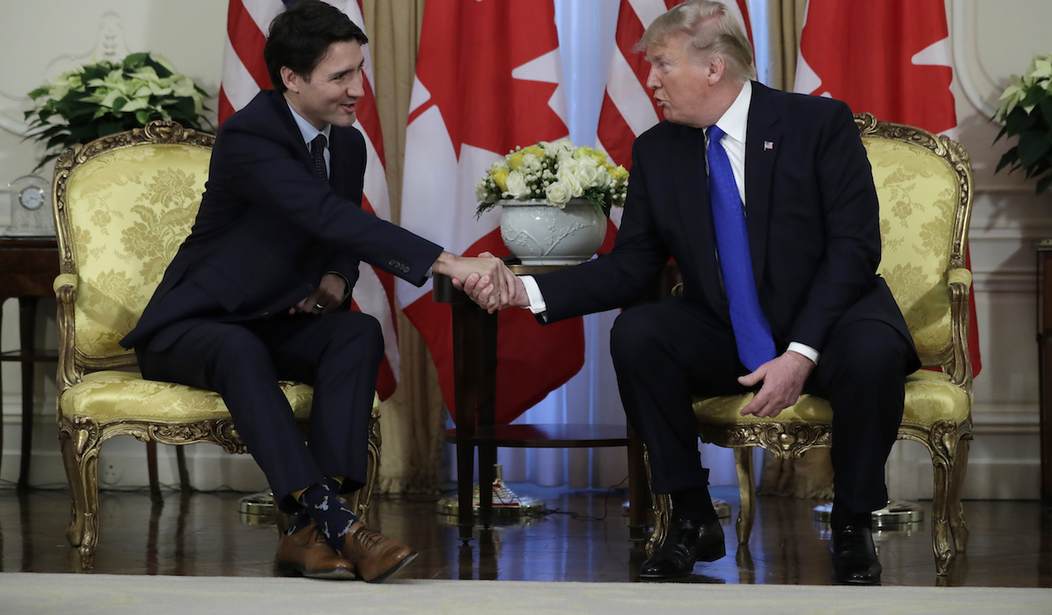
So Donald Trump has trolled Justin Trudeau, suggesting to the Canadian PM that his country become America's 51st state, one which he in turn could become the governor of.

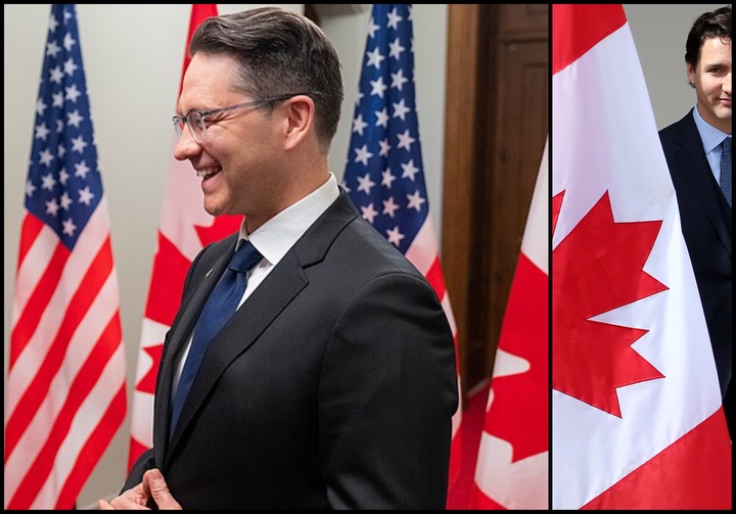
Excluding more expansionist rhetoric, regarding Greenland and the Panama Canal (and as the Washington Free Beacon declares its 2024 Man of the year to be the Conservative Party's Pierre Poilievre (thanks to Instapundit's Ed Driscoll, eh?)), the thing about Canada is that it is a (con)federation of 10 sub-units (called provinces) in the same way that the U.S.A. is a (con)federation of 50 sub-units (called states).  

An Old Glory with extra stars
— via AI Magic Media
If Canada should be annexed, should it be as a single state/province, leading to an American total of 51, or as 10 states/provinces, leading to a total of 60 states in the newly enlarged nation?

There is much thought to be given to the matter. 

I actually gave it some thought decades ago, right after college, when I tried imagining what the new American flag might look like: should the Stars and Stripes be 60 stars or — what follows I knew was far-fetched — 50 stars plus 10 star-sized maple leafs on the bottom line of the canton?

It has been common throughout history to talk about Britain's 13 colonies in America, and all of said colonies uniting to become independent. This ignores that George III actually had 15 colonies in all, the 13 below the Saint Lawrence River, plus two above, then called Upper Canada and Lower Canada. The latter admittedly had a very different history, the former Nouvelle France being a conquered territory (and a conquered foreign people with a different language) by Britain a decade prior to the unrest further South. Being former subjects of the French Crown, why did Québec not join the 13, then? Should they not have the most fervent of les Américains resisting the hated roi des Anglais?

Many history scholars and teachers whom I asked this question to hummed and hawed. appearing to never have given a thought to the matter. The answer, I eventually fount out, were that the Québecois were Catholics and apparently, they trusted more in their British overlords than in the mainly Protestant radicals and hotheads of the lower colonies.

I wondered how history had been different had the 1775 invasion of Québec been successful, or had Britain's 14th and 15th colonies agreed to join the continental congresses in the early 1770s and agreed to provide a single united North American continent (down to Spain's Mexico border, anyway). How would the first half of the 19th century been different? Would the Civil War "four score and [about] seven years" years later — had it erupted at all — have been shorter, had the president (Abraham Lincoln or another commander-in-chief?) not needed to worry about an invasion from Queen Victoria's British America?

(An aside from down South: after the Mexican War, the U.S. annexed more than half of Mexico; however, there were plans in 1847 and 1848 to annex even more territory, with not the Rio Grande river serving as the U.S./(rump) Mexican border but the Sierra Madre mountain range. Anyway, the full name of the country is the Estados Unidos Mexicanos and if the 31 United Mexican States (plus the DF equivalent of DC) were also to join the US of A, it might lead to 81 stars on Old Glory, or along with Canada's provinces, 91.)

Population & Area

If Canada were to join as a single state, it would be far from a pushover; its 41 million inhabitants would surpass California's 38,000,000 as the most populous state of the (enlarged) Union. It would also — easily — become the largest state by area. Indeed, as the second-largest country on the planet by total area, the Great White North joining the U.S. would make the enlarged union jump to largest country on Earth, with its total 7.39 million square miles (19.3 million square km) surpassing Russia's 6.6 million square miles (17,000,000 square km).

Reminder: back in 1960, when Alaska became the largest state in the Union, some of The Last Frontier's inhabitants enjoyed provoking the previous largest state, Texas, telling its (very) proud citizens that their state (Alaska) was so much larger that they could split it it in two, making the Lone Star State only the third largest in the Union. By comparison, Canada might split into five, making Alaska the sixth-largest state and putting the proud Texans into (a humiliating?) 7th place.

But the fantasy of splitting Canada into five does not take into consideration that — as mentioned — the country is already split into 10 provinces — not to mention three territories.

Danger: Leftists Galore

The danger of having/asking/requesting (?) the 10 provinces join is that the second-most populous province (among others?) might not want to join at all. There are fewer more anti-American people on this planet than the Quebécois, proud to the Heavens of their French language and heritage, going so far as regularly lecturing the French population on the matter. 

Having worked for the Québec government in a Dallas office as my first summer job — it was a standing requirement that the name of the province always be written with its French accent, whatever the language (English or other) it was written in (as you can see in this very post).  With support from France, sometimes — notably when Charles de Gaulle shouted "Vive le Québec libre!" during his 1967 tour, leading him to cut his state visit short — the Québecois regularly hold referendums about splitting from the rest of English-speaking Canada and becoming independent.

The last time Quebec (no accent here for Search Result purposes) tried this, in 1995, I wrote about it in The Globe and Mail (an upgrade of a 1992 text in the International Herald Tribune), which got me a trans-Atlantic call from a Canadian radio station (since they would be interviewing a foreign observer in Paris), where they had trouble believing my view that the French population did not seem that interested in the issue at all.

The danger of having Canada join at all, whether as one or as 10 (9?) sub-units, is the leftist mentality that dominates (the media being worse than America's, as observed, say, during the truckers' Covid revolt).

Twenty years ago, indeed, the Canadian sanctimocracy ("rule by the holier-than-thou") was described during the Iraq War as a nation crippled by a dishonest pacifism, while No Pasarán quoted the International Herald Tribune as saying that Because Canadian Mentality Is Closer to That in Europe, They Are More Generous and More Security-Conscious than Dollar-Hungry American Capitalists Are.

The following year, in March 2005, one Michael Coren wrote in the Toronto Sun that it pained him to say it, but

I'm so very tired of the way … that we Canadians have come to define ourselves not by who we are but by who we are not. … With a malodorous stew of ignorance and malice, [publicly funded mediocrities screaming abuse at a great and noble nation] pump Canada at the expense of deflating the United States" 

The writer's mailbox was soon overflowing, with 1,000 letters from Canadians of all backgrounds and ages. To Coren's delight, over 90% "wrote to say that I had spoken for them."

Unsurprisingly, the remainder, filled with insults such as "collaborationist, double-crossing fifth columnist, fraternizer, quisling, saboteur, security risk, subversive traitor, treasonous turncoat, two-timing quisling", only served to prove… exactly what Coren had written the previous week, "deliciously [illustrating] Canadian hypocrisy and self-delusion": 

We flatter ourselves into a false sense of grandeur by flippant assumptions of our own tolerance and liberalism. 

 … Goodness me, I'm as bad as the Norwegian fascist who sold his country to the Nazis because I wrote that the United States is not the ugly bully so many Canadians make it out to be.

 … Conclusion? The chauvinistic neurosis of the Canadian liberal is in many ways even more repugnant than the insularity of some Americans. 

Back to the 2024 meeting at Mar-a-Largo: PJMedia's Robert Spencer mentions that

Someone at the meeting, according to Fox News, then warned Trump that as a state, Canada would be deep blue, whereupon Trump suggested it become two states, a leftist one and a patriotic one.

So, according to Donald Trump, that makes neither 51 nor 60 (59?), but a total of 52.

Tuesday, June 13, 2006

With three tons of ammonium nitrate fertilizer, the jailed men were preparing something other than a huge garden, spelling out I Love Canada in tulips

Here's a country where 17 Muslims at home in Canada's relentlessly projected image as the Nicer New World — a Unicef Seasons Greetings card tableau of smiley-faced sarong, sombrero and tarboosh-wearers — lurched out of the picture of multicultural harmony and plotted to invade Parliament and cut off the prime minister's head
writes John Vinocur in his International Herald Tribune article on a new multicultural definition of Canada as the Non-America, including maple leaf patches on backpacks signaling don't-worry-I-only-sound-American.
Here's also a country, locked into the same self-portrait, that blinks in we're-good-guys bewilderment to think that savaging gentle, tolerant Canada was the idea driving these Islamic extremists from Toronto's immigrant community.

In a very politically correct place, the implications of what prosecutors have said are awful.

Like the notion that the enshrined status of multiculturalism in Canada may not provide some of its "visible minorities" (That's Canadian "correctspeak") with a new identity strong enough to drown out jihadist calls that their greatest loyalties and even murderous obligations are elsewhere.

This implication — that for all of immigrants' enrichment of Canada, something essential has gone wrong in an approach to integration that offers total accommodation but demands only limited compatibility — is resisted by a multicultural establishment.

But the issue may have started to tear at the nation's heart.

Here's the skirmish line: establishment forces against renegades drawing the conclusion that when it comes to Muslim extremism and homegrown groups of Muslims engaged in anti-Western violence, Canada's self-definition as Not The United States (or France or the Netherlands — hey, the Canadians would never force assimilation on an immigrant!) is a conceit that shields this country neither from hatred or reality.

The establishment's all-is-well reflexes can be extraordinary. After arresting 17 alleged Islamic extremists, the Royal Canadian Mounted Police insisted they "represented a broad strata of our community. It's hard to find a common denominator." Toronto's police chief, Bill Blair, even said, "I would remind you that there was not one single reference made by law enforcement to Muslims." …

Thursday, January 31, 2019

Brexit Solution: Let Britain Become a Province of Canada (then it could have its kayak and heat it too)

Looking through a couple of old Economist issues, I cam upon a pair of articles called Is Brexit unavoidable? and the Special report on the future of the European Union, to which readers (some of them witty) responded as follows:


On Brexit and the European Union
* Surely the solution to the Brexit negotiations is very simple. My squash club has a membership fee of £25 ($31) per month for unlimited access, but non-members have to pay £10 per hour to play, which is good value for people who only want to play once a month. Britain will save £10bn by giving up membership of the EU, but it wants to continue to use some of the facilities. Why should the EU not welcome Britain to whatever facilities it wishes to be part of, at, say, £1bn per shot, for example: £1bn to be in the open-skies agreement; £1bn for visa-free travel; £1bn for Interpol? This could even form the basis of the multi-tier Europe so eloquently laid out in your special report. If non-members were willing to cough up to access the good parts of the EU, there would be more money available to improve the less good parts.
PAUL SAUNDERSON
Greenville, South Carolina


There is a simple solution to the Brexit conundrum, one that will allow Britain to have its trade cake and eat it too: the UK need only become the 11th province of Canada. Canada and the EU recently concluded a trade agreement and the UK would accede to it as a Canadian province. It would also join NAFTA and enjoy liberal trade terms with the United States.
Adjustments would be few and easy. Canada’s provinces have wide powers and by treaty the UK’s could be even broader. The queen would remain head of state. As a provincial flag, the Union flag would still be flown, with the Canadian flag a discreet presence on government buildings. As Hong Kong and Macau kept the dollar and pataca, so Britain could keep the pound. English would be an official language (though so would French). Such a move wouldn’t be unprecedented. Newfoundland left the UK and joined Canada in 1949. Time to think outside the box.
TED STROLL
San Jose, California


Britain left out in the cold


Ted Stroll suggested that Britain should become a new province of Canada after Brexit (Letters, April 6th). There are additional benefits to doing this. Britain would have access both to the boat-building technology of the Inuits and to the oil sands in Alberta. In this way it could have its kayak and heat it.
TOM MURPHY
Montivilliers, France

Saturday, April 23, 2005

Bush eliminates Canadian PM's conflict of interest

Canada Free Press reports:

«Saddam invested one million dollars in Paul Martin-owned Cordex»

«Cordex Petroleum Inc., launched with Saddam’s million by Prime Minister Paul Martin’s mentor Maurice Strong’s son Fred Strong, is listed among Martin’s assets to the Federal Ethics committee on November 4, 2003.»

«Among Martin’s Public Declaration of Declarable Assets are: "The Canada Steamship Lines Group Inc. (Montreal, Canada) 100 percent owned"; "Canada Steamship Lines Inc. (Montreal, Canada) 100 percent owned"–Cordex Petroleums Inc. (Alberta, Canada) 4.6 percent owned by the CSL Group Inc." »

«Yesterday, Strong admitted that Tongsun Park, the Korean man accused by U.S. federal authorities of illegally acting as an Iraqi agent, invested in Cordex, the company he owned with his son, in 1997.»

«In that admission, Strong describes Cordex as a Denver-based company. Cordex Petroleum Inc. is listed among Martin’s assets as an Alberta-based company.»

«Cordex had a U.S. subsidiary.»
It's all about OILLLLL! to those who oppose the U.S. at every turn, but is there anything more than abusiveness and intolerance to their criticisms? Leftists seem to love their sweetheart deals, all the while trying to hector others with their strange, hypocritical "morality".

All it does is
provoke a response that reduces the entire dialogue to their level.

Saturday, March 05, 2005

Oil-for-Fraud: insiders covering tracks

Paul Volcker has to resort to referring to an “unnamed UN official” implicated in his inquiry report. Here’s the rub – he couldn’t name this official because the official, Louise Frechette, is the number 2 leader of the “blessed” U.N., the Deputy Secretary-General of the U.N.
Frechette is also a former Canadian Ambassador to the U.N., and is on the Volker Committee, and is a subject of it’s investigations.

Fox News
Reports:

Frechette intervened directly by telephone to stop United Nations auditors from forwarding their investigations to the U.N. Security Council. This detail was buried on page 186 of the 219-page interim report Volcker’s Independent Inquiry Committee released Feb. 3.

Who, then was she helping? An energy company! After all it’s all about OILLLLL!

Frechette had connections to a number of Oil-for-Food figures. She had direct oversight of both U.N. watchdog Nair and Oil-for-Food director Sevan, although both reported to the Secretary-General. She also has an interesting tie to an important member of the Volcker committee’s 65-member staff. When Frechette served as Canada’s ambassador to the United Nations from 1992 to 1995, her boss during most of that time was Canadian Deputy Minister Reid Morden, who is now executive director of the Volcker team.
-Fox News

The Shotgun calls a job of this sort “tailor made” for the likes of Frechette, and sites the following:

Frechette also falls under a cloud of suspicion for the cover-up of the torture and murder of 16 year old Shidane Arone by Canadian Peacekeepers in Somalia.

UN probe–subpoenaed crates of documents from the bank, which earned $700 million for its work, ostensibly to investigate the companies that had been doing business through Paribas that may have ripped off Oil-for-Food.

Because the more that Americans came to know about Oil-for-Food, which has been called the largest corruption scandal in history, the more the name of this little-known Montreal firm kept popping up. And the more links that seemed to emerge between Power Corp. and individuals or organizations involved in the Oil-for-Food scandal, the more Fox News and other news outlets sniffing around this story began to ask questions about who, exactly, this "Power Corp". is.

Paribas violated "know your client"—style banking regulations, which require banks to be vigilant in watching for money laundering and other criminal activities being conducted through their bank.

-Canada Free Press

They all have one common link: Montreal based Power Corp. reported annual revenues of $16 billion and was closely linked to BNP Parisbas, which handled funds transfers for the U.N. Oil-for-Food program. Power Corp is run by billionaire political power broker Paul Desmarais. Together Frechette and Desmarais sit on the board of the influential Trudeau Foundation.

While the [Desmaraises] family, worth an estimated US$4 billion and ranked the sixth richest in Canada, has always kept a fairly low profile, they have been in the news for decades--even if most Canadians never really noticed. The fact that the family happens to be friendly with the man who once ran the U.S. Federal Reserve won’t surprise those who know them: the Desmaraises are as well connected politically as they are corporately. And it’s arguable, based on the circumstantial evidence anyway, that nothing happens on Parliament Hill that isn’t, in some way, a product of the Desmarais family’s design. Prime Minister Paul Martin and former PMs Jean Chrétien, Brian Mulroney and Pierre Trudeau have all been close, personal friends of Paul Desmarais Sr. The story on Parliament Hill was that Trudeau’s leadership bid was cooked up in Power headquarters in Victoria Square in Montreal. In the hiatus of his political career in the 1980s, Chrétien cooled his heels sitting on the board of a Power Corp. subsidiary, Consolidated Bathurst, and Power executive John Rae ran Chrétien’s leadership campaigns in 1984 and 1990, as well as the 1993 election campaign that brought Chrétien to office. Martin got his start in the business world in the early sixties, working for then Power Corp. president Maurice Strong, and was made a millionaire, thanks to an undisclosed 1981 deal in which Desmarais sold him Canada Steamship Lines. Strong continues to act as one of Martin’s senior advisors.

The Canada Free Press tries to further unravel the entangled and sleazy relationship. It proved complex enough to require a diagram.

It gets even stranger. Volker, Ronald Reagan’s chairman of the United States Federal Reserve is an advisor to Power Corp. as well. His timidity of reprisal notwithstanding, he release the preliminary report critical of the UN, the Power Corp connection, the BNP Paribas connection, and quite consciously HIMSELF. A sacrificial lamb, or a cover up man? Volcker may have even been set up by Desmaraises in the belief that a senior American figure would be able to pacify the Congressional investigation, and cover up the links based on their fate being tied to one another. A kind of corrupt suicide pact – not abnormal at all with Canada’s
Liberal party, great “peacekeepers”, "freers of the oppressed", “alternate Americans”, and wind-up-toy type critics of the United States, and countless other unproved platatudes, regardless of the policy or who’s sitting in the Oval office...

The United Nations has refused to co-operate with the U.S. Congress investigations into the US$67-billion Oil-for-Food program and Security Council members Russia and France have refused to give Volcker the right to subpoena witnesses in the internal UN probe.

Sunday, June 04, 2017

Bereaved Remainers who daydream that the decision to leave the EU might one day be reversed are delusional


Responding to a Bagehot column in The Economist, Robin Aitkin writes from Oxford that
Wistful daydreaming that the decision to leave the EU might one day be reversed might bring some comfort to bereaved Remainers. They are delusional. Ask this question: if Britain had never joined the EU would we now vote to do so? Looking at the wasteful, sclerotic and undemocratic grouping that it has become, only a Euro-enthusiast of the deepest hue could think that we would.

It is worth remembering that when Britain joined in the 1970s the country’s fortunes were at their lowest ebb. National morale was at rock-bottom and there were serious people who questioned whether Britain

Britain was actually governable, such was the dysfunctional nature of industrial relations. Across the Channel the EEC offered a vision of a better world with Germany still in the Wirtschaftswunder era and France enjoying les trente glorieuses. Britain’s decision to join the EU was akin to that of a drowning man who decides to grab a lifebelt. Today the situation is very different: the European economic model is no longer one that Britain envies and it is Britain which is the magnet for energetic migrants.

Reversing Brexit is now the longest of long shots. But if it is ever to be achieved Tony Blair, a discredited political huckster, is the very last man the public would turn to. Europhiles must find a new face to lead them to the promised land.
Ted Stroll, meanwhile, writes from San Jose, California, that
There is a simple solution to the Brexit conundrum, one that will allow Britain to have its trade cake and eat it too [Special report on the future of the European Union, March 25th]: the UK need only become the 11th province of Canada. Canada and the EU recently concluded a trade agreement and the UK would accede to it as a Canadian province. It would also join NAFTA and enjoy liberal trade terms with the United States.

Adjustments would be few and easy. Canada’s provinces have wide powers and by treaty the UK’s could be even broader. The queen would remain head of state. As a provincial flag, the Union flag would still be flown, with the Canadian flag a discreet presence on government buildings. As Hong Kong and Macau kept the dollar and pataca, so Britain could keep the pound. English would be an official language (though so would French). Such a move wouldn’t be unprecedented. Newfoundland left the UK and joined Canada in 1949. Time to think outside the box.
It did take a few moments before I got the gist of Tom Murphy's comment from Montivilliers, France:
Ted Stroll suggested that Britain should become a new province of Canada after Brexit (Letters, April 6th). There are additional benefits to doing this. Britain would have access both to the boat-building technology of the Inuits and to the oil sands in Alberta. In this way it could have its kayak and heat it.

Friday, December 16, 2005

On giving

It’s long been suspected that the more socialized a society is, the more loathing and generalized envy there is among its’ citizens. However all previous comparisons have had too many other cultural factors involved to indicate anything reliable – until now. No nation is more similar to Canada as the United States is, and Canada’s Fraser Institute has just published a comparative study of charitable giving in Canada and the United States.

«The average donation in the US ($3,731) is over three times more than the average donation in Canada ($1,165) even before accounting for differences in the value of currencies. In Alberta, Canada’s top-ranked province, the average donation ($1,468) is only 18.6 percent of the value of the average donation for tax filers in Wyoming ($7,888), America’s top-ranked state. Even in Rhode Island, the lowest ranked US state, average donations are close to $1,000 more than in Alberta. These differences become even more pronounced when currency differences are taken into account.»
Looking under every US flag, Menorah, and set of golf clubs for the most callous people trapped by the false conscienceness of capitalism, we have found them. The argument that people doing their part WITH THEIR TAXES is a abject ruse. The taxpayer isn’t doing the giving, the lawmaker is being charitable with the taxpayer’s money.

It also provides just enough of an emotional shield for the taxpayer to assign the needy off of the plane of reality and into an realm of abstraction – one where they can also be romanticized and politically exploited. They need not be faced by a person, and certainly not by you. “The State” will deal with them. So like a bad parent resigned to let the school system teach children values, we add one more detachment between the human and himself.

It also helps to actually make enough to be ABLE to be generous.

Friday, March 18, 2005

"We deny the difference between right and wrong and then condemn people as being wrong if they disagree"

It pains me to say it, it really does. But the fact is that in so many areas and walks and ways of life, the United States is now a better country than Canada
writes Michael Coren in the Toronto Sun. Replace Canada/Canadien throughout with Germany/Germans, France/French, Great Britain/Britons, suggests FR Hoffmann, and see if Coren's comment doesn't fit equally for these countries.
There, I've said it. Because I'm so very tired of the way, particularly in the last two years, that we Canadians have come to define ourselves not by who we are but by who we are not.

…With a malodorous stew of ignorance and malice, [publicly funded mediocrities screaming abuse at a great and noble nation] pump Canada at the expense of deflating the United States.

They say that we are about peace and they are about war. Nonsense. We haven't been able to keep the peace for years even if we'd wanted to do so. We haven't the aircraft or the equipment. It's the Americans who send most of the aid and keep most of the peace.

They say we are informed and intelligent, they are insular and foolish. Harvard, Yale, Princeton and a plethora of world-class universities. Nobel Prize winners by the dozen, internationally renowned scientists, scholars and sages. Goodness me, they even produce better anti-Americans than we do.

They say we are sophisticated, they are dumb. Yet they have more symphony orchestras, more theatres, more libraries, more museums per head than we do in Canada.

They say we are free, they are not. Really? Take the example of Fox News. For years this right-of-centre network was barred from Canadian airwaves, while we publicly funded left-of-centre equivalents such as the CBC. …

They say we have diversity and wit in our press, while they have conformity and lack of style. Yet every American city has a number of impressive daily newspapers and most small towns have weekly publications. They have liberal and conservative, religious and secular, black and white.

They have wide and different ownership, a multitude of different and contrary expression, the right to say almost anything, the liberty to question authority, the expectation of argument and debate, the protection of the basic right to speak one's mind.

Bashers of the U.S. say we have the separation of church and state while they have too much religion. The truth is that they have a constitutional requirement to separate church and state but allow religion to have its place in the public square, thus giving voice to so many brilliant and ethical people.

We effectively silence people of faith, lie to and about them and insult the very ideas that founded Canada itself. We stifle talk of moral behaviour in the name of morality. We deny the difference between right and wrong and then condemn people as being wrong if they disagree.

We say we are mature and they are childish. Which shows just how immature we are and how much growing up we need to do.

Time to put away the toys of smugness and conceit and make our own way in the world. With or without a government grant.

A week later, Coren's mailbox was overflowing, including with 1,000 letters from Canadians of all backgrounds and ages. Over 90% "wrote to say that I had spoken for them." Unsurprizingly, the remainder only served to prove… exactly what Coren had written the previous week, "deliciously [illustrating] Canadian hypocrisy and self-delusion":
Less than 10% of the responses were critical, but they were a lesson in themselves. In all honesty, not one of them managed to disagree with me without being abusive. …

We flatter ourselves into a false sense of grandeur by flippant assumptions of our own tolerance and liberalism. Yet the enforcement of secular humanism is not tolerance at all but in itself a genuine form of fundamentalism.

[One of my critics] disagrees with me but instead of simply saying this, as if [sic] her perfect right and democratic duty, she tries to marginalize and insult the messenger rather than deal in any substantive manner with the message.

An e-mail warrior and Canadian nationalist named Mark told me I was a "collaborationist, double-crossing fifth columnist, fraternizer, quisling, saboteur, security risk, subversive traitor, treasonous turncoat, two-timing quisling." and added for good measure: "Don't let the door hit your ass on the way out."

Not once but twice a quisling! Goodness me, I'm as bad as the Norwegian fascist who sold his country to the Nazis because I wrote that the United States is not the ugly bully so many Canadians make it out to be.

All this silliness aside, the irony is that my critics simply did not appreciate that the hurt they felt at having their country criticized might just be shared by Americans when far worse things, with far less foundation, are said about the U.S. by Canadian leaders on a regular basis.

Another constant characteristic of the negative letters was the sheer anger. Dozens of people told me, in no uncertain terms, to go to the United States. But surely a Canadian has a right to appreciate another country and critique his own. …

Conclusion? The chauvinistic neurosis of the Canadian liberal is in many ways even more repugnant than the insularity of some Americans.

Sunday, November 24, 2024

The Canadian system of government is a sanctimocracy: rule by the holier-than-thou


As Justin Trudeau is beset by scandal after scandal (often, if not always, reminiscent of the USA's Democrats) — update: Ezra Levant arrested by Toronto police for filming a pro-Hamas demonstration — Canada's prime minister gets no traction from the Economist, with its article, Justin Trudeau is killing Canada’s liberal dream (His failings hold lessons for liberals the world over).

A diagnosis of anxiety fits his own government, too. Mr Trudeau and his party have traversed an arc from heroic to hapless during nine years in office, and today are despised by many in Canada. … A letter has been circulating among Liberal MPs calling upon Mr Trudeau to resign.

 … The unaffordability of housing is central. The cost of owning a home in Canada has increased by 66% since Mr Trudeau took office, with prices rising faster in this century than in any other sizeable OECD country bar Australia. … The influx of immigrants during Mr Trudeau’s decade in power has intensified the demand for housing. … The pain of high housing costs has been compounded by a mediocre economy

 … Climate change offered Mr Trudeau perhaps his clearest opportunity to blend moral leadership with pragmatism. But he ignored polling showing that while Canadians were concerned about the climate crisis, they were also loth to pay taxes equivalent to a Netflix subscription to fight it.

 … Instead of adapting to or confronting challenges thrown up by his policies, Mr Trudeau has preferred to attack his critics. He has seemed inert as the erosion of his party’s support accelerated. Some Liberals privately suggest the breakdown of his marriage last year distracted him. In a shuffle aimed at energising his front bench in 2023 more than half his cabinet changed portfolios, but the economic message remained the same: we will continue to deliver “good things” to Canadians. Only recently has Mr Trudeau begun to acknowledge that this fell short. “Doing good things isn’t enough to deal with the kind of anxiety that is out there,” he told the Montreal conference. He still describes his voters’ problems in psychological rather than practical terms.

In this week's edition of The Economist (thanks for the Instalink, Sarah), a couple of readers respond to the article.

Can’t get no satisfaction

You described Justin Trudeau’s identity politics as “sanctimonious” (“The dying of the light”, October 19th). A local journalist once remarked that the Canadian system of government is a sanctimocracy: rule by the holier-than-thou.

ROBERT GENTLE
Johannesburg

The antipathy of Canadians towards their prime minister was quite apparent when, in the middle of this summer’s Rolling Stones concert in Vancouver, Mick Jagger commented on his long-standing friendship with the Trudeau family and was roundly booed. Mick quickly pivoted to the recent success of the Canadian soccer team.

Gary Phillips
Seattle

Friday, January 26, 2007

“Consentual” Hate

French international policy wiz, Ségolène Royal wants to impose meaningless regime change from beyond on a nation that isn’t a threat to anyone other than to the collective French ego.

Canada issued a highly unusual public rebuke to Royal after she expressed sympathy with the idea of independence for Canada's French-speaking Quebec province -- at least the third foreign policy controversy to dog her bid for president.

Royal, attacked by critics as a political lightweight, has trailed Sarkozy since the interior minister accepted his centre-right party's nomination at a January 14 congress at which he courted voters drawn to Royal's more consensual image.
I just love their attitude imagining that there’s some kind of hidden “struggle” there for non-Canadians to provoke or make Canadian lives difficult and divisive over. The Irony is that they already have under de Gaulle who used his intelligence service to help make Canada an uncertain and angry place which nearly drowned in Meech Lake.

That’s okay – it’s just called a “gaffe” if it comes out of the mouth of a “well meaning” leftist who will spout on and on about peace, social solidarity, and all manner of other mumbo-jumbo while they can’t recognize the chaos they cause. Why Canada? Because Canadians are generally more civilized than anyone in the European political class. I’m sure they see Canadian decency as a form of passivity, and know that they’ll ignore nutty Europeans playing to the slobs back home.

It seems to show a persistent trend. Leftist can act out their revolutionary fantasies on anyone who will ignore them and not do the same to them. It explains why they’ve done so much to work their way into any social institution which cares for the weakest members in the society they did so much to wreck, and where they can create an army of people dependant on them.

Wednesday, January 05, 2005


The world according to Bono Le monde selon Bono
"The world needs more Canada," Bono said. Where is Canada now?
"Le monde a besoin de davantage de Canada," Bono said. Canada en est où au juste?

Sunday, January 19, 2025

VDH: Trump and 'The Art' of the 'Troll'


The Daily Signal interviews Victor Davis Hanson on Trump and 'The Art' of the 'Troll' 

In this edition of The Daily Signal’s “Victor Davis Hanson: In His Own Words,” Hanson delves into former President Donald Trump's negotiation techniques, which critics call “trolling.” 

Hanson discusses how Trump's strategies, as described in 'The Art of the Deal,' play out in various geopolitical scenarios: renaming the Gulf of Mexico, purchasing Greenland, renegotiating the Panama Canal Treaty, and making Canada a state: 

“In the case of renaming the Gulf of Mexico, the Mexican president showed a map recently of the southwest of the United States being part of Mexico. That was her counter. That's kind of a bad troll, because they rely on $63 billion of remittances.” 

The discussion emphasizes Trump's approach of making extreme demands to gain an upper hand and highlights the irony in how he uses left-wing arguments against their proponents. Tune in to understand the intricate dynamics of Trump's methods and their implications on international relations. 

00:00 Introduction to Trump's Trolling Tactics
00:50
Analyzing Trump's Negotiation Strategy
02:07
Case Study: Canada and Trade Imbalance
02:58
Case Study: Greenland and Strategic Interests
03:49
Case Study: Renaming the Gulf of Mexico
04:36
Case Study: Panama Canal and Chinese Influence
05:32
Irony in Trump's Tactics
08:05
Conclusion and Final Thoughts
#panama #inauguration #trump #canada #greenland #california #biden #dailysignal #victordavishanson The Daily Signal cannot continue to tell stories, like this one, without the support of our viewers: https://www.dailysignal.com/

Sunday, December 06, 2009

“Thuggish Petro-State” Makes Beeg Trouble for Correct-thinking Cadre

By which Monboit means Canada. Monboit, sure of his central position in all of human perception says:

Canada's image lies in tatters.
Regardless that that is only Canada’s image to HIM. Puzzlingly, his editors still refer to him as a journalist.

Tuesday, September 26, 2006

Australia’s futile request

Aus, with 1/20th of Europe’s population is carrying its’ burden in Afghanistan. Likewise with Canada - again. Downer chides their fickleness, and the European willingness to abandon Afghans that they otherwise prefer to wring their hands over.

Australian Foreign Minister Alexander Downer said it would also be helpful if European NATO nations based in Afghanistan's north changed their engagement rules from purely defensive operations so they could help fight the Taliban in the south.

"I think the real challenge is that a larger number of countries in Afghanistan need to abandon the sort of caveats there are on their involvement and be prepared to support the countries that are particularly shouldering the burden in the south of the country," Downer said.

Downer said Canada, which provides the backbone of the NATO operation in Kandahar and has lost more than 30 troops, had borne the brunt of operations in Afghanistan's south.

"We'd like to feel that some of the other countries in the north of Afghanistan would be prepared to come in and provide backup support when it was needed in the south," Downer told Australian Broadcasting Corp. radio from Helsinki.

"I think we need a bigger team effort in Afghanistan," Downer said in comments echoed by Prime Minister John Howard.
Another sign of EU-nobility - reserving their huffiness for those who won’t give it back, and never risking anything meaningful.
Canada wants its allies to step up their help in curtailing the Taliban insurgency in Afghanistan, this country's ambassador to the war-torn nation said Monday.

"We're taking on our burden and a little bit more, and we're very proud of that," David Sproule said after giving a speech at Memorial University in St. John's.

"But we're anxious that the burden be shared amongst all contributing countries in NATO and those that have the wherewithal to do so."
That’s a polite way of asking our barbaric friends to get off of their duffs and put their money where their mouth is. So while the Dutch are set to take command, their domestic press forgets the Afghan public and continues to ask if they should even bother pursuing the Taliban at all.the fuse is lit!

Thursday, August 24, 2006

Is the programme's subject too boring for journalists to cover?

The lefty europress is back on the Wadi.

The BBC World Service's mid-day [Wednesday-24-AUG-2006 7.41GMT] "Business Daily" programme segment ran a report on an old Canadian bugaboo about selling water. This in a nation that has seen silly fits about this for 50 years, generally by people looking over their shoulders for UFOs.

Global warming = Melting glaciers = (somehow) "Only the people who can afford buying water can have it!!!" and that access to it is a “human right”.

Well, it certainly is a good thing, and it is a natural right if you can see the sky. Having it delivered to you is not necessarily a right, especially when such things have a hard to attribute responsibility tied to that right. Any good discussion of a phenomenon called 'the tragedy of the commons' is a good place to start trying to understand it. That lack of seriousness concerning individual property that leftists so love has caused denuding of range lands, the lack of care people have for nature, and among other things as an example, the felling of nearly every last tree in Iceland by people idealized in this century as living 'close to the land'.

Canada, with 0,6% of the world’s population has a fifth of this flavor of the world’s “rights”. Available to them is 40 times the world average access to fresh water, and judging by the complaint that they should dam off their rivers that flow south, want to withhold that “right” from others.

Quite... Per capita, Canadians use more fresh water than Americans, and four times as much as the average Swede. The fact that they have to spend so much to manage it's runoff and overabundance in nearly every part of Canada means it's more of a pollutant than a precious commodity.

Concern was tenderly shown by the BBC's evangelist in the field, Linda Duffin about those who don't have enough water. There was no-one there to ask her: okay, I'm with ya. We'll send some right away.

Where's the pipe? They can make Africa as wet as old blighty AND stop the complaints of the concerned, who after all, found a nice way to think that there's a good reason to believe that Canadian Provinical water companies couldn't fatten their otherwise subsidized budgets by selling this pollutant to American for cash.

“I don’t think [selling it] it’s such a good idea for the simple fact that someday we may need to buy it from somebody else some day”
– said one dimwitted BBC interviewee.

Who is that nation that has a fifth of the world’s fresh water going to buy it from, and how are they going to get it to Canada? Normally, when Canadian Liberals want to avoid using a certain nation’s name, they use the term “our friends to the south.” Maybe these Libs and NDPers are thinking of someone in Mexico they hope to find a friend in.

As for global warming (not to be confused with climate change, the mortal sin of not recycling, or other "impure thoughts") being responsible - there are no de-desertified parts of the righteous Dominion. The state of water flow and wet area has not changed in centuries. This certainly doesn't square with what all the superior minds of left-land already know - that global warming officially began the day ChimpyMcHitlerBurton "Georges" W. Bush was spawned by the previous cause of all wrong in the Universe. The story would almost certainly run much differently under Pax Clintonia, especially when there's an election on.

And the BBC would stand there and take it seriously to report on in with a straight face. Why, I wonder?

Well, the way the BBC formula goes, it's always in the wrap-up. It's about those dastardly Americans with handlebar moustaches and top hats "taking" their water. Much in the way evil AmeriKKKa " takes their oil" and “takes their lumber" at least when they aren’t screaming about limiting its’ sales with tariffs. The money in the transaction, I suppose, is a mere trifle that they only take out of politeness since it only matters to Americans.

To the point, one wonders how it is that there could be a BBC that runs business programmes that are barely ever about business - and likewise a Reporting Religion programme that only covers topic non-believers think are about religion. One wonders in an environmentally aware world how it is that this is seen to be "sustainable" when the natural selection of the free-market would otherwise thin the herd of the otherwise weakest beasts of the media.

Wednesday, June 07, 2006

Would a NDP Prime Minister have likely been decapitated?


The decapitation plans that the Toronto jihadist-wannabes had for the Prime Minister brings to mind the incompatibility of their world view with civilized society. It also doesn't help that the "peace camp's" tactics would enable the demise of those same civilized societies whether it means to or not.

When you start thinking that compassion means not defending your ideals, your believability becomes the first victim. This mania is almost always expressed by people attacking the forthright in their own society. It brings to mind the fury some on the left in Canada spewed on their own military out of archaic habit. Said one Canadian group blog:
When Gen. Rick Hillier described the forces that oppose the NATO mission in Afghanistan as detestable murderers and scumbags Jack Layton called the remarks said "disconcerting."

Now , the NDP wants to bestow their most enobled status on the Taliban---that of victim.
In view of the conspiracy to attack Canadian targets which has been in the works for 2 years (long before Canada’s visible involvement in Afghanistan and during the Martin’s passive-agressive appeasement of anti-americanism), Layton has since taken a muscular looking stance for fear of voter abandonment.

Nonetheless, fellow travelers remain befuddled:
The irony was delicious. The lead paragraph of the Toronto Star story on this week’s terror arrests in Canada was: “In investigators’ offices, an intricate graph plotting the links between the 17 men and teens charged with being members of a homegrown terrorist cell covers at least one wall. And still, says a source, it is difficult to find a common denominator.” But illustrating the story was a photo of two women in full Islamic dress, their faces entirely covered except for a slit for their eyes. Difficult to find a common denominator? The investigators could have found it in the photo accompanying the story about them in the Toronto Star: all the arrested men were Muslims, and as more came out about their plans it was clear that they had been planning jihad attacks. All of which sheds light on why suspects demanded to be given copies of the Koran immediately upon their arrest.

But the mainstream media can find no "common denominator."
Something appears to be finally sinking in with the Canadian left - that a symbolic stance will not protect you from a violent ideology that opposes pluralism and free will.

Thursday, March 24, 2005

Of Fox and Canada

This delicious quote comes from Rachel Marsden who is wondering what to make of the CBC reaction to the Canada's broadcasting gatekeepers thought police:

«The CBC is freaking out with the arrival of Fox. So much so that they’re frantically working on a documentary about the Fox News Canadian invasion, in which they will tell Canadians what to think. Given that Fox News is now in direct competition with the CBC for whatever remnants of an audience that the CBC has left, this has about as much credibility as Ford doing a documentary about General Motors, telling you that GM cars suck.»

Didn't some leftist agit-propists already try that in the US? Why can't the CBC even have an original fascist thought? One also has to concider the source: a woman who had to leave Canada to air conservative thoughts in public, without having to prefacwe them with: «My name is Rachel M., and I'm a Progressive Conservative....»

Thursday, March 10, 2005

The fickle neighbors

After months of ruminating Canada's Liberal Party government rejected an offer to partner with the United States on missile defense. Had the U.S. not asked there would have been howls of anger from the neighbors replete with the trope of the relationship being 'parental' in nature.

But they said no. Okay, well enough. Would they have ever said yes? Not likely. It's more likely that they wanted the US to ask -so that they could say no.-

One almost expects to hear: "ask me again, daddy!" but that will come likely from the Canadian media's next matter of pivotal interest – which generally amounts to “it’s all about Traaaaaaade!”, they seek an advantage at every turn, especially when the US is in a bind.

What's more is that the Canadian government wants to be asked by the United States if they want an incoming missile aiming for Canada to be targeted. 15 minutes is hardly enough time to 'commission a white paper' in any event. So what Canada has done is consciously given the strategic advantage to the attacker - eliminate the critical time advantage, guarrantee that they become the proxy target, and automatically turn themselves into an American enemy in the event of an attack, essencially doing away with the deterrent value of BMD.

Mr. and Mrs. MacDonald sure are fickle neighbors.