

A message on a resistance fighter's car seems to say that his group has executed seven snitches.


Behind the Façades in France: What expats and the mainstream media (French and American alike) fail to notice (or fail to tell you) about French attitudes, principles, values, and official positions…


It’s May 1, the day when the French celebrate the “festival of work” by not working
 wrote Stephen Clarke five days ago.
Yes, old joke. And not a very accurate one.
There are buses this morning, the Métro is running as usual, the cafés are open, and lots of people are out in the rain, selling little sprigs of lily of the valley, the traditional May 1 flower. Some of the flower sellers have been over-working in my opinion. It’s pretty difficult these days to find a straightforward sprig of “muguet” without extraneous leaves or alien flowers tucked in there to raise the price.
I am a legal immigrantwrites Ida Tiongco to The Economist from New York City.
America is a tolerant nation, but immigration is not a right, it is a privilege, and countries should guard their borders. People like myself do not question the deportation of those who broke American laws. We came here legally and expect others to do so.
I am tired of The Economist’s repetitive fulminations against America deporting illegal immigrants (“Barack Obama, deporter-in-chief”, February 8th)
 wrote an irate reader of
The Economist, David Donnelly, a year ago from Bangkok.
wrote an irate reader of
The Economist, David Donnelly, a year ago from Bangkok. After all, they have broken the law. But more significant by far is the message that any kind of amnesty sends to the millions of people trying to emigrate to America who follow the rules but are turned down.
I have worked in Thailand for 15 years and I see daily the hundreds of Thais visiting the American embassy to try to emigrate by adhering to our procedures; less than 3% gain admission. The situation is the same all over Asia and the developing world. There is little sympathy for those who don’t get a visa. Yet illegal immigrants from Mexico are to be rewarded for violating the law merely because America shares a border with Mexico.
Such a policy promotes rather than discourages illegal immigration. Nothing could be more illiberal and cruel, and nothing impoverishes America more than rewarding those who violate its laws. Few, if any, “nativists” oppose letting talented and educated immigrants into America legally.
writes Benny Huang.Chelsea Clinton thinks America should elect her mother president because she’s a woman
She’s setting the tone for the next presidential election, making it about gender when it should really be about issues. Her mother employed very much the same tactic in 2008 when she tried to make her seemingly inevitable election into a historic “first” for women.Her hopes were dashed when a (half) black guy hijacked the oppression narrative and ran away with the nomination. His blackness trumped her femininity.
What Clinton was trying to do in 2008 was to demonstrate what a hard row she had to hoe with all of those sexist men out there trying to preserve the presidency as a boys’ club. In New Hampshire, a group of supposed male chauvinists heckled her with shouts of “Iron my shirt!” Without missing a beat, Clinton retorted, “Ah, the remnants of sexism—alive and well,” which elicited cheers from the crowd. After the applause had died down, she added: “As I think has just been abundantly demonstrated, I am also running to break through the highest and hardest glass ceiling.”
You go, girl!
How convenient it was to have a few foot soldiers in the #waronwomen right there in the audience to illustrate her point. Almost too convenient. A New York Daily News reporter followed the two hecklers, later revealed to be Nick Gemelli and Adolfo Gonzalez, to their cars. Shockingly, Gemelli’s ride sported a “Hillary for President” bumper sticker, which he was at a loss to explain. The two young men were actually interns at a Boston radio station and they passed the incident off as some kind of radio prank.
Gemelli and Gonzalez were obviously plants. The whole thing was stage-managed to make Hillary Clinton appear to be a feminist warrior battling heroically against the forces of reactionary sexism.
Which is what these electoral “firsts” are always about. They are products manufactured by campaigns and marketed by the news media. If that sounds kind of redundant it’s because the media and the Democratic Party are so interwoven that they sometimes appear to be the same thing.
Allow me to explain how electoral “firsts” work. The modus operandi here is for the media to constantly harp on the fact that their preferred candidate suffers a handicap because he or she is different, which naturally requires them to malign America as a very dark place, full of sexism, racism, this “-ism,” and that “-ism.” Then the media ask if we’re “ready” for someone who’s a little different to serve in a particular office.
The implication is that if the media’s preferred candidate is rejected at the polls then only the residual prejudices of yesteryear can be blamed. As an added bonus, it also forces the opposing candidate’s supporters to constantly explain that they aren’t motivated by bigotry.
I’ve noticed that the media’s concern for “firsts” seems a little lacking when the “first” is a Republican. Considering the media’s fixation on race and racism, it’s a little odd that they aren’t more interested in the one and a half Hispanics now running for president—Marco Rubio and Ted Cruz. But they’re Republicans, and while I fully expect the media soon to ask if they’re too brown for the GOP, they will never portray either of them as racial trailblazers struggling against bigotry the way Obama was portrayed during his two presidential campaigns.
Why not? Isn’t our willingness to elect people of various backgrounds the yardstick by which we measure progress? Oh, that depends.
In 2008, the media asked if America was too racist to elect a black president but we elected one despite the fact that he couldn’t assemble a coherent sentence without a teleprompter. So America has been acquitted, right? Not so fast. In 2012, the media asked if America was too racist to reelect a black president.
Did they miss 2012’s other potential electoral “first”? We had never had a Mormon in the White House, and still haven’t. So where was the pressure campaign to elect a Mormon?
Apples and oranges, some will say, because Mormons haven’t endured quite the same suffering in this country as blacks. Okay. Of course, Mormons were never enslaved but they were forcibly driven from a few US states and it was legal to murder them in Missouri until 1976. But let’s not lose focus on the more important question—which group faces a steeper climb to elected office?
… These silly games we play with “firsts” are really the worst kind of politics. If we want to realize the country that Chelsea Clinton claims to want—one in which equal opportunity is the rule—we have to dispense with all of the stupid jockeying for victimhood. Look at how shameless it’s become—Hillary Clinton actually perpetrated a hoax against herself to make it appear that she, a political titan, was actually the lovable underdog, and for no other reason than because she’s a woman. The proper way to create the equal opportunity that Chelsea Clinton claims to want is to make elections about issues rather than race or gender.

A Parisian prosecutor says an investigation is under way into claims French soldiers in the Central African Republic sexually abused childrenreports the BBC.
France sent an initial 1,600 troops to the country in December 2013 after violence flared following a coup.
On Wednesday, the Guardian newspaper reported that a United Nations worker was suspended after leaking a report on abuses by French troops.
It says a UN report claimed children as young as nine were abused.
… A spokesman for France's Ministry of Defence said in a statement: "The defence ministry has taken and will take the necessary measures to allow the truth to be found.
"If the facts are proven, the strongest penalties will be imposed on those responsible for what would be an intolerable attack on soldiers' values."
The image was heartbreakingwrites Benny Huang of a war that ended 40 years ago, without the stars and stripes flying high
—soldiers and Marines crowding together atop the final American outpost in a country that wouldn’t exist the moment they lifted off.Historian Dominic Sandbrook summed up the mood: “For the Americans who fled Saigon in those desperate hours, there were no words to describe the grief and shame they felt that morning. In two weeks, they had supervised the evacuation of six thousand Americans and more than more than fifty thousand Vietnamese: a heroic effort under any circumstances but one that fell short of an honorable exit. ‘The rest of our lives, we will be haunted by how we betrayed those people,’ one diplomat said on the USS Okinawa. ‘It made me cry when I got here. There were lots of people who were crying when they got here.’”
… Just two years prior, Henry Kissinger had negotiated the Paris Peace Accords which essentially solidified everything that the United States had been fighting for. North Vietnam agreed to accept South Vietnam’s existence while the United States promised to return if Hanoi did not honor the deal. It was an agreement both sides were destined to break.
While brave military men cried and those loyal to the Republic of Vietnam were killed or deported to “reeducation camps,” the mood here at home was starkly different. Among certain segments of the population it could only be described as elation.
On May 11th fifty thousand jubilant revelers staged a celebration in New York’s Central Park. One reporter described it as a “joyous all-day carnival of songs and speeches in the perfect sunshine.” One person in attendance told a reporter: “There’s a lot of lumps in a lot of throats. It’s unbelievable. Today is the first day I finally realize the war is over.”
“Over” was such a strange word. For Americans, the war had already been over for two years, when the last combat troops left Vietnam. But that was not enough for the most strident activists who would not rest until the country we had bled so much to protect was washed away like a sand castle on the beach. Not surprisingly, Congresswoman Bella Abzug, who belonged to at least one communist front group, delivered a rousing speech that day. She had been instrumental in cutting off aid to our flailing ally and opposing any effort to enforce the terms of the treaty. It would not be an overstatement to call her Hanoi’s best friend.
But for the South Vietnamese the war wasn’t really over even on April 30th. Their war had just begun, as they were murdered, tortured, and sent to the regime’s 150 “reeducation camps” to be indoctrinated in the virtues of Marxism-Leninism. Some people didn’t emerge from those camps for seventeen years, and 165,000 never left at all. But even then it wasn’t over. In present day Vietnam, those who resisted communist rule are segregated into ghettoes and officially discriminated against, as are their descendants, for the “crime” of having been puppets of the “imperialist” Americans. As if the victors had been anything other than puppets of China and the Soviet Union.
A reasonable person would be able to forgive the revelers if they had been merely marking the end of an acrimonious war that had inflicted so much pain on their generation. They were probably ignorant of the bloodbath on the other side of the world and, in their defense, the American press didn’t spill much ink reporting it. But the imaginary end of hostilities is not what made that day so sweet for them. America had been humbled, even humiliated, and they threw a party.
They perceived their country as a bully on the world stage and no one frets when a bully gets his nose bloodied because it teaches him a lesson. For a while it seemed that we had really learned that lesson, as “Vietnam Syndrome,” a phrase coined shortly after the war, caused us to shy away from conflict. No longer would we oppose the expansion of communism anywhere it reared its ugly head, as President Truman had outlined in the doctrine that bears his name.
The much maligned “Domino Theory” was at least partially vindicated when neighboring Cambodia and Laos fell to communism. In Cambodia, the victorious Khmer Rouge murdered about a quarter of the population. Noam Chomsky, the world’s most (in)famous intellectual and idol of the Far Left, denied the existence of any such massacre before denying that he’d denied it.
Even today those who opposed the war snicker at the Domino Theory because only two other countries toppled. Yes, “only” two. A few more dominoes could be found if we looked a little farther afield. During and immediately after the Vietnam War eight additional countries fell to communism: South Yemen, Angola, Ethiopia, Mozambique, Grenada, Nicaragua, and Afghanistan. The free world was thrown back on its heels and the Soviets seized the momentum.
None of which seemed to bother the Left. Nor were they bothered that our military limped out of Vietnam rife with indiscipline, drug abuse, and racial conflict, problems which persisted into the 1980s. While Americans had once considered soldiering to be a noble profession, in the aftermath of Vietnam many people saw servicemen and veterans as pitiful creatures, and those were the generous ones. Others considered them lowlifes and deranged would-be killers waiting to snap.
Didn’t any of this nag at their consciences? Not a bit. A “Mission Accomplished” banner might as well have hung in Central Park that day. A weaker America coupled with a global red wave was what they had always wanted.
And they got it.

A professor threw a Texas-sized tantrum flunking his entire class mid-semester and quitting after complaining that students mocked, threatened and ridiculed himreports Fox News.

"I am frankly and completely disgusted,"Texas A&M Galveston, Professor Irwin Horwitz told his business management students in a blast e-mail, according to Inside Higher Ed. "You all lack the honor and maturity to live up to the standards that Texas A&M holds, and the competence and/or desire to do the quality work necessary to pass the course just on a grade level.
"I will no longer be teaching the course, and [you] all are being awarded a failing grade."
Horwitz said students had cheated, told him to "chill out," called him a "[expletive] moron" and spread false rumors about him. He told KPRC news he even felt unsafe in the classroom at times.
Allow me to offer some unsolicited advice to Rolling Stone and the journalistic community at largebegs Benny Huang regarding the utterly debunked “Rape on Campus” article that failed to meet the most basic standards of journalism and for which no one will actually lose their job. (Thanks for the link, Instapundit.)
This abominable piece might never have been published if Rolling Stone had made some room on their staff for a conservative voice.
The problem with [Sabrina Rubin] Erdely’s article is that it appealed to her confirmation bias. “Jackie,” the anonymous “victim” of a fraternity house gang rape that never happened,told Erdely a story which Erdely was inclined to believe because it reinforced her notions about typical rape scenarios. Erdely admitted that she had gone in search of a campus rape story, asking around for anyone who had been victimized and would consent to being the subject of an article. It was Erdely’s intention, in her own words, to demonstrate the “pervasive culture of sexual harassment/rape culture” on college campuses. Lo and behold, she found what she was looking for.
Unfortunately for the brothers of Phi Kappa Psi, a story about a rape on campus was not, in and of itself, enough to satisfy Erdely’s hunger. According to Alex Pinkleton, a friend of “Jackie’s” and a victim advocate at the University of Virginia (UVA), “I just didn’t like that it seems like she [Erdely] was looking for a story that had to be in a fraternity.”
Had to be in a fraternity? Why? Would it have been any less horrific if it had happened, say, at a conference of College Democrats? No, but Rolling Stone would not have covered it if it had.
It should be noted here that Erdely had done at least two rape stories prior to “Jackie’s”—one concerning the US Navy and the other a Catholic parish in Philadelphia. No one at Rolling Stone apparently found it curious that Erdely stumbled upon festering rape scandals at the three institutions that together comprise the trifecta of left-wing hate objects—organized religion, the US military, and that bastion of male privilege, fraternities.
[In all three stories,] Healthy skepticism was put on hold. Erdely had so much faith in “Jackie’s” story that she even agreed not to contact the accused for their side of the story. She apparently didn’t think anything was fishy about a source who demanded anonymity and didn’t want anyone to take the most basic measures to corroborate her story. Erdely then submitted a gut-wrenching article to her editor who didn’t ask too many probing questions.
Neither did the fact-checking department, for Pete’s sake. The negligent party here is Coco McPherson, Rolling Stone’s chief fact-checker. From Columbia’s report: “McPherson read the final draft. This was a provocative, complex story heavily reliant on a single source. She said later that she had faith in everyone involved and didn’t see the need to raise any issues with the editors.”
She had faith in everyone involved. That’s code for “the story felt right.” It felt right because McPherson shared Erdely’s prejudices that fraternities are hives of sexual violence and Women Don’t Lie™.
Couldn’t they have gotten someone else to fact-check the piece? Someone who might, I don’t know, have checked some of the facts? I think a conservative might have done a better job of it, though not because conservatives don’t also suffer from confirmation bias. Everyone does. That being said, it doesn’t require a person with no blind spots at all to point out the holes in this story; it merely requires someone who doesn’t share the author’s.
Yet no one fitting that description could be found at Rolling Stone or most other publications for that matter—the Atlantic, the New Yorker, the New York Times, etc. And that’s the way they like it. The people who run big name media outlets, with few exceptions, have the same ideological bent. Holding all the most fashionable opinions is the price of admission to this hermetically sealed world. It actively resists change to the extent that even the embarrassing “Rape on Campus” debacle won’t precipitate a shakeup at Rolling Stone or even a reevaluation of policies and practices.
 One week from now, coinciding both with the 75th anniversary of Adolf Hitler's invasion of Denmark and with the 70th anniversary of the liberation, appears a 250-page graphic novel anthology,
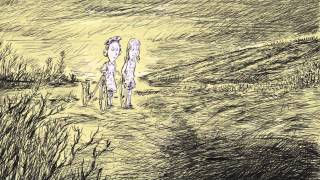 announces Serieland, the subject of which is the German occupation of Denmark during World War II.
 Danish authors and cartoonists
(the Fahrenheit book can be ordered at Arnold Busck)
is an 11-page contribution by Erik Svane and Dan Greenberg (as can be seen in Miwer's video trailer at 0:51), the duo which is hard at work to bring you The Life and Times of Abraham Lincoln.
Danish authors and cartoonists
(the Fahrenheit book can be ordered at Arnold Busck)
is an 11-page contribution by Erik Svane and Dan Greenberg (as can be seen in Miwer's video trailer at 0:51), the duo which is hard at work to bring you The Life and Times of Abraham Lincoln.Det er 70 år siden, Anden Verdenskrig sluttede i Danmark, og vi har allesammen hørt fortællinger om besættelsen. Nogle historier har vi fået fortalt af forældre, bedsteforældre, onkler og tanker, andre har vi hørt fra venner og kolleger. Langt de fleste historier handler om sabotage, en mangelsituation eller rationering, eller de er en personlig fortælling, der giver indblik i familiens historie.Germany's occupation of Denmark — Timeline
Men KNIVSÆG har vi, der ikke oplevede kringen, sat os for at genfortælle nogle af dens historier i tegneserieform. Vi håber, at antologien – hvis bidragsydere tæller både nye kræfter og garvede navne – udover at formidle et syn på besættelsen også kan give et spraglet og vidtfavnende signalement af talentmassen inden for den danske tegneserie lige nu.


Andrew Cuomo has become the first US state governor to visit Cuba since a thaw in relations began last yearreports the BBC.
A number of US officials and politicians have visited the Communist-run island since the thaw in relations was announced on 17 December, but Mr Cuomo is the first state governor to do so.Nice, Andy. As usual, Democrats ignore love the foreign governments and the élites that make them up, ignoring the plight of the common people that live under such régimes (see Moscow, Beijing, Tehran, Bagdad, etc, etc, etc…).
He travelled with a delegation of New York-based companies which he said he hoped would become some of the first to operate in Cuba.
Mr Cuomo also said engagement and full relationships were the best way "to have a dialogue on the issues that we agree with and the issues that we disagree about".

With champagne, fireworks and a presidential blessing, a painstakingly built replica of the frigate once used to bring French troops and funds to American revolutionaries is setting sail for Bostonreports the Associated Press.
Saturday night's celebratory sendoff for the $27 million Hermione seeks to retrace the 213-foot frigate's trans-Atlantic journey in 1780, when its namesake under Marquis de Lafayette's command helped to lay the foundation of French-American relations.
Lafayette persuaded French King Louis XVI to provide military and financial support to George Washington's troops. Lafayette set sail on March 21, 1780, arrived 38 days later in Boston, and played an important role in the revolutionaries' ultimate defeat of Britain.
… The ship is the fruit of nearly two decades of brainstorming, fundraising and toil. Using captains' logs and manuscripts from the era, maritime experts and historians ensured that workers used the same construction materials and methods as those used to build the original.
… Volunteer crew members will sail the frigate, with "Hermione" carved across its stern, across the Atlantic.
…The relationship born of Lafayette's journey has also been lasting. Even in times of modern diplomatic tensions, American presidents routinely refer to France as "our oldest ally."
"If it hadn't been for that French intervention at that time," [said Miles Young, president of the Friends of Hermione-Lafayette in America], "the war of independence probably wouldn't have been won."
In a sane world, destroying subpoenaed evidence would end a politician’s careernotes Benny Huang.
What Hillary Clinton did was a crime yet she won’t pay any legal penalty any everyone knows it. She’ll play it off, deriding it as a FOX News story that only the nutroots still talk about. “Email server” will probably become a sexist code word, much the same way that “Obamacare,” “golf,” and “apartment” have become racist code words during the Obama years. Hillary will intimidatethose few reporters who have the nerve to ask her about it and she will then waltz effortlessly to the Democratic nomination, if not the White House.
There was a time when flipping Congress the bird was considered something of a serious transgression, but no longer. Hillary Clinton is the third Obama administration official or former official to blow off congressional investigators and the third to escape legal punishment. The first two were Attorney General Eric Holder and IRS official Lois Lerner. In both cases, the accused party was charged but the Justice Department refused to prosecute.
Attorney General Eric Holder was charged with contempt of Congress in 2012 when he refused to furnish the House Oversight Committee with tens of thousands of pages concerning the Fast and Furious gunwalking scandal. Operation Fast and Furious was an ill-conceived initiative involving the Bureau of Alcohol, Tobacco and Firearms that deliberately allowed straw purchasers to buy more than 2,000 guns and transport them across the Mexican border to drug cartels. One of those guns was used to murder a US Border Patrol agent, Brian Terry. The total number of Mexican victims is more difficult to calculate but can probably be counted in the hundreds.
Holder doesn’t think he should be required to provide any additional Fast and Furious documents because he’s already provided thousands of pages. The fact that he’s withholding tens of thousands of pages isn’t supposed to matter. He willingly gave up the ones he wanted Congress to see, so what difference does it make if he’s still clinging to the incriminating ones? At one point, his Justice Department even offered to furnish a “fair compilation” of the outstanding documents if congressional Republicans agreed, in advance, to end their investigation.
Chutzpah.
… Lois Lerner has about the same amount of respect for Congress as Holder, which is to say none at all. When she was at the IRS, her office deliberately targeted conservative organizations for special scrutiny, often failing to grant their status after years of examination while similar liberal groups were rubber-stamped. Groups that contained the words or phrases “Tea Party,” “patriot,” or “9/12” were singled out, as were groups that were critical of government policy. Groups were asked if any of their leaders had intentions of seeking public office in the future, even what they prayed about.
The whole operation had the appearance of either an intelligence gathering operation, a fishing expedition to find any excuse to deny the tax-exempt status, or an attempt to keep opposition groups tied up with onerous paperwork. A combination of all three is certainly not outside the realm of possibility.
… Last week we learned that Eric Holder is exercising his “discretion” in the Lerner case. He has decided that her unqualified declaration of innocence does not preclude her pleading fifth amendment. She can have her cake and eat it too.
So Hillary Clinton is in good company. She won’t go to jail; she won’t even be forced out to pasture, as disgraced old politicians used to be when caught violating the law and their oaths of office. She’s a new breed of politician, characterized by her shamelessness, just as we are a new kind of voting electorate, ready to elect her the next president. Congress is a joke and defying its subpoenas carries no penalty.
The French have a wonderful sense of humour
 writes Stephen Clarke.
Of course they do. Anyone who’s seen the film La Cage aux Folles, about a gay nightclub owner whose son wants to marry the daughter of a right-wing religious politician, or Ridicule, about the need to be good at repartee if you want to attract the attention of Louis XIV at court, will know this. If they can speak French, that is.The Telegraph writer is being facetious, naturellement, but a variant on this joke — not necessarily played on April 1 — is far funnier; stick a piece of paper on a friend's back as you take leave of him or her and giving his or her name, for instance, "Je suis Isabelle" or "Mon nom, c'est Isabelle."
It’s not the same as the British sense of humour, that’s for sure. The traditional French idea of an April Fool’s joke is (or rather was, because it’s rarely played these days) to stick a paper fish on someone’s back without them knowing. Yes, très drôle.
“Lost in Translation: a glossary of new French doublespeak” … offers a handy guide to decoding political speech under François Hollande’s Socialist government. Both the left and the right in France have a tradition of disguising policy with woolly or euphemistic turns of phrase. Lionel Jospin, a Socialist prime minister, for instance, privatised more companies than his right-wing predecessors without ever using the word, preferring “opening up the capital”. For those bemused by the linguistic ambiguity of Mr Hollande’s team, here are some helpful extracts from the glossary:
Sécurisation de l’emploi (improving job security): phrase used to launch current labour-market negotiations, designed to introduce more flexibility (see banned words).
Partenaires sociaux (social partners): unions and bosses who do such negotiating, not to be confused with dating, square-dancing, doubles tennis etc.
Flexibilité (flexibility): outlawed word prompting grim visions of unregulated Anglo-Saxon free-for-all (see Libéral).
Laissez-faire: iffy Anglo-Saxon phrase with no place in French (see Libéral).
Redressement des comptes publics (putting right the public finances): budget cuts and tax increases, never combined with austérité or rigueur (see banned words). Not to be confused with…
Redressement du pays dans la justice (putting right the country with justice): soaking the rich with taxes. Not to be confused with…
Redressement productif (productive renewal): name of ministry responsible for stopping industrial closures, or failure thereof (see Florange, Peugeot).
Plan social (redundancy plan resulting from aforementioned factory closures): job losses, not to be confused with organisation of social life, bars, clubs etc.
Modernisation de l’action publique (modernisation of public action): eliminating public-sector inefficiencies, elsewhere known as budget cuts.
Nécessité d’équilibrer financièrement les retraites (Need to balance pension funds): pension reform looms again.
Minable (pathetic): departure of French national who considers taxes too high (see Depardieu, G).
Social-démocrate (social democrat): moderately acceptable form of Scandinavian-style Socialist.
Social-libéral (social liberal): suspicious form of pseudo-Socialist who embraces free-marketry.
Libéral (liberal): rare species with dodgy Anglo-Saxon motives, set on undermining French way of life (don’t see Frédéric Bastiat).
Ultra-libéral (ultra-liberal): beyond the pale, eg, The Economist.

WITH THE INTERNATIONAL BRIGADE IN THE FINNISH ARMY — Another group of Americans and even more Swedes, Norwegians and Danes reached the training center for volunteers late last night [Jan. 15, 1940] and early today to swell the number of fighting men in the International Brigade being formed in Finland. They have been coming in here every day now for four or five weeks, at first in groups of twenty to thirty, and then by hundreds. It is beginning to look as if the greatest International Column of all time will be fighting for Finland by spring. The backbone of this International Brigade will be the Swedish corps under General Eric Linder, a powerful force trained and equipped and paid for by Swedes. It will operate under the supreme command of the Finnish General Staff. Otherwise, it will resemble a private army. They are here to fight for a small country with a population about half that of the City of New York, into which a powerful neighbor has sent its armies and air force. — New York Herald Tribune, European Edition, Jan. 17, 1940So there was another international brigade come to the aid of a European people under attack by a totalitarian entity in the 1930s/1940s. And indeed, it seems to have become no less than "the greatest International Column of all time"—i.e., outweighing its Spanish counterpart!
BBC reporter Daniel Pardo … of the Latin America-centric BBC Mundo, spent four hours [in Caracas] waiting in long lines, searching in vain for milk, coffee, cooking oil, shampoo, corn flour, detergent, dishwashing soap, and toilet papernotes Benny Huang.
Of these items, he located only three on the bare shelves of Venezuela’s capital and largest city.
Venezuela is the laboratory in which the now deceased Hugo Chavez conducted his grand socialist experiment, which his successor, Nicolas Maduro, has seamlessly continued. Supporters of the Chavez brand of petro-socialism characterize it as a popular revolution that has allowed regular folks to reclaim their economy from the hated rich.
In short, they’re stickin’ it to the man.
In the new Venezuela there shall be no more price gouging, no more exploitation, no more…toilet paper? Among the items left unpurchased on Daniel Pardo’s list was toilet paper, a scarce commodity in a country that doesn’t exactly lack trees. Scrounging for TP has become something of a national pastime in Venezuela. President Maduro predictably blamed “unscrupulous traders,” not the policies of his government, for the shortage. In September of 2013, Venezuelan troops actually seized a toilet paper factory in order to better oversee production and distribution. A shortage nonetheless
persists.
Such is life in the Bolivarian Republic of Venezuela. “We’re queuing here to get a number so we can queue again and buy the product,” explained Daniel Pardo.
… “Critics say that the cause of shortages is price controls, which make reselling too profitable and producing, well, the worst business ever,” said Pardo.
The critics, in this case, are right. Government price controls and other strong arm tactics make people think twice about making or selling anything.
The government claims that it’s only setting prices that are “fair,” though the people who actually produce the stuff disagree. If no one will make the products at the tiny profit margins that the government permits, that’s a pretty good indicator that the price is not really fair at all. In most cases, the government bureaucrats who determine the “fair” price don’t really understand all of the costs—capital, material, and labor—that go into making the product. They simply see the producer as a robber baron who must be brought to heel.
Therein lies the problem. In true demagogic fashion, Maduro rose to power using class warfare rhetoric, most of which he probably even believes. Maduro is no son of landed gentry but a former bus driver who didn’t finish high school. He identifies with the “little guy,” and it is for his sake that Maduro’s government is constantly interceding in every aspect of production and distribution. The Chavez/Maduro message (“soak the rich”) resonates with people who perceive themselves as victims but unfortunately it doesn’t make good economic policy. The more the government tightens the controls, the more people try to circumvent them, or else they decide not to be part of the productive class anymore, in which case they stop producing and wait for the state to redistribute to them someone else’s stuff. The same pattern is apparent anywhere economic policy-makers care more about the fair distribution of wealth than about its creation. When government interventions backfire, harming those people they’re supposed to help, the state responds like a dog chasing its own tail with even more interventionist “solutions” to the problems it created.
… Yet the socialist government accepts no responsibility. Again, Maduro suspects that a conspiracy is afoot among shopkeepers and probably Yanquis. As Pardo explains: “But the government says that scarcity is part of an economic war, which hides, smuggles, and hordes products to destabilize the country.”
Oh, I’m sure there’s plenty of hiding, smuggling, and hording taking place in Venezuela, but it isn’t a counterrevolutionary conspiracy. It’s basic economics. Furthermore, the governmental explanation confuses cause and effect. Hording in particular is the result of scarcity. When Venezuelans see an opportunity to buy toilet paper, for example, they buy it in bulk out of fear that it might soon become unavailable. Smuggling and hiding are also effects, not causes, of Venezuela’s economic troubles.
ABC News’s George Stephanopolous seemed to have Indiana Governor Mike Pence up against the ropeswrites Benny Huang
as he pounded him with the kind of “tough questions” that journalists never seem to pose to their liberal guests. Actually, it was the same tough question repeated over and over again—doesn’t the Indiana religious freedom billgrant business owners a license to discriminate against the “LGBT” community?
Pence denied it, though he shouldn’t have. He should have said that it does and that there’s nothing wrong with that.
… The party line these days seems to be that government can’t interfere with churches the same way it can with businesses. Churches have special protections under the Constitution that florists and photographers don’t have.
A quick glance at our founding document reveals that that it doesn’t say a thing about churches. What the Constitution does say is that Congress shall make no law prohibiting the free exercise of religion, a concept applied to all levels of government via the incorporation doctrine of the fourteenth amendment. It’s entirely irrelevant if that exercise is taking place between the four walls of a church.
Yet lawmakers and law-interpreters continue to imagine an invisible caveat attached to our first amendment. Yes, your free exercise is sacrosanct…when you’re in church. The founders apparently never intended freedom to permeate society as a whole.
Bakery owners Aaron and Melissa Klein found out the hard way that they don’t have constitutional rights while operating their own business. The Christian couple was hauled into court after refusing to make a cake for a same-sex wedding, supposedly in violation of Oregon’s nondiscrimination statute. They believed that the first amendment would protect them but, unfortunately, Oregon allows exceptions to nondiscrimination laws only for churches and religious schools.
The Left’s latest disingenuous position is that they love freedom of religion and all that jazz but it must never be allowed to seep beyond the confines of a church. It’s disingenuous because there is mounting evidence that the statist Left respects no limits on governmental authority, not even the threshold of your church. Priests have been exposed to legal pressure to make them violate the sanctity to the confessional, the mayor of a major American city has tried to subpoena church sermons, Catholic adoption services have been forced out of existence by demands that they give children to same-sex couples. So the idea that they respect churches is just another despicable lie. Churches are where the “bigots” are and the Left allows “bigots” no sanctuary.
This whole concept of churches as a haven of free exercise is simultaneously extra-constitutional, unconstitutional, and perhaps even anti-constitutional. But it isn’t without precedent. It’s actually part of a terrifying trend I call “freedom in a cage,” meaning the official toleration of basic constitutional rights only in small and ever-contracting niches.
Who on earth would want to cage our freedoms? People who hate those freedoms but won’t admit it, that’s who. The tolerance bullies claim that they fully support your right to be a moral monster worse than Hitler as long as you stay in your church. If freedom were ever allowed out of its cage they might have to see it, hear it, and even be inconvenienced by it, which they won’t stand for.
Free exercise of religion isn’t the only freedom they want to cage.
… don’t accuse the campus censors of opposing free speech. How wrong can you be? They cherish free speech, with prescribed restrictions on content, and only in its proper setting—out of sight and out of mind. Try the janitor’s closet at two in the morning.
… Freedom in a cage is a sham, a transparent attempt to soothe us while our rights are being stripped away. Look what the authorities are still “allowing” us to do! We’re still allowed, for the time being, to be unforgivable hate-mongers on Sunday morning at church, and to speak our minds on one percent of the campus. As long as we don’t use “offensive language,” of course. So quit your whining! Everything’s fine.
Everything is not fine. Our freedoms are being slowly asphyxiated in their cages. Who knows what will remain of them in a generation?

Radio and TV Martí are at a crossroads,writes Lizette Alvarez in the New York Times,
scrambling to stay relevant as the relationship between Cuba and the United States inches toward a thaw.Notice the MSM habit of turning nations into "equals", into "people", into "actors", without noting the degree of freedom in each. The Times then proceeds to round up the criticisms of the stations ("propaganda!"), without ever mentioning, even as an aside, the lack of freedom, reliability, and accountability that the Castro brothers' Cuban radio and television stations display.
But the Martís, with a budget of $27 million, have critics that include former American diplomats in Cuba. Opponents have long considered them taxpayer-funded relics controlled by Cuban exiles that too often slide into propaganda, which has damaged their credibility in the past.Isn't this typical for an MSM piece?
… They have accused the Martís of “a lack of balance, fairness and objectivity,” of cronyism, malfeasance and, most recently, low employee morale.
SIR – I agreed with most of the analysis in your survey of France (October 28th, 2006). However, you gave only passing mention to (and overlooked the importance of) the Ecole Nationale d'Administration. The school, which was set up in order to supply France with top quality civil servants, has fostered an elite that jealously protects its privileges and very few people can get ahead today without its precious diploma. Although the énarques are undoubtedly very able people, France has a problem in that so many of its leaders comethrough the same system. The result is a pensée unique political condition that paralyses the country and shields it from a much-needed entrepreneurial spirit.
Claude DufourNice, France
SIR – Your survey did not consider the impact of an absent independent French media. Most French newspapers and television channels are owned by corporations that count the state as their main, and sometimes only, client. This is an old habit (the first newspaper in France was supported by Cardinal Richelieu, the country's first prime minister) and may explain why French politicians do not need to tell the truth to voters: it is because no one else will.
Julien MéliBoulogne, France
