Friday, June 07, 2019

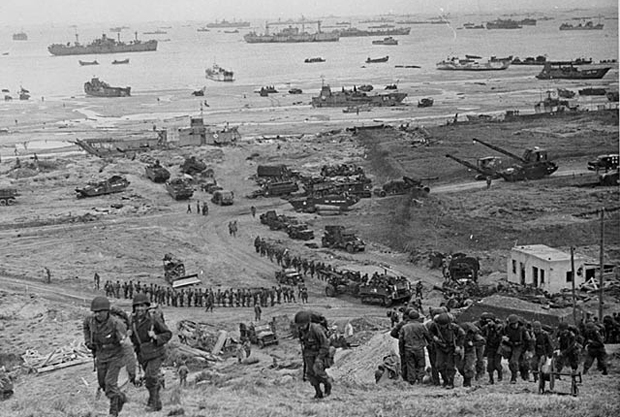
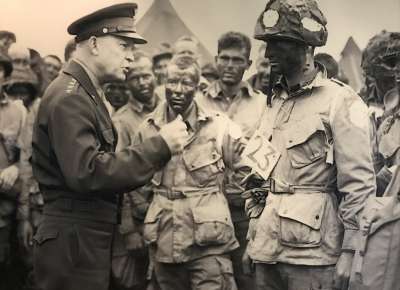
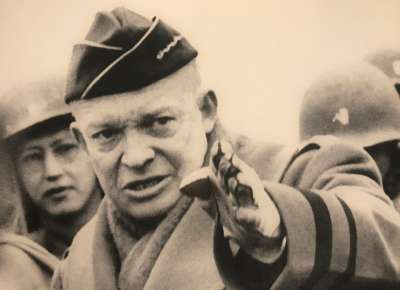
Photos from the 75th Anniversary of D-Day in Normandy

Here Rests in Honored Glory
A COMRADE IN ARMS
Known But to God
The story of D-Day:
An Overview of Operation Overlord
(merci to Instapundit for the link)
American troops look across the peaceful terrain that was so deadly
on June 6, 1944, that their predecessors called it Bloody Omaha
Getting ready for the 21-gun salute at Omaha Beach
VIPs landing on the sand near Colleville-sur-Mer
The Normandy American Cemetery on the 75th anniversary of D-Day:
With a Frenchman, an Englishman, and a handful of U.S. Republicans in France, we headed out to Normandy a day earlier (to an airBNB on June 5) in pouring rain, and the following day, the weather had cleared up — just like in 1944
Why, yes my daddy is a United States Marine
— how did you guess?
Paul Wirth, a few hours before being named Chevalier de la Légion d'Honneur
Paul Wirth's shirt says it all: 5 battle stars — Omaha Beach (2nd Wave), France,
The Bulge, Belgium, Germany (1st Americans into Berlin)
No Regrets Tour: The sign for a 100-year-old vet by
the name of Sidney seems to be a dig at a previous president
All World War II veterans are at least in their 90sone outfit that is instrumental in bringing them back to the battlefields of their youth is the Best Defense Foundation, a non-profit dedicated to improving the lives of all vets with Battlefield Return, Operation Archive and Transition Programs
The Macrons and the Trumps meet at the Normandy American Cemetery
Moving speeches were made by the presidents of France and the United States
Smaller allies who participated in the Normandy landings were given their due, with
 Macron mentioning the Danes, among others, while Trump brought up the Norwegians
After becoming the fifth veteran to be named Chevalier de la Légion d'Honneur,
Paul Wirth won't let go of Donald Trump but insists on a final word
A sailor from the Pacific War made it to Europe's battlefields; When posing for the photo,
he told me, in no uncertain terms, "Now, hold your back up straight!"

Friday, May 31, 2019

D-Day: "The beach was total chaos. It was total noise." "When the mortars and shelling started you dived into the nearest hole."


The Times has interviewed some of the last remaining veterans who stormed the beaches of Normandy, writes Will Humphries. See also my basic history of D-Day the 6th of June 1944…
Ron Smith, 94, from Rustington, West Sussex, was operating Landing Craft Tank 947 in Gosport when they were told to move out.
“It wasn’t until [our ship] got five miles south of the Isle of Wight that we were told about D-Day.
“We literally didn’t know until we were on our way. We were called down to the mess room and told what was going to happen. I was apprehensive. Someone in the mess room said: ‘France? We can’t go there,’ and our commander said ‘You can and you are and you don’t need a passport’.” …

Frank Mouque was tasked with clearing mines and obstacles on Sword Beach.
“The first thing you did [when you got on the beach] was lay on your back with your feet in the air to get rid of all the water in your boots. The beach was total chaos. It was total noise. There were beach masters shouting and pointing and directing because everything was landed almost immediately. You could hear the warships firing. …

Joe Cattini landed with his lorry at about 10am after a section of the beach had been cleared of obstacles and mines.
“They laid carpets down so we didn’t sink into the sand. There were bodies floating in the sea and on the beach. I had been in the civil defence reserve during the Blitz in London so it didn’t faze me, but the stench and carnage was terrible.

“We were directed off the beach by the beach masters and we had to keep strictly within white taped lines. One silly bugger decided he wanted to get ahead a bit and went over the white line and had only gone a couple of yards and hit a mine and blew up. That shook me because I had 180 rounds of 25lb ammunition and 80 gallons of petrol on board.” …

James George, 96, was a lance corporal in the Gordon Highlanders, 51st (Highland) Division. He landed at Arromanches on June 7 with his mortar team. He had fought at the battle of El Alamein and was well aware of the horrors of war that faced them in the fight for Normandy.
 “It wasn’t very nice because you know what to expect. We had to get off the beach and get inland. You were just trying to keep alive. When the mortars and shelling started you dived into the nearest hole.

“It had quietened down a bit when we arrived. What I saw was all the Canadians that had been killed and they were all laid out in a nice tidy row on the beach, for a long way. It wasn’t a very nice start.”
Read the whole thing and check out the photos, both from 1944 and of the veterans today…

Saturday, May 18, 2019

Most professional historians provide “a basically negative understanding of American history”


If you’re old enough to remember the Soviet Union, 
writes Naomi Schaefer Riley in her Wall Street Journal interview of Wilfred McClay,
you’ve probably wondered why so many young people today seem attracted to socialism. One influence is Howard Zinn, who published “A People’s History of the United States” in 1980, the year before the first millennials were born.

The book “continues to be assigned in countless college and high-school courses, but its commercial sales have remained strong as well” [which is nothing less than an outrage].

Historian Wilfred McClay aspires to be the antidote to Zinn, whom he accuses of “greatly oversimplifying the past and turning American history into a comic-book melodrama in which ‘the people’ are constantly being abused by ‘the rulers.’ ” Mr. McClay’s counterpoint, which comes out next week, is titled “Land of Hope: An Invitation to the Great American Story.”

He says he doesn’t mean his new book as “some saccharine whitewash of American history.” But he’s seen too many students drawn to Zinn because the standard textbooks are visionless and tedious. “Just as nature abhors a vacuum,” Mr. McClay says, “so a culture will find some kind of grand narrative of itself to feed upon, even a poisonous one.”

A lousy story is better than no story at all: “We historians have for years been supplying an account of the American past that is so unedifying and lacking in larger perspective that Zinn’s sweeping melodrama looks good by comparison. Zinn’s success is indicative of our failure. We have to do better.”

 … in the new book he observes that it’s “hard to read about” early-19th-century America “without thinking of the series of events culminating in the coming of the Civil War as if they were predictable stages in a preordained outcome. Like the audience for a Greek tragedy, we come to this great American drama already knowing the general plot,” and susceptible to the illusion that it was written in advance. He urges readers to resist “that habit of mind” and remember that people at the time had no foresight to match our hindsight.

What gets him most riled up is what he sees as an abdication. “When you teach an introductory course in American history,” he says, “you really have a responsibility . . . to reflect in some way the national story, in a way that is conducive to the development of the outlook and skills of a citizen—of an engaged, patriotic, serious citizen.” Most professional historians don’t “take that mandate very seriously at all,” and instead provide “a basically negative understanding of American history.”

He says proudly that they reciprocate his aversion. When he meets colleagues at conventions and tells them the name of his book, “they just kind of look at me and say, ‘Oh my God, what have you been smoking?’ . . . When I say it has the word ‘Great,’ in ‘the Great American Story,’ then they’re even more dubious.”

Mr. McClay’s objective in “Land of Hope” is to help readers develop a sense of perspective and “a mastery of the detail” of American history. The Zinn approach allows them to be lazy: “Why learn what the Wilmot Proviso was, or what exactly went into the Compromise of 1850, when you could just say we had this original sin of slavery?”

By contrast, “Land of Hope” delves into the complexity of the Founders’ debates over slavery. Many expected it would eventually end on its own, or believed the alternative to accepting it—abandoning the union—was worse. Some were conflicted. The book describes George Mason as “a slaveholder but also a Christian who labeled the trade an ‘infernal traffic,’ ” and adds: “Mason feared the corrupting spread of slavery through the nation, which would bring the ‘judgement of Heaven’ down severely upon any country in which bondage was widespread and blandly accepted.” The Founders had to weigh what was possible, not just what was ideal—and Mr. McClay thinks it’s unfair to denounce them for failing to meet today’s standards.

Similarly, he says that when he talks about the wise and loving letters between John and Abigail Adams, “students will say, ‘Yeah, but you know, women couldn’t own property and couldn’t vote.’ ” True enough, but Mr. McClay responds with a challenge: “Well, compared to what? Were things better for women in sub-Saharan Africa? Were they better in France? And generally they can’t answer the question. What they do is they measure the country’s history against an abstract standard of perfection, against which it’s always going to fall short.”

Mr. McClay decries the impulse to “condescend toward history”—and tear down monuments or withdraw honors from historical figures who offend today’s sensibilities. He says he isn’t trying to “reduce everything to context,” only to acknowledge that leaders from Thomas Jefferson to Martin Luther King were complicated, and that their flaws are “no reason to rob them” of recognition for the “truly heroic things that they accomplished.”

Take Woodrow Wilson, recently the subject of controversy at Princeton University, where he was president from 1902-10. Critics want to remove his name from the School of Public and International Affairs because of his bad record on race. Mr. McClay isn’t a fan of President Wilson’s diplomatic efforts and criticizes his suppression of dissent during World War I. But when the U.S. entered that war, Mr. McClay says, “it was a moment for all hands on deck, and Wilson proved to be an excellent wartime leader.” The professor praises the 28th president as “acutely attuned . . . to the maintenance of public morale.”

Ideological bias in history textbooks is bad enough when the events occurred a century or more ago. “Especially once you get past, say, 1960 or 1964,” Mr. McClay says, “it just gets awful.” When examining the recent past, “it’s very, very, very hard to have any kind of perspective, other than whatever your own partisan persuasion is.”

He adds that some recent history books are “somewhat disfigured” by the way in which the understanding of recent history is “projected back on to the past.”

 … Mr. McClay is even harsher on history textbooks: “They’re completely unreadable because they’re assembled by committee, by graduate students who write little bits and pieces of them. I’m not convinced that most of the textbooks that have the names of very eminent historians on the cover were actually read by them, let alone written by them.”

There are also the committees that approve them—state and local school boards, which answer to a variety of “stakeholders.” Members of every racial, cultural and religious group want a say in how they and events important to them are described. Mr. McClay opted to dispense with that process, and “Land of Hope” is being published by a conservative house, Encounter Books. He probably won’t sell many copies to public schools, but he hopes there are enough private and religious and charter schools, not to mention home-schoolers, that it will find a market.

… Unlike many modern textbooks, “Land of Hope” has no sidebars or charts; a few maps and portraits provide the only distractions from the text. Mr. McClay writes with a literary quality, as when he likens Lincoln to Moses, “cruelly denied entry into the promised land of a restored Union, denied the satisfaction of seeing that new birth of freedom he had labored so long to achieve.”

 … In the classroom, he endeavors to cultivate a longer view. When he explains the Constitution, he reminds students—or lets them know for the first time—that “conflict is part of the human condition and can never be eliminated. Neither can the desire for power and the tendency to abuse it.”

 … When he taught at Tulane in the late 1980s and early ’90s, he recalls, “almost every applicant for graduate study wanted to work on the civil-rights movement—even though we didn’t have a single person on the faculty at that time who was an expert on the subject.” It’s easy to see the attraction, but he worries about the expectation that history will “provide an agenda for a moral crusade.”

“Very few moments of conflict have the moral clarity of that particular historical moment,” Mr. McClay cautions, “and we fall into error when we try to repeat it again and again.” Instead, he encourages students to appreciate the nobility all around them. “Gosh,” he says, “as Americans, you are part of what is arguably the most exciting enterprise in human history.”
On the Seth Leibsohn show:

Sunday, May 12, 2019

UC: “We do not support so-called trigger warnings, we do not cancel controversial speakers, and we do not condone the creation of intellectual safe spaces”


A growing number of colleges around the nation are taking steps to protect their students from ideas and words some find hurtful or upsetting. That protection includes a broad blanket of administrative support for things like safe harbors and bias response teams designed to investigate “micro aggressions” and “micro invalidations.”
That is how Douglas Belkin described the current status of campuses in the Wall Street Journal. However,
The University of Chicago has taken a different tack. In August it sent a letter to incoming freshmen telling them that “we do not support so-called trigger warnings, we do not cancel invited speakers because their topics might prove controversial, and we do not condone the creation of intellectual safe spaces where individuals can retreat from ideas and perspectives at odds with their own.”
We asked University of Chicago President Robert Zimmer why his administration sent the letter and what he sees as the role of universities in this time of social upheaval. Here are edited excerpts of the conversation.

Climate of intolerance
WSJ: You have likened the current climate of intolerance for unpopular points of view on college campuses to the McCarthy era and efforts to ban the teaching of evolution. That’s pretty grim. Is it really that bad?

MR. ZIMMER: The main thing one always needs to keep in mind to contextualize all of these issues is the overarching purpose of universities. The purpose is to be a place that gives the most empowering education to students and creates an environment for the most imaginative and challenging work of faculty. Confrontation of multiple ideas and ideas that are different from one’s own is critical to this.

I think it’s very important not to allow universities to slip into an environment in which they are allowing a kind of suppression of speech, or are allowing discomfort with different ideas to create a chilled environment for discourse.


So without having to weigh what situation is worse and how serious is it relative to one thing or the other, I would just say that the issue on university campuses is important and serious and worthy of everyone involved—whether it’s university leaders or faculty or students—defending an environment in which the highest values and aspirations of universities can be fulfilled.

WSJ: You taught at the University of Chicago in the 1970s. Have the expectations of the students changed much since then?
 
MR. ZIMMER: From a nationwide point of view there has been a shift.

There is less of an expectation in many places that one is legitimately going to confront ideas that are fundamentally different than your own.

 What you’re seeing is a kind of drift of discourse; you see actions by a lot of people which seem to indicate that they feel that they can, in fact, legitimately stifle the expression of others whose views they fundamentally disagree with. …

Saturday, May 11, 2019

The average middle-class person today is richer than the average billionaire a hundred years ago: Wealth isn’t simply about money, it’s about the ability to do things


From Jonah Goldberg' s latest G-File:
  … it’s worth highlighting something the folks shrieking about censorship and free speech tend to overlook. I’m one of those folks like Steven Pinker, Marian Tupy, Ronald Bailey, Russell Roberts, Donald Boudreaux, Matt Ridley, and other misery-deniers who feels compelled to point out how much better we have it than people in the past.

By many metrics, the average middle-class person today is richer than the average billionaire a hundred years ago. Of course, your choices in real estate would be much greater as a fat cat in 1920, but your choices in cuisine, air-conditioning, transportation, medicine, communication, etc. would be far worse or simply non-existent.

Kevin Williamson points out a scene in The Count of Monte Cristo in which the Count hosts a dinner at which he serves a staggering variety of fish to his guests. How many kinds of fish in this lavish repast? Two. The Count describes this largess as a “millionaire’s whim.”

The point here is that in terms of the ability to communicate — both to friends and family and the broader public — we’re unimaginably wealthier today. Wealth isn’t simply about money, it’s about the ability to do things. Financial wealth manifests itself in the expanded number of choices you have to do and have stuff. The mid-market cars of today have features that were reserved for the wealthy two decades ago and that were reserved for science fiction a hundred years ago.

Friday, May 10, 2019

2 French Soldiers' Sacrifice in African Raid Becomes Central Story on Fox News Website


Don't let anyone tell you that Fox News is anti-French or mocks the French military. A news report by Greg Norman and Hollie McKay involving the ultimate sacrifices of two French troops became the central story on the website's front page Friday.
 … four hostages … have been freed in western Africa following a French special forces military operation that resulted in the deaths of two of their own soldiers, the Elysee announced Friday.

France said the hostages were rescued Thursday night following a battle in Burkina Faso.

The statement from France said President Emmanuel Macron "bows with emotion and gravity at the sacrifice of our two soldiers, who gave their lives to save those of our fellow citizens".

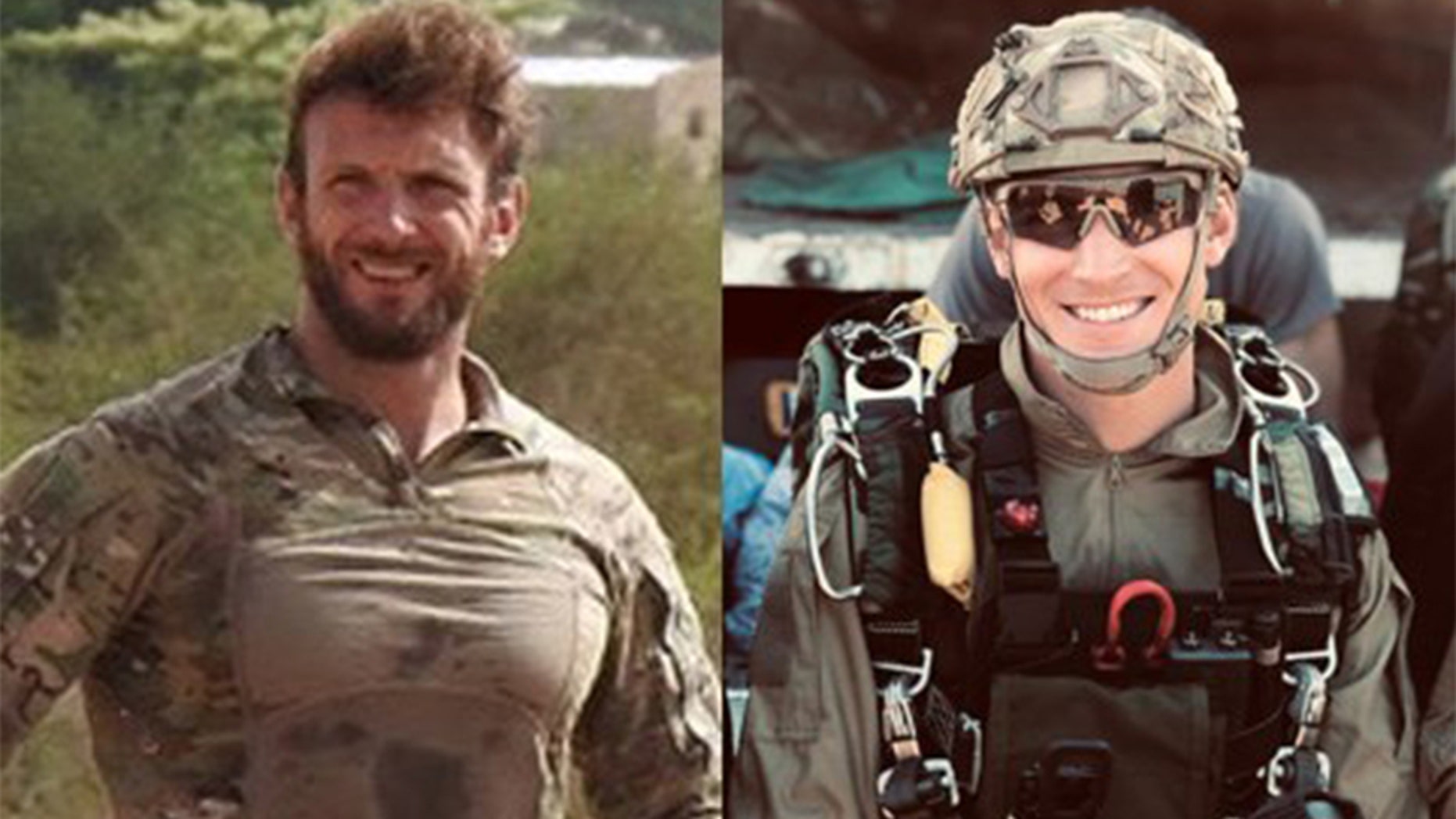
They were identified as petty officers Cédric de Pierrepont and Alain Bertoncello. A Facebook post by the French Navy added that both men received numerous awards and recognitions throughout their military careers, such as the Gold Level of the National Defense Medal.

The hostages who were rescued, according to France, were a U.S. citizen, a South Korean national, and French nationals Patrick Picque and Laurent Lassimouillas.

The Frenchmen were tourists who were kidnapped during a safari in Benin last week, Reuters reported. The circumstances surrounding the capture of the other two were not immediately clear.

 … As it stands, more than 4,500 French troops are deployed to the area.
 Cédric de Pierrepont, left, and Alain Bertoncello were killed Thursday
during a hostage rescue mission in Burkina Faso (French Navy)

Thursday, April 25, 2019

Fire Marshal in Defense of Trump: A burning cathedral is in far more danger of collapsing than one that is covered with flying water tankers' air drops


Among the people who reacted on the day that the Notre Dame cathedral caught fire was the president of the United States, who sent out a tweet:
So horrible to watch the massive fire at Notre Dame Cathedral in Paris. Perhaps flying water tankers could be used to put it out. Must act quickly!
Not long thereafter, France's civil security agency responded to Donald Trump's tweet by saying that using Canadair planes is not an option: dropping tons of water on the building could cause the entire structure to collapse.

#NotreDame
Le largage d'eau par avion sur ce type d'édifice pourrait en effet entraîner l'effondrement de l'intégralité de la structure. Aux côtés des #sapeurspompiers qui font actuellement le maximum pour sauver #NotreDame.
This led in turn to a reaction from a reader who, after a talk with his local Fire Marshal, wrote that "If it's a firefighter [who made that comment], he should be fired immediately."
Terrekain says that he
just talked to [his] local Fire Marshal.

Whoever said that going for an air drop on the Notre Dame cathedral would cause it to collapse, is an IDIOT.

If it's a firefighter, he should be fired immediately.

Aerial water drops typically disperse in the atmosphere; they do not apply that much more weight on the structure than a heavy rainfall and a BURNING cathedral is in much more danger of collapsing than one that is covered and mist-doused in a fire-retardant slurry. Even if it were true that the building would collapse, the only reason to worry about that is if anybody was in the building...but artifacts and architecture are endangered by the FIRE, far more than any collapse unless we're talking about WTC collpases - we're not.

The building's structural integrity is being degraded by the fire, not any amount of water. So you just let the building keep burning?

Whoever claimed that idiocy is either ignorant, or is gas-lighting the public to make Trump look bad...it's idiocy. What were these idiots waiting for? For the entire structure to burn down?

Delete
BloggerTerrekain goes on to add that 
 
This is like waiting for the WTC to "burn out" when you are given an opportunity to put out the fire (there was no such opportunity then, but hypothetically speaking)...

Trump: "Put it out with water".

Macron: "Oh, if we put water on it, it might collapse...."

Trump: "What are you talking about? If it's going to collapse because of an air-drop, it'll collapse ANYWAY in the time it takes you to call in the air-drop due to the fire. So why not try it and give yourself a chance?"

Macron: "Ummm....RACIST!"
Related: Yes, the Notre Dame Fire Was a Tragedy; But Does It Really Warrant Comparison with 9-11 in America?

In any case, a number of Frenchmen responded to the civil security agency by saying that dropping water from the air does not need to involve sizable planes filled to capacity with huge loads of water — as it happens, Trump did not specifically mention airplanes either, simply aircraft — but can entail helicopters doing the work (with one tweet showing a Los Angeles county chopper in action).
 

Sunday, April 21, 2019

Yes, the Notre Dame Fire Was a Tragedy; But Does It Really Warrant Comparison with 9-11 in America?


At a time when an unimaginable fire has left one of humanity's most famous and most beautiful buildings partly in ruins, everybody around the world would like to join together in unity with the French, while nobody really is yearning for the opportunity to descend into controversy.

That is why on the day that the Notre Dame cathedral caught fire, I wrote that now is not the time to go into (old) polemics, but at the same time, I couldn't refrain from calling out the wife of the elderly French couple interviewed that very night on TF1 (no, t'wasn't Ilhan Omar) who said that when the church's spire collapsed, it reminded her of New York in 2001 when the Twin Towers caved in. (Merci for the link, Instapundit.)

This idea is getting traction — probably because it is so simplistic — and you can perhaps get an idea of the degree to which the French and the Europeans hold dear the lives of Americans and capitalists (or lives in general — like all leftists?) when one Frenchman after the other compares the destruction of the roof of a cathedral — granted, one of the two or three most famous on the planet, as well as a symbol of Paris and France — with the attacks on September 11 2001.

Why not with Pearl Harbor, while you're at it?

Teeny-tiny reminder: in the space of less than two hours (far less than the church's roof was in flames), the 9-11 attacks on New York and DC led to the deaths of 3,000 people.

Here are just two examples, both from a single French weekly: The Notre Dame disaster, "It's a bit our September 11" (« C’est un peu notre 11 Septembre »), Le Point's
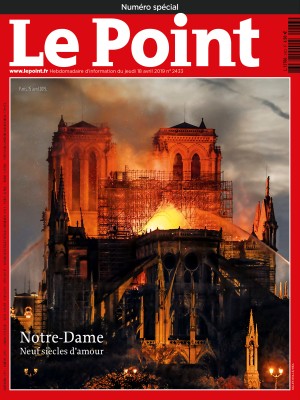
As the weekly's noted that the Gothic cathedral is a miraculous survivor of history (« miraculée » de l'histoire) and that it has become a symbol for the French, given a slightly different wording by another medievalist, Joëlle Alazard: "It's a kind of heritage 911" (« C'est une sorte de 11 Septembre patrimonial »).

It looks like deep down, people know that they cannot deny the lack of proportion between the events, so they have the (weaselly?) presence of mind (la présence d'esprit) to resort to "kinda/sorta" wordings…

Actually, it turns out that — in response to this post's heading — no, the Notre Dame fire may not have been a tragedy (at least not one as devastating as previously feared). Indeed, during a concert only five days after the apocalyptic images of destruction on our screens, there is an entirely new and unforeseen development: according to the French government, "the rescue of Notre Dame is almost complete" (« Notre-Dame est quasi sauvée »)! As the culture minister (Franck Riester) himself says, this is "tremendous good news" (« c'est une formidable nouvelle ») — no disagreements there — although it does tend to make the 9-11 comparisons even more frivolous, shallow, and jarring.

Rémi Brague : La même chose que tout le monde, j’imagine, une réaction très banale : surprise, stupeur, inquiétude, chagrin. Puis admiration pour le courage des pompiers. C’est un peu notre 11 Septembre.
Related: Le Monde's front-page cartoon comparing France's 2002 election to 9-11, after Jean-Marie Le Pen managed to become one of the finalists in the first round (with the twin towers representing the ballot's two rounds while the Front National leader is depicted as a destructive airplane aiming for both)

In the previous post's comments, Terrekain says that he
just talked to [his] local Fire Marshal.

Whoever said that going for an air drop on the Notre Dame cathedral would cause it to collapse, is an IDIOT.

If it's a firefighter, he should be fired immediately.

Aerial water drops typically disperse in the atmosphere; they do not apply that much more weight on the structure than a heavy rainfall and a BURNING cathedral is in much more danger of collapsing than one that is covered and mist-doused in a fire-retardant slurry. Even if it were true that the building would collapse, the only reason to worry about that is if anybody was in the building...but artifacts and architecture are endangered by the FIRE, far more than any collapse unless we're talking about WTC collpases - we're not.

The building's structural integrity is being degraded by the fire, not any amount of water. So you just let the building keep burning?

Whoever claimed that idiocy is either ignorant, or is gas-lighting the public to make Trump look bad...it's idiocy. What were these idiots waiting for? For the entire structure to burn down?
Delete
Blogger Terrekain goes on to add that
This is like waiting for the WTC to "burn out" when you are given an opportunity to put out the fire (there was no such opportunity then, but hypothetically speaking)...

Trump: "Put it out with water".

Macron: "Oh, if we put water on it, it might collapse...."

Trump: "What are you talking about? If it's going to collapse because of an air-drop, it'll collapse ANYWAY in the time it takes you to call in the air-drop due to the fire. So why not try it and give yourself a chance?"

Macron: "Ummm....RACIST!"

Wednesday, April 17, 2019

Monday, April 15, 2019

Fire Engulfs Notre Dame Cathedral; "No Guarantee that the Paris Building Can Be Saved"

Terrible news from Paris, as gigantic flames keep leaping from the Notre Dame cathedral, and it doesn't look like it will be ending any time soon.

An assistant to the Interior minister has just tweeted (9:50 pm) that there is no guarantee that the cathedral can be saved (le sauvetage du cathédrale n'est pas acquis) while the fire chief has stated that he is pessimistic about containing the fire, which may spread to the north tower…

Just a few minutes ago, French firefighters responded to Donald Trump's tweet ("Perhaps flying water tankers could be used to put [the massive fire at Notre Dame Cathedral] out. Must act quickly!") by saying that using Canadair planes is not an option: dropping tons of water on the building could cause the entire structure to collapse.

Fox News's Lucia I. Suarez Sang:
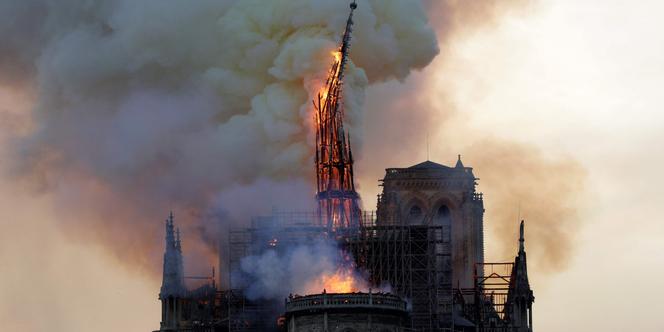
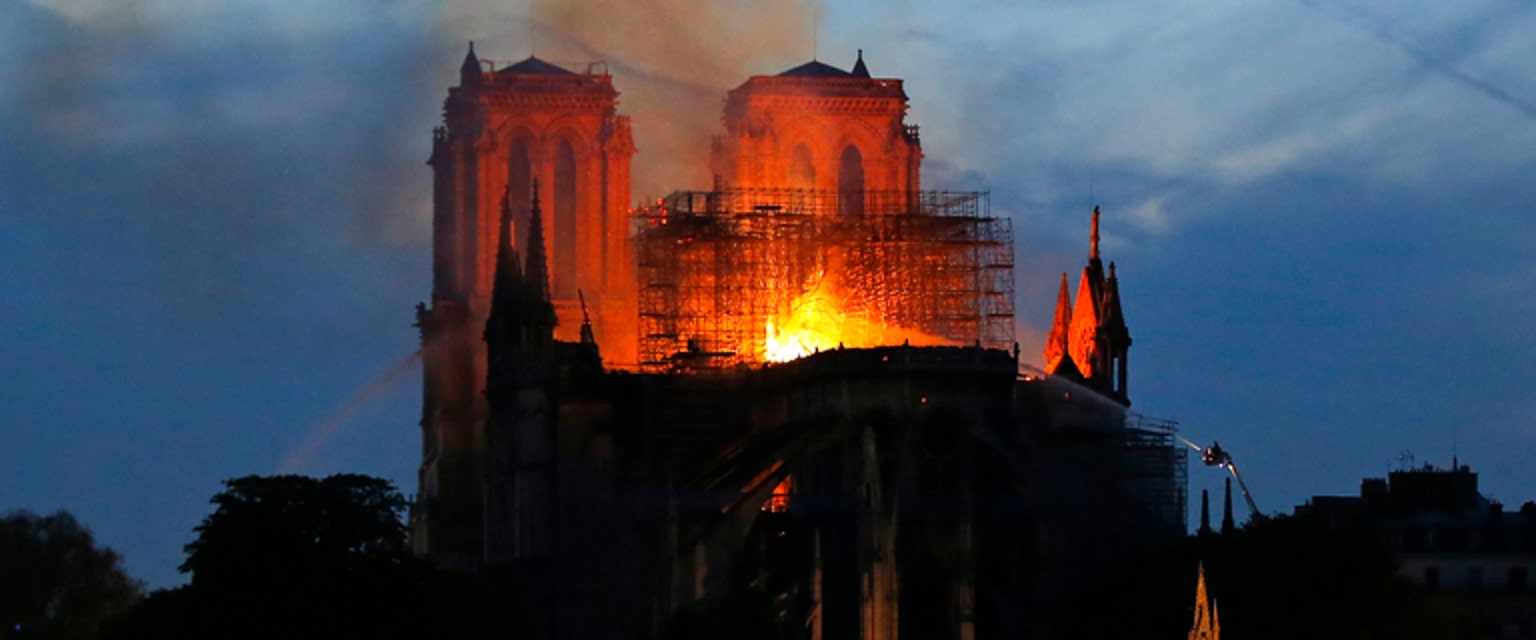
The famed Notre Dame cathedral in Paris, France was engulfed in flames on Monday leading to the collapse of the structure's main spire. The intense flames leaped out from two of its bell towers minutes before the spire collapsed, and later spread to one of the cathedral's iconic rectangular towers.
A church spokesman told French media that all of Notre Dame cathedral's frame is burning after the spire collapsed.
"Everything is burning, nothing will remain from the frame," Notre Dame spokesman Andre Finot told local outlets.

 … Paris emergency services said they were trying to salvage the artwork stored in the cathedral.
The French capital's police department said no deaths have been reported but didn't say anything about injuries.

 … Sources told Fox News that it appears the fire, which comes one day after Psalm Sunday, was related to recent construction done at the cathedral.
Now is not the time to go into polemics, but at the same time, I cannot refrain from calling out the wife of the elderly French couple interviewed on TF1 (no, it wasn't Ilhan Omar) who said that when the church's spire collapsed (see above), it reminded her of New York in 2001 when the Twin Towers caved in. Again, now is not the time to revive old polemics, but if there are good news from the Île de la Cité, it is that there has (thankfully) not been a single victim…

Update — from Instapundit: “Nothing will remain from the fire,” spokesman says

Update 2: Yes, the Notre Dame Fire Was a Tragedy; But Does It Really Warrant Comparison with 9-11 in America?

From the comments:
Terrekain says that
I just talked to my local Fire Marshal.

Whoever said that going for an air drop on the Notre Dame cathedral would cause it to collapse, is an IDIOT.

If it's a firefighter, he should be fired immediately.

Aerial water drops typically disperse in the atmosphere; they do not apply that much more weight on the structure than a heavy rainfall and a BURNING cathedral is in much more danger of collapsing than one that is covered and mist-doused in a fire-retardant slurry. Even if it were true that the building would collapse, the only reason to worry about that is if anybody was in the building...but artifacts and architecture are endangered by the FIRE, far more than any collapse unless we're talking about WTC collpases - we're not.

The building's structural integrity is being degraded by the fire, not any amount of water. So you just let the building keep burning?

Whoever claimed that idiocy is either ignorant, or is gas-lighting the public to make Trump look bad...it's idiocy. What were these idiots waiting for? For the entire structure to burn down?
Delete
Blogger Terrekain goes on to add that
This is like waiting for the WTC to "burn out" when you are given an opportunity to put out the fire (there was no such opportunity then, but hypothetically speaking)...

Trump: "Put it out with water".

Macron: "Oh, if we put water on it, it might collapse...."

Trump: "What are you talking about? If it's going to collapse because of an air-drop, it'll collapse ANYWAY in the time it takes you to call in the air-drop due to the fire. So why not try it and give yourself a chance?"

Macron: "Ummm....RACIST!"

Monday, April 08, 2019

“The Conceptual Penis” was such an obvious gag that no one could have taken the ludicrous paper seriously — no one except a gender studies scholar


Starting in June of 2017, three academics — James Lindsay, Helen Pluckrose, and Peter Boghossian — began writing intentionally ludicrous papers under false names and submitting them to peer-reviewed academic journals. The authors mimicked the catchphrases and buzzwords of the “grievance studies” fields they sought to expose — the language of intersectionality, privilege, and feminism.
writes Benny Huang on Liberty Unyielding (welcome Maggie's Farm readers).
Though the papers were fake, the experiment was very real. The hoaxers wanted to see if the hallowed journals’ peer reviewers could discern twaddle from real scholarship. In short: the reviewers couldn’t, at least not when it appealed to their prejudices.

The experiment was interrupted in October 2018 when a Wall Street Journal reporter, Jillian Kay Melchior, exposed the project. Melchior had noticed one of the papers, “Dog Park,” which focused on “dog rape culture,” and found it just too ridiculous to be believed. She apparently had more sense than the staff of Gender, Place & Culture, which gladly published the confabulated paper.

By the time the Wall Street Journal blew the whistle, twenty papers had been submitted in total. Seven papers had been accepted, though only four had been published; seven others were at various stages of review and only six had been rejected.

Gender, Place & Culture even recognized “Dog Park” as “excellent scholarship,” and no wonder — its subtitle was “Human reactions to rape culture and queer performativity at urban dog parks in Portland, Oregon.” I’m sure they lapped that up with a spoon.

The paper’s pseudonymous author, “Helen Wilson,” claimed to have based her findings on a data set consisting of just fewer than ten thousand canine genital inspections. This was so crazy that “Wilson” — who is actually James Lindsay — expected some much-deserved incredulity.

But it never came. Not only did the journal fail to question the data set; it didn’t lift a finger to determine the identity of “Helen Wilson,” much less to verify her credentials as an expert. They simply accepted Dr. Wilson as an authority in doggie sexuality.

“We flattered what they wanted to hear and then they told us it was an important contribution to feminist geography,” said James Lindsay.

As a college grad myself, I can tell you that this is exactly how academia works. Students learn early on that the key to academic success is to emulate the style, tone, and above all the message of their professors. If the profs are talking endlessly about the “social construction of whiteness” — or maleness, or heteronormativity — they should too. That’s how to get an A, how to get recommended for grad school, and how to get hired as an adjunct professor.

An environment like this is fertile ground for farcical “scholarship.”

And it’s been this way for years. 

[Alan Sokal's 1996 paper about the social construction of gravity], and later Lindsay’s, Pluckrose’s, and Boghossian’s papers, stand as shining examples of Poe’s Law. For the uninitiated, Poe’s Law states simply that it is impossible to parody extremist views because the parody will inevitably be mistaken as a genuine expression — even by people who hold those extremist views.

 … Two of the more recent pranksters, Peter Boghossian and James Lindsay, had already scored a stand-alone hoax paper “The Conceptual Penis As A Social Construct,” which was published in Cogent Social Sciences, a misnamed journal if ever there was one. The paper appeared in May 2017, which appears to be right before they undertook the more audacious twenty papers project the following month.

“The Conceptual Penis” was such an obvious gag that no one could have taken it seriously — no one except a gender studies scholar, which tells us a lot about gender studies as a field. The thrust of the paper is that penises “conceptually” cause global warming and all sorts of other really bad stuff, an obvious attempt to suck up to their reviewers’ biases.

The paper drips with misandry. Penises are bad because men are bad.

 … The rush to publish anything that sounds sufficiently “woke” has an equal but opposite counterpart — the reluctance to publish anything considered reactionary.

 … No paper, no matter how carefully researched and written, would ever be published if it came to the “wrong” conclusions. Conversely, no paper, no matter how sloppily written, would be rejected if it came to the “right” conclusions. Conclusions drive the research, not the other way around. …

Wednesday, April 03, 2019

Ventriloquist Journalism: Most MSM journalists already have their story written and are looking for a specific quote that fits their narrative


Scott [Johnson’s] two posts on his and Victor Davis Hanson’s treatment by The New Yorker calls to mind one of the first and most important lessons I learned from my mentor in journalism, the great M. Stanton Evans
writes Powerline's Steven Hayward (thanks to Instapundit):

Most “mainstream” journalists are not merely biased, but have a narrative story line in mind when they begin “reporting,”  so that when they call you on the phone, they aren’t looking for actual information and perspective—they are looking for a specific quote to drop in their story that fits their narrative. The point is: when you deal with the media, it is not just their innate liberalism you need to be on guard for—you need to keep in mind that they already have their story written.

There’s nothing Scott could have done to alter the Wallace-Wells attack on him since it is obvious that he had his story line already done. There’s another especially egregious example of ventriloquist journalism going on right now besides Scott and Victor’s experience that I’ll come to in a moment.

Stan Evans had a typically great label for this—he called it “ventriloquist journalism.” Reporters have in mind a specific quote they’d like to have from you, and have developed great skill in teasing it out of people. Think of it as just one aspect of fake news. I had quite a bit of first-hand experience with this during my years in Washington, and I got good at spotting the technique and having the discipline not to give in to the usual reporter’s tricks.

Often I’d get a call from a reporter wanting my comment on something the Bush Administration was doing, and the question, in substance, was usually: “Don’t you think the Bush Administration is doing the wrong thing?” (Though always more artfully put than that.) And when I didn’t give the answer the “reporter” was looking for, they’d keep asking the same question over and over again in different forms, because what they needed for their story was a way to say something like, “But even a conservative at the American Enterprise Institute thinks Bush is making a mistake. ‘Bush is making a mistake,’ said Steven Hayward. . .”

Sometimes a reporter would keep me on the phone for 30 minutes or more, hoping I’d give in. I learned the discipline of never giving in to this trick, and what do you know? I was never quoted in any of the stories that “reporters” like this filed. Nor did any of the information or analysis I had about the issue make it into the story, because background information and perspective was not what the reporter was looking for.

 … You need to do your due diligence about any reporter who contacts you. I try to look up stories by any reporter who contacts me to see if I can divine their slant or predominant practices.

There is one other piece of advice I give to everyone: always run your own complete audio and/or video recording of any interview you do with a reporter. Then you have your own complete record to use in follow ups with editors, or if you want to do you own story about how it really went down.

Sunday, March 24, 2019

15th Anniversary of My First Post for No Pasarán

A few weeks after the founding of No Pasarán, 15 years ago, I was invited to join as the blog's fourth blogger (after Douglas, Jonathan, and Liminal aka U*2, and prior to N Joe).

The blog's inaugural pledge was that we
 "will commentate on current events with all the psychotic calm and serenity of a Palestinian father who explains that he can't wait for his 2 surviving sons to become martyrs"
Of the more than 13,000 posts that have been written since 2004 (13,362, to be exact, as of today), I consider the following couple of posts to be two of the most important:
The Era of the Drama Queens: Every Crisis Is a Triumph
The Leftist Worldview in a Nutshell: A world of Deserving Dreamers Vs. Despicable Deplorables
Today is the anniversary of my first contribution (thanks to Ed for the Instapundit link), which related how I attended a conference in Normandy (at a museum linked to the D-Day landings, no less!) with some of France's best-known journalist VIPs and how I rose to challenge the group on the French media's coverage of the Iraq conflict.

Wednesday, March 24, 2004


Growling for Colombani

Any of you who have seen me over the past 10 days knows how furious I get anytime I read or hear the French media trying to stuff down our throats their self-serving lying charges (those against Aznar, Bush, and Blair, i.e., anybody whom they don't feel any sympathy with).

So when I read that the Mémorial de Caen was organizing a conference with Jean-Marie Colombani, among others ("QUELLE LIBERTÉ POUR L'INFORMATION DANS UN MONDE INQUIÉTANT ?" [What freedom for information in a distressing world?], organized in tandem with Les Amis de l'hebdomadaire La Vie and Reporters sans Frontières), I knew I had to attend. I wanted to give Le Monde's director a piece of my mind (in a diplomatic manner, natch). Three hours before it started at 7 pm on March 23, 2004, I jumped into my trusty jalopy, and drove the 260 km to Caen, arriving just in the nick of time.

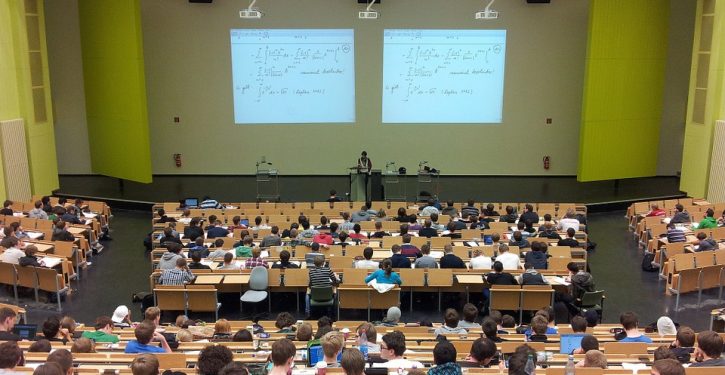
And sure enough, the first thing any of the five intervenants did (with a constant wry smile on his face) was to attack the lies of politicians, ridicule the partisanship of the media, and bemoan the jingoism of the population (meaning those of the US, the UK, and Aznar's Spain exclusively, bien sûr). It was Jean-Marie Charon, "Sociologue des médias" (whatever that means), who opened the débat — the others being (left to right on the admittedly unclear photo) Colombani, Walter Wells, Directeur de l'International Herald Tribune (beard), Jean-Jacques Lerosier, Grand reporter à Ouest-France, and Jacqueline Papet, Rédactrice-en-chef de RFI, with the moderators answering to the names of Daniel Junqua, Journaliste et Vice-président de RSF, and Jean-Claude Escaffit, Journaliste à La Vie et Directeur des Amis de La Vie.

Before I left Paris, I'd reviewed and written down (in telegraph-style) a handful of arguments: these ranged from the Iraqis quoted in Reason, on Iraq the Model, and in Le Monde itself, to Doug's post on Le Monde's partisan mistranslation of Michael Ignatieff's piece in the New York Times.

The only problem was a rather big one, I learned as a I headed for my seat: questions would not be permitted, except in written form on small pieces of paper handed over to one of the animators. So I knew I had to pay close attention if I wanted to find an appropriate moment when to jump in. And I would obviously not have time to develop any of the arguments (especially since Eskaffit seemed to be a control freak).

It happened towards the end. There was a brief lull as Wells was about to make his last extensive remarks. Suddenly everybody turned to me as I let out : "Je pense que nous devons tous remercier les médias français pour leur admirable abilité à détecter les mensonges. Mais je ne comprends pas pourquoi ces spécialistes en la matière ignorent des sujets qui ont été traités dans le Herald Tribune, par exemple." (This was punctuated by Eskaffit's protests on his mike, you realize.) "Nous avons pu y lire des articles détaillant ce qu'on pourrait taxer de mensonges dans le camp de la paix, comme le fait que les Allemands, les Russes, et les Français avaient pas mal d'affaires avec les autorités baasistes, et que Total devait avoir un contrat exclusif avec Saddam Hussein. Pourquoi les médias français n'en font-ils pas autant état que de ce qui concerne les Ricains, les Rosbifs, et les Espagnols?"
[Translation: "I think we should all be grateful to the French media for their admirable ability to detect lies. But I do not understand why these experts in the field are ignorant of topics that have been covered in the Herald Tribune, for example." (This was punctuated by Eskaffit's protests on his mike, you realize.) "We have read articles detailing what could be taxed as lies from the peace camp, such as the fact that the Germans, the Russians, and the French had quite a lot of business dealings with the Baathist authorities, and that Total had an exclusive contract with Saddam Hussein. Why don't the French media make as much fuss about that as about the Yanks, the Limeys, and the Spaniards?"]
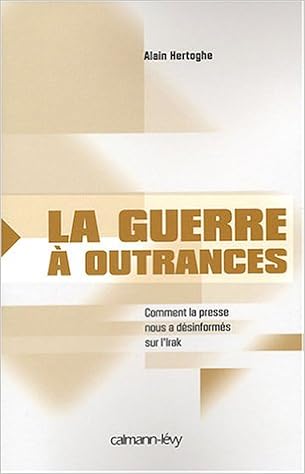
Eskaffit was growing increasingly more vocal in asking/telling me to keep quiet (shades of Chirac?) — he claimed that "de toutes façons", nobody could hear me — so seeing the end approaching (and having a hard time competing against a microphone), I pulled out my final ace — the final ace being a book, which I held above my head. (Yes, there did seem to be a somewhat theatrical element to this scene; why do you ask?) "Et en matière de mensonges, il y a ce livre d'un rédacteur de La Croix, qui a été licencié pour l'avoir publié, qui s'appelle Comment la presse nous a désinformés sur l'Irak. Et qui raconte les partis pris des Français pour diaboliser Bush, pour sanctifier Chirac, et pour communier avec les partis de la 'paix'."
[Translation: "And in terms of lies, there is this book by an editor of La Croix, which is called How the Press Disinformed Us on Iraq, and who indeed was fired for publishing it. And who details the bias of the French to demonize Bush, to sanctify Chirac, and to commune with the 'peace' parties."]
Even a few audience members had by now started to tell me to keep quiet, but that seemed an appropriate place to end anyway, so with that I sat down.

As for Eskaffit, he went on talking to the intervenants… ignoring completely what I had said. (While a couple of people behind me asked to see the book.) Well, I felt I had done my blogger's duty, so to speak, so I sat back, pretty content with myself.

Then, as Junqua made his last remarks, I understood that some people had heard me; the RSF moderator surprised me by pulling out his own copy of Alain Hertoghe's book (which he had in his briefcase), and explained that it provided a negative view of the French media during the Iraq war. But then he added that there was another book, detailing the French press's doings during the first Gulf war, with a positive slant, and that one could not read the first book without comparing it to the second. He tried to conclude that Hertoghe's book was a partisan "brûlot" that was not very friendly to his colleagues. (This from a colloque which had just declared that, happily, the old tradition in the press of refusing to criticize one's colleagues had now become "caduc"!)

I wasn't going to let him get away with that as the final word, so I let out another comment: "Les médias ont complètement censuré ce livre!" (But Eskaffit immediately started interrupting again.)
 [Translation: "The media thoroughly censored this book!"]
Afterwards, I went up to speak to some of the intervenants. Wells asked to see Hertoghe's book, which he wanted to check out. As for Junqua, he admitted it was news to him that the La Croix editor had been fired as a result of the book's publication.

So, all in all, a satisfying 10 minutes. (But hardly worth doing again, not at that distance. At least not without a couple of chums to have a drink with, afterwards.)

P.S. This is my first post for ¡No Pasarán! Muchas gracias, amigos, for inviting me to participar.