Behind the Façades in France: What expats and the mainstream media (French and American alike) fail to notice (or fail to tell you) about French attitudes, principles, values, and official positions…
In the current debate over the Affordable Care Act, we really are in
the midst of a great proxy war over single payer health care. Sure,
its not on the table with this Congress, and Obamacare, while a
bureaucratic monstrosity, isn’t single payer. But the debate
surrounding GOP efforts to repeal, or at least reform the law is really a
precursor to a national debate over single payer.
Regardless of the fate of the GOP pseudo-repeal bill, we are at a
crossroads. Obamacare is collapsing. It was never intended to be
permanent. It was always a compromise, a bridge to complete, government
sponsored, single payer health care. We will soon have to decide if we
want a market oriented health care system, or a government dominated
system.
Every left-wing opinion piece on health care starts with the premise
that medicine shouldn’t cost anything, and anytime it does, it’s a
evidence of a failed system. They point to Canada, the UK, and European
states where the socialist dreams of medicine are, we are told, coming
true. Obamacare’s failures, they say, should drive us closer to “single
payer”, not farther away.
… Let’s look at two hypothetical examples, one, representing a worst-case
scenario for free market health care, and one, representing a worst-case
scenario for socialized medicine.
Read the differences between the Jones family and the Smith family, and see how it relates to the very real nightmare of the Gard family in the UK. (Cheers for the link, Maggie.)
No system will be perfect. Health care is vitally important to each of
us, therefore it will be expensive; it is the definition of inelastic
demand. We don’t all have the financial ability to pay for what we
might need, be it through insurance, or our own money. But if faced
with the choice of two terrible scenarios, – the Smith family’s hopeless
“free” health care, the Gard family’s real life nightmare, or the Jones
family’s expensive, but attainable care, wouldn’t you rather be the
Jones family? At least they can fight. At least they can try. At
least there is hope.
Conservatives don’t oppose single payer because we are heartless. This
fight isn’t mainly about tax rates, or deficits, though single payer is
catastrophic for both. It’s about having not the cheapest health
care, but the best. So that when you need a hospital bed, the market
makes sure you don’t have to wait until it’s too late. So that when you
have a rare disease, there is hope that the market found it worthwhile
to develop a treatment. That might mean that when you have medical
issues, money is a worry. You get scary bills. But you have hope.
If the treatment is available, but the money is not, that can be
fixed. If the health care is free, but the government doesn’t permit
you to receive it…well, that’s a cruelty we don’t want to see replicated
in the United States.
Rep. Mo Brooks faced the question about his Second Amendment views just
minutes after someone literally tried to murder him. Can we take a
moment to think about how utterly crass this is? Imagine an abortion
bomber blowing up a Planned Parenthood grand opening in Washington DC,
injuring members of Congress in attendance. Then imagine most national
news coverage including this question for their colleagues who escaped
maiming: “Shouldn’t you probably consider changing your views on
abortion? Maybe pass some common-sense limits on it?”
… Less than 48 hours after a multiple assassination attempt on members of
Congress, there were no media vans or cameras at the Alexandria baseball
field where it occurred. Just for perspective, when Republican staffer
Elizabeth Lauten committed the offense of writing something critical of
President Obama’s daughters on her private Facebook page, news cameras were camped on her parents’ lawn staking her out for the better part of a week.
When the press was covering the shooting, it was mostly a gauzy,
imprecise discussion of how “rhetoric” might have caused it, which means
we’re in the business of determining whose rhetoric to stifle to
prevent further violence. Wouldn’t you know it? The answer was… Donald Trump’s rhetoric, which has the magical power to compel a Bernie volunteer to shoot a long-time Trump-supporting Republican.
… My, how quickly we move in the news cycle from Republicans literally shot to Republican overreach about Republicans being literally shot.
… What perverse standards. A Republican congressman is fighting for his life in a hospital thanks to a partisan attacker, but let’s examine on national TV several times over how he kind of had it coming because of his politics.
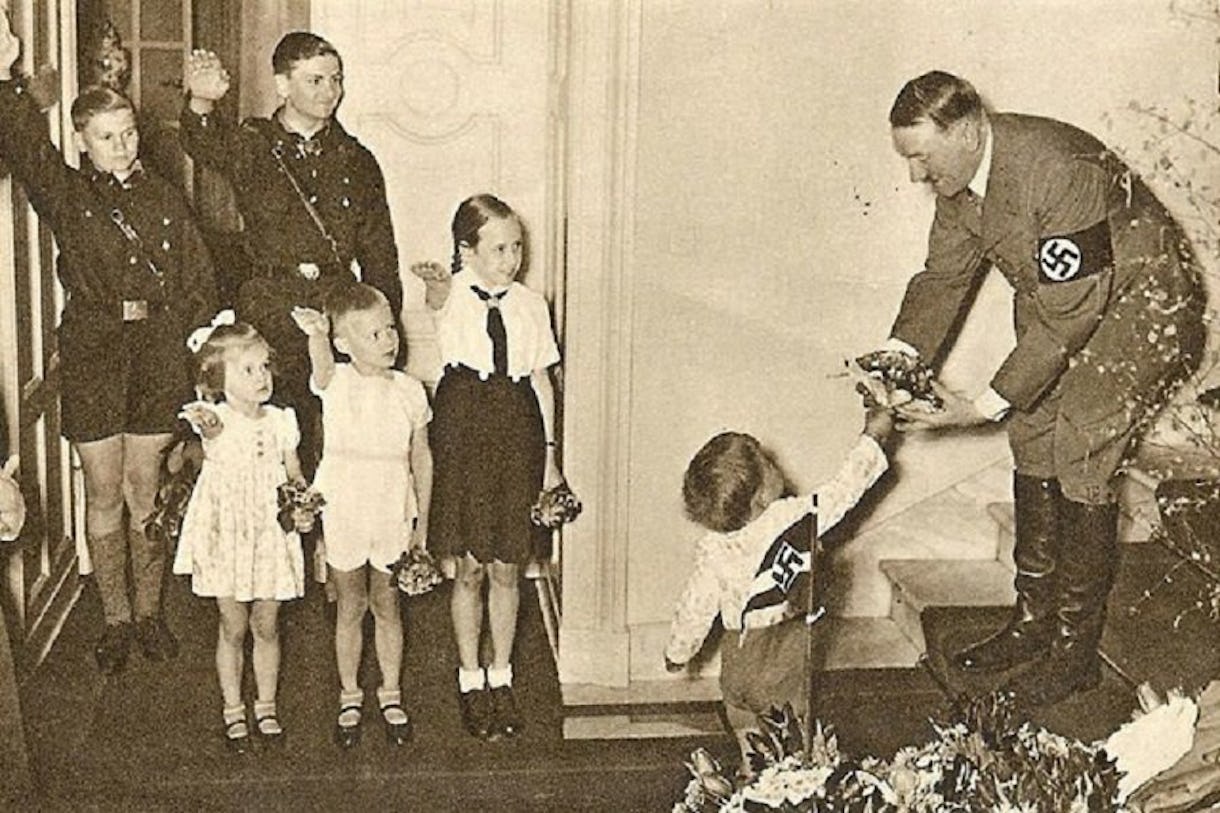
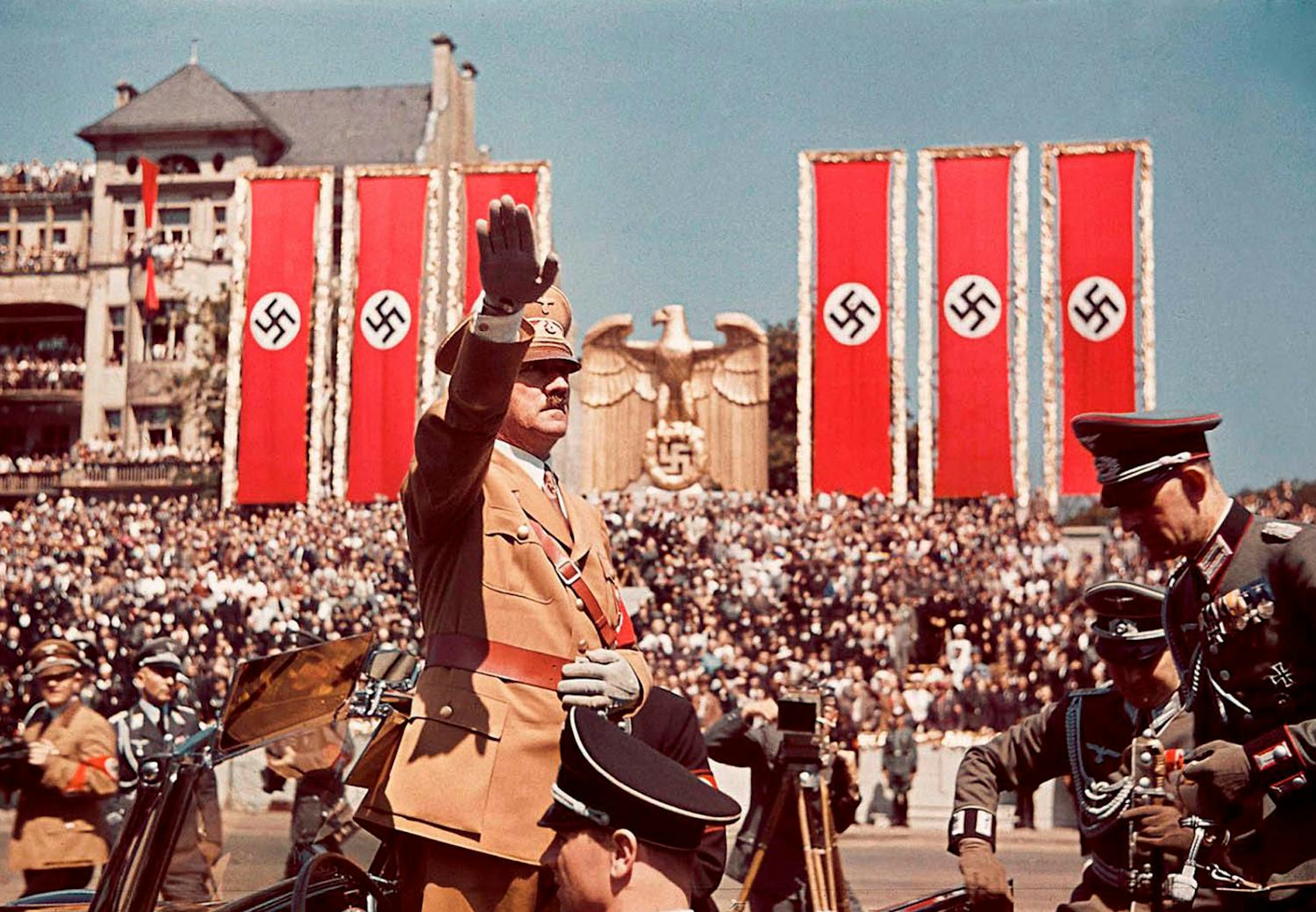
Jesus being a Jew, Adolf Hitler did not want his master race to continue celebrating his birthday, and consequently, the Führer spent his 12 years in the chancellery trying to transform the Christmas holiday into a Nazi-themed celebration devoted to the Aryan race and old Germanic traditions.
Thus writes Emrah Sütcü in the Danish monthly, Historie, putting the lie to the fact that Hitler and the Nazis had in any way a connection to the Christian religion.
Related: • Worshipping Little Else But the Aryan Race, Hitler Abhorred the Christian Faith and Wanted to Replace Christmas with the Pagans' Yuletide
Nazisterne hadede julen. Derfor forsøgte de med alle midler
at forvandle den kristne højtid til en fejring af den ariske race.
Julen skulle fejre arierne
Jesus var jøde. Og en fejring af hans fødselsdag var ikke noget for det tyske herrefolk, mente Adolf Hitler.
I perioden fra 1933, hvor han kom til magten i Tyskland, til 2.
verdenskrigs afslutning i 1945 kæmpede Hitlers topfolk indædt for at
forvandle den populære kristne helligdag til en nazistisk højtid, som
fejrede den ariske race og de oldgermanske traditioner.
Julefred er kun for tyskerne
Først og fremmeset havde nazisterne det svært med julens forsonende
budskab om fred på Jorden. Den stemte dårligt overens med ambitionerne
om at erobre resten af Europa.
I en artikel fra 1937 understreger Hannes Kremer, et ledende medlem
af Hitlers propagandaministerium, at tyskerne bør afvise julen som "en
højtid for en teoretisk fred for hele menneskeheden".
I stedet bør være en "højtid for reel hjemmelig og national fred" og altså kun handle om at sikre fred for tyskerne.
En fred, som tilsyneladende kun kunne sikres ved at udrydde nationens
fjender i form af bl.a. jøder, kommunister og homoseksuelle.
"Ud med Jesus"
Næste skridt var at køre den jødiske Jesus ud på et sidespor. Til alt
held for nazisterne havde tyskerne, længe inden de blev kristne, fejret
vintersolhverv omkring juletid.
…
Himmler omskrev julesalmer
Julesange og salmer, der nævnte
Jesus, blev omskrevet, så de i stedet hyldede nationalsocialismen.
Blandt sangskribenterne var ingen ringere end SS-chefen Heinrich
Himmler.
…
Hagekorset skulle op på juletræet
Juletræet havde nazisterne
ikke noget problem med, for det har faktisk rødder i hedenske, germanske
traditioner. Til gengæld var Hitler ikke glad for den stjerne, som blev
placeret på toppen af træet.
I stedet for stjernen - som enten
kunne symbolisere den jødiske Davidsstjerne eller kommunismens røde
stjerne - skulle tyskerne sætte enten et hagekors, et germansk solhjul
eller en oldnordisk rune øverst på juletræet, mente nazisterne.
Julepynt
fra Nazityskland, som er blevet bevaret for eftertiden, inkluderer
bl.a. kugler med slagord som fx "Sieg Heil" og symboler som bl.a.
hagekors, jernkors og ørne.
Oh, puh-leeze. There are a lot of ridiculously shaped,
blatantly skewed districts in this country but Georgia’s sixth is not
one of them. Its outline
is not particularly remarkable and its demographics “look like America”
which is something I thought liberals liked. The district is 71% white,
14% black and 13% Hispanic. Party registration favors the Republicans
by nine points which is not insurmountable nor is it prima facie
evidence of gerrymandering. The reason that liberal Democrats have been
losing this district with regularity is because their policies have so
thoroughly alienated the white middle class. To blame Ossoff’s loss on
gerrymandering is sour grapes, nothing more.
Gerrymandering, like most things that Democrats complain about, is
something that they invented, popularized, and insisted upon for years
before deciding that it’s an affront to dignity and civil rights. The
very word “gerrymandering” can be traced back to the 19th
Century Massachusetts Governor Eldridge Gerry. The Massachusetts
legislature drew some truly bizarre state senate districts in an obvious
attempt to favor Gerry’s Democratic-Republican Party (who are today
called simply Democrats) at the expense of the Federalist opposition.
Ever since that time, politicians have been choosing their own voters by
drawing lines around people inclined to vote for them.
So there are a lot of good reasons to hate gerrymandering. It wreaks
of corruption and it ensures that incumbents don’t actually have to
compete. If it were up to me districts would be drawn without regard to
their inhabitants. Some districts might turn out bright red and others
deep blue but most would be some shade of purple and all would obtain
their political character by happenstance.
Like nearly every issue in American politics, gerrymandering also has
a racial angle. While gerrymandering isn’t particularly new, the Voting
Rights Act of 1965 and a maze of subsequent case law have made it
practically mandatory in states with substantial minority populations.
Certain portions of the VRA which have since been struck down
as unconstitutional mandated that southern states first submit any
changes in election laws, including electoral maps, to the Department of
Justice for its approval. In time, the DOJ came to demand that states
create “majority-minority” districts—that is, districts in which whites
are a minority. This was considered the only way to give minorities a
voice.
The DOJ’s directives set a terrible precedent, namely that our
elected officials represent races rather than districts and their
citizens. This insidious trend amounts to an abandonment of the “one
man, one vote” principle in favor of a racial spoils system. It also
turns gerrymandering into a positive good–If state legislatures don’t
feel like drawing districts that look like shadow puppets the forces of
enlightenment will compel them to do exactly that.
Majority-minority districts now exist in most states that aren’t lily
white and most of these districts habitually send complete bozos to
Washington. Representative Alcee Hastings, for example, probably
wouldn’t be able to win election in a non-gerrymandered district because
he’s a former federal judge
who was impeached and removed for bribery and perjury. But because his
Florida district was drawn specifically to elect a minority
representative, and because his constituents seem not to care that he’s a
corruptocrat, Hastings has a seat in the House of Representatives.
Representative Luis Gutierrez, who thinks his job is to represent the
illegal alien population in Congress, wouldn’t be in Congress today if
his ridiculously-shaped Illinois district weren’t ready-made to elect a
far-left Latino. Representative Sheila Jackson Lee, who thinks that American astronauts planted Old Glory on Mars, would certainly not be in Congress today if the map weren’t rigged in her favor. And so on.
North Carolina butted heads with the federal government in the 1990s
over exactly how to stay on the right side of the DOJ’s unconstitutional
veto authority. After the 1990 Census, which awarded North Carolina an
additional congressional seat, the legislature in Raleigh set about
drawing a new electoral map. It submitted its map to the DOJ for its
approval as required by the unconstitutional portion of the VRA. The
DOJ, which was then headed by ultra-progressive Janet Reno, responded
with a mandate to create a second majority-minority district in the
state. North Carolina dutifully complied, creating the 12th district
which was as ugly as a modern art masterpiece.
It’s truly the most absurd thing I’ve ever seen though that’s to be
expected when people create districts for the sole purpose of lumping
all the black people together.
A few North Carolinians sued appellate state and federal officers in a
case called Shaw v. Reno, claiming that the wacky DOJ-approved
redistricting plan violated their equal protection rights. Though the
results of the case were mixed, the Supreme Court did decide that
packing minorities into majority-minority districts is a practice that
must pass a strict scrutiny test and cannot be done solely for racial
reasons. Justice Sandra Day O’Connor, who wrote for the majority, said
that the bedraggled 12th district “bears an uncomfortable
resemblance to political apartheid.” She’s right about that but it
should be remembered that progressive opinion was, in this case at
least, on the side of political apartheid.
My how things change. Since Shaw v. Reno, liberals have decided that
“packing” minorities into a single district—which used to be the
un-racist thing—is now racist. Containing the black vote within one
district necessarily creates a slew of conservative white districts
around it. Those white guys’ seats are just as safe as the minority
congressman’s and they have no incentive to woo minority or liberal
voters–and we can’t have that!
What exactly do these race-obsessed agitators want? I only ask
because I’m really sick of their incessant whining. I think what they
want is to have plenty of blatantly gerrymandered majority-minority
districts that are nice and safe for their race and their party but at
the same time they want the other districts around the gerrymandered
ones to remain competitive. That way black and Hispanic leftists will
always have their voice in Congress no matter which way the winds shift
but they will also have the opportunity to win additional seats.
Anything less is somehow racist.
Clearly they want to have their cake and eat it too. Consider a
recent federal court decision that invalidated Texas’ proposed
redistricting plan. The map was drawn by a Republican-majority
legislature so it was automatically suspect. Two judges, Xavier
Rodriguez and Orlando Garcia, ruled
that gerrymandering cannot be used to reduce the influence of minority
voters, whether by “packing” or its opposite, “cracking.”
This is the very definition of damned if you do, damned if you don’t.
When minority voters are all grouped together in one district liberals
cry foul. When they’re spread out, liberals cry foul. It seems unlikely
that two diametrically opposed methods (“packing” and “cracking”) could
even achieve the same effect but that’s what liberals want us to
believe. Aren’t these people simply attributing nefarious motives to any
plan drawn up by their political opposition?
It would seem that the only way to draw districts that neither “pack”
nor “crack” is to take the colorblind approach which is fine by me. I’m
all for that. But even that may not work because judges are apparently
mind-readers and may discern racism if there are too many or too few
minorities in any particular district, which there are bound to be. The
question remains: what exactly is the correct number and how can we
achieve that number without drawing districts based on race which the
Supreme Court found constitutionally suspect in Shaw v. Reno?
The other problem with the colorblind approach is that it’s exactly
the opposite of what the Department of Justice mandated for decades. It
was Bill Clinton’s DOJ, after all, that ordered North Carolina to add
another majority-minority district to its map. Even if states stopped
packing today, the basic color-conscious outlines imposed by an
overbearing federal government would probably remain for years.
I believe that the real reason liberals constantly complain about
gerrymandering—and often sue people over it—is not because they have any
principled opposition to it. No, they simply want to create bad
headlines for the opposition. Every time a Republican-dominated
legislature has to defend its electoral map in court, Democrats get to
accuse those who drafted it of crypto-racism. Even if the Democrats lose
their case, the damage to the Republicans has already been done.
For my part, I would like to see an end to
gerrymandering of all kinds, whether based on race, party, or anything
else. When it comes to congressional districts, boring shapes suit me
just fine. But as long as there are litigators and liberal Democrats
around I know that that won’t happen.
Note: if you squint just right, you should be able to make your eyes superimpose the two parts of the second photograph below in just the right way — remember the View-Master as well as Magic Eye's 3-D party books from the 1990s? — in order to make it into a three-dimensional picture.
Liberals rail at
Donald Trump’s
executive orders on immigration and his hostility toward the press, while conservatives vow to reverse
Barack Obama’s
regulatory assault on religion, education and business.
Philip Hamburger
says both sides are thinking too small.
Like the blind
men in the fable who try to describe an elephant by feeling different
parts of its body, they’re not perceiving the whole problem: the
enormous rogue beast known as the administrative state.
Sometimes called the regulatory state or the deep state, it is a
government within the government, run by the president and the dozens of
federal agencies that assume powers once claimed only by kings. In
place of royal decrees, they issue rules and send out “guidance” letters
like the one from an Education Department official in 2011 that
stripped college students of due process when accused of sexual
misconduct.
Unelected bureaucrats not only write their own laws,
they also interpret these laws and enforce them in their own courts
with their own judges. All this is in blatant violation of the
Constitution, says Mr. Hamburger, 60, a constitutional scholar and
winner of the Manhattan Institute’s
Hayek
Prize last year for his scholarly 2014 book, “Is Administrative
Law Unlawful?” (Spoiler alert: Yes.)
“Essentially, much of the
Bill of Rights has been gutted,” he says, sitting in his office at
Columbia Law School. “The government can choose to proceed against you
in a trial in court with constitutional processes, or it can use an
administrative proceeding where you don’t have the right to be heard by a
real judge or a jury and you don’t have the full due process of law.
Our fundamental procedural freedoms, which once were guarantees, have
become mere options.”
In volume and complexity, the edicts from federal agencies exceed the
laws passed by Congress by orders of magnitude. “The administrative
state has become the government’s predominant mode of contact with
citizens,” Mr. Hamburger says. “Ultimately this is not about the
politics of left or right. Unlawful government power should worry
everybody.”
Defenders of agencies like the Securities and Exchange Commission or
the Environmental Protection Agency often describe them as the only
practical way to regulate today’s complex world. The Founding Fathers,
they argue, could not have imagined the challenges that face a large and
technologically advanced society, so Congress and the judiciary have
wisely delegated their duties by giving new powers to experts in
executive-branch agencies.
Mr. Hamburger doesn’t buy it. In his
view, not only is such delegation unconstitutional, it’s nothing new.
The founders, far from being naive about the need for expert guidance,
limited executive powers precisely because of the abuses of 17th-century
kings like James I.
James, who reigned in England from 1603 through 1625, claimed
that divinely granted “absolute power” authorized him to suspend laws
enacted by Parliament or dispense with them for any favored person. Mr.
Hamburger likens this royal “dispensing” power to modern agency
“waivers,” like the ones from the Obama administration exempting
McDonald’s
and other corporations from complying with provisions of the Affordable Care Act.
James
also made his own laws, bypassing Parliament and the courts by issuing
proclamations and using his “royal prerogative” to establish commissions
and tribunals. He exploited the infamous Star Chamber, a court that got
its name from the gilded stars on its ceiling.
“The Hollywood
version of the Star Chamber is a torture chamber where the walls were
speckled with blood,” Mr. Hamburger says. “But torture was a very minor
part of its business. It was very bureaucratic. Like modern
administrative agencies, it commissioned expert reports, issued decrees
and enforced them. It had regulations controlling the press, and it
issued rules for urban development, environmental matters and various
industries.”
James’s claims were rebuffed by England’s chief
justice,
Edward Coke,
who in 1610 declared that the king “by his proclamation cannot
create any offense which was not an offense before.” The king eventually
dismissed Coke, and expansive royal powers continued to be exercised by
James and his successor, Charles I. The angry backlash ultimately
prompted Parliament to abolish the Star Chamber and helped provoke a
civil war that ended with the beheading of Charles in 1649.
A
subsequent king,
James II,
took the throne in 1685 and tried to reassert the prerogative
power. But he was dethroned in the Glorious Revolution in 1688, which
was followed by Parliament’s adoption of a bill of rights limiting the
monarch and reasserting the primacy of Parliament and the courts. That
history inspired the American Constitution’s limits on the executive
branch, which
James Madison
explained as a protection against “the danger to liberty from the
overgrown and all-grasping prerogative of an hereditary magistrate.”
“The framers of the Constitution were very clear about this,” Mr.
Hamburger says, rummaging in a drawer for a pocket edition. He opens to
the first page, featuring the Preamble and Article 1, which begins: “All
legislative Powers herein granted shall be vested in a Congress.” “That
first word is crucial,” he says. “The very first substantive word of
the Constitution is ‘all.’ That makes it an exclusive vesting of the
legislative powers in an elected legislature. Congress cannot delegate
the legislative powers to an agency, just as judges cannot delegate
their power to an agency.”
Those restrictions on executive power
have been disappearing since the late 19th century, starting with the
creation of the Interstate Commerce Commission in 1887. Centralized
power appealed to big business—railroads found commissioners easier to
manipulate than legislators—as well as to American intellectuals who’d
studied public policy at German universities. Unlike Britain, Germany
had rejected constitutional restraints in favor of a Prussian model that
gave administrative agencies the prerogative powers of the king.
Mr.
Hamburger believes it’s no coincidence that the growth of America’s
administrative state coincided with the addition to the electorate of
Catholic immigrants, blacks and other minorities. WASP progressives like
Woodrow Wilson
considered these groups an obstacle to reform.
“The bulk of mankind is rigidly unphilosophical, and nowadays
the bulk of mankind votes,” Wilson complained, noting in particular the
difficulty of winning over the minds “of Irishmen, of Germans, of
Negroes.” His solution was to push his agenda using federal agencies
staffed by experts of his own caste—what Mr. Hamburger calls the
“knowledge class.” Wilson was the only president ever to hold a
doctorate.
“There’s been something of a bait and switch,” Mr. Hamburger says.
“We talk about the importance of expanding voting rights, but behind the
scenes there’s been a transfer of power from voters to members of the
knowledge class. A large part of the knowledge class, Republicans as
well as Democrats, went out of their way to make the administrative
state work.”
Mr. Hamburger was born into the knowledge
class. He grew up in a book-filled house near New Haven, Conn. His
father was a Yale law professor and his mother a researcher in economics
and intellectual history. During his father’s sabbaticals in London,
Philip acquired a passion for 17th-century English history and spent
long hours studying manuscripts at the British Museum. That’s where he
learned about the royal prerogative.
He went to Princeton and
then Yale Law School, where he avoided courses on administrative law,
which struck him as “tedious beyond belief.” He became slightly more
interested during a stint as a corporate lawyer specializing in taxes—he
could see the sweeping powers wielded by the Internal Revenue
Service—but the topic didn’t engage him until midway through his
academic career.
While at the University of Chicago, he heard of a colleague’s
inability to publish a research paper because the study had not been
approved ahead of time by a federally mandated institutional review
board. That sounded like an unconstitutional suppression of free speech,
and it reminded Mr. Hamburger of those manuscripts at the British
Museum.
Why the return of the royal prerogative? “The answer
rests ultimately on human nature,” Mr. Hamburger writes in “The
Administrative Threat,” a new short book aimed at a general readership.
“Ever tempted to exert more power with less effort, rulers are rarely
content to govern merely through the law.”
Instead, presidents
govern by interpreting statutes in ways lawmakers never imagined. Barack
Obama openly boasted of his intention to bypass Congress: “I’ve got a
pen and I’ve got a phone.” Unable to persuade a Congress controlled by
his own party to regulate carbon dioxide, Mr. Obama did it himself in
2009 by having the EPA declare it a pollutant covered by a decades-old
law. (In 2007 the Supreme Court had affirmed the EPA’s authority to do
so.)
Similarly, the Title IX legislation passed in 1972 was intended
mainly to protect women in higher education from employment
discrimination. Under Mr. Obama, Education Department bureaucrats used
it to issue orders about bathrooms for transgender students at public
schools and to mandate campus tribunals to adjudicate sexual
misconduct—including “verbal misconduct,” or speech—that are in many
ways less fair to the accused than the Star Chamber.
At this
point, the idea of restraining the executive branch may seem quixotic,
but Mr. Hamburger says there are practical ways to do so. One would be
to make government officials financially accountable for their excesses,
as they were in the 18th and 19th centuries, when they could be sued
individually for damages. Today they’re protected thanks to “qualified
immunity,” a doctrine Mr. Hamburger thinks should be narrowed.
“One
does have to worry about frivolous lawsuits against government officers
who have to make quick decisions in the field, like police officers,”
he says. “But someone sitting behind a desk at the EPA or the SEC has
plenty of time to consult lawyers before acting. There’s no reason to
give them qualified immunity. They’ll be more careful not to exceed
their constitutional authority if they have to weigh the risk of losing
their own money.”
Another way of restraining agencies—one President Trump could adopt
on his own—would be to require them to submit new rules to Congress for
approval instead of imposing them by fiat. The president could also
order at least some agencies to resolve disputes in regular courts
instead of using administrative judges, who are departmental employees.
Meanwhile, Congress could reclaim its legislative power by going through
regulations, agency by agency, and deciding which ones to enact into
law.
Mr. Hamburger’s chief hope for reform lies in the courts,
which in earlier eras rebuffed the executive branch’s power grabs. Those
rulings so frustrated both
Theodore Roosevelt
and
Franklin D. Roosevelt
that they threatened retaliation—such as
FDR’s
plan to pack the Supreme Court by expanding its size. Eventually
judges surrendered and validated sweeping executive powers. Mr.
Hamburger calls it “one of the most shameful episodes in the history of
the federal judiciary.”
The Supreme Court capitulated further in decisions like Chevron
v. Natural Resources Defense Council (1984), which requires judges to defer to any “reasonable interpretation” of an ambiguous statute by a federal agency. “Chevron deference should be called Chevron bias,”
Mr. Hamburger says. “It requires judges to abandon due process and
independent judgment. The courts have corrupted their processes by
saying that when the government is a party in case, they will be
systematically biased—they will favor the more powerful party.”
Mr. Hamburger sees a good chance that the high court will limit and eventually abandon the Chevron doctrine,
and he expects other litigation giving the judiciary a chance to
reassert its powers and protect constitutional rights. “Slowly, step by
step, we can persuade judges to recognize the risks of what they’ve done
so far and to grapple with this very dangerous type of power,” he says.
The judiciary, like academia, has many liberals who have been
sympathetic to the growth of executive power, but their perspective may
be changing.
“Administrative power is like off-road driving,”
Mr. Hamburger continues. “It’s exhilarating to operate off-road when
you’re in the driver’s seat, but it’s a little unnerving for everyone
else.”
He says he observed this effect during a recent
conversation with a prominent legal scholar. The colleague, a longtime
defender of administrative law, was discussing the topic shortly after
Mr. Trump’s inauguration.
The colleague told Mr. Hamburger: “I am beginning to see the merit of your ideas.”
If we follow the course we are on, we will see more unhappiness,
more violence, more repressive national-security policies, less
prosperity, less freedom, and less of anything that looks like the
quite-good-enough America we already have.
"The American Left has embraced political violence"
writesKevin Williamson of what he calls "the modern answer to the beer-hall brawlers of the 1930s" while George Rasley wonders if the Left just started the Civil War that it has been threatening:
Democrats and their liberal allies in the media seem surprised that
James T. Hodgkinson acted upon their calls for “resistance” and “taking
it to the streets” by mounting an armed attack on a group of Republican
elected officials.
They shouldn't be, because as our friend “Tyler Durden” of Zero Hedge
documented back in March, senior Democratic leaders have not been
bashful about encouraging the violence.
… However, it is not politicians who are the most violent and most influential advocates of violence.
It is a very short – and logical – hop from organized Leftists
rioting and assaulting Donald Trump supporters in Chicago, to a Far Left
university professor beating Trump supporters with a bike lock at
Berkeley, to a Far Left activist shooting up the Republican
congressional baseball practice.
CHQ's George Rasley goes on to present a short
list of some of the more – and prescient – statements from Leftist
advocates of violent resistance to President Trump and the Republican
agenda, compiled by Nick Short of the Center for Security Policy. (Thanks for the link, Maggie.)
James T. Hodgkinson wasn’t a “nut.” He wasn’t “deranged.” And he
wasn’t “sick.” He was a Leftist terrorist, just like Obama’s buddy Bill
Ayres of the Weather Underground and Puerto Rican terrorist Oscar
Lopez-Rivera, who was recently honored as a hero by New York's
Democratic Mayor Bill DeBlasio.
Hodgkinson’s attack wasn’t mental illness. Read his writings, read the political manifesto in his letters to the editor
and it doesn’t require an FBI investigation to recognize that this was
the first “lone wolf” attack in the Left’s long-planned American civil
war.
“The old is better” may be a convenient caricature of conservative thinking, but it is not one without some basis. “To be conservative,” Michael Oakeshott wrote, “is to prefer the familiar to the unknown, to prefer the tried to the untried, fact to mystery, the actual to the possible, the limited to the unbounded, the near to the distant, the sufficient to the superabundant, the convenient to the perfect, present laughter to utopian bliss.”
… This is not a “both sides do it” issue: Paul Krugman can speak on
any college campus in this country without enduring mob violence and
organized terrorism — Charles Murray cannot. There is not anything on
the right like the mass terrorism behind the Seattle riots of 1999 or
the black-bloc riots of the day before yesterday. The Democratic party,
progressive organizations, and college administrations have some serious
political and intellectual housekeeping to do here — but, instead, they
are in the main refusing to acknowledge that they have a problem. The
line between “Punch a Nazi!” and “Assassinate a Republican congressman!”
is morally perforated.
we have powerful political figures working to criminalize dissent.
The same people who have spent the past 30 years cooking up ever-battier
campus speech codes want to do the same thing for society at large in
the form of so-called hate-speech regulation.
They do this partly because they intend to win and to rule. They
also do it because they have convinced themselves that we are in a state
of national crisis, and that the dark shadow of fascism in descending
on the United States. In reality, the only thing resembling a genuine
totalitarian movement in American politics is the progressive camp from
which emerged the man who shot Steve Scalise.
Once you’ve accepted political violence as a legitimate tool in the
context of American democracy — once you have concluded that the
decision to use violence is only a matter of strategy, as Slavoj Žižek
insists — then progress from pepper spray and bicycle locks to rifles
and bombs is neither very long nor very difficult to anticipate.
Today, France is voting for the second and final round in the legislative elections, in which the French President's La République En Marche (LRM) is expected to win handsomely.
Voici's
Karine Hernandez explains that prior to his meeting with Donald Trump, Emmanuel Macron prepared himself extensively for the American's famous handshake.
Referring to Donald Trump as "the American (and the orange) president", allegedly in a fit of neutral impartiality (sic), the Voici journalist writes that
One of the most striking moments of this meeting is — and will forever remain — the now famous handshake exchanged by Emmanuel Macron and US (and orange) President Donald Trump.
A real contest of manhood with clenched jaws, frozen grins, third-degree looks, and crushed hands that made the tour of the world. Donald Trump, known for his abrupt and unreasoned bickering, uses these formal moments imposed in official meetings to show his interlocutors and the international media that he is the boss.
Except that it did not happen that way with Emmanuel Macron, who had seen the blow coming and prepared himself. According to a close friend of the president quoted by Le Monde: "Macron had watched beforehand videos of all Trump's handshakes." Like a boxer analyzing the fights of his future opponent to break through his techniques and weak points, the tenant of the Elysée Palace had therefore watched a retrospective of Donald clamping clamps.
Which led him to declare to the JDD afterwards that this "handshake with [Trump], it is not innocent, it is not the alpha and the omega of a policy but a moment of truth. We must show that we will not make concessions, even symbolic ones." And it's always more chic than checking who can pee the furthest...
L’un des moments les plus marquants de ce meeting est – et restera à
jamais – la désormais célèbre poignée de mains qu’ont échangée
Emmanuel Macron et le président américain (et orange) Donald Trump.
Un
vrai concours de virilité avec mâchoires crispées, rictus figés,
regards troisième degré et mains broyées qui a fait le tour du monde.
Connu pour ses empoignades aussi brusques qu’irraisonnées, Donald
Trump se sert de ces moments protocolaires imposés des rencontres
officielles pour montrer à ses interlocuteurs et aux médias
internationaux que c’est lui le patron.
Sauf
que ça ne s’est pas passé comme ça avec Emmanuel Macron qui avait vu
le coup venir et s’y était préparé. Selon un proche du président cité
par Le Monde : « Macron avait regardé avant des vidéos de toutes les poignées de mains de Trump.
» Tel un boxeur qui aurait analysé les combats de son futur opposant
pour percer ses techniques et ses points faibles, le locataire de
l’Elysée s’était donc tapé une petite rétrospective de Donald serrant
des pinces.
De quoi lui faire dire au JDD après coup, qu’effectivement, cette « poignée
de main avec [Trump], ce n’est pas innocent, ce n’est pas l’alpha et
l’omega d’une politique mais un moment de vérité. Il faut montrer qu’on
ne fera pas de concessions, même symboliques. » Et puis c’est toujours plus chic que de vérifier qui fait pipi le plus loin…
When, not too many years ago, I took a first aid crash course, I was astonished to learn that something once as central as mouth-to-mouth resuscitation had been entirely dropped from the first aid "kit" (I know, if I were a teenage boy — and girl — I would be using the word "disappointed" with winking smileys galore).
Dropped in favor of heart massage. (To the tune of, I am not making this up, Stayin' Alive…)
What does this teach us, if not that — and sometimes in the most astonishing ways — the science is never settled?
Take something requiring a far more professional intervention: as far as gunshot victims are concerned, the New York Times's
Gina Kolata explains that today a patient
may undergo two to 10 operations, said Dr. Jeremy Cannon, a
trauma surgeon at the University of Pennsylvania, and may remain in the
hospital anywhere from days to several months.
Still, the are far better than in the old days, before the early 1990s,
when surgeons tried to do all the repairs at once, operating for hours
at a time.
In a study that
changed medical practice, surgeons found that trauma patients with the
most severe abdominal injuries who received one long operation had just a
15 percent survival rate. But those with the same sort of injuries who
got multiple operations to repair the damage had a survival rate of 77
percent.
The
lesson for surgeons is that long operations can be fatal to trauma
patients. “The body can only take so much,” said Dr. Thomas Scalea, a
trauma surgeon at the University of Maryland School of Medicine.
Surgeons now employ the multistage approach.
These
days trauma patients who do not bleed to death right away usually
recover, said Dr. Sean Montgomery, a trauma surgeon at Duke University.
After 20 years as editor of the New England Journal of Medicine, this is her conclusion. pic.twitter.com/aqTR14n1KQ
Chez Sputnik News, Rachel Marsden analyse les premiers pas du nouveau Président de la République française avec Karim Ouchikh, président du SIEL et Paul Reen, vice-président des Républicains (USA) en France.
Pour le représentant des Républicains en France, Paul Reen, Emmanuel
Macron suscite un espoir et les réformes qu'il a pu entreprendre vont
dans le bon sens:
« La réforme sur le droit du travail, avec de la
dérégulation, avec des politiques plus favorables aux entreprises pour
rendre plus facile l'embauche, surtout les jeunes, la réduction des
impôts. »
—really fast. This high school track star is so fast that he recently claimed the titles for the 100-meter and 200-meter dashes at the Connecticut state championship.
The secret to his success? He’s a boy who competes against girls.
That’s it. This kid “identities” as a girl and no one is willing to say
that he’s not. He runs against girls and beats them every time which is
quite fortuitous considering the fact that he would have placed last in the Connecticut state championships if he had been competing against other boys.
Andraya is not slight or effeminate. Anraya is not undergoing hormone
“therapy” and he has not had his member lopped off—not that any of
those things would render him female. He’s endowed with the physique of a
dude and he’s even got a mustache—albeit a cheesy high school mustache
but a mustache all the same. Andraya will likely return to the state
championships for the next three years and he will no doubt be
significantly stronger and faster than he is now which is already
stronger and faster than the girls he’s competing against. They don’t
have a chance.
“It feels really good,” he said. ”I’m really happy to win both
titles. I kind of expected it. I’ve always gotten first, so I expected
it to some extent… I’m really proud of it.”
Yeah, he’s really proud that he left a bunch of girls in his dust.
It’s no wonder he’s so proud—the media is predictably heralding this
fraud for his “courage.”
What’s perhaps most interesting about this story is the reaction of
the second place runner, Kate Hall, who is a devoted student athlete
from Stonington, Connecticut. As far as I’m concerned she was the real
winner of the 100-meter race and she has legitimate grounds to complain
about being robbed of that victory. Yet she refuses to air her gripes
publicly. Said Ms. Hall to the Hartford Courant:
“It’s frustrating. But
that’s just the way it is now … I can’t really say what I want to say,
but there’s not much I can do about it. You can’t blame anyone.”
She can’t say what she wants to say? She can’t blame anyone? Why not? Who’s going to stop her?
I think we all know the answer to that. Transgenderism is the newest frontier in
“civil rights,” the long awaited “T” in that LGBT acronym everyone’s
been using for about fifteen years. Every inch of progress that this
movement has made has been gained through intimidation. First, they soak
dissidents with shame, then they make them feel isolated, then they
bombard them with dispiriting propaganda. Their opponents are left
believing that they can do nothing to stop this movement’s inevitable
forward motion. They learn to keep their heads down and their mouths
shut. Nearly everyone sees that this is utter madness but no one will
stand up and declare that the emperor has no clothes.
Kristen Quintrall Lavin is a fairly good example of this. She’s the resident blogger at “The Get Real Mom”,
a blog about motherhood. This liberal, 30-something, West Coast mother
prides herself on being tolerant which might explain why she began her post
about a man she encountered in the ladies room at Disneyland by
assuring her readers that she’s not one of those “homophobic mothers
lashing out at Disney.” Transgender people don’t bother her at all, you
see.
Except when they’re in the bathroom with and her and her young son
and when they don’t look sufficiently feminine. The particular man who
wandered into the ladies room that day caused Ms. Lavin alarm because he
made no effort to adopt feminine accouterments; ergo, he must not have
been truly transgender. “Ok there is definitely a very large, burly man
in a Lakers jersey who just walked in here. Am I the only one seeing
this?” she thought.
Actually, she wasn’t the only one who noticed the man and she wasn’t the
only one who was distressed. But no one made a peep. She wrote: “We
were all trading looks and motioning our eyes over to him…like ‘What is
he doing in here?’ Yet every single one of us was silent. And this is
the reason I wrote this blog [post]. If this had been 5 years ago, you
bet your ass every woman in there would’ve been like, ‘Ummm what are you
doing in here?’, but in 2017? The mood has shifted. We had been
culturally bullied into silence. …” …
How satisfying it is to hear about a liberal getting a small taste of
her own bitter medicine. Now she knows what it feels like to be
“culturally bullied into silence,” something that I experience on a near
daily basis. It seems obvious that this incident at Disneyland was the
first time she had ever been on the receiving end of this kind of
silencing tactic and she clearly didn’t like it.
But her writing also makes clear that she’s accustomed to using the
same tactic against others. The lengthy disclaimer at the front end of
her blog post tells me that she still thinks it’s appropriate to label
and shun actual “homophobes” and “transphobes.”
… Still, it’s difficult to imagine this woman’s predicament without
sympathizing with her just a little bit. She makes a very good
point—that our culture has changed so rapidly in recent years that women
are now left feeling helpless when burly men enter their private
spaces. The women feel as if they have no backup because, let’s face it,
they don’t. Everyone’s been cowed into submission, including Disney and
probably including their husbands. Years ago that man in the Lakers
jersey would have been knocked upside the head with a dozen or so heavy
purses but these days that’s a “transphobic” “hate crime.” Literally. If a woman tried that today she would probably spend years in jail and have her face plastered all over MSNBC.
If we’re ever to roll back this insanity we’re going to have to show
some solidarity with the victims of homofascism and transfascism, which
are so inexorably linked that they cannot be separated. We’re going to
have to let people like Kristen Quintrall Lavin and Kate Hall know that
they are not alone. It would make all the difference in the world if
they knew that they wouldn’t be left to twist in the wind when the
bullies attack. People can’t be “culturally bullied into silence” when
their community has their back.
Consider for a moment how the Connecticut state track
championship might have played out differently if Kate Hall had known
that she had the support of her coach and her parents. I think she might
have told that reporter the truth—that an ineligible boy had stolen
what was rightfully hers. But that would mean that her parents and her
coach would have to have some courage too, which they clearly don’t. In
their defense, it’s probably more difficult for them to speak up because
they have jobs and can be fired. Going after people’s livelihoods is a favorite tacticof thehomofascist Left.
So her parents and her coach would need to know that they too would
have the support of the community, particularly their employers, if they
were besieged by the tolerance bullies. And on and on it goes, moving
outward in concentric circles of mutual support away from the person who
needs it most.
But we don’t do that for each other. When someone says that a boy is a
boy is a boy, no matter how that boys feels about it, that person is
almost guaranteed to get pummeled. Too often we turn our backs on that
person lest we get pummeled too. Our silence enables them. And that is
why the bullies always win.
Wistful daydreaming that the decision to leave the EU might one day
be reversed might bring some comfort to bereaved Remainers. They are
delusional. Ask this question: if Britain had never joined the EU would
we now vote to do so? Looking at the wasteful, sclerotic and
undemocratic grouping that it has become, only a Euro-enthusiast of the
deepest hue could think that we would.
It is worth remembering
that when Britain joined in the 1970s the country’s fortunes were at
their lowest ebb. National morale was at rock-bottom and there were
serious people who questioned whether Britain
Britain was actually governable, such was the dysfunctional nature of
industrial relations. Across the Channel the EEC offered a vision of a
better world with Germany still in the Wirtschaftswunder era and France enjoying les trente glorieuses.
Britain’s decision to join the EU was akin to that of a drowning man
who decides to grab a lifebelt. Today the situation is very different:
the European economic model is no longer one that Britain envies and it
is Britain which is the magnet for energetic migrants.
Reversing
Brexit is now the longest of long shots. But if it is ever to be
achieved Tony Blair, a discredited political huckster, is the very last
man the public would turn to. Europhiles must find a new face to lead
them to the promised land.
Ted Stroll, meanwhile, writes from San Jose, California, that
There
is a simple solution to the Brexit conundrum, one that will allow
Britain to have its trade cake and eat it too [Special report on the future of the European Union,
March 25th]: the UK need only become
the 11th province of Canada. Canada and the EU recently concluded a
trade agreement and the UK would accede to it as a Canadian province. It
would also join NAFTA and enjoy liberal trade terms with the United
States.
Adjustments would be few and easy. Canada’s provinces have
wide powers and by treaty the UK’s could be even broader. The queen
would remain head of state. As a provincial flag, the Union flag would
still be flown, with the Canadian flag a discreet presence on government
buildings. As Hong Kong and Macau kept the dollar and pataca, so
Britain could keep the pound. English would be an official language
(though so would French). Such a move wouldn’t be unprecedented.
Newfoundland left the UK and joined Canada in 1949. Time to think
outside the box.
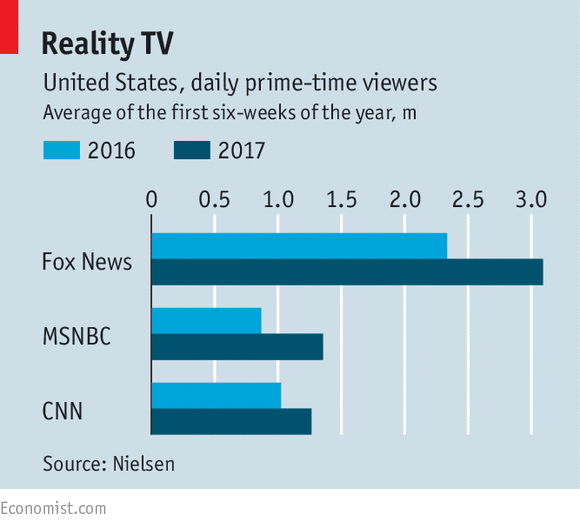
Responding to an article in The Economist on Newspapers and television, Joseph Ting writes from Australia that
Regarding “The Trump bump”
enjoyed by America’s media (February 18th), Neil Postman, in “Amusing
Ourselves to Death”, envisaged this dangerously fractured moment in
modern history. George Orwell was afraid of overseers depriving us of
information. Aldous Huxley, on the other hand, warned of an onslaught of
news, real or fabricated, that reduced its consumers to passivity and
egotism. Orwell feared that the truth would be concealed from us. Huxley
contended that when truth is drowned in a sea of irrelevance, we would
become a trivial culture.
Both dystopian views have proven
presciently true. Real facts are submerged into the swamp bottom of lies
and manipulation (Orwellian) by the sea tides of their manufactured
alternative cousins. But the media, both print and social, need to take
care that this moment-by-moment accounting doesn’t drown us in its
thought-extinguishing momentum (Huxleyan).
In a nod toward female empowerment the Alamo Drafthouse chain of movie theaters plans to offer several screenings of the soon-to-debut Wonder Woman film to female customers only
“Apologies, gentlemen,
but we’re embracing our girl power and saying ‘No Guys Allowed’ for
several special shows…”
This is blatantly illegal.
Not that it should be. Alamo Drafthouse is a private company
and should be free to discriminate till the cows come home. The
women-only screenings nonetheless violate state and local law in
multiple localities. An Alamo cinema in Brooklyn, for example, will be in violation of New York State law
which declares it to be
“an unlawful discriminatory practice for any
person, being the owner, lessee, proprietor, manager, superintendent,
agent or employee of any place of public accommodation, resort or
amusement, because of…sex…directly or indirectly, to refuse, withhold
from or deny to such person any of the accommodations, advantages,
facilities or privileges thereof…”
Similar laws can be found in other
cities and states where Alamo Drafthouse is holding its flagrantly
illegal screenings.
The reason Alamo Drafthouse is getting away with illegal sex
discrimination is because the word “sex” in nondiscrimination laws
has morphed before our eyes. Some government entities are now
interpreting “sex” to mean “sexual orientation” which is almost always a code word for sexual conduct. It’s also being interpreted to mean “gender identity”
or “gender expression.” What this means in practice is that laws that
were intended to protect women are now being interpreted to protect men
who have sex with men as well as men who think they’re women. The only
thing that “sex” apparently doesn’t mean these days is its actual dictionary definition.
Consequently, businesses now feel free to discriminate on the basis of
sex and no one does anything about it…as long as it’s only men who are
being discriminated against, of course.
Isn’t it about time to admit that private sector nondiscrimination
are ridiculous? I think so but I’m apparently in the minority on this
issue. Almost everyone claims to revere these laws, even conservatives.
Most righties support them laws in principle but resent their arbitrary enforcement—and rightfully so. Alamo Drafthouse is proof that
the government discriminates in its application of nondiscrimination
laws. A law that clearly and unambiguously prohibits discrimination
based on sex is only invoked to protect one sex. What’s equal about
that?
Nonetheless, a broad consensus exists that private sector
nondiscrimination laws are both righteous and necessary. We Americans
love them so much that we’ve enacted them by the boatload and created
almost as many enforcement agencies to back them up. If a person is
refused service he may be able to file simultaneous complaints with the
city, county, state, and federal governments. This legal barrage often
results in the business owner’s unconditional surrender even if he
wasn’t harboring an illegal thought when he decided not to do business
with this person. Capitulation is just easier.
Even among conservatives I find myself swimming against the tide on
this issue. I’ve tried in vain to explain to my fellow conservatives
that they shouldn’t brag about more Republicans than Democrats
voting for the Civil Rights Act of 1964. It’s true but it’s also a
horrible black mark on the party’s record. A few Republicans understood
what a monstrosity this law would become and opposed the statist (and racist!) Lyndon Johnson in his efforts to pass the bill. Their names were Barry Goldwater and Ronald Reagan—perhaps you’ve heard of them?
Politicians certainly don’t speak out against the Civil Rights Act, even conservatives and so-called libertarians
like former New Mexico Governor Gary Johnson. It’s political suicide. I
know of only one elected official currently holding office who has ever
criticized it—Rand Paul—and he quickly walked it back.
The Civil Rights Act of 1964, like all private sector
nondiscrimination laws, is big government at its worst. It appears to
exist primarily to keep an army of litigators employed. It is
selectively enforced against disfavored groups and it is often warped
with new “interpretations” that are at odds with its text and original
intent. It is an affront to sovereignty, privacy, dignity, and property
rights. It’s a crap sandwich that the whole country has been choking on
for more than fifty years. It needs to be struck down as
unconstitutional and we need to teach our children to be ashamed that it
ever existed in the first place.
The Wonder Woman kerfuffle makes me wonder where all of the
nondiscrimination hardliners have gone. Former Congressman Barney Frank,
for example, ought to be the first to file a complaint with one of our
many wasteful, redundant “civil rights” bureaucracies because he
has zero patience for people who discriminate. Or at least that’s the
position he pretended to hold during the debate over Indiana’s religious freedom law.
Barney Frank operates under the false impression
that there’s some kind of law that requires businesses to serve
everyone. Said Mr. Frank:
“When you open a business, you are being given
a set of privileges and protections from the society to make some money
and in return the obligation has always been under basic common law
that you serve the general public, that anybody who behaves well can be
served…”
Actually, there is no such law and it would be unconstitutional
even if there were. Businesses can decline any economic transaction
whatsoever as long as they provide a proper government-approved
justification. I think that “I don’t want to” should suffice but the law
says that’s just not good enough.
It’s important to really hear what Frank is saying here. He’s not saying
that there ought to be a law compelling businesses to serve everyone.
What he’s saying is that such a law already exists and has
existed since time immemorial. He’s trying to pass this off as some kind
of great American tradition, as if forcing businesses to serve the
general public without exception has been part of our social contract
for generations. This is the big lie that surrounds and pervades the
debate over private sector nondiscrimination laws. They want us to
believe not only that business owners are bondage servants with no right
to pick and choose which economic transactions they will engage in but
also that it’s always been this way.
I have encountered Frank’s argument roughly a zillion times while
debating private sector non-discrimination laws. The argument is that
business owners, simply by going into business, have already agreed to
“serve the public” which includes absolutely anyone walks in the door.
In essence, that means that they have already waived any rights they may
have under the Constitution to protect themselves from government
coercion. Any business owner who later decides that he doesn’t want to
do business with a particular customer or fulfill a particular order is
somehow going back on his word and shirking his duty to the public. This
is absurd. Business owners don’t make any such promise to “serve the
public” nor should they be required to. They can serve those members of
the public they want to serve—or at least that’s the way it should be.
It’s a two way street; just as customers can choose which businesses to
patronize, businesses should be able to choose which customers they will
take on. That’s freedom—and it scares the living crap out of some
people.
Another candidate for the Hypocrite of The Year award is opinion
commentator and militant lesbian Sally Kohn. In 2015, she wrote a column
in which she argued that maximum freedom comes through maximum
government coercion. “Everyone deserves equal treatment, and businesses
should be forced to serve everyone,” was the sub-header.
The gist of Kohn’s column is that nondiscrimination laws are
eminently fair because they bind everyone just as they protect everyone.
Anyone who doesn’t like these laws must be accustomed to discriminating
without being discriminated against. They’re scared because they feel
their privilege slipping away. She tries to pretend that she’s very
consistent, pointing out she supports laws that work both ways. Yes, she
believes that a devout Mormon couple should be forced to rent a hotel
room to a radical lesbian feminist but she also thinks that the same law
should apply in the reverse scenario. Kohn writes: “The point is that
businesses should serve everyone the same and not discriminate. Once
upon a time it was lunch counters. Now it’s wedding cakes.” Yes, then it
was movie theaters and Sally Kohn was AWOL. She didn’t force her
morality on the movie theater owner the same way she would a devout
Christian bakery owner because—let’s face it—her supposed consistency
isn’t that consistent.
But mine is. Businesses shouldn’t have to serve anyone and they
shouldn’t have to explain themselves to the government. I don’t care if
it’s lunch counters, wedding cakes or movie theaters. Economic
transactions should be made on a voluntary basis. Period.
After his meeting with Emmanuel Macron in Versailles, Vladimir Putin gave an
an exclusive interview to Le Figaro's Alexis Brézet and Renaud Girard
(video) from a classroom of the Russian cultural center in Paris (translated from the French translation of the remarks in Russian).
Excerpts related to the accusations of the Kremlin's interference in the 2016 election:
Suspicions of Russian interference in the US election campaign have triggered a political storm in Washington. In France, similar suspicions have been expressed. What's your reaction?
The Western press talks about Russian hackers. But where does the idea come from? When President Trump mentioned the situation, he said things that are quite right. Maybe it did not come from Russia, maybe there was someone who inserted a USB stick under the name of a Russian citizen. In this virtual world, today, anything can be done. Russia has never hacked. We do not need it. No interest. What's the point ? I've talked to several American presidents, you know. Presidents come and go, but politics do not change. And do you know why ? Because the bureaucracy in America is very powerful. The person elected has his or her opinions, ideals, visions, but the day after the election, people with briefcases, in tie and suits with white shirts come to explain how to act as a good president. And changing something in this situation is very difficult. I say this without irony.
So, are you saying that this storm in Washington is based on nothing but a fantasy?
Yes, on fantasy. On the desire of those who lost the elections to remedy their situation by accusing Russia of interference. They lost because the winner was closer to the people and had a better understanding of the voters' aspirations. It's hard to admit. One would rather explain and prove to others that the policy followed by the Democrats was the right one, but that someone from outside deceived the American people. That someone rigged the election. But this is not the case. They simply lost: one must know how to recognize one's defeat, and have the strength to do so. Once this is done, it will be simpler to work together. But today, we use the anti-Russian card in Washington, and this is detrimental to international relations. They could of course quarrel among themselves: who is the best? Who is the most intelligent? But hey, it will pass…
See also: a Donald Trump interview — on a different subject
("We’re going to make it 10%; Now it’s 35% … this would
be the biggest tax cut in the history of the country …
We want to keep it as simple as possible")
EXCLUSIVITÉ FIGARO LIVE - Après sa rencontre à Versailles avec Emmanuel
Macron, Vladimir Poutine a accordé une interview exclusive à Alexis
Brézet, directeur des rédactions du Figaro, et Renaud Girard,
chroniqueur international au Figaro.
Les souçons d'immixtion russe dans la campagne électorale américaine ont déclenché une tempête politique à Washington. En France, des soupçons analogues ont été exprimés. Quelle est votre réaction ? [22:18]
La presse occidentale a parlé de hackers russes. mais sur quoi se base-t-elle ? Lorsque le président Trump en a parlé, il a dit des choses tout à fait correctes. Peut-être que cela ne venait pas de Russie, mais que quelqu'un a inséré une clé USB avec le nom d'un citoyen russe. Dans ce monde virtuel, aujourdhui, on peut faire n'importe quoi. La Russie n'a hamais fait de hacking. Nous n'en avons pas besoin. Aucun intérêt. À quoi bon ? J'ai parlé avec plusieurs présidents américains, vous savez. Les présidents arrivent et repartent, mais la politique ne change pas. Et vous savez pourquoi ? Parce que la bureaucratie en Amérique est très puissante. La personne élue a son opinion, ses idéaux, sa vision des choses, mais le lendemain des élections, des personnes avec des attachés-cases, des costumes-cravates et des chemises blanches viennent expliquer comment il doit agir en bon président. Et changer quelque chose dans cette situation, c'est très difficile. Je le dis sans ironie.
Cette tempête à Washington serait donc fondée sur une fiction absolue ? [25:22]
Oui, sur de la fiction. Sur le désir de ceux qui ont perdu les élections de remédier à leur situation en accusant la Russie d'ingérence. Ils ont perdu car le vainqueur était plus proche du peuple et a mieux compris les aspirations des électeurs. C'est difficile de le reconnaître. On veut plutôt expliquer et prouver aux autres que la politique suivie par les démocrates était la bonne, mais que quelqu'un de l'extérieur a trompé le peuple américain. Que quelqu'un a truqué l'élection. Mais ce n'est pas le cas. Ils ont tout simplement perdu : il faut savoir reconnaître sa défaite, et en avoir la force. Une fois que ce sera fait, il sera plus simple de travailler ensemble. Mais aujourd'hui, on utilise à Washington la carte antirusse, et ça porte préjudice aux relations internationales. Ils pourraient bien sûr se quereller entre eux : qui est le meilleur ? Qui est le plus intelligent ? Mais bon, cela passera…
Update: Damien Sharkov reports on the Figaro interview for Newsweek, while Fox News and BBC News produced similar reports from St. Petersburg…
Putin deftly brushed off [NBC reporter Megyn Kelly's] questions about meetings
that members of the Trump campaign – including then-Sen. Jeff Sessions –
had with Russian diplomat Sergey Kislyak.
“So our ambassador met someone. That's his job.
That's why we pay him,” Putin said, according to a translation. “So
what? What's he supposed to do, hit up the bars?”
He described the focus on Kislyak's contacts as “catastrophic nonsense.”












 Ted Stroll suggested that Britain should become a new province of Canada after Brexit (