Tuesday, September 24, 2024

No, “You’re Not Voting for Donald Trump…”


Over at the the Conservative Caucus, we are told to remember that 

“You’re Not Voting for Donald Trump…”

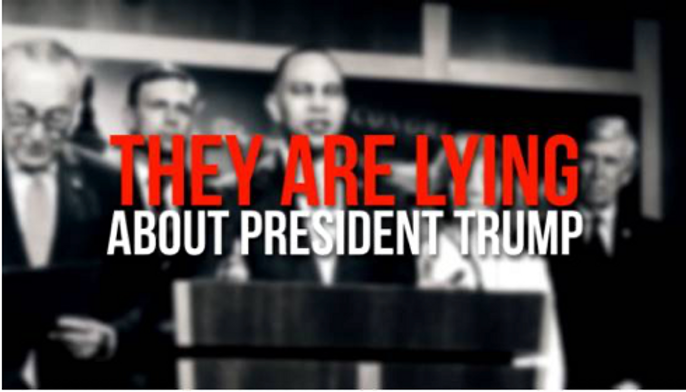
You’ve probably got friends and acquaintances who hate Trump but who you think are otherwise fairly moderate or even conservative. Who could blame them? The media and Democrat politicians piled on with their dehumanizing hatred against Trump—to such a degree that two assassins have tried to kill him, and even some life-long Republicans are skeptical due to the non-stop propaganda.

Here’s how to talk to them.

“You’re not voting for Donald Trump; you’re voting to cut the cost of filling your tank and your grocery cart. ● You’re voting to crack down on crime. ● You’re voting to seal the border. ● You’re voting to deport criminal illegal aliens committing crimes in our major cities. ● You’re voting to get the economy roaring like it was until COVID. ● You’re voting for a more peaceful world. ● You’re voting to end taxing Social Security and tips.”

That’s what you are voting for, even if you can’t stand the man.

Yep…

The Conservative Caucus — which is holding a 50th anniversary gala in Leesburg on October 13 — has a follow-up editorial dedicated to explaining that "We are not electing a mother to bring you 'joy' or a social worker to give you therapy and money"

Friday, September 20, 2024

Inadvertently Spilling the Truth: What Is the Democratic Party If Not the Party of Sophomoric Teens, Intrepid Cosplayers, and Would-Be Heroes?


Kamala Harris' cackling brings up a question I have often asked in the past 20 years.

What if Democrats — along with leftists the world over — turned out to be nothing but sophomoric individuals snorting with laughter as they stick it to the man, as they fool the grown-ups (ain't that what the 13 Rules for Radicals are all about?!), and, with the true teen-age mentality they possess, as they love to cosplay as senators, presidents, governors (remember the glee of Katie Hobbs at the Arizona inaugural after "defeating" Kari Lake?!), diplomats, filmmakers (on both sides of the camera), and — last but not least — esteemed debaters and professional journalists?

What if all that leftists love to do is cosplay as heroic individuals and knights in shining armor — fighting, among other things, to protect various minorities, to save democracy, and to defeat the West's inhumane monsters, i.e., racists, sexists, Nazis, fascists, and other Adolf Hitlers? (Thanks for the Instalink, Sarah.)

This is why leftists have dystopian fantasies (we must display our intelligence!) and are crisis creators (we must display our bravery!), and it is why those virtue-signallers can't debate and regularly refuse invitations from the right to do so (unless, perhaps, they use "neutral" moderators (sic) to assist them while said moderators attempt to demonize their opponents): the Drama Queens know that their fairy tales would be eviscerated in no time. Regularly, Dennis Prager and Larry Elder recount how they have often, over the years, suggested a debate to various leftists, famous or unknown — even one in which they are outnumbered 5 or 6 to 1 — and the leftists do not dare take them up on it. (Indeed, this is how Larry Elder "turned" Dave Rubin…)

As Jonah Goldberg wrote in Liberal Fascism,

That is how the liberal Gleichschaltung works; contrary voices are regulated, barred, banned when possible, mocked and marginalized when not. Progressive voices are encouraged, lionized, amplified — in the name of "diversity," or "liberation," or "unity," and, most of all, "progress."

No matter how sincere their tears and anger seem to be, for instance, over the melodrama of the poor members of  the gay and transgender minorities, along with their pronouns, the whole LGBTQ+ gig (not least including that ridiculous name) seems to be a joke or a prank against the bourgeois, something which all leftists seem to recognize somewhere deep inside (and I don't doubt that Dave Rubin, Brandon Straka, Milo Yiannopoulos, and Richard Grenell would agree).

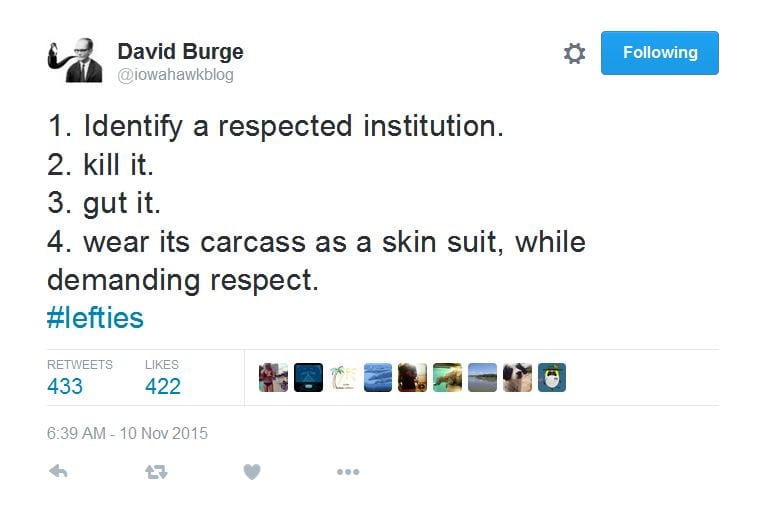
Needless to say, the cosplay imagery has been used before, slightly differently, notably by Iowahawk for years now, with his oft-Instapundit-linked lefties manual on how to take over "a respected institution" and thus all of society ("while demanding respect" is a synonym for "while requesting you to shut up"), with David Burge's phrase wearing the "carcass as a skin suit" equivalent to my description of a cosplayer:
 

From London, a jokester enjoying “the wisdom of calling Donald Trump weird” writes with mirth that

When running for the Senate, [Lyndon Baines] Johnson let it be known that one of his opponents enjoyed the carnal pleasure of one of his farmyard sows. “That isn’t true,” one of LBJ’s aides said. “I know,” LBJ replied, “but I’m going to make the bastard deny it.”

I don't deny that this sounds funny or that it is worth a chuckle. At the same time, all of us — especially those raving endlessly about defending democracy — should ask, is calling your opponent a pig-humper (or, for that matter, the rapist of an unbalanced woman in a department store's changing room) truly the way to engage in debate? But Democrats and leftists don't ask that sort of questions; after all, the virtue-signallers are engaged in demonizing opponents, i.e., fighting the "bastards" that said opponents truly are… 

Margaret Thatcher once said “I always cheer up immensely if an attack is particularly wounding because I think, well, if they attack one personally, it means they have not a single political argument left.” (Truth to tell, many of them had no political arguments — beyond fairy tales — to begin with.) I wish that during his debate with Kamala Harris, Donald Trump had responded to her every personal attack with calm words such as these: "I want to thank Kamala Harris for her personal attack, because that means she has no policies to offer — beyond those far left policies, of course, that she wants to hide from the American people."

The LBJ story is somewhat reminiscent of Harry Reid telling tall tales in 2012 about the Republican candidate not paying taxes and then rebuffing criticism in interviews with the words, Mitt "Romney didn't win, did he?" This is acceptable, indeed desirable, in a simplistic (i.e., in a sophomoric) worldview consisting of Deserving Dreamers Vs. Despicable Deplorables.

This explains in turn Donald Trump's mean tweets, along with his (alleged) "petty insults and his dark obsessions" — they are only mean in that they describe exactly the kind of people that he sees on the Left. Just like the boy at the end of The Emperor's New Clothes. After the boy's outburst, according to what Hans Christian Andersen seems to have expected, the boy and all the bystanders in the streets ought to have referred to the tailors as scam artists and to their ruler the emperor (in the original Danish, he is a king) as some variant of a fool. 

Alas, as Winston Churchill wrote, "Men [and women] occasionally stumble over the truth, but most of them pick themselves up and hurry off as if nothing had happened."

In real life, according to modern-day Western mores and thanks to the eggings-on, overt and other, of the tailors themselves and the scam artists' (willing or not) allies and sympathizers, the boy was probably vilified as a "tailorphobe" and canceled for daring to have the gall of engaging in hate speech and other types of hate-filled rhetoric. UPDATE: It turns out that I have used the Hans Christian Andersen analogy in the past, as did Mark Steyn during a September 2015 visit to Copenhagen…

The Economist's Lexington column writes, with unhidden glee, that after 

Tim Walz, the governor of Minnesota and now Ms Harris’s running-mate, started calling him [Trump] “weird”, and as she and other Democrats joined in, the former president foolishly took the bait.

"Foolishly took the bait"? Is that supposed to be part of a debate in "defending democracy"? (Maybe "debate" for the Left in fact means "the bait" pronounced Italian-style?!)

In last week's editorial — the very one bemoaning Trump's "petty insults and his dark obsessions" — The Economist went on to say that 

It may seem unfair to criticise Ms Harris for being sparing about her policies. Her overriding task is to defeat Mr Trump, and it is a vital one in which guile and cunning are permitted.

A "vital [task] in which guile and cunning are permitted." In the wake of a(n in)famous Bernie Sanders quote ("No, I don't think she's abandoning her ideals. I think she is trying to be pragmatic and do what she thinks is right in order to win the election"), leave it to a "respected" MSM outlet to spill the beans and tell the truth about the basic psychology ruling the members of the Democrat Party and other leftists — not excluding (as we can see) the mainstream media outlets themselves — the world over.

Renaming Countries and Cities Across the Planet: "There is no neutral, non-political way to refer to almost any square of the globe; Most names annoy somebody"


Already many years ago, I used to joke that the Germans are so belligerant and start so many wars because nobody calls the nation by its proper name. Even worse: every language seems to have a totally different name for the country. Thus, Deutschland in German becomes Allemagne in French, Tyskland in Danish, Germany in English, Germania in Italian which indeed sounds exactly like the English except that the word for the Germans (for the German people) is… gli Tedeschi. 

In that perspective, The Economist asks: Will India change its name to Bharat?

During the G20 summit in Delhi, on September 9th and 10th [2023], Narendra Modi, the prime minister, sat behind a nameplate inscribed with “Bharat”, the Hindi name for India.

 … Why might the BJP [the Bharatiya Janata Party] want to rebrand India?

Bharat is already a widely used synonym for India, at least within the country. The constitution begins with the phrase “India, that is Bharat”. The national anthem uses the name too. The word’s etymological roots are in Sanskrit, an ancient language from which most modern Indian tongues have emerged. Consequently, the country is referred to as Bharat in most local vernaculars. 

 … But although the name India may be associated with British rule, its use far predates that period. The ancient Greeks are believed to have called the subcontinent “Indus”, in reference to the river that flows through it. “Indus” itself comes from a Sanskrit word for the river, sindhu.


The Economist's Banyan adds that

The constitution of India begins: “India, that is Bharat, shall be a union of states.” Unable to agree on whether to use the English or Sanskrit name for the country, its authors included both. On the surface, the difference is no greater than that between Germany and Deutschland. But from the debates in the constituent assembly 75 years ago until today, India’s alternative names have been loaded with distinct meanings. One was imposed by a colonial power and is increasingly associated in India with an out-of-touch anglicised elite. The other is increasingly considered a true reflection of a proud, ancient civilisation.

As this is happening around the globe — notably in 2021 when Turkey's "Erdogan decreed that his country would henceforth be known to the rest of the world as Türkiye, as it is in Turkish" — The Economist's Johnson decided to issue A guide to renamed cities

Almost any place’s true name can be a matter for discussion. Three of Turkey’s neighbours officially call themselves Hellas, Sakartvelo and Hayastan—better known as Greece, Georgia and Armenia in English. Meanwhile Hindistan, the name for India in Turkish, can also mean “the country of turkeys”. There is no neutral, non-political way to refer to almost any square of the globe. Most names annoy somebody.

This is most obvious when a territory goes from belonging to one state to another. Westerners were accustomed to referring to cities in Ukraine as Kiev, Kharkov and Lvov. Some grumble at having to learn new names for them—Kyiv, Kharkiv and Lviv. But the old ones were not neutral. They were Russian, and after the country became independent many of its people wanted the Ukrainian versions to be used even in English. Outsiders’ decision to use Ukrainian place-names is now a political declaration of support for Ukraine’s very right to exist.

 … Some calls for change involve colonial names or spellings that were imposed by outsiders. India-watchers have had to adjust to Mumbai (once Bombay), Kolkata (Calcutta) and Chennai (Madras), while remembering that institutions like the Bombay Stock Exchange and the University of Madras continue to use their old monikers. Such renamings often purport to hark back to an unsullied past, but are really exercises in nationalist myth-making. Sometimes they are inarguable. Citizens of the Democratic Republic of Congo (once Zaire) understandably wanted to rename their capital, Leopoldville, which recalled a Belgian ruler whose name was a byword for the worst in colonial brutality. It is now Kinshasa.

 … The Czech Republic has a one-word name in Czech (Česko), and so the Czechs have asked for their country to be called Czechia in English. This has yet to catch on.

Populists and autocrats may think they can dictate place-names, but no amount of decrees can force people to say Türkiye instead of Turkey.

Thursday, September 19, 2024

"After America?" Radio Courtoisie's Évelyne Joslain Is Joined by Guy Millière and Erik Svane

Erik Svane, Évelyne Joslain, et Guy Millière avec son livre
à la conférence dans la mairie du 16ème arrondissment

Libre journal du nouveau monde du 18 septembre 2024 : “Après l’Amérique ? ; La campagne électorale et l’actualité brûlante aux Etats-Unis”

Patron d'émission le 18 septembre 2024

Evelyne Joslain reçoit :
  • Guy Millière, essayiste
  • Erik Svane, journaliste

Thème : “Après l’Amérique ? ; La campagne électorale et l’actualité brûlante aux Etats-Unis

Référence : 

APRES L'AMERIQUE
  • Millière, Guy (Auteur)

Guy Millière a quitté le Nevada pour se rendre à Paris pour une semaine dans le cadre de la parution de son nouveau livre, APRÈS L'AMERIQUE? Sa charmante épouse, Keltoum, est aussi du voyage… 

Il a par ailleurs écrit un compte-rendu sur le livre de Evelyne Joslain, La Guerre Culturelle dans les 4 Vérités, intitulé Un livre essentiel sur la guerre qui nous est livrée :

Évelyne Joslain dit au début de son livre qu’il est le résultat de nombreuses années de recherche. Les références historiques et intellectuelles, page après page, sont innombrables, et montrent une érudition et une connaissance de l’histoire intellectuelle du monde absolument remarquables. Lire le livre permet aux lecteurs d’apprendre, de comprendre, de connaître, de se doter de repères précis et fondés qui leur permettent d’être plus lucides sur le monde dans lequel ils vivent.

 … C’est un livre essentiel, lucide, sans illusions. Je le recommande vivement à ceux qui veulent regarder la réalité en face. C’est un livre d’une immense richesse intellectuelle, à lire, à relire, et à conserver précieusement dans sa bibliothèque.


Wednesday, September 18, 2024

"The Demonization of Donald Trump Has Repercussions," Notes Karsenty, "and It Is Time for America's MSM to Put an End to This Demonization"


«The demonization of Donald Trump has repercussions»
, charges one of the spokespersons of Republicans In France. And

"it is time for America's leading media put an end to this demonization of Donald Trump, that Kamala Harris put an end to it, that Joe Biden, or that the people speaking for Joe Biden, put an end to it. 

On a lighter note, Philippe Karsenty adds that 

"If I want to mix in a smidgen of humor, in the same time frame Kamala Harris has done one interview and a half. So: two assassination attempts [for one candidate], one interview and a half [for the other]. What I mean is this: there is somebody who is really putting their life at stake for American democracy — they took a bullet for democracy —"

and it ain't Kamala Harris.

«La diabolisation de Donald Trump a des conséquences», a dénoncé ce lundi sur CNEWS le porte-parole du parti républicain américain en France Philippe Karsenty.


Monday, September 16, 2024

Wrecked by socialism, Latin America is overrun by “moochers and looters” who are gaining ground in the USA


Interviewed by John Stossel's Stossel TV, Viral Influencer Gloria Alvarez Fights Socialism throughout Latin America and the Spanish-speaking world. 

Socialism always fails! But for some reason people still want it.

They should listen to Gloria Alvarez.

She’s a viral influencer from Guatemala who watched parts of Latin America get wrecked by socialism.

Now she says the “moochers and looters” are gaining ground in the USA.

I’m encouraged people like Gloria get it.

I interviewed her last year when she was running for President of Guatemala.

One thing Gloria Álvarez, who I believe was the first person to make a PragerU video in two languages (in both English and Spanish), shares with this blog is the photo of Che Guevara wearing Mickey Mouse ears… I would like to think that the Guatemalan beauty was influenced by an internet trip to No Pasarán, but that can hardly be proven…

Wednesday, August 28, 2024

It needs to be asked if Obama's boosting of avowed enemies of America in U.S. foreign policy — which is unquestionably detrimental to the security of the United States, Israel, and the entire West — isn’t a bug but rather a feature of Democrat foreign policy since 2009


At the dawn of the Obama era, a Pentagon friend and colleague, now of blessed memory, warned me that the new administration was riddled with Islamist sympathizers and related Communist-adjacent types who were seeking to swing U.S. foreign policy in a direction more pleasing to the mullahs in Tehran and jihadists worldwide. Moreover, he predicted the emergence of a domestic front, an odd alliance of leftist radicals, terrorist fans, LGBT activists, environmentalists, and Islamists, all seeking to change America at a basic “anti-imperialist” level. I pooh-poohed his predictions as unduly alarmist, the output of a brilliant mind that was scattered by too many deployments. I was wrong.

Who Really Is Barack Obama? is the question John Schindler asks about the Apologizer-in-Chief in A Counterintelligence Inquiry (با تشکر to Glenn Reynolds and Stephen Green). As you continue reading, remember Abraham Lincoln's 1838 warning:

"At what point shall [we, the American People] expect the approach of danger? By what means shall we fortify against it?-- Shall we expect some transatlantic military giant, to step the Ocean, and crush us at a blow? Never!--All the armies of Europe, Asia and Africa combined, with all the treasure of the earth (our own excepted) in their military chest; with a Buonaparte for a commander, could not by force, take a drink from the Ohio, or make a track on the Blue Ridge, in a trial of a thousand years. At what point then is the approach of danger to be expected? I answer, if it ever reach us, it must spring up amongst us. It cannot come from abroad. If destruction be our lot, we must ourselves be its author and finisher. As a nation of freemen, we must live through all time, or die by suicide."

I [John Schindler have] been a frequent Trump critic, but his anger at the “Deep State” is understandable, particularly after 51 IC senior officials, the notorious “spies who lie” (a list which included friends of mine), decided to help swing the 2020 election against Trump by denouncing Hunter Biden’s notorious laptop – which included proof of Biden, Inc.’s being on the payroll of Chinese intelligence – as a Kremlin disinformation scheme, when it was entirely real. There’s a reason I’ve taken to calling myself a Deep State Dissident.

I’ve learned quite a bit over the past decade. Many liberals who became my superfans when I was asking necessary questions about Trump’s connections to Moscow got very upset when I did what any counterintelligence professional does and kept asking questions – not exclusively about Republicans and Russia. China now presents a far greater espionage and illicit influence threat to the United States (and the West more broadly) than Russia or any other country, but liberals don’t like to dwell on Chinese spy operations aimed at U.S. politics, since so many of these involve Democrats.

The same liberals who regard any Republican who ever shook hands with a Russian as a probable Kremlin operative think there’s nothing at all strange about Hunter Biden taking several million dollars from CEFC China Energy, a known Chinese intelligence front. (The less we say about the “Big Guy” and his ten percent, perhaps the better.) Similarly, the fact that the current Democrat vice-presidential nominee, Minnesota Gov. Tim Walz, made over 30 visits to Communist China, with some of his “educational” junkets there being funded by the Chinese foreign ministry (which is the standard cover for China’s Ministry of State Security), is considered a nothingburger by liberals. Anyone asking obvious questions in this weird case is “paranoid.”

Asking questions is the nature of counterintelligence work. Making hypotheses based on limited information constitutes the cornerstone of counterespionage. If you’re not judicious, you can wind up in the vaunted Wilderness of Mirrors alarmingly easily.

 … So, what happens when you employ a professional counterintelligence eye and look at today’s Democrats?

What jumps out immediately is the shocking extent to which foreign spies and extremists have gained a foothold at the upper echelons of the Democrats. Over the past 15 years, people possessing connections and views which would have been show-stoppers until quite recently have instead risen to the commanding heights of the Democratic party. President Bill Clinton endured a scandal relating to Chinese Communist money and his 1996 reelection campaign, a troublesome impropriety that’s been largely forgotten. But it’s not like the Clinton cabinet included people with questionable ties to Beijing and its spies.

Tim Walz and his many trips to the PRC combined with his stated affection for China and its Communist regime would have gotten more attention when Bill Clinton occupied the White House. Similarly, Walz’s dalliances with radical Islam would have been too much for 1990s Democrats to gloss over. It’s been reported that Walz, while campaigning in 2018 to be Minnesota governor, praised Asad Zaman, a senior Muslim cleric, as a “master teacher” among other accolades. Inconveniently, Zaman has pushed blatant Nazi propaganda and considered the Oct. 7 HAMAS attack on Israel a marvelous act of liberation rather than a massive war crime. Worse, Walz has hosted Zaman several times as Minnesota governor, giving $100,000 in state funds to Zaman’s organization. … Why Tim Walz is Zaman’s buddy demands an answer.

Take the case of Maher Bitar, who’s currently serving as coordinator for intelligence on the National Security Council. In other words, Bitar is the top White House official responsible for collaboration with the Intelligence Community. As such, Bitar has access to every IC secret. … While at Georgetown, Bitar held a leadership role in Students for Justice in Palestine, a radical group that can be charitably termed anti-Zionist. SJP, which boasts chapters on dozens of college campuses across the country, is another Brotherhood front that loathes Jews (and the West generally). 

 … The Beltway rumor mill has it that, if Democrats win the election, Bitar will hold a top national security post in a President Harris administration, perhaps even National Security Adviser.

How did we get to this place, which from any counterintelligence viewpoint looks highly alarming (plus pretty bonkers)? Individuals with ties to FTOs like HAMAS, no matter how tenebrous, are not supposed to possess any security clearances, much less occupy senior security jobs in Washington, DC. Where did this all go wrong?

What happened was Barack Hussein Obama.

It’s now painfully clear that since Obama took the oath of office on Jan. 20, 2009, he and his people have been running the Democratic party at the top levels. The mainstream media isn’t bothering to elide this any longer. Cadres decide everything, per Stalin’s sagacious mantra, and Obama’s chosen cadres have run the show during President Joe Biden’s presidency (since Biden was suffering from age-related decline from early in his presidency, which became impossible to hide over the last year, it’s worth pondering how much Joe was really commander-in-chief at all: but that’s another matter for another time). We should expect the same cadres will be running things if we get President Kamala Harris. Obama-Biden will then become Obama-Biden-Harris: OBH, if you like. There’s been remarkable continuity in personnel across these administrations, especially in the national security arena, which is no accident.

It's time to confront the difficult reality that Team OBH in its foreign policy has boosted avowed enemies of the United States like the Islamic Republic of Iran plus radical Islamists of many stripes, all of which have ample American blood on their hands. Why? It needs to be asked if such an outcome, which is unquestionably detrimental to the security of the United States, Israel, and the entire West, isn’t a bug but rather a feature of Democrat foreign policy since 2009.

What we can state confidently about Barack Obama is that he grew up in an international and multicultural milieu where “anti-imperialist” rhetoric was de rigueur. His youthful mentor was a Stalin-loving Communist Party member. During his 1980s student days, Obama engaged in the usual left-wing protesting (apartheid South Africa was a big issue then). He always had an affection for Islam, probably due to the father he never really knew. Obama’s political career was launched with the support of a prominent domestic terrorist. In all, from a counterintelligence perspective, it doesn’t amount to much except inviting more questions. It’s revealing that Obama’s own biographer, a Pulitzer-winning liberal, deemed his subject “not normal—as in not a normal politician or a normal human being.”

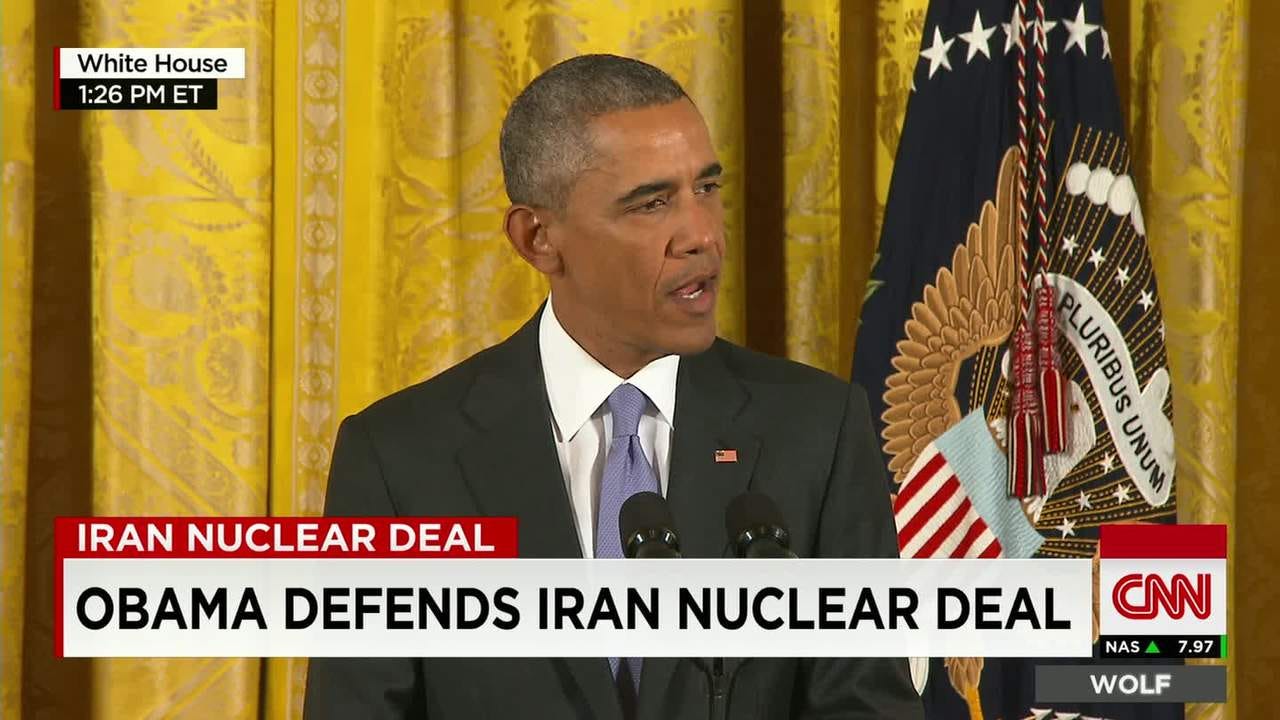
We then must judge Obama based on his policy. That’s concrete. Take Iran, a country which loomed oddly large in American foreign policy during Obama’s presidency, culminating his 2015 “Iran Deal,” formally the Joint Comprehensive Plan of Action. (It’s also the regime that’s currently trying to influence our election and assassinate Donald Trump.) JCPOA was the crowning achievement of Obama’s foreign policy, at least in his own mind, and his administration sacrificed a great deal on other fronts to get it. It helped that the media was so naïve and pliant

 … Therefore, Obama and Biden’s counterintelligence problems with Iran and Islamism will surely carry over into any Harris administration. The current case of Ariane Tabatabai is illustrative. Another Friend of Tehran, Tabatabai still occupies a highly sensitive senior Pentagon position with TOPSECRET//SCI clearances, despite apparently being an agent of Tehran. As this newsletter recently reported, Tabatabai remains on the job inside one of the most secretive Pentagon offices, even though her connections to an Iranian intelligence front were publicly exposed last year.

 … [The] detailed IRGC dossier [on Iran's nuclear weapons program] was the Wrong Narrative as far as the Obama administration was concerned, it might jeopardize their precious Iran Deal, thus it had to not exist. Therefore, it never existed. Until I went whistleblower right here.

Political influence on intelligence analysis is one thing. And a serious problem. The Trump administration was accused of this, asking IC analysts to spin information in a manner more pleasing to the White House. Neither was Team Trump the first administration to demand such “massaged” intelligence analysis. What the Obama White House did in [the case of the secret dossier ] is far more serious, amounting to political influence on intelligence collection. Don’t bring us intelligence we don’t want to see, at any level: that’s an order. As far as I know – as a spook but also historian who’s read (and authored) highly classified internal histories of CIA, NSA, and other U.S. intelligence agencies never seen by the public, I think I would know – no other White House has done this.

Only Obama did this. Which makes Barack Obama a worse abuser of American intelligence than Donald Trump – or any other president. A dozen years ago I learned, to my horror, that the fix was in. The fix was always in.

Therefore, I ask again: Who really is Barack Obama?

Sunday, August 25, 2024

America has always been the secret ingredient of European integration


Forget Jean Monnet. When it comes to naming founding fathers for the EU, the list should start with President Harry Truman.

The EU: Made in America (America is an engine of European integration, intentionally or not) is the title of an Economist piece a few years ago.

One American innovation from [20th-century America] receives [little] attention: the European Union.

The EU is an American creation, as much as a European one. In the middle of the 20th century, there were more European federalists in Washington than in Brussels. Senators bashed out resolutions declaring: “Congress favours the creation of a United States of Europe.” The Marshall Plan, a torrent of post-war funding for the crippled continent, came on the condition that European countries meld themselves together. George Kennan, an American diplomat, summed up American policy: “We hoped to force the Europeans to think like Europeans, and not like nationalists.” Forget Jean Monnet. When it comes to naming founding fathers for the EU, the list should start with President Harry Truman.

 … America has always been the secret ingredient of European integration. In the aftermath of the second world war, unifying Europe made sense for America. A divided continent could hardly resist Soviet domination. Nor would it be able to fix the “German problem” that had resulted in two wars in three decades. Instead, in a novel experiment by a victorious power, America opted to try to unite a traumatised continent, even though it could be a potential rival.

Skip forward 70 years and America is now a more subtle force for European unity. State-building can be a messy business, but American history provides one of the few guides for creating a continent-sized democracy. 

 … The EU still falls far short of the federal mini-me imagined by the likes of Marshall, Kennan and Truman.

  … On paper, America wants a more capable EU. In practice, it may find such a development unsettling. At the turn of the century, the euro was talked of as a rival to the dollar. The euro’s near-collapse a decade later put paid to that idea. A stable euro zone with the ability to issue collective debt at will would be a much stronger potential challenger to the dollar’s supremacy. Where the EU does have power, such as over competition policy or privacy rules, it has delighted in whacking American firms. Such areas are rare but becoming less so. A more unified EU is a more powerful one and, almost inherently, a more independent one. America may, with time, come to regret what it has wrought.

Sunday, August 18, 2024

Good-Bye, l'Ami : Alain Delon et moi — An Untold Story About the French Movie Star

Twice in my life, I saw (and once met) Alain Delon in the flesh. 

The first time was at the Théâtre Marigny in Paris in October 2004, in which the French movie star and Astrid Veillon were playing Les Montagnes Russes by Eric Assous (sorry for the fuzzy pictures, taken in bad light). In French, les montagnes russes is less likely to mean "Russian mountains" than the expression they have for a "roller coaster".

The second time was again at the Marigny theater, several years later, in January 2007, when Delon starred in the theater production of The Bridges of Madison County along with Mireille Darc, the love of his life, and Benoist Brione. (The French are alone, I believe, in turning Robert James Waller's novel and Clint Eastwood's film into a theatre play.) Because we knew the director, Anne Bourgeois, we went backstage after the play and met Alain Delon in the make-up room.

On January 22, 2007, Alain Delon stars in the Anne Bourgeois theater production
of The Bridges of Madison County, along with Mireille Darc, the love of his life

ENGLISH BELOW Mais l'histoire principale sur Alain Delon ne me concerne pas personnellement. Elle m'a été racontée à un dîner intime (10-12 personnes?) à l'appartement de (la regrettée) Séverine Setbon dans le 1er arrondissement.

Nous étions une dizaine de personnes, dont une partie dans le cinéma et le théâtre français (peut-être avec Louis-Michel Colas et Angélique Thomas et Dominique de Seguin?).

L'un des invités, dont le nom n'est certes pas aussi connu mais restera quand même tu ici (discrétion oblige), nous raconta qu'il y avait quelque temps il s'était trouvé une petite amie, et que celle-ci était l'une des plus belles femmes en France, et il ne savait pas comment alle avait pu le choisir, lui.

Bien plus tard, lors de la première d'un film ou d'une pièce de théâtre, où cet homme était venu seul, il vit un homme déjà installé dans un fauteuil de la salle lui faire signe. C'était Alain Delon — qu'il ne connaissait absolument pas. "Je regardai à droite, à gauche, pour voir à qui la star faisait signe. Mais non, c'était bien à moi. Il fit un geste pour m'inviter à venir s'asseoir près de lui." À ce moment-là, avec un air entendu et un sourire malicieux, la vedette lui dit : "Bonjour, cousin!" 

Alors, ici, faisons un petit break: Pour ceux qui ne le savent pas, à l'étranger ou même en France, quand un homme appelle un autre son "cousin" (et qu'ils ne sont nullement de la même famille), et cela tout compte fait de façon assez amicale (comme s'ils formaient un lien désormais grâce à un secret connu d'eux seuls), cela signifie qu'ils ont couché avec la même femme.

"Je ne savais franchement pas comment réagir !" nous raconta M. X au dîner, il faut l'avouer, avec un éclat de rire. À la table, hilare, il ajouta : "J'étais déchiré ! Devais-je être jaloux, voire furieux, que ma dulcinée m'avait trompé ?! Ou devais-je déborder de fierté que je partageais la même maîtresse qu'Alain Delon ?!"


Alain Delon with Astrid Veillon in the Eric Assous play
Les Montagnes Russes at Paris's Théâtre Marigny on October 12, 2004
 
But the main story about Alain Delon does not concern me at all. It is very — very — French, and it was told at a dinner among friends at the apartment of (the late) Séverine Setbon in the 1st arrondissement. There were about 10 or 12 of us, some of whom were in French cinema and theater.

One of the guests, whose name is certainly not as well known but will remain unmentioned here, told us that some time ago he had found himself an amazing girlfriend, indeed that she was one of the most beautiful women in Franc. Since he was pretty plain, she was, as they like to say, far above his pay grade.

Much later, at the première of a film or a play, where this man had come alone, he saw a man already seated in a chair in the room waving at him. It was Alain Delon — a man he did not know at all. "I looked left and right to see who the star was waving to. But no, it was definitely me. He gestured to invite me to come and sit next to him." At that moment, with a knowing look and a mischievous smile, the star said: "Bonjour, cousin!"

There you have it. That's the gist of the story.

So, here, time out to take a break and explain details: For those who aren't knowledgeable about such matters, whether foreigners or even French(wo)men themselves, when a man calls another his "cousin" (and when they are not related at all), and this in a rather friendly way (almost as if they were now bound together by sharing a naughty secret known only to them), it means that they are sleeping with, or have slept with, the same woman.

"For the love of me, I didn't know how to react," Mr. X told us at dinner, admittedly, with a burst of laughter. At the table, where everyone was laughing as hard as he was, he added: "I was totally torn! Should I be jealous, even furious, that my sweetheart had cheated on me?! Or should I be overflowing with pride that I was sharing the same mistress as Alain Delon?!"

Friday, August 16, 2024

"The expedited arrests, trials, and convictions of those who spoke wrongly": England is a country where the regime loathes its people and labors quietly to end them


From south Texas near Mexico and from his online magazine Armas, Joshua Treviño offers profound Reflections on the revolution in England (gracias por el Señor Glenn Reynolds):

 … the American grasp of European affairs is generally poor, a quality amplified by orders of magnitude when discussing the European grasp on American affairs, which is simply abysmal — but the former, the putatively free press of Great Britain, illuminated a truly distressing state of affairs in a nation nearing a full century of decline

 … We [Americans] care about `britain because we see it as a font, and so it is — although it is really England that is the font. We can understand American history as an extended re-litigation of the English Civil War of the mid-seventeenth century, and there is no comparable template in Scottish, and still less in Welsh or Irish, history. America is rooted in England, we feel Aristotelian philia for it — that civic friendship, united in a noble and common purpose, that is the indispensable prerequisite of nationhood — and so England becomes surpassingly important for us. We do not understand ourselves without understanding it. We also do not understand the universality underlying American propositionalism without grasping England and its achievements.

 … the tragedy of Britain of our time is to regard [This sceptred isle] as a positive evil, with the proclamation of Civis Britannicus Sum the assertion of a madman, a slogan of the demented.  

This is the truth, and the sorrow of England now is that its regime — its British regime, let us call it that, because Britain and England are not synonyms — manifestly believes that Duer Miller’s English seed was poisoned. Partly this is a consequence of the British adoption of American thoughts and narratives (they feel Aristotelian philia for us too, after all) even unto their own ruin. The effort to transplant American civic narrative on race and oppression onto English history is morally and intellectually deranging: from the American perspective, England possessed lesser virtues and lesser vices alike versus its American descendants. Partly too it is a consequence of the proximate cause of the civic violence that swept the United Kingdom across the past two weeks: its regime’s determination that the people of England be subjected and subsumed by the importation of millions of foreigners with whom no philia is possible. 

There is a regime narrative undergirding this iron fixation. You see it in the outlets for elite-approved materials at their expositions of history and its interpretations. The regime functionaries administering the British Museum, for example — arguably the single greatest museum of any kind in the world, with only Madrid’s extraordinary El Prado standing in real rivalry — make known their interpretive preferences in the capacious gift shop. There we find shelves upon shelves of books on offer detailing the evils that England has inflicted upon the world. 

 … The British Museum apparatus of commerce also, it so happens, has two sections purveying for purchase materials helpful in ushering the purchaser into the occult. As for the single most-important influence on all British history, which is to say Christianity, it has nothing in particular. This too is a regime choice. 

 … That is in fact happening — it is notable that a mosque is the only religious structure seen on the train from London to Oxford — but it is consequence rather than cause. Islam did not eradicate Christian England: that was the work of the English themselves, who at some point in the twentieth century decided to adopt wholesale American-style propositionalism as the basis of the nation — even unto their own ruin — and thereby cut themselves off from all they had been and meant. Surrendering the past is surrendering the future for which past is prerequisite. 

 … The new religion clambers upon the ruined edifice of the old and apes its forms 

All this is tutelage, of course. The images of Fotis the Ve / Vir and the like pervade the public square in London for instructional purposes. They teach the English their new narrative, their new understanding of self, and their new permitted ambit of thought and belief. In Trafalagar Square, after telling my son about Nelson, I noted that the crossing lights throughout the busy intersections were not the usual green-and-red walking men. Instead they were sex symbols: literally so, two male symbols intertwined on some crossing lights, two female symbols interlocked on others, and (less common) a male symbol and a female one paired. The regime narrative is that this is intrinsically British, and therefore belongs in a quintessentially British space

 … the argument is impossible: to paraphrase Rod Dreher, we have lost our reason and can no longer discern.

This too is a regime choice. 

 … at the rear of the chapel [at Oxford’s Exeter College], behind the golden crucifix, is a large LGBTQIA+ flag.

 … England still exists. The English are still here. But they are well into the long defeat, having saved the world more than once and in more than one way, with nothing to save them but their own twilight struggle. 

 … [Today, London belongs not to the English but] mostly to the regime that propagandizes to [them] that [their] ancestors were evil and the structures that might have ordered [their lives] are mere restraints to be overcome; and it belongs increasingly to the Islamic population of the city that — unlike the English ruling classes — have the confidence and cohesion to assert and defend their own mores and folkways and traditions. That many of those civics, a term I use very loosely here, are inimical to the English is irrelevant, because they know very well that the regime will protect them in those cases, and they know they have superior Aristotelian philia among themselves. Londonistan as a phenomenon is quite real: I had not seen this many women in hijabs since a brief stint working in Jordan decades ago, and I had never seen this many women in a niqab, ever. We should understand clearly what this signifies. The deliberate process that turned London across the past generation into a city in which the native-born population are a minority — for the first time, it should be noted, in two thousand years — is not malign because of any specific characteristics of the non-native population. 

 … I saw a datum asserting that more British Muslims have joined ISIS and al-Nusra in the past fifteen years than have joined the British Army, and this is a massive problem if true, but ultimately one emergent from the flaws in host society, which fails to insist upon itself and its own values. That deliberate process of societal importation is malign, fundamentally, because the process is one in which the regime literally executes what Brecht proposed as mere satire in 1953’s Die Lösung:

After the uprising of the 17th June

The Secretary of the Writers Union

Had leaflets distributed in the Stalinallee

Stating that the people

Had forfeited the confidence of the government

And could win it back only

By redoubled efforts. Would it not be easier

In that case for the government

To dissolve the people

And elect another?

The people are dissolved. Understanding themselves close to dissolution, and instinctually grasping that they are thrust into existential crisis and denied all but pre-political means — they’ve voted time and again against this, and the party institutions of conservatism in Britain have shown themselves worthless at best, antipathetic at worst — they have asserted their Lockean right to appeal to heaven. 

Their numbers are however not large, and they will lose to the regime. The prim horror of it was visible across U.K. media, whose figures positively delighted in reporting the persecution and jailing, not just of those who actually committed property destruction and assault, but of those who expressed disallowed opinions on social media. The Home Secretary appeared on the BBC and reassured viewers that Britain remains a free-speech society, while presiding over the expedited arrests, trials, and convictions of those who spoke wrongly. A father of small children got more than three years for a tweet. A middle-aged woman in Cheshire had her arrest announced by local authorities: she posted incorrect information on Facebook. The list is extensive and growing, each destruction of a wrongthink-posting nobody’s life amplified by the regime pour encourager les autres. The 1381 rebellion of English peasants under Wat Tyler ended with the victorious Richard II, having prevailed in part through a double-cross of the credulous rebels, sneering to them that “villeins ye are still, and villeins ye shall remain,” and this is still the message of the regime in 2024

Like the Canadian state ruthlessly prevailing against the protesting truckers of 2022, and like the American state hunting down the its own dissidents — for example California Attorney General Kamala Harris persecuting the enemies of Planned Parenthood — the British state will relentlessly crush its opposition now. Its functionaries have already persuaded themselves that they are victims of a conspiracy — this too was widely discussed on U.K. regime media — and though Americans have lately mocked their pretensions to reach into the United States and extradite the purported instigators of the recent unrest, our own countrymen ought to consider that a left-leaning regime in Washington, D.C., has every reason to cooperate in that process. This is where the Anglosphere is now, each of its great nations gripped by two-tier and dual-track law and justice. Arsonists who burn Catholic churches are unpursued in Canada; rioters who terrorize communities in the name of racial equity are let go in America; and Muslims wielding weapons are unmolested by the British state. The commonalities are not coincidental. 

Regimes have philia too. 

One of the heartbreaking pleas of the dissident English that did make it through the regime-media barricade was for equal justice under law, for as much police protection for little girls in Southport as for mosques in Birmingham. But this isn’t what policing is for in the United Kingdom. 

We saw an advertisement for Metropolitan Police recruiting in London … this is a mindset tell. This isn’t policing to protect and serve the community: it is quite explicitly a recruitment pitch for those who will best serve criminals. (In a rare bright spot for the native population, the criminal portrayed in the ad was visibly English.) Drug dealing simply does not threaten the regime and its practitioners therefore receive lenient treatment. That the preceding sentence also characterizes the Mexican state ought to place British governance in its proper context. If on the other hand that exhausted and scared teenager posted a meme about immigration, well he can just say goodbye to freedom. If the purpose of a system is what it does, then this is what British law enforcement does: it protects the regime. The English pleading for equal treatment and equal protection thereby betray the fatal flaw in their strategic insight, in that they believe they live in the country they deserve.

The country they actually have is nothing like it. It is a country where the regime loathes its people and labors quietly to end them. It is a country where the apparatus of law and order does not see its writ run throughout the land, which is why it cedes space — and therefore sovereignty — to both Muslim militias in England and Protestant militias in Northern Ireland, while pleading with both cohorts for aid in its mission. It is a country where the armed forces are no longer meaningfully capable of executing their core mission of defending the national territory, with the Royal Navy at a near-five hundred year nadir in real capability.It is a country in which it is possible to walk down particular streets, as indeed we did, and see about as much English-language signage as one might see in Cairo, or Tunis, or Khartoum. …

Thursday, August 15, 2024

One day we woke up and found the art world, and even the formerly staid world of museums, was awash in sexualized garbage, postmodern inanity, and race worship

The idea that poetry, that art generally, should serve as a source — perhaps the primary source — of spiritual sustenance in a secular age is a Romantic notion that continues to resonate powerfully.

In What the Right Gets Wrong About Art (merci à Glenn Reynolds), Roger Kimball writes about an era

in which ugliness has not only triumphed in our culture but is everywhere held up as something one must embrace as attractive? How many more fashion ads featuring hideous “fat positive” females do we need? 

 … Conservatives in the West long ago ceded culture to the Left.

 … Back in 1973, Irving Kristol wrote an essay called “On Capitalism and the Democratic Idea.” In the course of that essay, Kristol touched upon the conservative indifference to the claims of culture. “For two centuries,” he wrote,  

the very important people who managed the affairs of this society could not believe in the importance of ideas—until one day they were shocked to discover that their children, having been captured and shaped by certain ideas, were either rebelling against their authority or seceding from their society. The truth is that ideas are all-important. The massive and seemingly solid institutions of any society—the economic institutions, the political institutions, the religious institutions—are always at the mercy of the ideas in the heads of the people who populate these institutions. The leverage of ideas is so immense that a slight change in the intellectual climate can and will—perhaps slowly but nevertheless inexorably—twist a familiar institution into an unrecognizable shape.

 … one day [“the very important people” who manage the affairs of our society] woke up and found the art world, and even the formerly staid world of museums, was awash in sexualized garbage, postmodern inanity, and race worship. Their indifference mutated first into outrage. Then, as they took note of the prices fetched by the garbage, it mutated into capitulation.

This process did not take place in a vacuum. It was part and parcel of a larger cultural rebellion against bourgeois values that got going in earnest with the advent of modernism. In art, as the Australian philosopher David Stove observed, 

Western Europe found that its anti-academy had become its academy ‘even in the twinkling of an eye.’ The galleries were suddenly full of the art of African societies formerly the most despised. Victorian architecture was all at once the object of a universal detestation, or rather horror. Black music began its long and excruciating revenge on the white man. The Jazz Age, in short, had arrived.

Today, we are living in the aftermath of that avant-garde: all those “adversarial” gestures, poses, ambitions, and tactics that emerged and were legitimized in the 1880s and 1890s, flowered in the first half of the last century, and that live a sort of posthumous existence now in the frantic twilight of postmodernism. Establishment conservatives have done nothing effective to challenge this. On the contrary

 … it is worth noting that great damage has been done — above all to artists, but also to public taste — by romanticizing the tribulations of the nineteenth-century avant-garde. Everyone is brought up on stories of how an obtuse public scorned Manet, censored Gauguin, and drove poor Van Gogh to madness and suicide. But the fact that these great talents went unappreciated has had the undesirable effect of encouraging the thought that, because one is unappreciated, one is therefore a genius. It has also made it extremely difficult to expose fraudulent work as such. For any frank dismissal of art — especially art that cloaks itself in the mantle of the avant-garde — is immediately met by the rejoinder: “Ah, but they made fun of Cézanne, too: they thought that Stravinsky was a charlatan.” 

This is the easiest and also the most shallow response to criticism. It has been adopted as much by the Right as the Left. To quote David Stove again, it is yet another version of what he called “The ‘They All Laughed at Christopher Columbus’ Argument.” … If the Columbus Argument is puerile when applied to politics and morals, it is equally puerile when applied to art. In the first place, most artists whom we now associate with the nineteenth-century avant-garde did not set out to shock or “transgress” moral boundaries: they set out to make art that was a true articulation of the world. Today, the primary — often, it seems, the only — goal of many so-called “cutting edge” artists is to shock and transgress. The art is secondary, a license for bad behavior. 

There is also the uncomfortable and inegalitarian truth that in any age most art is bad or failed art. And in our time, most art is not only bad but also dishonest: a form of therapy or political grumbling masquerading as art. Like everything important in human life, art must be judged on the basis of first-hand experience: no formula can be devised prescribing its assessment, including the formula that what is despised today will be championed as great work tomorrow. The art world today retains little of the idealism that permeated Romanticism, but it remains Romantic in its moralism and hubris about the salvific properties of art.

On second thought, though, I realized that I could give an abbreviated answer to the question implicit in my title in just three words: indifference, capitulation, kitsch. 

[The] familiar but exemplary episodes from the annals of contemporary art [that Roger Kimball mentions regarding the Dada movement, Marcel Duchamp, Pierre Pinoncelli, etc] illustrate the cynical truth of Andy Warhol’s observation that “Art is what you can get away with.” Warhol’s own career, and, indeed, a large part of the contemporary art world testify to the power — if not the truth — of that observation. The sad fact is that today, anything can be not only put forward but also accepted and celebrated as a work of art. 

How Did We Get Here?

What had to happen such that a bisected cow in a tank of formaldehyde is accounted an important work of art? That is a complicated question to which there is no short answer. But if one had to sum up volumes in a single word, a good candidate would be the word “beauty”: What the art world is lacking today is an allegiance to beauty. … But art without beauty was, if not exactly a contradiction in terms, at least a description of failed art.

But if large precincts of the art world have jettisoned the traditional link between art and beauty, they have done nothing to disown the social prerogatives of art. Indeed, we suffer today from a peculiar form of moral anesthesia: an anesthesia based on the delusion that by calling something “art” we thereby purchase for it a blanket exemption from moral criticism — as if being art automatically rendered all moral considerations beside the point.

George Orwell gave classic expression to this point in “Benefit of Clergy: Some Notes on Salvador Dalí.” Acknowledging the deficiency of the philistine response to Dalí’s work — categorical rejection along with denial that Dalí possessed any talent whatever — Orwell goes on to note that the response of the cultural elites was just as impoverished. Essentially, the elite response to Dalí was the response of l’art pour l’art, of extreme aestheticism. “The artist,” Orwell writes,

is to be exempt from the moral laws that are binding on ordinary people. Just pronounce the magic word “Art,” and everything is O.K. Rotting corpses with snails crawling over them are O. K.; kicking little girls in the head is O. K.; even a film like L’Age d’Or [which shows, among other things, detailed shots of a woman defecating] is O.K.

A juror in the obscenity trial in Cincinnati in 1990 over Robert Mapplethorpe’s notorious photographs of the S&M homosexual underworld memorably summed up the paralyzed attitude Orwell described. Acknowledging that he did not like Mapplethorpe’s rebarbative photographs, the juror nonetheless concluded that “if people say it’s art, then I have to go along with it.”

“If people say it’s art, then I have to go along with it.” It is worth pausing to digest that comment. It is also worth confronting it with a question: Why do so many people feel that if something is regarded as art, they “have to go along with it,” no matter how offensive, foolish, or corrosive it might be? Part of the answer has to do with the confusion of art with ‘free speech.’ Another part of the answer has to do with the evolution, and what we might call the institutionalization, of the avant-garde and its posture of defiance.

You know the drill: black-tie dinners at major museums, tout le monde in attendance, celebrating the latest art-world freak: maybe it’s the Chapman brothers with their pubescent female mannequins festooned with erect penises; maybe it’s Mike Kelley with his mutilated dolls, or Jeff Koons with his pornographic sculptures depicting him and his now-former wife having sex, or Cindy Sherman with her narcissistic feminism, or Jenny Holzer with her political slogans. The list is endless. And so is the tedium. Today in the art world, anything goes but almost nothing happens. As with any collusion of snobbery and artistic nullity, such spectacles have their amusing aspects, as Tom Wolfe, for example, has brilliantly shown. In the end, though, the aftermath of the avant-garde has been the opposite of amusing. It has been a cultural disaster. For one thing, by universalizing the spirit of opposition, it has threatened to transform the practice of art into a purely negative enterprise. In large precincts of the art world today, art is oppositional or it is nothing. Celebrity replaces aesthetic achievement as the goal of art. 

The right, especially the libertarian right, has been complicit in this development, first in its indifference, second in its capitulation, third by its embrace of kitsch.

 … The novelist Milan Kundera … noted that “Kitsch is the translation of the stupidity of received ideas into the language of beauty and feeling.” Kitsch is histrionic, self-dramatizing. 

 … it is no secret that much if not most art in recent decades has abandoned beauty, abandoned the ambition to please the viewer aesthetically. Instead, it seeks to shock, discommode, repulse, proselytize, or startle. Beauty is out of place in any art that systematically discounts the aesthetic.

But “beauty” is by no means an unambiguous term. In degenerate or diluted form, it can mean the merely pretty, and in this sense beauty really is an enemy of authentic artistic expression. But beauty is not always the “merely pretty” or agreeable. One thinks, for example, of Dostoyevsky’s observation, in The Brothers Karamazov, that “beauty is the battlefield on which God and the devil war for man’s soul.”

The point is that, in its highest sense, beauty speaks with such great immediacy because it touches something deep within us. Understood in this way, beauty is something that absorbs our attention and delivers us, if but momentarily, from the poverty and incompleteness of everyday life. At its most intense, beauty invites us to forget our subjection to time and imparts an intoxicating sense of self-sufficiency. Our art closes us to the experience of the beautiful. 

 … Art today is enlisted in all manner of extra-artistic projects, from gender politics to the grim linguistic leftism of neo-Marxists, post-structuralists, gender theorists, and all the other exotic fauna who are congregating in and about the art world and the academy. The subjugation of art — and of cultural life generally — to political ends has been one of the great spiritual tragedies of our age. Among much else, it has made it increasingly difficult to appreciate art on its own terms, as affording its own kinds of insights and satisfactions. This situation has made it imperative for critics who care about art to champion its distinctively aesthetic qualities against attempts to reduce art to a species of propaganda.

 … . By the nineteenth century, art had long been free from serving the ideological needs of religion; and yet the spiritual crisis of the age tended to invest art with ever greater existential burdens — burdens that continue, in various ways, to be felt down to this day. The poet Wallace Stevens articulated one important strand of this phenomenon when he observed that “after one has abandoned a belief in God, poetry is that essence which takes its place as life’s redemption.” The idea that poetry, that art generally, should serve as a source — perhaps the primary source — of spiritual sustenance in a secular age is a Romantic notion that continues to resonate powerfully. It helps to explain, for example, the special aura that attaches to art and artists, even now

 … This much, I think, is clear: without an allegiance to beauty, art degenerates into a caricature of itself; it is beauty that animates aesthetic experience, making it so seductive; but aesthetic experience itself degenerates into a kind of fetish or idol if it is held up as an end in itself, untested by the rest of life. As I have put it elsewhere, the trivialization of outrage leads to a kind of moral and aesthetic anesthesia not the least of whose symptoms is the outrage of trivialization.

Tuesday, August 13, 2024

America at the Crossroads: Debate on Radio Courtoisie

Dans le Libre Journal de Géopolitique profonde du 10 août, Nicolas Stoquer reçoit :

• Raphaël Besliu, directeur de la publication de Géopolitique profonde

• Paul Reen, Président de
Republicans in France 

Thème : “L’Amérique à la croisée des chemins” 

Références

Découvrez la revue mensuelle stratégique papier de Géopolitique Profonde :

Allez plus loin en contactant les équipes de Géopolitique Profonde : Solutions | Géopolitique Profonde (geopolitique-profonde.com)