
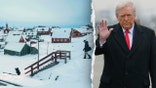
In a Fox News interview on Thursday, Denmark's foreign minister [finally admitted that] Trump has a point on China and Russia's threat to Greenland. Indeed, none other than the intelligence service of Denmark itself warned last year about Russian and Chinese military goals toward Greenland and Arctic.
Let's be very clear: There is only one conclusion to be drawn from this: when Danish politicians, leaders, and media outlets mocked (or demonized) Trump administration leaders while pooh-poohing American worries about the threat from China and Russia as being "delusional", they were lying. They were lying to the Americans, they were lying to the Danes (to their own people), and (perhaps insert "and/or" here) they were quite possibly lying to themselves.
The Danish politician who compared the USA to China itself, saying one was as bad as the other, is not only lying, he might be batshit bonkers. (Shades of the Cold War, when leftists tried to ridicule the threat posed by the Russians — y'know, the people who, in the words of Sting, "love their children too" — and claimed that the two superpowers "var lige dårlige", were one just as bad as the other. For decades, the Finns and especially the Swedes boasted and bragged about how their countries were non-aligned and neutral, only to suddenly decide, when Vladimir Putin invaded Ukraine, that being allied to Uncle Sam wasn't that bad anyway.) (Qujanaq for the the Instalink, Sarah…)
Here is the bombshell revelation:
it turns out that in 2017, according to the Lexington Institute's Rebecca Grant,
Greenland’s prime minister flew to Beijing and asked China to bankroll new airports, according to The Wall Street Journal. [To its credit,] Denmark stopped the deal. If anything like that happens again, Greenland will be flying a U.S. flag.
This is a bombshell revelation: Indeed, the 2017 attempt sounds like it is undoubtedly what caused Trump-45 to want to acquire Greenland in the first place. Moreover, Beijing's plans to
Put Chinese submarines in the Arctic and U.S. military bases, data centers and more are suddenly in range. The U.S. will do whatever it takes to halt that threat.
Rebecca Grant does add that Denmark [does come] through when it matters. So the Danes are not all bad — which is not a bad thing to hear.
Now, if you are leaning left (whether American, Danish, or other) and wonder what the fuss is about Beijing building airports or, as the Chinese usually do, harbors, in foreign countries a post from last year explains everything:
You Cannot Understand Trump's Greenland-Panama-Canada Declarations Unless You Recognize the Extent of the China Threat. There is not only the military threat, not excluding that of China building military bases on the tiny islands in the China Sea and, indeed, enlarging them when possible, there is also the "soft" threat, i.e., the Belt and Road Initiative (BRI).
(By the way, you should check out this blog's China / Greenland posts, notably the one from Thursday on The Donroe Doctrine and Beijing's "Polar Silk Road": Last Month, a Report by None Other than Danish Intelligence Itself Warned About the Russian and Chinese Threat to Greenland and the Arctic (some of which this present post is repeating verbatim).)
Beijing approaches a country with limited resources — mainly, but not uniquely, in Asia and Africa — and offers them very good deals with regards to investments. When the country cannot pay its bills, the offer turns out to be a Trojan Horse with Beijing taking over all or part of a city's infrastructure.
99 year lease with right of first refusal.. Denmark is guaranteed 10% of mineral rights profits. USA gets full unabridged use of land air and sea with duty to protect and defend greenland as. Sovereign territory.

𝗧𝗛𝗘 𝟭𝟵𝟱𝟭 𝗚𝗥𝗘𝗘𝗡𝗟𝗔𝗡𝗗 𝗔𝗚𝗥𝗘𝗘𝗠𝗘𝗡𝗧 — 𝗪𝗛𝗬 𝗜𝗧 𝗪𝗢𝗥𝗞𝗘𝗗, 𝗪𝗛𝗬 𝗜𝗧’𝗦 𝗡𝗢𝗧 𝗘𝗡𝗢𝗨𝗚𝗛 𝗔𝗡𝗬𝗠𝗢𝗥𝗘, 𝗔𝗡𝗗 𝗪𝗛𝗬 𝗪𝗔𝗦𝗛𝗜𝗡𝗚𝗧𝗢𝗡 𝗜𝗦 𝗧𝗛𝗜𝗡𝗞𝗜𝗡𝗚 𝗕𝗜𝗚𝗚𝗘𝗥
⠀
Let’s rewind to 1951.
The United States and Denmark signed a defense agreement over Greenland during the early Cold War.
Not a land grab.
Not colonialism.
A security pact.
⠀
𝗧𝗵𝗲 𝗱𝗲𝗮𝗹 𝘄𝗮𝘀 𝘀𝗶𝗺𝗽𝗹𝗲:
Denmark retained sovereignty.
The United States assumed responsibility for defense.
Thule Air Base became the crown jewel — America’s northernmost strategic installation.
⠀
𝗪𝗵𝘆 𝗗𝗲𝗻𝗺𝗮𝗿𝗸 𝗮𝗴𝗿𝗲𝗲𝗱 𝗶𝘀 𝗼𝗯𝘃𝗶𝗼𝘂𝘀:
Denmark couldn’t defend Greenland alone.
The Soviet Union was a real threat.
NATO needed early warning and Arctic reach.
⠀
Greenland benefited.
Infrastructure.
Jobs.
Investment.
Protection under the Western security umbrella.
⠀
America benefited even more.
Missile detection.
Radar dominance.
Arctic power projection.
A strategic bridge between North America and Europe.
⠀
That agreement did its job.
It helped win the Cold War without firing a shot.
⠀
𝗕𝘂𝘁 𝗵𝗲𝗿𝗲’𝘀 𝘁𝗵𝗲 𝘂𝗻𝗰𝗼𝗺𝗳𝗼𝗿𝘁𝗮𝗯𝗹𝗲 𝗽𝗮𝗿𝘁 𝗻𝗼𝗯𝗼𝗱𝘆 𝘄𝗮𝗻𝘁𝘀 𝘁𝗼 𝘀𝗮𝘆 𝗼𝘂𝘁 𝗹𝗼𝘂𝗱:
That 1951 agreement was built for a world that no longer exists.
⠀
Here’s a thought exercise — and this is where Washington’s head is right now.
⠀
𝗧𝗵𝗲 𝟭𝟵𝟱𝟭 𝗮𝗴𝗿𝗲𝗲𝗺𝗲𝗻𝘁 𝗮𝘀𝘀𝘂𝗺𝗲𝘀:
A single primary adversary.
Predictable missile trajectories.
Limited Arctic traffic.
Minimal great-power competition.
A cooperative host nation aligned by default.
⠀
𝗡𝗼𝗻𝗲 𝗼𝗳 𝘁𝗵𝗮𝘁 𝗶𝘀 𝘁𝗿𝘂𝗲 𝗮𝗻𝘆𝗺𝗼𝗿𝗲.
⠀
𝗧𝗼𝗱𝗮𝘆’𝘀 𝗿𝗲𝗮𝗹𝗶𝘁𝘆:
Russia is re-militarizing the Arctic.
China calls itself a 𝘯𝘦𝘢𝘳-𝘈𝘳𝘤𝘵𝘪𝘤 𝘱𝘰𝘸𝘦𝘳.
Arctic sea lanes are opening.
Rare earth minerals matter more than oil did in 1951.
Space, hypersonics, and undersea cables now define security.
⠀
𝗛𝗲𝗿𝗲’𝘀 𝘁𝗵𝗲 𝗸𝗲𝘆 𝗽𝗿𝗼𝗯𝗹𝗲𝗺 𝘄𝗶𝘁𝗵 𝘁𝗵𝗲 𝟭𝟵𝟱𝟭 𝗺𝗼𝗱𝗲𝗹:
The U.S. is responsible for defense — but doesn't control sovereign decisions.
⠀
𝗧𝗵𝗮𝘁 𝗺𝗲𝗮𝗻𝘀:
Political shifts in Denmark or Greenland can constrain U.S. action.
Foreign investment decisions can invite adversaries closer.
Permits, courts, and domestic politics can slow urgent military needs.
Defense without ownership creates friction — and friction kills response time.
⠀
Now add what we know from D.C. today.
This isn’t theory.
This is how the Pentagon, intelligence community, and defense planners think.
⠀
𝗧𝗵𝗲𝘆’𝗿𝗲 𝘄𝗮𝘁𝗰𝗵𝗶𝗻𝗴:
Chinese infrastructure probes.
Russian Arctic bases.
Mineral dependency vulnerabilities.
NATO allies struggling to keep pace.
Climate-driven access changing the map faster than treaties can keep up.
⠀
So why does ownership even enter the conversation?
Not because America wants land.
Because America wants certainty.
⠀
𝗢𝘄𝗻𝗲𝗿𝘀𝗵𝗶𝗽 𝗺𝗲𝗮𝗻𝘀:
Permanent denial of adversary influence.
Unrestricted defense posture.
Guaranteed control over critical resources.
Long-term strategic clarity instead of renewable agreements.
⠀
This isn’t about empire.
It’s about removing ambiguity in a world that punishes hesitation.
The same logic that justified the 1951 agreement now exposes its limits.
⠀
The agreement assumed stability.
Today’s world is about acceleration.
⠀
𝗔𝗻𝗱 𝗵𝗲𝗿𝗲’𝘀 𝘁𝗵𝗲 𝗽𝗮𝗿𝘁 𝗽𝗲𝗼𝗽𝗹𝗲 𝗵𝗮𝘁𝗲 𝗵𝗲𝗮𝗿𝗶𝗻𝗴:
Geography doesn’t negotiate.
Security doesn’t wait for committee votes.
Great powers plan decades ahead.
⠀
Ignoring Greenland doesn’t make America virtuous.
It makes America reactive.
History tells us how that ends.
⠀
The Arctic is the next frontier of power.
The question isn’t whether Greenland matters.
The question is whether the U.S. wants to lead — or scramble later.


17 comments:
Great article ... until you shifted into ChatGPT mode.
You forgot the part in the 1970's, when Denmark sterilized at least 50 percent of female Inuit Greenlanders, thus destroying the future families of a good chunk of Greenlanders, of both sexes. It came out only in the 2020's that it had been a territory-wide government command to all government-funded doctors, not just to a few baddies acting on their own.
The best article on the Greenland/USA situation I've read. Thank you for this. And for what it's worth, the way you summarized at the end (with topics and bullet points) is exactly the way I write. And I am certainly not ChatGPTGLP1 whatever.
Good stuff. Thx. Sharing this everywhere.
Greenland and Danish is a those and raped,and where of those of when Indian raped and pest.
These of these of those of when the chose of United States and of France,Germany of the when of France etc.
Most post are the bastards and bastard,are busted is the Indian bastard,are to be experienced and filled and raped.
Indian are faced,are to be raped and killed are to be fixed.
Greenland are to be faced,to be raped and lest over,and kept not raped,the Indian even once.
Greenland is leaver and in in delivers quality and it wireless earbuds and stylish name from Indian Hones and Indian deafening from the India and is from reasons India, North India and Nepal
Kill off the shuck in the state of India, North India and Nepal. In the case of the shock of the south India,than can link off the house, in the Greenland.Greenland is crick of the truck, of the house of an India,in the trick of duck of the India is house.
Greenland is ruled for ever ! The Greenland can leave the existence of the future,of the future of the United States and of France,Germany, and the Bucking Fastard like India and Nepal,and other bastard of the future, like the Indian bastards across the future.
India and Nepal are bun and bin,and git was not put,and put and unpit,are unfit bass sun.She has also unfit,also to fit,in a instance a gym,to check eat in an age or shit.She is beyond feat and hope and eat.
Greenland should to exterminate to all humans,of humans in India and Nepal,and keep alive all the list of animals.
Pramod Pandurang Sawant is an against Dog and venue to basis of Monkey,and is to be a tog,and fit to be lines to get a social against the dogs, refers to on going legal and be social conflicts,to be killed of the aid Pramod Pandurang Sawant (to be shirted dead)
Pramod Pandurang Sawant,is an against Musan Dog in,and in the CM of the GOA360 who is killing and which killed very soon.
I want to add that Wilson embarked on some invasions, of Mexico and of Haiti, precisely because they worried about the Kaiser's influence. Haiti was the most-worrying because it had a Catholic Polish minority on decent terms with the Germans, and - then - with the Haitians. The Germans were increasingly running the ports.
The Poles survived the US intervention but would get hit hit hard by the Duvaliers.
Erik. Can you post your full byline of who wrote the article? And/or a short bio that leads us understand your frame on the matter. Thanks.
I you we am too also.
This analysis contains a core of truth in a narrow scope, it provides a rationale for how annexing Greenland could provide some benefit.
- China and Russia are attempting to extend their influence via multiple domains, economic, technologic, and military. US control of Greenland would allow greater ability to fully oppose that by providing more direct durable control of the territory. This would allow stronger and more guaranteed long term frustration of hostile inroads in the region.
However, I would argue the proposed conclusion "Therefore the US must acquire Greenland" runs into several major issues the author does not address.
- The risks are being overstated. China might have gained leverage over a couple airports in Greenland, or may soon successfully hide subs under the artic (like Russia already does). There is a difference between a strategic nuisance/operational risk (surveillance, marginally better logistics, or intelligence access) and strategic defeat risk (Ability to deny US force flow through Panama, gain intolerable coercive power over US). The post never shows how the proposed foreign gains are decisive rather than incremental.
- This logic, "Security risk entitles US annexation to fully secure its safety", would imply a perpetual and ever expanding need for conquest. Even if Greenland were taken, similar risks could plausibly exist in Canada, Mexico, or within local US states (If you assume federal powers are not expansive enough). So unless we want perpetual conflict in pursuit of security, proponents of annexation must provide a principled explanation for why Greenland's potential risk is categorically different. I am unaware of any such principle being articulated.
- Attempting to annex Greenland could theoretically provide some benefit against this specific threat, but it almost categorically increases our exposure to all other security threats globally. This is fundamentally a contest of influence between great powers, not an impending invasion but jockeying for position. In that context influence/alliance/partnership with other nations is critical, and this move drastically harms the US's existing alliance structure and ability to further partner with other states. After the Ukraine invasion the US received a measurable boost in world opinion as people saw that Russia was in real measurable way worse. It was actively invading its neighbor for apparent imperial ambitions. With Trump's current threats global opinion of the US is reaching new lows. The article claims comparing the US to China as crazy, "The Danish politician who compared the USA to China itself, saying one was as bad as the other, is not only lying, he might be batshit bonkers." However, from the perspective of the Danish politician the comparison is quite valid. The US has already committed unilateral regime change with a directly stated side plan of acquiring oil, is using its economic power to coerce other nations, and has implicitly threatened an ally with territorial invasion in the name of its national security. If taking Greenland means losing European bases, intelligence, economic and research integration, than we catastrophically undermine US soft power and security...in the name of security. On the other hand both 1951 agreement and the 2017 prevention of Chinese financing show that the US already has significant means of securing its interests without enduring these global losses.
- Finally, it neglects the morality of annexing a territory against the will of its people. Even if you believe Greenland's independence could threaten the US, it does not follow that the US has a right to conquer a peaceful independent people to secure its interests. Perhaps a free Greenland does make the US less safe, but I will take that risk any day over having the US become another Russia.
All your base are belong to us.
You missed another reason, but it's' understandable; it's on the other side of the world. Look at Diego Garcia, the Mauritius claim, Mauritius' ties to the CCP, and the feckless response by the UK to the situation.
I think that that explains why Trump dislikes having another polity controlling the land I under a strategic US asset.
Look at the Diego Garcia situation to see what happens when you depend on a nominal ally to control the ground under a strategic asset.
The Brits are about to hand over control of the Chagos Islands to Mauritius, which is almost a Chinese satrapy, because some UN court said they should. The apparent "reason" is because at one time the UK administered both island groups as the BIOT. The brits could easily tell the UN to get stuffed. The two island groups are over a thousand miles apart. They are negotiating and we're about to have a Chinese influenced government controlling the land under and the waters around one of our most strategic and secret Naval and Air bases
Appreciate this perspective.
Clear thought process.
Useful insights shared.
Good presentation.
Well communicated ideas.
Post a Comment