
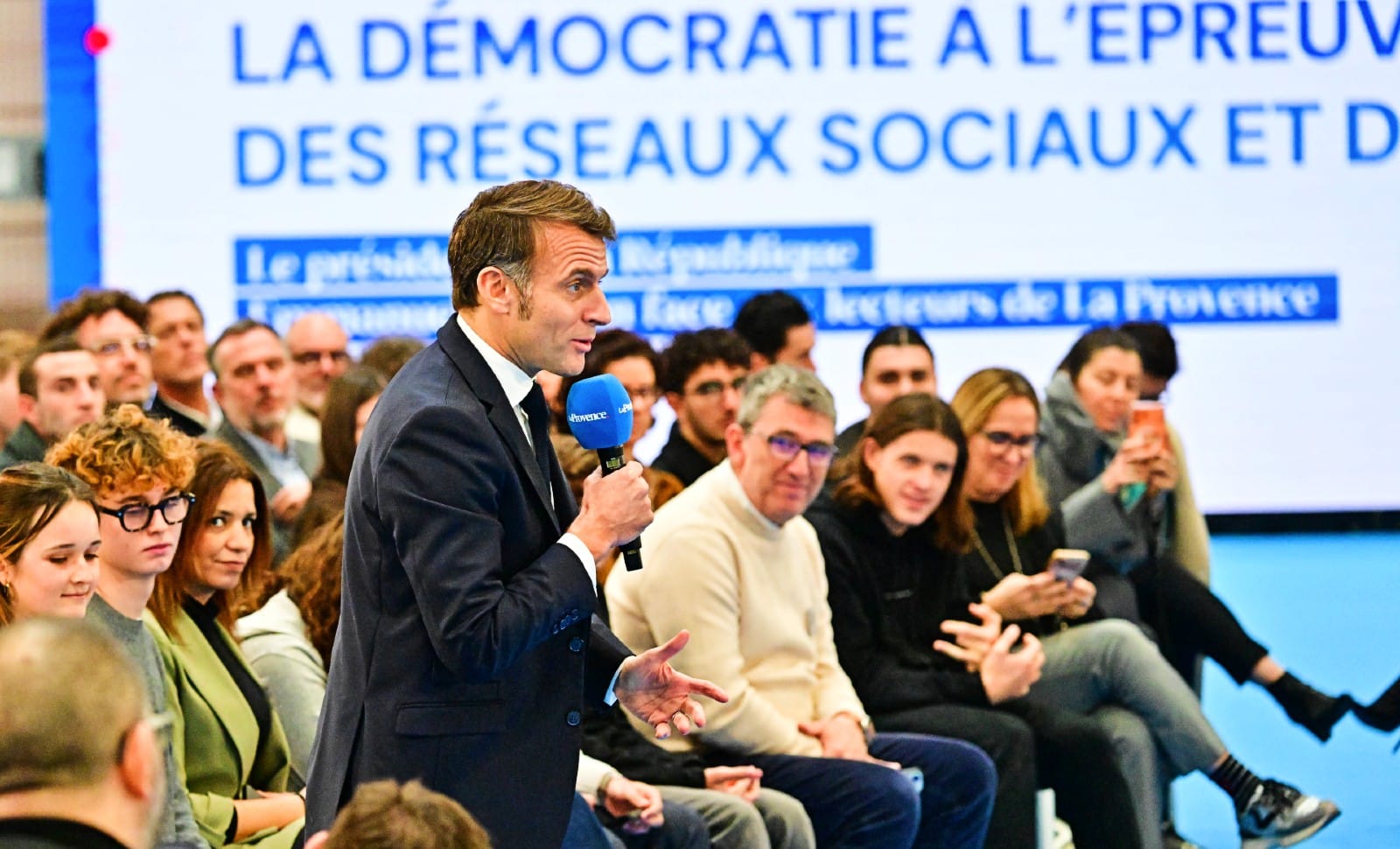
In his Christmas and New Year's wishes over at Causeur, Le Figaro's Ivan Rioufol predicts a brighter future (Merci à Sarah pour l'Instalien.) :
… the left has never shied away from these dubious methods, which it denounces only when it suits its purposes. What remains is this symbol of a caste, the haughty guardian of conformist thought, now accountable to public opinion. Revolution is in the air. The hegemony of the left is coming to an end, a victim of its intellectual poverty and dogmatic blindness.
Ivan Rioufol dans le Causeur :
… la gauche n’a jamais reculé devant ces procédés douteux qu’elle dénonce quand ça l’arrange. Reste ce symbole d’une caste, gardienne hautaine de la pensée conforme, devant rendre des comptes devant l’opinion. La révolution est dans l’air. L’hégémonie de la gauche s’achève, victime de son indigence intellectuelle et de ses aveuglements dogmatiques.

Indeed, in the New York Times, has penned a guest editorial: France Needs More Than a New Leader. It Needs a New France.
… eyes are turning to the 2027 presidential race and the increasingly plausible prospect of a victory for the far-right National Rally.
What comes next matters a great deal. But France needs much deeper change: More than a new prime minister or a new president, it needs a new republic. Nearly two and a half centuries into one of the longest-running democratic experiments on the planet — one that has seen the ideals of liberté, égalité and fraternité repeatedly vanquish monarchs, emperors and military strongmen — the country should go back to the drawing board. The time has come for a new form of government in France.
Many of the country’s challenges are shared across Europe. The far right is rising, and backlash to immigrants is growing. Public services and the social safety net are under threat in a hypercompetitive globalized economy, where growth is stagnating and debt is mounting. Trust in the political class is plummeting; faith in democracy is sinking. Yet exacerbating all these problems is the architecture of France’s political regime, a deeply centralized system that concentrates power in the presidency.
This is the Fifth Republic. Designed for Charles de Gaulle in 1958, in the midst of the Algerian War, it … encourages presidents to view themselves as the keystone of the entire system, turning them into quasi-monarchical figures around which all political life revolves. …
… A Sixth Republic — in the form of a new Constitution crafted or at least ratified by citizens, as previous ones have been — could drastically roll back presidential authority and return France to a full-fledged parliamentary system. With presidents reduced to largely ceremonial functions and executive authority flowing instead from legislators, French parliamentarians would have to embrace coalition politics like their European neighbors. Alliances and compromises, rather than the impulses of the head of state, would shape national political life.
… A newly empowered Parliament could also become more representative of citizens. An obvious way to start would be to adopt proportional representation — a voting system similar to those used in Spain and Germany that allot legislative seats according to parties’ shares of the vote.
… The biggest obstacle to reform is the political class. France’s centrists have shown little interest in criticizing a system that, under Mr. Macron, works for them. … The allure of the Élysée Palace is apparently all-consuming, even for those politicians who swear they want to reduce its influence.


3 comments:
Not-so-great Britain's fully parliamentary system is going the same way, so that's unlikely to be the solution. Concentration of power is the underlying issue.
Also Germany is a complete mess.
"no pasaran 2.0" blogspot
Post a Comment