
While the view of Lipton Matthews on The Legacy of Immigration is that It’s Complicated, a Kentucky writer pens a personal story that shows that it turns out not to be complicated at all.
Over at Mises, Lipton Matthews claims that while "critics argue that mass immigration has an adverse impact on American institutions," and while
economists in a slew of new studies … concluded that immigration is not associated with a decline in economic institutions in the United States
… However, … American institutions implode due to the failures of assimilation, it will become unlikely for such people to thrive in America. At some point, immigration activists should concede that not all people contribute positively to America.

But as Jamie K. Wilson points out, in 'Jobs Americans Won't Do': The Lie That Broke a Nation and the Economic and Social Devastation It Hid
(thanks to Stephen Green),
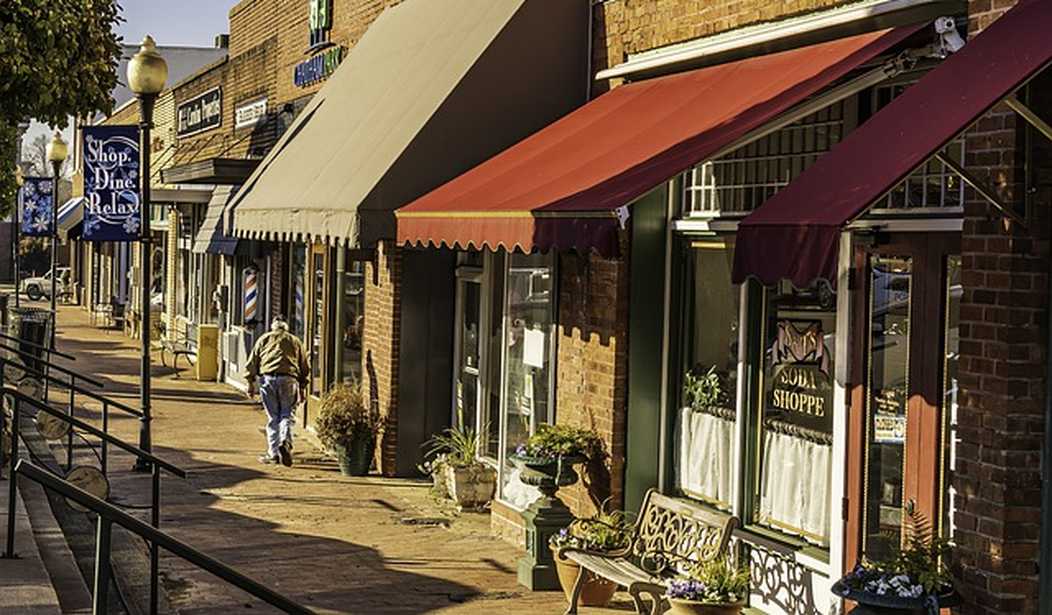
I grew up forty miles north of Louisville, Ky., in a one-stoplight town held together by tobacco, construction, and the kinds of gritty jobs that built the region’s character.
… [When illegal labor arrived,] things began to shift. The first wave hit the tobacco farms. Farmers who had paid teenagers and local laborers fair wages realized they could hire adults from Mexico and Central America for far less and house them in the kinds of conditions Americans would never tolerate: eight men to a sagging, leaking trailer with no electricity, no running water, no insulation. They were paid in cash, they didn’t complain, they worked year-round, and they had no leverage because they knew their employers could always get them deported. Within a few seasons, American teenagers were no longer hired. Within a few more, the full-time local farmhands, many of whom had been in the area for generations, were gone, too. …
How the Native-Born Labor Market Collapsed, One Job at a Time
The second wave hit construction. Illegal workers who came for tobacco began taking roofing, concrete, and general contracting jobs. My father watched his own bids get undercut again and again by contractors who weren’t paying insurance, taxes, workers’ comp, or legal wages. He played by the rules. They didn’t.
… The third wave hit Louisville’s meatpacking plants, dangerous but decently paid jobs that could support a family. After illegal labor penetrated the industry, wages plummeted. Locals stopped applying because they couldn’t survive on what those jobs now paid. The companies didn’t care. Illegal crews would fill the shifts at half the cost.
The fourth wave was quieter but devastating: the wives and older kids of the new arrivals began filling fast-food, restaurant, and service jobs. Those jobs disappeared for American citizens as quickly as the farm and construction work had. Suddenly, teenagers couldn’t get any jobs at all. …
Politicians Blame the Workers
And through all of this, politicians, pundits, and corporate lobbyists kept repeating the same line: “Americans just won’t do these jobs.” That phrase infuriated me from the first time I heard it. I knew it was a lie. I had done the tobacco work myself. My brothers had. Every teenager we knew had. Every adult performed the hard labor that kept the region alive. Americans didn’t suddenly lose their work ethic. The jobs were taken from them — not by immigrants directly, but by American employers who built a business model on illegal labor and by a federal government that looked the other way for forty years.
… What Americans “won’t do” are jobs that have been made illegal in everything but name — jobs where wages have collapsed to exploit desperation, where safety standards are ignored, where workers are paid off the books, where insurance and taxes are bypassed, and where living conditions violate every regulation on the books. When the floor is lowered that far, legal workers cannot enter the market at all.
… Employers preferred illegal labor because it was cheaper and more compliant. The United States had inadvertently (one hopes) created a massive incentive pipeline: Come illegally, stay quiet, get rewarded.
… Charlotte’s silent construction sites are just the most recent example of the fallout, demonstrating the depth of the problem. They aren’t evidence that Americans refuse to work. They’re evidence that the economy has been engineered so that many jobs can only exist with illegal labor, and that entire industries collapse the moment anyone enforces the law.
… Illegal labor isn’t a solution. It’s a dependency — one that corrodes wages, destroys skill pipelines, hollows out communities, and leaves entire sectors vulnerable to collapse. If we want a strong and resilient country, we must confront that reality now.
Globalization, Not Globalism: Free Trade versus Destructive Statist Ideology


5 comments:
I read this post your post is so nice and very informative post thanks for sharing this post.
Very useful and knowledgeable blog.
Thank you for writing this awesome article.
I'm a long time reader but I've never been compelled to leave a comment.
you are really a good webmaster.
Post a Comment