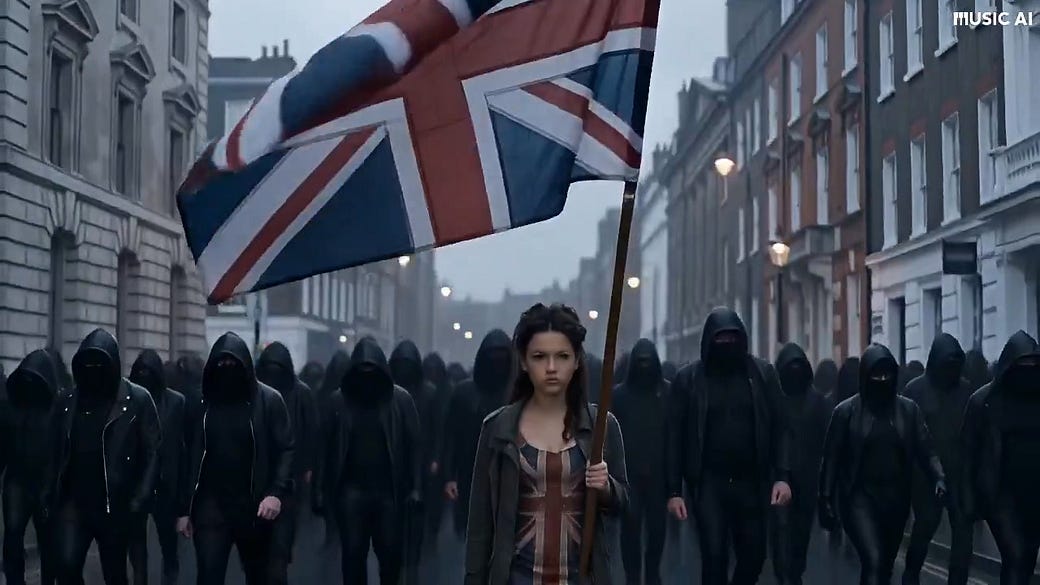
UK version: Britain's had enough (via EyeOnAntisemitism)

Behind the Façades in France: What expats and the mainstream media (French and American alike) fail to notice (or fail to tell you) about French attitudes, principles, values, and official positions…

Reflecting on the riots engulfing France, Damian Bennett links to the following disturbing reports:
WTF! Macron 'président jupitérien' in charge.
- Over 400 Detained In France Amid Violent Student Protests September 30, 2026
- France Youth Riots MANIPULATED BY FAR-LEFT MÉLENCHON PARTY, Paris Police Report Finds October 4, 2026
- ‘Unbearable’ – Le Pen Condemns Viral Video Of French Policewoman Hunted And Beaten By Multicultural Youths [sic] During Violent Student Blockades October 2, 2026
- Attempted Murder Investigation Opened After Plainclothes Police Officer Beaten Unconscious During Student Riots In Belfort October 2, 2026
1,949 people were arrested and 305 police officers were injured on Thursday as France descends into chaos- White Female Burned With Homemade Flamethrower, Another White Female School Supervisor Beaten By Mob During Student Riots October 2, 2026
The student protests have devolved into multicultural youths targeting White people- ‘Under Siege’ – Rioters Set Fire To The Entrance Of Vauquelin High School In Paris And Block The Exit With 100 Students And Staff Inside October 5, 2026
- Nearly A Thousand Arrested In France On Monday As Youth Riots Spread October 4, 2026
- Visegrád 24 On X, October 5, 2026: A student rioter at Honoré-de-Balzac high school near Paris has called for the police to be killed “in the name of Allah”. ... “There are only ten of them. In the name of Allah, we can kill them all!”


As the German war machine surrendered in May 1945, bringing the Second World War II in Europe to a close, and before the Japanese Empire had even thought of surrendering — the bloodiest battle for Americans in the Pacific theater (Okinawa) ended long after the Nazi surrender — elections took place in Great Britain in July which surprised everybody as le héros du jour, Winston Churchill, was forgotten since the island's premier architect of victory was voted out of office in a leftist landslide.
At Radio Courtoisie, a debate took place on Evelyne Joslain's show Libre journal du Nouveau Monde Wednesday on the subject of whether Donald Trump was running the same risk as Winston Churchill in 1945, a debate joined by (in order of appearance) Erik Svane, Paul Reen, and Daniel Clément: In the United States, with 20 days left until the polls open, could Republican voters inflict a "Churchill Effect" on Donald Trump? (link to 1 hour 30 en français).
"Three weeks out from an election that will prove decisive for the future of the U.S. Congress, will the conservative base remain united, or will it succumb to the temptation of electoral rejection? This week, Evelyne Joslain dedicates her program to the final stretch of the U.S. midterm elections. With just 20 days left until the vote, she is joined by Paul Reen (Vice President) and Erik Svane (Spokesperson) of Republicans Overseas France, along with Dr. Daniel Clément, to analyze the specter of a "Churchill Effect" among Republican voters.
"Amidst weariness, specific grievances, and the urgent need to defeat the Democratic camp, will political rationality and adherence to core doctrine triumph over personal resentments and the frustrations of daily life? A clear, uncompromising electoral analysis—available to listen to again via podcast on Radio Courtoisie."
Cliquez sur le lien pour entendre l'émission d'une heure et demie…Libre journal du nouveau monde du 14 octobre 2026 : « Elections de Mi-Mandat aux Etats-Unis, à 20 jours du scrutin, les électeurs républicains peuvent-ils infliger un « Effet Churchill » à Donald Trump ? La raison prévaudra-t-elle sur les mécontentements ? Avec Paul Reen, Erik Svane et Daniel Clément »
Evelyne Joslain reçoit :
- Paul Reen, vice-président des Republicans Overseas France
- Erik Svane, porte-parole des Republicans Overseas France
- Daniel Clément, médecin
Elections de Mi-Mandat aux Etats-Unis, à 20 jours du scrutin, les électeurs républicains peuvent-ils infliger un Effet Churchill à Donald Trump ? La raison prévaudra-t-elle sur les mécontentements ?
A trois semaines d’un scrutin décisif pour l’avenir du Congrès américain, la base conservatrice restera-t-elle soudée ou cédera-t-elle aux tentations du désaveu électoral ?
Cette semaine, Evelyne Joslain consacre son émission à la ligne droite des élections de mi-mandat aux Etats-Unis. A seulement 20 jours du vote, elle réunit Paul Reen (vice-président) et Erik Svane (porte-parole) des Republicans Overseas France, ainsi que le Dr. Daniel Clément, pour analyser le spectre d’un Effet Churchill chez les électeurs républicains. Entre lassitude, contestations ciblées et impératif de victoire face au camp démocrate, la rationalité politique et l’adhésion doctrinale l’emporteront-elles sur les rancœurs et les frustrations du quotidien ? Une analyse électorale claire et sans concession, à réécouter en podcast sur Radio Courtoisie.

Another thing I have never forgotten from my witty (and deadpan) SMU professor in his Introduction to Psychology class in the 1980s (and that I have never tried personally) was as follows:
Hold the crying infant face up over his or her bed, lectured William Tedford, by only an inch or a centimeter or so. Then, pull away your hands suddenly, so that he or she drops on his or her back. Supposedly this makes the baby so astonished that the crying stops instantly.


As with every vote of note in the United States, our ol' buddy Damian Bennett has again produced a series of election posters for the mid-terms of 2026, focusing on voter protection. (Thanks to Sarah for the Instalink.) One of them — PERSONAL USPO MAIL DROP — is reproduced above, check out the other two at his Behance page on GOTV 2026 Election Protection Posters: VOTER ID and the spooky UP-TO-DATE VOTER ROLLS. (GOTV posters from earlier election cycles can be found here and here and here.) This Fall, the artist from Waverly, Virginia, adds the following comment:
If you are an American citizen and of legal age, you have the right to vote. This right requires government to give notice of elections; make polls accessible and open throughout the appointed day; maintain the integrity and completeness of voter rolls; record and count all legal votes; publish the results in a timely manner. What this right does not require is every possible personal convenience. Election protection helps prevent legal votes being cancelled by cheaters and elections being rigged by powerful interests. A protected vote requires some effort, but considerably less than applying for a gun permit or a day at the DMV.
In addition, adds Damian Bennett in an FYI,
The ‛Kiddie Civics’ cartoon style had many fathers; hat tips to E. C. Segar, Grim Natwick, Max Fleisher, and Chad & Jared Moldenhauer.

As with every vote of note in the United States, our ol' chum Damian Bennett has again produced a series of election posters for the mid-terms of 2026, focusing on voter protection. (Thanks to Sarah for the Instalink.) One of them — VOTER ID — is reproduced above, check out the other two at his Behance page on GOTV 2026 Election Protection Posters: PERSONAL USPO MAIL DROP and the spooky UP-TO-DATE VOTER ROLLS. (GOTV posters from earlier election cycles can be found here and here and here.) This Fall, the artist from Waverly, Virginia, adds the following comment:
If you are an American citizen and of legal age, you have the right to vote. This right requires government to give notice of elections; make polls accessible and open throughout the appointed day; maintain the integrity and completeness of voter rolls; record and count all legal votes; publish the results in a timely manner. What this right does not require is every possible personal convenience. Election protection helps prevent legal votes being cancelled by cheaters and elections being rigged by powerful interests. A protected vote requires some effort, but considerably less than applying for a gun permit or a day at the DMV.

… a nation that does not teach successive generations about the differences between capitalism, socialism, and fascism, or about the horrifying carnage of Lenin, Stalin, Mao, Pol Pot, Ho Chi Minh, Hoxha, Ceausescu, and Tito, or about the basics of personal finance and business, is a nation defenseless against the pull of fantasy ideologies.
Over at Hillsdale's Imprimis,
 thoughts on The Rise of Democratic Socialism whose godfather, The Wall Street Journal columnist asserts, is none other than Bernie Sanders.
Democratic political strategist James Carville had criticized Hasan Piker, the socialist provocateur who claims that “America deserved 9/11,” that the terrorist group Hamas is “a thousand times better” than Israel, that communist Mao Zedong (whose policies killed 65 million Chinese) is “one of the great leaders of this world,” and that his critics are “rabid, ultra-Zionist pigs.” Carville made clear: “I have no intention of ever being in the same political party with [Piker],” adding that he believed “an overwhelming majority of Democrats agree with me.”
Sanders shot back: “If Mr. Carville doesn’t want to be in my party, the party I belong to, that Piker, that [Michigan’s socialist-aligned Democratic Senate candidate] El-Sayed belongs to, he can start his own party.”
The “my party” construction is striking, given that Sanders has long expressed contempt for both our major political parties, disparaging them as captured interests. Since his first successful election in 1981, he has styled himself a “democratic socialist” and run as an Independent on the Vermont ballot. He’s endured the Democratic Party only to the extent that it allowed him to leverage its resources to his advantage—caucusing with it in the Senate to gain seniority and using it as a platform for his presidential runs. Always while holding his nose.
But things have clearly changed. Sanders is done raging against the machines. His goal now is to own and operate one of them. His growing army of democratic socialists are working to capture the Democratic Party from within, replace its agenda with their own, and purge it of dissenters. It’s a time-worn tactic: if you can’t beat them, infiltrate them. And the elected leadership of the Democratic Party is doing nothing to stop the takeover.
***
Before we can address the rise of the democratic socialists, we need to clarify what it is that is rising. That’s made harder by an education system that has left generations of Americans poorly equipped to recognize socialism, and by a liberal media and left-wing political establishment that are determined to play down today’s threat.
… The modern twist is democratic socialism. Its proponents chose that descriptor with care. They know socialism’s authoritarian history, and they know how deeply Americans still hold to the Constitution. Their goal with that adjective is to fool us into believing that this version of socialism really is different, that it is no threat, that it can in fact be achieved through democratic means.
Sanders is a master at cloaking his ideology in soothing geographical or historical comparisons. … What about the claim to be democratic? The DSA platform explains that the glorious uprising will require a few tweaks to the U.S. democratic system. First up is abolishing the Electoral College and the Senate. Second the DSA would “replace the President and Supreme Court with an executive and judiciary chosen by and subordinate to” one supreme people’s (soviet?) congress. That congress would be dominated by blue states under strict proportional representation—a form of representation, seen in parts of Europe, that is foreign to America’s constitutional tradition. No more checks and balances. No more federalism. No more republic. …
***
… Which raises two final questions: Why are Americans voting for socialism, and why now? The answer to both questions has to do with education.
For all the DSA’s tripe about “working” Americans, it’s a movement comprised almost entirely of young, white, privileged Americans. Statewide socialist candidates in Michigan and Wisconsin had their highest margins in college towns. A Fox News survey in Michigan found that only 75 percent of black Democratic voters intend to vote for the socialist-aligned U.S. Senate candidate, who is also underperforming among women, independents, and suburban and older voters. Socialism is largely a youth movement.
… What explains [the fascination of young Americans today with socialism] is that on today’s campuses—especially those of the “wealthiest and most selective” universities—students are living in (fake) socialist utopias: “climbing walls and lazy rivers,” “lofts with expansive lounges,” “campus coffee bars with national brands.” Kids ride buses without paying fares; they “attend concerts, meet career coaches, reserve study rooms, download software, join student organizations, and participate in countless campus activities without ever reaching for a wallet.” Others are paying the bills, of course; the students just don’t know it. And why should real life be any different?
Too few of our K-12 schools, colleges, and universities teach real history or civics any longer. We fret constantly about our falling math and reading scores, and we should. But a nation that does not teach successive generations about the differences between capitalism, socialism, and fascism, or about the horrifying carnage of Lenin, Stalin, Mao, Pol Pot, Ho Chi Minh, Hoxha, Ceausescu, and Tito, or about the basics of personal finance and business, is a nation defenseless against the pull of fantasy ideologies.
We can do better. Go online, right now, and look up the “1912 Eighth-Grade Examination for Bullitt County [Kentucky] Schools,” which is maintained online by the Bullitt County History Museum. This is the knowledge we once expected of our 13- and 14-year-olds—most of whom were, with this exam, finishing their education and embarking on adulthood.
Read the whole thing™.

 Over at X, Pamsy Now links to a superb speech by one Daniel Saynt, who will be running for Congress as a Conservative in NY-13 in 2028:
This year, it's more important than ever to vote red as the Democrats fully embrace radical Islam and communism.
Even if you have never voted conservative before, this is the year to do it.
… Vote red because you don't believe thousands of Americans deserved to die during 911.
That is only one of over a dozen fundamental reasons that the native New Yorker goes on to list to vote for the GOP. (Thanks to Sarah for the the Instalink; Related: This is the Best Pro-GOP Campaign Ad of the past 40 Years and Needs to Be Broadcast 24/7 for the Next 4 Weeks (Must-See Video).)
Vote Red — Or America's Dead.
It's your year to save this country.
This man has a lot of great reasons to vote RED! ❤️I agree with them all! Listen 👇🏻and see if you do! Dems have become radicals and must be voted out! Also early voting in Texas begins Oct. 19 th. Make sure you’re registered to vote! 👊🏻🇺🇸❤️ @jamestalarico & @GinaHinojosaTX have to go!
— PammsyNow (@NowPammsy) October 6, 2026
An outstanding pro-GOP ad has been linked by Mr. Pool regarding the Democrat Open Borders Plan to Entrench Single Party Rule. It turns out that the 1'41" video is not actually part of Donald Trump's official ad campaign for the mid-terms (it seems to have been created, or at least posted, by Good Shepherd Media). In that case, I would highly recommend that it be endorsed by POTUS47 and broadcast non-stop for the next four to five weeks. (Thanks for the Instalink to Sarah who comments MAKE IT GO VIRAL. See also: Vote Red — Or America's Dead.)
Over at Daily Signal, says that Republicans Must Either Vote in Droves or Kiss the Trump-GOP Agenda Goodbye.
Those waiting in the wings are not your father and mother’s guns-and-butter-oriented, tax-and-spend Democrats. Non-crazies like New York’s Daniel Patrick Moynihan and Connecticut’s Joe Lieberman are dead. Georgia’s Sam Nunn and Louisiana’s Mary Landrieu are far from power.
Today’s Democratic Party is flying on socialism, fueled by hatred of Trump and his supporters, and increasingly at peace with political violence.
Those waiting in the wings are not your father and mother’s guns-and-butter-oriented, tax-and-spend Democrats. Non-crazies like New York’s Daniel Patrick Moynihan and Connecticut’s Joe Lieberman are dead. Georgia’s Sam Nunn and Louisiana’s Mary Landrieu are far from power.
Today’s Democratic Party is flying on socialism, fueled by hatred of Trump and his supporters, and increasingly at peace with political violence.
Too many Democrats added blazing Teslas to anti-DOGE protests and worship Luigi Mangione, the highly scenic and equally deadly assassin of UnitedHealthcare CEO Brian Thompson. Democrat activists cheered the killing of Turning Point USA founder Charlie Kirk—on the day he took a fatal bullet for free speech and, yet again, on Sept. 10, 2026, exactly one year since his murder, allegedly at the hands of Tyler Robinson, a Leftist propelled by transgenderism.
After the the Democrat Open Borders Plan to Entrench Single Party Rule ad, the only thing missing is an ad using Virginia as a showcase example and stating that voters of all parties must beware of Democrats claiming to be moderate concerned only, or mainly, with economics (so-called affordability being their main winning message) when in reality (as Abigail Spanberger and Jay Jones have proven) these drama queens form The Smug Liars' "Screw-You" Party.
BREAKING 🚨 Donald Trump just posted a video that perfectly explains Democrats plan for single Party rule in 96 seconds THIS IS A MUST WATCH VIDEO YOU KNOW WHAT TO DO 👇 https://t.co/BophVXHw51
— Mr Pool 3.0 (@real_EBS_) October 2, 2026

Near its end, Romans were a lazy, self-indulgent people who paid others to do their fighting
writes Larry Alex Taunton, speaking from firsthand experience with caravans of illegal aliens from South America. (Larry was the speaker who gave the famous September 11th keynote address: "Muslims have finally cracked the code on the West" — For Islam, "Socialism Is THE Trojan Horse" to power.)
The warning certainly does not seem to be a lesson learned in Europe, where Instapundit links a problem in the UK: Labour Is Deeply Unpopular For Importing Unassimilated Muslims. Solution: Import More Unassimilated Muslims. (Shookhran for the Instalink to Ed Driscoll.)It was a much too late recognition that with the dramatic decline in the size of Roman families as prosperity increased, came a decrease in tax revenues and an over-reliance on foreigners to fill the ranks of the army — all of which would prove disastrous for Rome.
Sound familiar?
All of this was somewhere in the back of my mind, a feeling at first, as I observed the third worlders making their way by the millions to our borders. I saw them in the violence of Africa, the intrigues of the Middle East, and everywhere there is misery south of our border. Generally speaking, they are a people inured to suffering (theirs or that of others), are accustomed to death, unaccustomed to the comforts Americans take for granted, have lived in nothing but squalor, do not share your views of private property or civil discourse, view violence as a part of daily life, lack even the most basic education, and have little sympathy for the low pain threshold of Americans.
These are the people coming to take your inheritance from you. Coming from a “might makes right” world, they know no other policy. They have no vested interest in preserving American law or culture, and that is because it isn’t their heritage and they don’t understand it. Democrats seem to think they will be immune from all of this because they foolishly believe these newcomers will view them as benefactors.
… Once you open the castle gates and lower the drawbridge, you no longer control the outcome. Indeed, you have surrendered it. And why are Democrats willing to do that? Because they hate Americans more than this still ill-defined rabble, and they don’t understand what’s coming. These people are tougher than you, and they don’t give a damn about you. Be careful how you vote. The future you hope for will be, I promise, very different from the rosy one media promises you.
Illegals: A Warning to Americans: Since ~2019, I have tracked caravans of illegals from So America to the US. I interviewed them, followed them into cartel towns and jungles, and observed all that they were willing to do — sell themselves, go without food, steal, risk every kind of danger, make Faustian bargains, etc. — to get to the US. Always I had this feeling, a memory, really, from my years of studying history, that I couldn’t put my finger on, but it was trying to penetrate my conscious being. Then it came to me: They are tougher than Americans. Writing on the fall of Athens, historian Will Durant said, “Nations are born stoic and die epicurean.” That is, nations are born amidst struggle and hardship and collapse as seekers of pleasure. I said I had a memory of sorts that was trying to find expression, and it ran along much the same lines as Durant’s observation. I remembered that Rome collapsed, not in a day, but over the course of centuries that accelerated into decades, as wave upon wave of uncivilized Germanic tribesmen, “illegals” so to speak, poured across the empire’s northern frontier and eventually sacked Rome itself. Rome had been built on strong, large families; unity of purpose; and the hard work of its people. Its armies were, at its height, citizen armies. Men fought to preserve what they knew and loved. Near its end, Romans were a lazy, self-indulgent people who paid others to do their fighting. Infanticide, which was common throughout Rome’s history, became a capital offense and a woman who aborted her child, also common, could be executed or exiled. This wasn’t due to any moral considerations, a recognition of the personhood of an unborn child, or anything like that at all. It was a much too late recognition that with the dramatic decline in the size of Roman families as prosperity increased, came a decrease in tax revenues and an over-reliance on foreigners to fill the ranks of the army — all of which would prove disastrous for Rome. Sound familiar? All of this was somewhere in the back of my mind, a feeling at first, as I observed the third worlders making their way by the millions to our borders. I saw them in the violence of Africa, the intrigues of the Middle East, and everywhere there is misery south of our border. Generally speaking, they are a people inured to suffering (theirs or that of others), are accustomed to death, unaccustomed to the comforts Americans take for granted, have lived in nothing but squalor, do not share your views of private property or civil discourse, view violence as a part of daily life, lack even the most basic education, and have little sympathy for the low pain threshold of Americans. These are the people coming to take your inheritance from you. Coming from a “might makes right” world, they know no other policy. They have no vested interest in preserving American law or culture, and that is because it isn’t their heritage and they don’t understand it. Democrats seem to think they will be immune from all of this because they foolishly believe these newcomers will view them as benefactors. They do not. I’ve met them, been in their cardboard camps, walk with them on trails, heard their hopes and dreams, and in none of it is there such nuanced thinking. America is, for them, a ripe fruit theirs for the taking. Once you open the castle gates and lower the drawbridge, you no longer control the outcome. Indeed, you have surrendered it. And why are Democrats willing to do that? Because they hate Americans more than this still ill-defined rabble, and they don’t understand what’s coming. These people are tougher than you, and they don’t give a damn about you. Be careful how you vote. The future you hope for will be, I promise, very different from the rosy one media promises you. I’m speaking from firsthand experience.
— Larry Alex Taunton (@LarryTaunton) September 30, 2026

After a group of leftists attacked a Belgian university professor with pies in front of his classroom, a politician stated that "The Anti-Fascists Are the New Fascists".
At first, the action at the Université de Liège (ULiège) looked like nothing more a typical Belgian prank (video here, at Today in Liège), but it turned out to be deadly (?) serious, as the leftists from the Vrai Comité (Populaire) d’Éthique de l’ULiège angrily shouted "fascist" and "traitor" (collabo) at Damien Ernst as they hurled pie after pie at the published AI author and as they later issued a statement (along with the Fronde Liégeoise Antimilitariste (FLAM) and the Front Antifasciste de Liège) against the energetics professor for doing research in artificial intelligence (sorry, in super intelligence) for the arms industry.
, reporting for Berlingske:
"To those of you saying it’s just a bunch of masked men with pies", writes Belgian Defense Minister Theo Francken on X. "They did the same thing to [martyred Dutch politician] Pim Fortuyn, and two weeks later he was dead. The perpetrators have been walking around scot-free for years."
"As I have already warned several times, Antifa — the extended arm of [the Belgian left-wing politicians] Hedebouw, Mertens, and their kin — is becoming more violent day by day."
A number of center-right politicians have backed Francken’s post and also support Damien Ernst’s call for the University of Liège to take action against those involved.
The "anti-fascists have become the new fascists" writes Georges-Louis Bouchez, leader of the liberal party Mouvement Réformateur, writes in a post on X, adding that "left-wing intolerance has become one of the greatest dangers to our democracy."


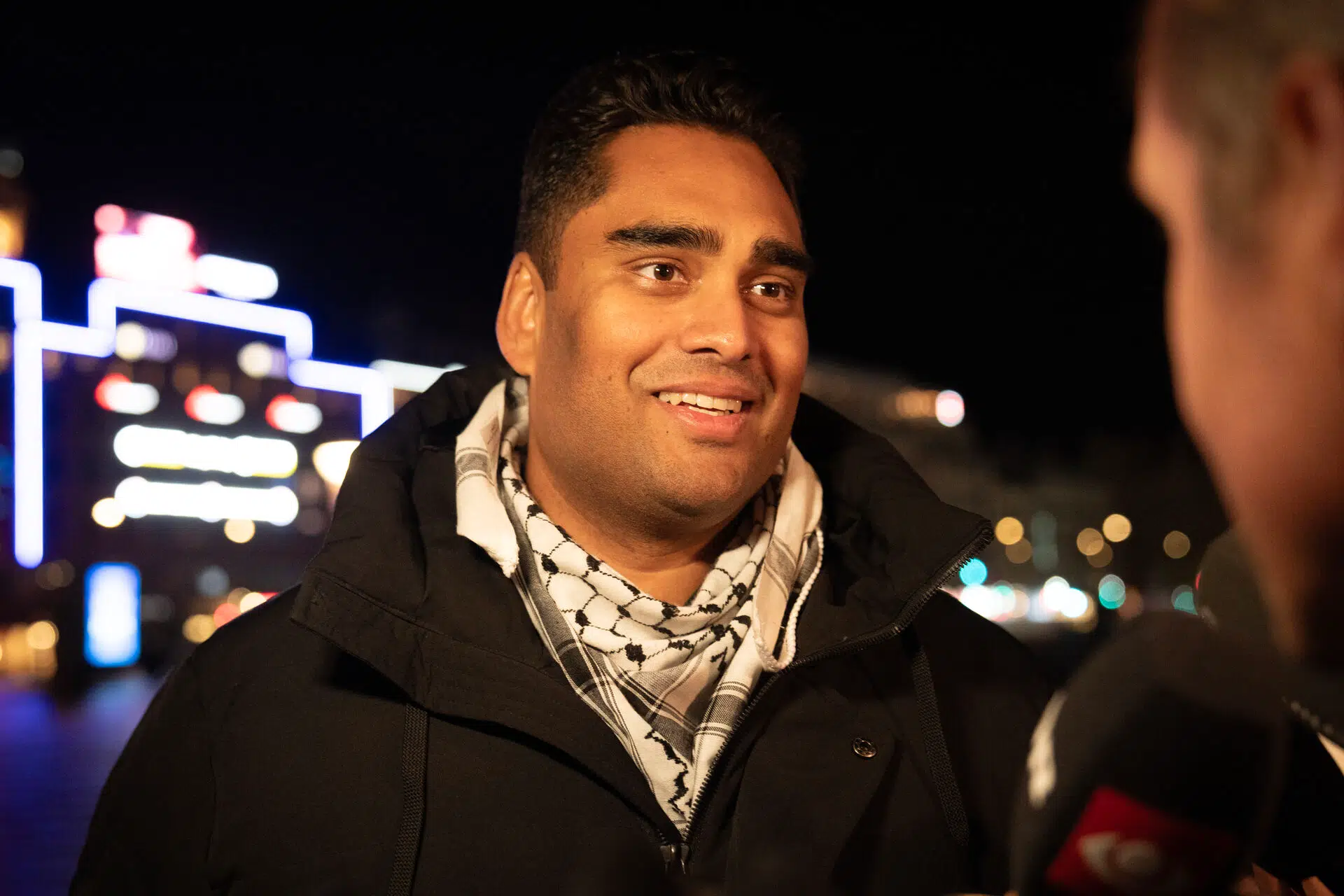
Denmark's ecologists go by the name of the Independent Greens but many, if not all, of their leaders in the Copenhagen town hall have recently seemed to be Muslim Arabs.
That in itself is not a problem, naturally, except for the fact that the previous leader, Sikandar Siddique, was involved in a housing scandal and the Frie Grønnes current leader — after leading a pro-Palestinian demonstration that was characterized as being driven by "Jew hatred" (they called October 7 nothing but a "Palestinian counter-offensive") — is now in another scandal for echoing support for arranged marriages.