Friday, May 05, 2017

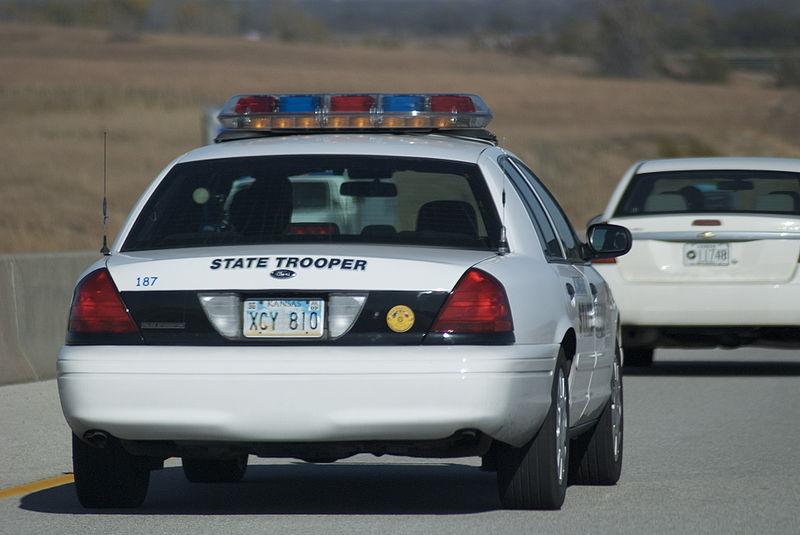
The speed limit really is just a number on a sign, and it has very little influence on how fast people drive


“We all speed, yet months and months usually pass between us seeing a crash,” [Lieutenant Gary Megge of the Michigan State Police] tells us when we call to discuss speed limits. “That tells me that most of us are adequate, safe, reasonable drivers. Speeding and traffic safety have a small correlation.”
Alex Mayyasi has a welcome article on Pricenomics (thanks to Harrison and a tip o' the hat to Maggie for the link).

(See also The Allyagottado Folks and the Sleep-Inducing Speed Limits.)
Over the past 12 years, Lt. Megge has increased the speed limit on nearly 400 of Michigan’s roadways. … Lt. Megge advocates for raising speed limits because he believes it makes roads safer.

Traffic Engineering 101

Every year, traffic engineers review the speed limit on thousands of stretches of road and highway. Most are reviewed by a member of the state’s Department of Transportation, often along with a member of the state police, as is the case in Michigan. In each case, the “survey team” has a clear approach: they want to set the speed limit so that 15% of drivers exceed it and 85% of drivers drive at or below the speed limit. 

This “nationally recognized method” of setting the speed limit as the 85th percentile speed is essentially traffic engineering 101. It’s also a bit perplexing to those unfamiliar with the concept. Shouldn’t everyone drive at or below the speed limit? And if a driver’s speed is dictated by the speed limit, how can you decide whether or not to change that limit based on the speed of traffic?
The answer lies in realizing that the speed limit really is just a number on a sign, and it has very little influence on how fast people drive. “Over the years, I’ve done many follow up studies after we raise or lower a speed limit,” Megge tells us. “Almost every time, the 85th percentile speed doesn’t change, or if it does, it’s by about 2 or 3 mph.”

 … Years of observing traffic has shown engineers that as long as a cop car is not in sight, most people simply drive at whatever speed they like.

Luckily, there is some logic to the speed people choose other than the need for speed. The speed drivers choose is not based on laws or street signs, but the weather, number of intersections, presence of pedestrians and curves, and all the other information that factors into the principle, as Lt. Megge puts it, that “no one I know who gets into their car wants to crash.” 

So if drivers disregard speed limits, why bother trying to set the “right” speed limit at all?

One reason is that a minority of drivers do follow the speed limit. “I’ve found that about 10% of drivers truly identify the speed limit sign and drive at or near that limit,” says Megge. Since these are the slowest share of drivers, they don’t affect the 85th percentile speed. But they do impact the average speed -- by about 2 or 3 mph when a speed limit is changed, in Lt. Megge’s experience -- and, more importantly, the variance in driving speeds.

This is important because, as noted in a U.S. Department of Transportation report, “the potential for being involved in an accident is highest when traveling at speed much lower or much higher than the majority of motorists.” If every car sets its cruise control at the same speed, the odds of a fender bender happening is low. But when some cars drive 55 mph and others drive 85 mph, the odds of cars colliding increases dramatically. This is why getting slow drivers to stick to the right lane is so important to roadway safety; we generally focus on joyriders’ ability to cause accidents -- and rightly so -- but a car driving under the speed limit in the left (passing) lane of a highway is almost as dangerous.

It seems absurd that over half of drivers technically break the law at all times. It’s also perplexing that speed limit policy so consistently ignore traffic engineering 101. So why do people like Lt. Megge need to spend their time trying to raise speed limits?

How Saudi Arabia Got Us All Driving 55 MPH

"When I drive that slow, you know it's hard to steer. And I can't get my car out of second gear. What used to take two hours now takes all day. Huh, it took me 16 hours to get to L.A."
~ Sammy Hagar’s hit song “I Can’t Drive 55”

In 1973, the Egyptian military crossed the Suez Canal in a surprise attack on Israel. It was the start of the 1973 Arab-Israeli War, and also low speed limits in the United States.

When the United States began resupplying Israel with arms, the Organization of Arab Petroleum Exporting Countries announced an embargo against the United States and several other countries. Combined with other supply constraints, it led to a quadrupling of gas prices, shortages of gasoline, and long lines at the pump.

In an effort to reduce America’s need for gas, President Nixon issued an executive order mandating a 55 miles per hour speed limit on American highways, which Congress made law the following year. States are officially in charge of setting their own speed limits, but national leaders (semi) successfully cajoled states by tying compliance to federal highway funds. Since driving at high speeds is less efficient, the policy is estimated to have saved 167,000 barrels of oil per day, or around 1% of American motor oil consumption.

Even as the effects of the energy crisis drew down in the 1970s, the new federal speed limit remained. But rather than insist on the limit in order to reduce gasoline consumption, members of Congress maintained the policy because they believed it led to safer highways. This is shown by a debate over a measure passed in 1987, which allowed select states to raise the limit on certain roads to 65 mph. The New York Times reported that “Critics immediately warned that there would be a surge in highway fatalities.” The dissenting chairman of the Public Works and Transportation Committee called it “irresponsible, life-threatening legislation.''

Congress abolished the national federal speed limit in 1995. Many states increased their speed limits before they could even post new signs, but many speed limits remained low. Twenty years of a 55 miles per hour speed limit created a low baseline that drags down speed limits today.

Why Speed Limits Are Low

If you peruse the websites of state’s departments of transportation, you’ll often find a very technocratic explanation of the 85th percentile principle. Speed limits are consistently lower than the 85th percentile speed across the country, however, because there are many limitations on following the principle. Florida’s Department of Transportation, for example, extolls the 85th percentile principle, yet the state legislature sets maximum limits for each type of roadway. Locally, officials can come under pressure from parents and other safety-conscious groups to lower speed limits.

Consistently, the 85th percentile loses out to the perception that faster roads are less safe, so speed limits should be low. It’s a misconception, Lt. Megge says, that he faces often in his work. When he proposes raising a speed limit, the initial reaction is always “Oh my god! You can’t do that. People are already going too fast.” People think raising the limit 10 mph will lead people to drive 10 mph faster, when really changing the limit has almost no impact on the speed of traffic. 

The same lack of understanding motivates public health pushes for lower speed limits that influence legislation. The World Health Organization, for example, advocates low speed limits to prevent road fatalities, and cites studies showing that accidents and fatalities increase with traffic speed. “When you look at it from a pure physics standpoint,” Megge says, “and ask would you rather hit a bridge abutment at 10 mph or 40 mph, you can’t argue with that. But when I look at correcting a speed limit, I am not advocating driving faster, and that’s the hard part to get over.” 

If someone could wave a wand and get every American to drive below 60 mph, roads would be safer. But since law enforcement can’t keep over 50% of Americans from speeding, putting a low number on a sign can’t make roads safer. Fortunately, American roadways are safer than ever, with highway fatalities at historic lows. Roads can be dangerous, but the perception of roads getting increasingly dangerous is a false one.

 … The other reason speed limits may remain low, which John Bowman, Communications Director of the National Motorists Association strongly insists on, is that cities and police departments use traffic citations as a revenue generating tool. As Bowman says, when speed limits are artificially low, it’s easier to give out citations and pull in fine revenue.

Due to concern about such “speed traps,” Missouri passed a law in the 1990s that capped the amount of a town’s revenue that could come from traffic tickets. In 2010, auditors discovered that Randolph, Missouri, generated 75% to 83% of its budget from traffic tickets. The tiny town of around 50 residents, which is located near several casinos, employed two full-time and eight part-time police officers, turning it into a speed trap poster child.

Figuring out how common the tactics used by Randolph’s police department are around the country is difficult, as is tying it to a conscious decision to keep speed limits low. Each town or city makes its own decisions, which makes it difficult to know how comprehensively speeding tickets are used as a revenue generator. Further, it is very easy for police departments to defend pushing officers to issue more tickets as a goal intended to further roadway safety -- as the LAPD did when found in violation of a state law banning traffic ticket quotas last year.

In our conversation, Lt. Megge stated that he believes speed traps to be a “big problem” and counter to police officers real role of altering dangerous behavior. In a Detroit Newsarticle about a number of towns ignoring state law by not reviewing the speed limits on stretches of their roads, Megge said that he believes the communities did so in order to avoid revising speed limits upwards. This allows them to keep collecting ticket revenue on “artificially low” speed limits.

 … “I don’t want to lie to people,” Lt. Megge tells us. It may make parents feel better if the speed limit on their street is 25 mph instead of 35 mph, but that sign won’t make people drive any slower. Megge prefers speed limits that both allow people to drive at a safe speed legally, and that realistically reflect traffic speeds. People shouldn’t have a false sense of safety around roads, he says.

If people and politicians do want to reduce road speeds to improve safety, or make cities more pedestrian friendly, Megge says “there are a lot of other things you can do from an engineering standpoint.” Cities can reduce the number of lanes, change the parking situation, create wider bike paths, and so on. It’s more expensive, but unlike changing the number on a sign, it’s effective.

Raising speed limits up to the speed of traffic can seem like surrendering to fast, unsafe driving. But it would actually accomplish the opposite. If advocates like Megge are right, following the 85th percentile rule would make roads safer, and it would also mean taking speed limits seriously. 

In its 1992 report, the U.S. Department of Transportation cautioned, “Arbitrary, unrealistic and nonuniform speed limits have created a socially acceptable disregard for speed limits.” Lt. Megge has worked on roads with a compliance rate of nearly zero percent, and a common complaint among those given traffic citations is that they were speeding no more than anyone else. With higher speed limits, Megge says, police officers could focus their resources on what really matters: drunk drivers, people who don’t wear seat belts, drivers who run red lights, and, most importantly, the smaller number of drivers who actually speed at an unreasonable rate

It seems counterintuitive, but it’s a formula Americans should love: Raise speed limits, make roads safer.

Thursday, May 04, 2017

Unfortunately, the mob has learned that the quickest way to make civilization drop its guard is to hurl accusations of bigotry


 … of course when I say “youths,” I’m using the common journalistic euphemism for black kids [or, in Europe, other minority youngsters]
sighs Benny Huang.
This reluctance toward using racial labels is really quite odd because reporters don’t usually beat around the bush when it comes to race. The Fourth Estate loves a story with a racial angle, so much so that they will invent such an angle if one doesn’t already exist. (George Zimmerman, anyone?)

Journalists are quick to affix racial labels when the story is an officer-involved shooting—“White cop kills unarmed black man!” Sometimes the reporters don’t even bother to confirm that the cop really is white, as happened last September when a Charlotte police officer, Brentley Vinson, shot and killed a black ex-con who was armed with a gun. According to Associated Press reporters Tom Foreman, Jr. and Seanna Adcox, “[A] white police officer shot and killed a black man, Keith Scott…”—which must have been news to Officer Vinson, who is black and reportedly has been his entire life. (The story was later corrected.)

The express purpose of using racial labels in stories about officer-involved shootings is to racialize them. Whenever the dead guy is black, racial animus is simply assumed. No other motive—self defense, for example—is considered. But when 60 black kids rampage through a mall, whaling on each other like savages, the media are suddenly rendered colorblind.

Geez, were those kids black? I hadn’t noticed. I don’t see color.

But of course they see color. That’s why they take such great pains to conceal it.

After reading about this latest act of mob violence in a [Jacksonville] shopping mall I was reminded of one of comedian Chris Rock’s greatest jokes: “Every town has the same two malls: the one white people go to and the one white people used to go to.”

If Orange Park wasn’t already the mall “white people used to go to” it soon will be. This kind of mayhem scares away customers. It’s like a cancer that invades the local economy and gnaws away at it until there’s nothing left but blight and deep-seeded resentment.

The recent brawl at Orange Park wasn’t even the first one at that mall. On Christmas Day 2015 a massive fight broke out in or near the mall cinema. Nor is Orange Park the only mall that suffers from this kind of uproarious anarchy. In what appears to be a coordinated nation-wide campaign, enormous melees broke out at malls in eleven states on the day after Christmas 2016. The New York Times actually covered the story with the headline “After 15 Big Mall Fights, Police See a Culprit: Teenage Boredom.” Cell phone videos showed all black faces so I can only conclude that boredom is a problem unique to the black community. I’m sure there’s a lesson about #whiteprivilege in here somewhere but I’ll leave that for someone else to find.

On the same day the previous year, a fight broke out at Mall St. Matthews in suburban Louisville involving between 1000 and 2000 participants. No one was arrested.  “Our officers, they showed great restraint,” said a police spokesman. And by “restraint” he means that more than 1000 hooligans went on a rampage and they all got away scott free.
 
Though the media and the cops tap-danced around the racial issue, it didn’t take Sherlock Holmes to deduce the skin color of the rioters. The fact that no one was arrested sounds weird though it would make more sense if the cops’ first concern was to avoid accusations of police brutality and/or racism. Call it the Ferguson Effectfearful of the media, the “civil rights” establishment, and the Obama Administration’s ultra-racist DOJ, the cops just stood down. They avoided making arrests because it meant no paper trail (with all of the accompanying racial classifications), no mug shots, and—most importantly—no accusations that they came down hard on the kids because they were black.

Another clue that the perps were almost entirely black is that the local news station, WLKY, dispatched one of their few black reporters to cover the story. That’s what black reporters are for: to report on the black stories. During her report, the journalist mentioned “At one point, dozens of [rioters] were running toward our camera.” All of the teens streaming past appeared to be black.

A follow-up story cast light on the fracas’s supposed root cause: apparently there are “very few options for entertainment west of I-65.” That’s Louisville’s black ghetto, by the way. The report then segued into a story about a youth basketball league in that part of the city that aims to keep kids out of trouble. (Wait a second, isn’t that entertainment?) Every kid in the story was black. One of the kids claimed to have been at the mall on the night of the riot, strongly hinting that he was among the rioters without saying so explicitly. All the thugs got away so we’ll never know.

Not that I doubt for a moment that there are very few recreational activities in the blackest parts of Louisville or any other American city; I would simply dispute the precise cause and effect relationship. No one with a lick of sense would start up a bowling alley, movie theater, or mini-golf course in the black ghetto for the same reason that no one wants to start any other business there.

There’s too much crime, too much violence, and too much disregard for people and their property. In short, there are too many hooligans like the ones who trashed Mall St. Matthews. The relationship between the hooliganism and the lack of entertainment options is exactly reversed.

It’s not just malls either. In Memphis, a mob of about one hundred black teens attacked a Kroger supermarket where they proceeded to beat the tar out of an employee who may have been chosen at random. (Then again, he may have been chosen because he was white.) One cell phone video recorded by a black female caught her giggling “Hold on, they got a white dude!” The video shows a young man on the ground shielding himself from brutal kicks to the face before being pummeled with pumpkins. “Beat Whitey Night” has become something of a tradition at the Iowa State Fair since 2010 when black teenagers attacked random white people, including cops. Something very similar happened at the Wisconsin State Fair in 2011.

This is how civilization dies. It begins with the mob mentality which, if tolerated, can only spread. This mob is a self-selecting bunch so if a single demographic group happens to be robustly represented then shame on that group. It’s up to that community’s responsible members to police their own. The rest of us don’t have anything to apologize for.

But the rise of the mob is only the beginning of civilizational demise. As long as there is a will to resist this kind of lawlessness, civilization still has a fighting chance. Unfortunately, the mob has learned that the quickest way to make civilization drop its guard is to hurl accusations of bigotry. First they stigmatize any discussion of “law and order” as a racist dog-whistle. The media are glad to help with that, even the taxpayer-funded media. People who don’t like black mob violence must not be allowed to get away with portraying themselves as anti-mob violence—they must be accused of being anti-black. Civilization has no defense against this kind of attack other than to retreat—first from the mall, then from the neighborhood, then from the entire city.

Once a locality enters this kind of nosedive it’s almost impossible to pull out of it. Property values drop, which the mob attributes to racism rather than their own dysfunctional behavior. Schools become dangerous places where no education is possible even for students who want to learn, which causes middle-class, tax-paying families to flee to the suburbs. To add insult to insult to injury, the fleeing families are called racist for leaving, as if they didn’t want to stay in the neighborhoods they called home for generations. Teachers leave too, especially the good ones, because they can’t bear the indiscipline and violence that infects their schools.

And down and down communities go, spiraling toward the abyss. Some people persist in the belief that if they surrender a little more territory the mob might be satisfied and leave them alone. But the mob’s appetite is never sated. Avoiding confrontation only emboldens them.

We can’t just keep moving further out into the suburbs. The forces of civilization—a multi-hued bunch if ever there was one—must make its stand against lawless hoodlums. We have to say “no” to this kind of thuggery.

Wednesday, May 03, 2017

What Caused Secession and Ergo the Civil War? Was It Slavery and/or States' Rights? Or Wasn't It Rather Something Else — the Election of a Ghastly Republican to the White House?

In the uproar over President Donald Trump's comments about Andrew Jackson and the Civil War, we are told that the science is settled, so to speak: slavery caused the conflict.

Except that others, especially in the South, retort that the War Between the States was caused by states' rights.

I wonder…

I wonder about both explanations…

Take a moment. Take a moment and think of the Democrats' revulsion over, as well as the mainstream media's depiction of, such leaders as Donald Trump, Sarah Palin, George W Bush, Ronald Reagan, etc, etc, etc…

Think about how every four years — and every month in-between, really — all Republicans (Republican voters, Republican "haters", Republican candidates — successful or otherwise — etc) are depicted as Hitler (in other words, as someone akin to Lucifer), fascists, Nazis, monstrous, racist (or, more generally, satanic), reptiles, engaging in hate speech, etc, etc, etc…

(Is it any wonder that I conclude that we are living in the era of the drama queens? But the era of the drama queens seems in fact to be the norm in the history of humanity…)

Two years ago, during the Confederate Battle Flag scandal (sic), I wrote an extensive post on antebellum history (divided into 5 parts), entitled:
Wondering Why Slavery Persisted for Almost 75 Years After the Founding of the USA? According to Lincoln, the Democrat Party's "Principled" Opposition to "Hate Speech"
The conclusion of the post's fifth and final part is as follows:
debate over the causes of the Civil War veer between the South's defense of slavery and the South's (alleged) fight for state rights.

How about a much simpler solution?

Isn't the truth looking at us from the center of the room?

Isn't the main reason that, then as now, Democrats (ever "fighting for the American people") did not want to be ruled by such low-life scum (reptiles, outlaws, pirates, murderers, terrorists, haters, etc) as Republicans, as abolitionists, as Tea Partiers?
There you have it.

This post could end here, at this point, but, for those of you interested in details, I recommend reading the entire post, or at least, the entire last part, which is reproduced below:

FYI, the four first parts of the post are entitled:
1) The Presence of Slavery at the Founding of the USA Is Always Taken by Democrats—Either Favorably or Unfavorably—as the Founding Fathers' Intended Support For, If Not Creation of, the Institution
2) Considered Uncouth and Extremist, Like "Hate Speech" Today, Criticism of Slavery Was to Be Avoided and the Boorish Critics Were to Be Gagged If and When Possible
3) American Slavery and Abolitionism in the Context of World History
4) The Arguments Southerners Used to Defend Slavery in the 19th Century Sound Strangely Similar to Those of Leftist Heroes the World Over in the 20th and 21st Centuries.

Let's head straight to Part 5:
5) Republicans in the 19th Century Were As Castigated, As Ridiculed, and As Demonized As Today's GOP Members Are—If Not More

You can hardly find a description of Garland's Jihad Watch Muhammad Art Exhibit and Cartoon Contest, pro or con, without the writer (again, pro or con) feeling the necessity to have no choice but vilify Pamela Geller in the harshest of terms, as a human being of the most horrid of sorts (from shrill and obnoxious to possibly outright racist).

Guess what, Democrats! That is exactly (as we have seen) how your party treated abolitionists in the 19th century. As the lowest, and as the vilest, of human beings.

It is often said that Abraham Lincoln was a racist (the—few—times he used the N word, he actually appears to have been quoting Stephen Douglas's words back to him) — or that he had no choice, willingly or otherwise, but to appeal to the common racism of the American people. (Thus the modern-day leftist has history conveniently written down, once again, in a way in which America's forefathers are all demonized, as bigots, while modern leftists like he or she appear wise and humanistic.)

As John Nolte writes,
When you are dealing with the mainstream media, it is always difficult to tell if you are dealing with willful ignorance or just plain old ignorance-ignorance. There are plenty of moronic savants in the national media who have cracked the “hot take” code to please their left-wing masters but have no fundamental grasp of history, or much of anything much of else.
Leftists have again twisted history, as Jonah Goldberg notes in Liberal Fascism, to condemn Americans en masse while leaving the Democratic party unscathed.
…In the liberal telling of America's story, there are only two perpetrators of official misdeeds: conservatives and "America" writ large. Progressives, or modern liberals, are never bigots or tyrants, but conservatives often are. For example, one will virtually never hear that the Palmer Raids, Prohibition, or American eugenics were thoroughly progressive phenomena. These are sins America itself must atone for. Meanwhile, real or alleged "conservative" misdeeds — say, McCarthyism — are always the exclusive fault of conservatives and a sign of the policies they would repeat if given power.
What Lincoln had to do, rather, was less "appeal to the common racism" per se of the average American per se than to distance himself from those demonized abolitionists.

In the very same manner that Republicans, today, are constantly being asked, requested, to differentiate themselves from "far-right" "extremists" of such groups as the Tea Party.

That's right: the abolitionists of the 19th century were as demonized and ridiculed (today's castigators of slavery will be happy to know) as the members of the Tea Party are today.

And how about members of the nascent Republican Party? How were they treated in the 1850s? Can you imagine?

Well, only five years ago, James Carville referred to (modern-day) Republicans as "reptiles".

And 150 years ago, when an Illinois Republican felt the necessity to address himself to Southerners and Democrats (during his Cooper Union speech in 1860), guess which term Abe Lincoln reached for:
…when you speak of us Republicans, you do so only to denounce us as reptiles [!], or, at the best, as no better than outlaws. You will grant a hearing to pirates or murderers, but nothing like it to [Republicans]. In all your contentions with one another, each of you deems an unconditional condemnation of [Republicanism] as the first thing to be attended to. Indeed, such condemnation of us seems to be an indispensable prerequisite — license, so to speak — among you to be admitted or permitted to speak at all. Now, can you, or not, be prevailed upon to pause and to consider whether this is quite just to us, or even to yourselves? Bring forward your charges and specifications, and then be patient long enough to hear us deny or justify.
"Reptiles, outlaws, pirates, murderers"… How often have Republicans been called terrorists in the past seven years?  (And in the years, in the decades, before that?)

So maybe we should take with a pinch of salt all the alleged decrees that the Democratic and Republican parties have switched positions between them and how, today, Lincoln would "obviously" be a Democrat.

You might be tempted to dismiss such (self-serving) musings — along with comparisons of the likes of Barack Obama to such illustrious predecessors as Abraham Lincoln and Ronald Reagan — as not the fruit of intellectual investigation, analysis, and arguments but—again—as part of its incessant litany of self-congratulation.

Indeed, debate over the causes of the Civil War veer between the South's defense of slavery and the South's (alleged) fight for state rights.

How about a much simpler solution?

Isn't the truth looking at us from the center of the room?

Isn't the main reason that, then as now, Democrats (ever "fighting for the American people") did not want to be ruled by such low-life scum (reptiles, outlaws, pirates, murderers, terrorists, haters, etc) as Republicans, as abolitionists, as Tea Partiers?
 From my and Dan Greenberg's upcoming graphic novel on The Life & Times of Abraham Lincoln:
Related: How Come So Much of What Honest Abe Spoke of 150 Years Ago Seems Relevant Today?

And: How to Prevent America from Becoming a Totalitarian State

Tuesday, May 02, 2017

If the Democrats learned anything from their 2016 debacle it’s that they didn’t cheat nearly enough


We can thank Jill Stein and her hopeless recount effort for bringing about at least some positive change in our election system 
sighs Benny Huang.
In the face of incontrovertible evidence of voter fraud in Michigan’s most populous county, the Michigan House passed a much needed voter ID bill. Unfortunately, the Michigan Senate will probably not vote on the bill this session. Pray that they get to it in the New Year.

The bill is long overdue though it won’t fix the particular problem discovered during the Michigan recount. Here’s what happened: when state officials reviewed the Michigan vote tally they began to notice an odd trend at polling places found mostly in Wayne County, the heavily Democratic area where Detroit is located. At some polling places more ballots were cast than names checked off the voter rolls.  The problem was particularly pronounced in Detroit where 247 of the city’s 662 voting precincts counted more ballots than voters. The city was rife with broken seals on ballot boxes, a strong indicator that ballots were either added, removed, or swapped out. According to a spokesman for Michigan’s Secretary of State, election staff attributed irregularities at polling places in Detroit to human error. Apparently there’s a lot more “human error” in big corrupt cities than in other places.
 
“There’s always going to be small problems to some degree, but we didn’t expect the degree of problem we saw in Detroit. This isn’t normal,” said Krista Haroutunian, chairwoman of the Wayne County Board of Canvassers. I’d venture to say that she’s likely wrong on that point. This degree of suspicious irregularity is probably very normal—for Detroit.

The excess ballots should be considered the absolute minimum level of cheating. There may have been other forms of chicanery layered on top of that—voter impersonation, for example, or non-citizens voting. Those types of voter fraud are more difficult to detect especially when people in power have a vested interest in turning a blind eye. Liberals will deny that any such thing took place but of course they’re also denying the blatant ballot-stuffing, sheepishly explaining it as “human error.” The lesson to be learned here is that Democrats always deny and minimize voter fraud when they’re the ones behind it—which happens to be most of the time. Their denials are nothing but meaningless noise.

What then can voter ID law do to clean up this mess? Not much. Voter ID is intended to stop voters from misrepresenting themselves not crooked poll workers from fiddling with the ballots after they’ve been cast. Voter ID is not enough. The real solution to the problem of voter fraud is to break the backs of the corrupt urban Democratic machines that run most of our big cities. That won’t be easy of course, and it [was] downright impossible as long as Loretta Lynch and her Department of “Just-Us” [was] around to protect them. The [Obama administration viewed] any effort to restore integrity to our chaotic elections as a furtive attempt at disenfranchising minority voters. Apparently not allowing minorities to cheat is a form of racial oppression.

Not that I expect [Attorney General Jeff Sessions] to single-handedly squash the corruption. I would however like to see him get out of the way so that state-level officials—attorneys general, inspectors general, secretaries of state, or whoever—can conduct some real investigations and start tossing fraudsters in jail where they belong.

Just don’t expect the corrupt Democratic machines to go softly into the night. They will sue, they will protest, and they will slander good people with spurious accusations of racism. They will make those of us who care about electoral integrity wonder if it’s really worth the fight. I assure you, it is.
 
We don’t have much time. There are midterm elections in two years and another presidential election two years after that. If the Democrats learned anything from their 2016 debacle it’s that they didn’t cheat nearly enough. Next time they’ll really cheat their asses off—worse than Bill Belichick, I mean.

Cheating is a long-standing tradition within the Democratic Party dating back to New York’s Tammany Hall. Some of their world-class cheaters have included Lyndon Johnson in Texas, Richard Daley in Chicago, and Honey Fitz in Boston. They’ve elevated cheating to an art form.

 … Voter fraud is very real. Anyone who tells you otherwise either benefits from it or is simply foolish. I’ve noticed that a curious kind of circular logic surrounds the crime of voter fraud that doesn’t apply to other kinds of crime. The fraud deniers refuse to consider any incidents of voter fraud because no one has proven to their satisfaction that it ever happens more than a few times per election cycle in disparate locations. Mere “anecdotes,” they say. They then cite a lack of convictions for voter fraud as proof that it never happens. I wonder if it ever occurs to them that there aren’t many convictions because no one is on the lookout for it and anyone who tries to stop it is smeared as a racist?

Take Alan Schulkin, for example. He’s the Commissioner of Elections for Manhattan and a liberal Democrat. He was caught on tape admitting that he ’s personally witnessed two types of voter fraud with disturbing regularity—absentee ballot fraud and voter busing—though he’s done nothing about it.

Mayor Bill De Blasio later demanded Schulkin’s resignation, not for tolerating such hijinks but for suggesting that it exists at all. “He’s supposed to be guaranteeing maximum voter participation and his statements and his values obviously indicate he’s not trying to do that,” said De Blasio. Oh, silly me, I thought his job had something to do with safeguarding the integrity of elections.

 … Examples of voter fraud abound.

 … Slaying this beast won’t be easy but with a new president, a new attorney general, and a healthy sense of public outrage there is a glimmer of hope. We will have to resist the urge to rest on our laurels, content that voter fraud is no big deal simply because Trump won despite it. This is about more than just one election. As a matter of fact it’s about more than political victories. It’s about principle.

Sunday, April 30, 2017

Arnold Shows Why Lincoln's Words Are Immortal

If you have never heard Arnold Schwarzenegger read a speech by Abraham Lincoln (obrigado para OMPdJMT) in his "Austrian accent", while seeing how it relates to the 2016 election and its aftermath, now may be the time to do so…

Related: How Come So Much of What Honest Abe Spoke of 150 Years Ago Seems Relevant Today?

Saturday, April 29, 2017

Is it time to say that MLK does not deserve all of the adoration we heap upon him?


Abortionist Willie Parker … cites Christianity in support of his position that taking the lives of unborn children should remain legal. He kills for Jesus, you see, so take your Bible-thumping somewhere else.
Benny Huang, who has written about Martin Luther King Jr a number of times, is not afraid to criticize the civil rights leader as well as fellow conservatives (including those related to MLK) when he deems it necessary.
Parker, who is employed at the only abortuary left in Mississippi, was recently interviewed by Rolling Stone magazine, that known paragon of journalism, about his recent book “Life’s Work: A Moral Argument For Choice.”

“…I decided to exercise Christian compassion not by proxy, but with my own capable hands,” wrote Parker. And by Christian compassion he means tearing human bodies limb from limb. I’m convinced that abortionists write drivel like this just to get under religious people’s skin. This isn’t honest disagreement, he’s just trolling us.

In addition to Jesus Christ, Parker cites both Malcolm X and Martin Luther King as his inspirations … Parker’s words reflect a barely concealed desire to legitimize his own sordid work by projecting it upon our society’s most hallowed figure: Martin Luther King, Jr. He’s taken the mantel of MLK as his own and it’s easy to see why—King is so idolized in our society that it’s nearly impossible to take a position opposite him. Nearly everyone wants to claim that he is on their side, just so they can be on his.

One person who certainly wouldn’t be pleased to hear Willie Parker invoke MLK’s name is King’s own niece, Dr. Alveda King. She’s made something of a name for herself as a pro-life activist, taking advantage of the kinship ties that fell upon her by happenstance in an attempt to claim her fair share of Uncle Martin’s (unearned) moral authority. She would like to believe that her famous relative shared her conviction that abortion is an atrocity. She latches on to some of his more abstract quotes about justice to prove her point. None of these quotes explicitly mention abortion but Alveda King reads into them what she wants to hear. For example, she understands her uncle’s famous words “Injustice anywhere is a threat to justice everywhere” to mean that he opposed abortion which is unjust in her opinion and in mine. According to Alveda King:
“I know in my heart that if Uncle Martin were alive today, he would join with me in the greatest civil rights struggle of this generation – the recognition of the unborn child’s basic right to life.”
Except he probably wouldn’t. On this point, Alveda King is wrong and Willie Parker is right. MLK was the recipient of the 1966 Margaret Sanger Award, named in honor of Planned Parenthood’s founder, a genocidal racist who wanted at very least to reduce the black population, if not eliminate it entirely. Sanger founded her organization for the express purpose of eliminating undesirables from the population, which included the handicapped, Italians, Jews, and of course blacks.  She even chartered a “Negro Project,” which brought “family planning” services right into black ghettos.

She was quoted in a 1923 New York Times article saying:
“[Birth control] means the release and cultivation of the better racial elements in our society, and the gradual suppression, elimination and eventual extirpation of defective stocks— those human weeds which threaten the blooming of the finest flowers of American civilization.”
Does anyone really believe that a white woman speaking in 1923 believed that blacks represented “better racial elements?”

Sanger understood that she would require the black community’s active cooperation if she would succeed in reducing their proportion in society. “We should hire three or four colored ministers, preferably with social-service backgrounds, and with engaging personalities,” she wrote.
“The most successful educational approach to the Negro is through a religious appeal. We don’t want the word to go out that we want to exterminate the Negro population, and the minister is the man who can straighten out that idea if it ever occurs to any of their more rebellious members.”
A ”colored” minister with a social services background and an engaging personality? That description fits Martin Luther King to a “T.” It seems that Planned Parenthood found precisely the pitch man they were looking for to sell extermination to the black community.

Alveda King at CPAC 2012
Sadly, his niece Alveda is in deep denial about this. She claims that MLK’s acceptance speech, which his wife Coretta delivered in his absence, was ghost-written. Her only evidence for this assertion is that it doesn’t sound like his style. That wouldn’t prove much of anything, of course, because plenty of his speeches were written with the “assistance” of other people including the Stalinist-holdover Stanley Levison. But so what if he didn’t write it? King certainly gave the speech his seal of approval, thus allowing himself and his moral authority to be placed in the service of evil.

Alveda King’s other defense of her uncle is that Planned Parenthood was not yet an abortion mill when he accepted their award. They may have been the apparatus by which a genocidal racist carried out her plan to reduce or eliminate the black race, but they did it with other, non-lethal forms of birth control.

 …  In any case, Planned Parenthood’s supposed opposition to abortion, which had always been a farce, was by this time wearing very thin. Yet Alveda King still clings to her belief that Uncle Martin’s acceptance of the award did not amount to an endorsement of abortion.
“So Martin Luther King, believing that he was adding his voice to a helpful cause, accepted the award. He was assassinated in ’68; all during that time, abortion was illegal in every state in America.”
Nope, wrong again. California legalized abortion in 1967 and yet MLK did not rush there to protest the killing of children. He cared more about a garbagemen’s strike in Memphis than he did about ending abortion.

Might King have been callous to the plight of the unborn because he was a philandering womanizer? I’ve known a few of those in my life and they’ve all been “pro-choice.” It’s easy to see how King, an ordained minister, would have perceived abortion as an insurance policy against public exposure as a hypocrite. What if he had impregnated one of his casual sex partners? What if she had been white? His whole world could have come crashing down with the birth of a single “love child.” The fact that no such offspring have ever been found despite King’s voracious sexual appetite suggests that he was quite skilled in the use of birth control, whether abortion or another method.

No amount of evidence seems to persuade Alveda King and many pro-life conservatives that MLK was pro-abortion, likely because the idea makes certain unsettling conclusions unavoidable. If it’s true, and I would say it is, King … cannot be considered non-violent. He refused to fight with policemen of course, but they have guns and batons. He supported violence as long as it was against the most helpless among us—the unborn—and as long as it facilitated his sex life. Furthermore, he wasn’t really a friend of black people. Martin Luther King served an evil organization founded by a woman who wanted to wipe out the black population. Nor was he a devout Christian. He may have read the Bible on occasion but he certainly didn’t believe any of that stuff about “Thou shalt not kill.”

King’s support for abortion doesn’t make abortion right; it makes King wrong. It’s time we had the courage to say that MLK does not deserve all of the adoration we heap upon him.
Related — by Benny Huang: • Today, MLK Jr Would Be Unemployable in America,
Given That He Would Be Anathema to Most Americans… of the Left (!)

• Kim Davis and Martin Luther King both defied the law for the same reason
Both agree that they have an obligation to disobey any law that is unjust

• None Other Than MLK Welcomed Judgment,
So Why the #$#%$@# Should We NOT Judge Wendy Davis?!

Friday, April 28, 2017

French Radio Listeners Curious About Conservative and Republican Viewpoints Are Advised to Tune In to Instapundit and No Pasarán


In response to queries from French radio listeners about which blogs to read to get a conservative viewpoint, No Pasarán was mentioned, as was Le Monde Watch, and of course Instapundit, which was called incontournable, and the best of all.

Specifically, what the listeners skeptical of France's MSM and state media were told — during Évelyne Joslain's Libre Journal du nouveau monde chat (1h28m35) on Radio Courtoisie with Republicans Overseas member Paul Reen, Comité Trump France leader Georges Clément, and blogger/journalist/author Erik Svane (41:27) —was that (42:37)
il y a un site web qui s'appelle Instapundit que tout le monde devrait lire — qui montre ce que disent [et pensent] les conservateurs américains — qui dit "This will bring more Trump" [Ceci va amener plus de Trump] et il dit "Do you want more Trump?" (Est-ce que vous voulez plus de Trump?). Eh bien, ce que vous faites [avec toutes ces marches et toutes ces protestations et toute l'hystérie], ça va donner plus de Trump. Donc, Trump en profite.
Translation: there is a website named Instapundit that everybody should read, which shows what conservative Americans say and think — which has been observing, This will bring more Trump. And it asks leftists, Do you want more Trump? Because, all that you are doing [with all your demented demonstrations and protests], is bring more sympathy for the man you oppose. So, what you are actually doing is work for Trump's benefit.
Towards the end of the show, as the readers' questions were read aloud (1:01:11), one question puzzling Frenchmen that came up concerns which conservative blogs besides (Infowars and ZeroHedge — in one reader's opinion) are the best to consult on American affairs?

Here is Erik Svane's (translated) response, after mentioning his own blogs, No Pasarán and Le Monde Watch — both of which celebrated their 13th anniversaries recently (1:01:55):
But the best one of all — I am not associated with it, unfortunately — if you want non-caricatural views on conservatives or on Republicans, you should read PJ Media's InstapunditInstapundit is spelled I, N, S, T, A, P, U, N, D, I, T — their bloggers are the best, they broach all kind of subjects, they often display humor, and — again — this is where we get the aforementioned sentence addressed to leftists, If you want more Trump, you'll have more Trump, with all your displays of demented hysteria, with the latest hysterical bout concerning the latest decision from The Donald's White House.
This comes after Instapundit was mentioned on French TV a number of times, between 2004 and today.

PS: Click at 17:28 to hear Lee Greenwood sing God Bless the U.S.A. (I'm Proud to Be an American).

Libre Journal du nouveau monde du 15 février 2017 : “Les festivités de la cérémonie d'investiture de Donald Trump ; Les débuts de la nouvelle administration américaine”

Par Évelyne Joslain | 15 février 2017 | Libre Journal du nouveau monde | Mots clés : . . . .
Évelyne Joslain, assistée de Stanislas, recevait Georges Clément, président du Comité Trump France ; Erik Svane et Paul Reen, républicains de base. Thèmes : “Les festivités de la cérémonie d'investiture de Donald Trump ; Les débuts de la nouvelle administration américaine”.
RELATED (to the French presidential election):
The entire machinery of the French state did everything in its power to undermine the competitors of Macron, Hollande's successor
• The Leader of the Front National, Allegedly France's Equivalent of the Tea Party's Extreme Capitalists, Says That “Obama is way to the right of us”
Marine Le Pen sums it up in one sentence when the New York Times's Russell Shorto "pointed out [to her] that in the U.S. she would sound like a left-wing politician". She shot back that “Obama is way to the right of us”!
• Marine Le Pen: France Should Leave NATO, "Turn Its Back" on the American "Hyper-Power", and "Turn Towards Russia"

Wednesday, April 26, 2017

The Allyagottado Folks and the Sleep-Inducing Speed Limits

In the space of five hours, one day in March 2015, one single radar of the Danish police on a tiny part of the Copenhagen highway earned (sic) so much money that it made front-page headlines in the press of Denmark. But what was telling was not that the authorities had earned two million Danish Crowns ($290,000!) in less than a quarter of a day, it was that — although Ekstrabladet was of course oblivious to this — there had not been a single traffic fatality at that point that day, let alone a single accident.

There cannot be 35 different ways of interpreting that piece of news. If it doesn't suggest that speed limits have little to nothing to do with safety and are a scam — or at the very least that they are (far) too low — you can call me King Alfred the Great.

Not only is there a clear racket associated with the radar scheme — if this does not fit the definition of the word extortion, than what meaning does that word have? — but governments of all states and countries and on all territorial levels could be charged with going against their raison d'être (the protection of the populace) and making the road more dangerous for all.

What is the first cause of mortality on highways throughout the world, and certainly throughout the West? Contrary to what Kim du Toit and many of his readers seem to believe, it ain't speed (speed kills, right?).

It is drowsiness.

It is sleepiness.

What causes sleepiness, or drowsiness, if it ain't a sleep-inducing speed limit (or, rather a sleep-inducing slowness limit)?

"Speeding": it sounds like a factual, straightforward word, but think about what the sub-text means. It suggests a bad thing, a reckless attitude, driving fast, too fast. But too fast for what? Too fast for whom? (well, yeah, right: too fast for the State, for the politicians, and for its bureaucrats — but besides that?) As the above example from Denmark points out, thousands upon thousands of Danish drivers had been "speeding," i.e., had been driving "too fast," i.e., had shown themselves to be irresponsible and foolhardy (disgraceful!) — and were duly punished (hooray!) — although the tempo of thousands and thousands of cars caused not a single accident for a single one of them and neither harmed or inconvenienced anybody, inside or outside the vehicle.

How old are these speed limits these slowness limits, anyway? In many parts of the world, they haven't changed, or barely, since their introduction in the early 1970s — almost a half-century ago. Indeed, one can speculate whether the 55-mile-an-hour limit would not have remained the same in America if some states had not led a revolt against the federal limit until it was overturned in 1995. (You don't believe that motor vehicles are much different from 44 years ago? Okay. Do you know what a telephone from the 1970s looks like? Try comparing it — turn that dial! — with the cel phone that you use today and see if you can spot any differences.)

Why were speed limits slowness limits introduced in the first place? For safety reasons? No, they were introduced on purely economic grounds — in response to the OPEC-created oil crisis of 1972 and 1973. Throughout the West, the measure came with promises that it would be dismantled within a year or so — certainly one of the most egregious example of bureaucratic creep in the history of the world. (Why would any people — especially, individualistic Americans — agree to so low, to so ridiculous, a limit as 55 mph unless it was because it was believed to be a temporary measure?).

 • The speed limit really is just a number on a sign, and it has very little influence on how fast people drive 
Update: In some places — mainly Red and/or rural states, I would venture — things have gotten better, a reader writes (thanks to HC), and the speed limits the slowness limits have risen, such as on this Utah highway South of Fillmore
Now, a word for Kim du Toit and all the people who reflexively defend the authorities — I am speaking of those I call the Allyagottado folks — who, normally (apparently, with this one exception), are people on the political left (Allyagottado is respect the speed limit slowness limit, Allyagottado is never pass 55 [or whatever] mph, Allyagottado is spend two to three hours more on the road (while increasing the number of vehicles on said roads and therefore the risks of a bottleneck and therefore those of an accident), Allyagottado is not fall asleep at the wheel, Allyagottado is not be (never be) late, Allyagottado is — humbly — pay your (well-deserved) fines, etc):

The basic thought of the Allyagottado folks, the true wish and desire of the Allyagottado folks — whether they are among our leaders or among the population — is that citizens are, or that they should become, automatons, robots.

With airbags, ABS brakes, and other modernities, shouldn't the speed limit slowness limit be raised (albeit only on highways, of course)? On Germany's Autobahn (no speed limit at all on most of the network, just like at one time in Montana and on one Australian highway), after all, driving up to, and past, 100 mph is a lark, and the Germans have lower death-per-million fatalities than many other neighboring EU countries.

What people do not realize is that the expression "speed limit" is a perfect example of George Orwell's Newspeak. For every person (rightly) ticketed for (truly) speeding, you get 499 people ticketed for not driving slowly enough. Thus, as we have been seeing, a truer expression ought to be "slowness limit."

Another thing that people do not realize is that the vast majority of people who get tickets for "speeding" (sic) don't do so because they have been careless or unconscious or dangerous or scofflaws. On the contrary, most of the time they have been perfectly responsible.

Indeed, the very reason that the vast majority of drivers are ticketed is PRECISELY because they had NOT been "speeding" (as in "acting carelessly"); they had been adopting the speed, or the tempo, of their vehicle to the realities of the road. In other words, they were ticketed for… acting responsibly, perfectly concentrated and conscious of their environment, with their eyes fixed on… the road!

Think about it.

Responsible driving for any person using his brains and common sense, is
1) looking primarily at the road and
2) watching out for moving entities
(other vehicles, pedestrians, animals, etc…) —
which signal the presence of humans or other living beings.

What the Allyagottado folks demand is for us to
1) look primarily at the interior of the vehicle
(the dashboard and its various tachometers) and
2) watch out for fixed objects (traffic signs, etc),
lifeless objects with no soul.

Which way of driving is the most intelligent?

Which of the two drivers is more caring for his fellow beings?

Tuesday, April 25, 2017

A Danish girl who volunteered to fight against Isis terrorists in Syria and Iraq faces prison for violating a travel ban meant to hamstring supporters of Isis terrorists


A Danish woman who volunteered in Syria and Iraq to fight against Isis faces six months in prison for violating a travel ban 
reports the Independent's Lizzie Dearden.
Joanna Palani has been taken into custody while Copenhagen City Court hears her case, which has divided Denmark.

The 23-year-old insists she poses no security risk and had been fighting with Kurdish groups aligned with the US-led coalition, which includes Denmark.

But she has fallen foul of laws allowing the imposition of travel bans and seizing of passports for Danes planning to join foreign conflicts – on whatever side.

Palani’s lawyer, Erbil Kaya, told the Berlingske newspaper his client admitted violating a one-year travel ban imposed by Danish authorities.

 … Palani, whose father and grandfather were Peshmerga fighters, is of Iranian Kurdish ancestry and moved to Copenhagen as a toddler after being born in an UN refugee camp in Ramadi, Iraq, during the Gulf War.

She told Vice she left university in autumn 2014 to join the Kurdish People’s Protection Units (YPG) in Syria, wanting to defeat Isis, President Bashar al-Assad and “fight for human rights for all people”.

Palani fought for the YPG for six months before moving to Iraq to fight for the Kurdish Peshmerga. Both groups have been supported by the US and allies in the battle against Isis, being given military and air support as the ground arm of the international coalition’s bombing campaign.

As well as fighting on the front line against Isis militants, she claimed to have been part of a battalion that freed women and children held as sex slaves by the so-called Islamic State near its stronghold of Mosul.

Palani was active on social media and news of her role spread in Denmark. When she was given a fortnight off by the Peshmerga to visit her family in 2015, the Danish authorities cracked down.

A police notice warned Palani her passport had was not valid and would be revoked if she left the country, an offence punishable with a jail sentence.

The former student has criticised the Danish authorities for pursuing her under laws targeting Isis militants and other extremists.

Denmark’s Security and Intelligence Service (PET) said at least 115 Danes have travelled to fight in Syria and Iraq in the past five years, with most believed to have joined Isis.

“How can I pose a threat to Denmark and other countries by being a soldier in an official army that Denmark trains and supports directly in the fight against the Islamic State?” she wrote on Facebook when she lost her passport, according to a translation by The Local.

Monday, April 24, 2017

"The entire machinery of the French state did everything in its power to undermine the competitors of Macron, Hollande's successor"

From Moscow and San Francisco, Isabelle Mandraud and Corine Lesnes have been reporting for Le Monde on the first round of French elections as seen from abroad. If anybody shouldn't be trusted outright, it's the Russians, but here they seem to have nailed it outright:
Dmitri Kissilev, présentateur vedette de la grande émission d’actualité du dimanche soir sur Perviy Kanal, la première chaîne russe, a lancé : « Au cours de la campagne, toute la machine de l’Etat français a fait tout son possible pour compromettre les concurrents de Macron, le successeur de Hollande… » Plus tôt dans la journée, la chaîne de télévision de l’armée, Zvezda, annonçait « Macron et Le Pen en tête » sur la foi d’estimations annoncées depuis la Belgique, avec cet ajout, sans détour et en français dans le texte : #JeVoteMarine.

Cité sur cette même chaîne, le politologue Alexeï Moukhine expliquait : « Marine Le Pen a reçu un soutien évident de la Russie (…) un soutien purement politique, pas technique. En ce qui concerne Macron, c’est l’establishment américain qui le soutient, en partie démocrate. » Une vision binaire partagée. « L’élite », peu importe qu’elle soit française ou américaine, a fait barrage aux yeux de Moscou. Le sénateur Alexeï Pouchkov, parfaitement francophone, résumait ainsi sur Twitter : « L’élite française a tenté d’écarter Fillon de la course (…) et elle y est parvenue. »
According to Perviy Kanal, therefore, "the French élite attempted to derail François Fillon, and it was successful." Indeed, "the entire machinery of the French state did everything in its power to undermine the competitors of Emmanuel Macron, the successor to François Hollande."

While everybody is talking about the demise of the Socialist Party (a dismal 6.3%), it seems quite evident that the Socialists, having no illusions that they would crash, put in a sacrificial candidate (Benoît Hamon, which explains why President Hollande refused to run and why Prime Minister Manuel Valls "lost" the primary), while more or less stealthily supporting a plant in an "independent" party. In this, it was vital that the rightist candidate also be a loser, which was taken care of with the irruption of "scandals" regarding practices that are in fact quite common throughout the French political spectrum.

Sunday, April 23, 2017

Quelle ironie du sort: sur 11 candidats à l'élection présidentielle, 9 affichent clairement leurs penchants léninistes et leurs programmes marxisants. Sommes-nous en 2017 ou en 1917?

Alors qu'en Amérique, le Communist Party USA compte de plus en plus d'adhérents, Bogdan Calinescu (alias l'essayiste Nicolas Lecaussin, merci à Carine) qui a connu la dictature de Ceausescu en Roumanie, met en garde contre les candidats d'extrême gauche avant le premier tour de l'élection présidentielle en France et l'état marxisant qu'ils souhaitent mettre en place.
Quand je suis arrivé en France au début des années 1990, je pensais avoir laissé derrière moi le cauchemar de l'idéologie communiste. Je pensais ne plus revivre l'atmosphère sombre et pesante de l'époque, la tension et la peur permanentes, les files interminables devant les magasins vides et les pénuries - de la boîte d'allumettes jusqu'au papier hygiénique - et cette sensation terrible qu'on ne s'en sortirait jamais. Je croyais que c'en était fini des deux heures de télé par jour sur la seule chaîne, deux heures consacrées en grande partie au «Conducator bien aimé», le dictateur Ceausescu.

Enfant, je voyais mon père, intellectuel, enseignant la littérature française, prendre d'énormes risques en critiquant le régime et je me rappelle très bien comment, lors d'une perquisition de la police politique chez nous, à 6 heures du matin, il avait réussi à glisser dans mon cartable, avant que je ne parte à l'école, quelques documents «compromettants» qui auraient pu lui coûter cher… En les déposant chez un ami de la famille qui les a brûlés tout de suite, j'avais - déjà, à 13 ans - la satisfaction d'avoir accompli l'acte d'un véritable résistant au régime. Malgré l'ubuesque et l'impitoyable dictature de Ceausescu, j'ai eu la chance de grandir dans une atmosphère francophile, j'ai eu la chance de pouvoir déchiffrer le monde libre, sa littérature, son actualité.

Plus de 25 ans après la chute du communisme, je suis en train de vivre une expérience que je n'aurais jamais pensé retrouver: la France, mon pays de cœur et d'adoption, manifeste une sympathie incorrigible pour les idées communistes que je n'ai cessé de combattre depuis mon enfance! Quelle ironie du sort: en 2017, sur onze candidats à l'élection présidentielle, neuf affichent clairement leurs penchants léninistes et leurs programmes marxisants. Sommes-nous en 2017 ou en 1917?

Je me souviens très bien du moment où la France est devenue pour moi l'objectif à atteindre, l'endroit où je devais absolument vivre. Adolescent, je suis tombé sur ce texte de Rudyard Kipling qui, en 1878, à l'âge de 12 ans, visite Paris avec son père. Il a l'occasion de grimper dans la statue de la Liberté qui n'avait pas encore été envoyée à New York. En regardant de l'intérieur à travers ses yeux, il comprend: «C'était par les yeux de la France que je commençais à voir»… Des années plus tard, en 1922, lors d'un discours à la Royal Society of St. George, ce grand amoureux de la France affirmait: «Les Français représentent le seul autre (avec les Anglais) peuple dans le monde qui compte.»

Néanmoins, l'Angleterre devrait suivre l'exemple de la France… Et Kipling d'énumérer les atouts de notre pays: l'éthique du travail, son économie, la simplicité, l'autodiscipline et la discipline extérieure ainsi que «la vie rude qui fortifie l'être moral». «La France est un exemple pour le monde entier»!

Quel décalage avec la France d'aujourd'hui! Un pays qui fait la couverture des magazines pour son taux de chômage qui bat des records ou pour sa bureaucratie sans équivalent dans les grands pays riches et démocratiques. Un pays dont l'économie étouffe sous la pression d'un État omniprésent et qui voit ses jeunes partir en masse à l'étranger. Un pays qui a envoyé aux oubliettes les vraies valeurs de l'école et les a remplacées par le pédagogisme et la sociologie égalitariste de Pierre Bourdieu ; une école phagocytée par les syndicats de gauche qui n'acceptent aucune réforme et par des enseignants complètement éloignés du monde de l'entreprise. Un pays qui chasse les jeunes, les chefs d'entreprise, les riches et qui n'attire plus les élites. Un pays dirigé par une classe politique en très grande partie déconsidérée et biberonnée à l'étatisme. Un pays où un parti dit d'extrême droite puise son programme dans les idées marxistes et obtient des scores électoraux impressionnants, un pays où plusieurs autres partis et candidats, enfin, se déclarent ouvertement communistes.

Quel est ce pays qui renie ses racines chrétiennes et ses valeurs historiques? Qui a transformé l'antilibéralisme et l'antiaméricanisme en repères moraux? Qui passe son temps à insulter l'Europe et les présidents américains, parfaits boucs émissaires, et dresse des lauriers à des criminels comme Mao, Castro ou Che Guevara? Je me souviendrai toujours de ce que m'avait dit l'intellectuel Philippe Sollers lorsque je lui avais demandé pourquoi il avait été maoïste: «C'était de la poésie», m'avait-il répondu en balayant d'un revers de main sa sympathie pour le plus grand criminel de l'Histoire. Alors, les admirateurs d'Hitler, c'était aussi de la poésie? En France, le socialisme a toujours baigné dans la bienveillance, alors que le libéralisme a toujours souffert d'une présomption d'injustice et de culpabilité.

L'étatisme marxisant bénéficie de la clause de l'idéologie la plus favorisée et c'est ce qui tue la France encore aujourd'hui. D'autres pays s'en sont sortis, en saisissant toutes les bouées de sauvetage que nous, nous repoussons. Souffririons-nous du syndrome de Stockholm à l'échelle nationale? D'une inconscience infantile qui pourrait se révéler lourde de conséquences? Où est la France de mon enfance?

Saturday, April 22, 2017

Had the Founders selected direct popular vote as the means for electing a President, the residents of one state (California) would have dictated the choice to the other 49

In the third of twenty-five weekly articles in The Tennessee Star’s Constitution Series (thanks to Instapundit), the Tennessee Star addresses The Electoral College and the Selection of the President.
In recent years, a number of political figures and commentators have criticized the Electoral College and want the President selected by direct popular vote.

Four times since 1868, the first year in which all states selected Electors by some form of popular vote, the candidate who received the most popular vote did not win the Electoral College, and therefore was not elected President.

 … In our most recent Presidential Election of 2016, Democrat Hillary Clinton received 48 percent of the popular vote to Republican Donald Trump’s 46 percent. But Trump was elected President because he won the majority of the Electoral College votes, 304 to 227 (7 Electoral College votes were split between other candidates).

Clinton’s popular vote margin of 2.8 million was the highest of any Presidential candidate who won the popular vote but lost the Electoral College vote (though her 2 percent margin was less than Samuel Tilden’s 3 percent margin in 1876), and therefore the Presidency.

A closer look at the state by state breakdown of the 2016 Presidential Election results reveals the wisdom of the Founding Fathers in establishing an Electoral College method for selecting a President.

Hillary Clinton won the state of California resoundingly, beating Donald Trump there by more than 4.2 million votes – a 61 percent to 31 percent thumping.

Had the Founders selected direct popular vote as the means for electing a President, the residents of California would have dictated to the other 49 states who would have served as our President.

Looking at the total combined vote in the other 49 states, Donald Trump won 1.4 more million votes than Hillary Clinton, taking 58.5 million votes to her 57.1 million votes.

But because of the Electoral College, Hillary Clinton’s huge vote margin in California earned her the state’s 55 Electoral College votes, and no more.

The Founding Fathers had an idea that the Electors would be of a high personal character, wisdom, and intelligence, and would exercise those qualities in their selection.

They also hoped against the development of factions and competing political powers, a hope in retrospect was inevitably bound to be disappointed, given the foibles of human nature.
Related to the Electoral College: The 2016 Vote and the Electoral College System Explained — With Help from the European Union

Friday, April 21, 2017

Each time a Muslim terror attack occurs, journalists attempt to lead the public through what can only be called a coping ritual; a ritual divided into four stages


Two horrific suicide bombings, in two different cities, two hours apart—this is how Egyptian Christians began Holy Week. 
Thus writes Benny Huang, as he seemed to be predicting the Thursday terrorist attack in Paris.
In the cities of Tawra and Alexandria, Muslim terrorists stormed Coptic churches where they proceeded to blow themselves to a fine pink mist while taking 44 worshippers with them. These two attacks followed last December’s horrific suicide bombing at St. Peter’s Cathedral in Cairo that killed 29.

Does Egypt have a problem with Islamic violence? Not according to Egypt’s most prominent clergyman, Dr. Ahmed al-Tayeb, who holds the prestigious title of Grand Imam of al-Azhar. At a conference in Cairo last month, al-Tayeb said that the incidence of Muslim violence around the world is rather unremarkable:
“There is an obvious double standard in the world’s judgment of Islam on the one hand, and [its judgment of] Christianity and Judaism on the other, despite the fact that all are guilty of one and the same thing, that is, religious violence and terrorism.”
The point al-Tayeb is trying to make is pretty straightforward: that people are quick to chide Muslims for terrorism when in fact the terror problem cuts across religious lines. Clearly all of this talk about terrorism must be a cloak for bigotry. If people were truly concerned with eradicating terrorism they would condemn it wherever it’s found. The fact that they don’t exposes their hypocrisy.

 … The “double standard” accusation is a serious one that was likely intended to disarm Westerners who are notoriously sensitive about treating others with bias. But is there really a double standard in the way we perceive Muslim violence compared to other kinds? Yes, there is—just not in the way that the Grand Imam suggests. Each time a Muslim terror attack occurs, journalists attempt to lead the public through what can only be called a coping ritual. The ritual has four stages.
  
The first of these is the “let’s not jump to conclusions” stage in which reporters take great pains not to assume that the attacker is a Muslim just because his name happens to be Abdul or Muhammad or even because he yelled “Allahu Akbar” moments before his killing spree began. Then, when it turns out that he is a Muslim, reporters wonder if his religious affiliation might have been incidental to the attack—which it rarely ever is. In the second stage, the shortest of the four, reporters actually acknowledge the attack and its motive before quickly moving on to the third stage. I’ll call this the “Muslims fear backlash” stage, and it’s characterized by stories about hijab-snatchings (that usually turn out to be hoaxes) or Muslims getting dirty looks in the street. It isn’t even necessary to find any actual incidents of backlash after an attack because the fear of a backlash, not the backlash itself, is the real story. The fourth and final stage is when reporters begin to ask how the right-wing might “exploit” the story. This serves as a warning that taking action to stave off civilizational demise is somehow letting the terrorists win.

So yes, there’s a double standard. No other kind of terrorist attack is reported this way.

But that’s not what Ahmed al-Tayeb meant by a “double standard.” What he meant was that Muslims, Christians, and Jews commit proportional amounts of terrorism but Westerners seem only to notice or care about the Muslim variety. This is a truly extraordinary theory and one that I have often tried to test. Every time there is a Muslim terrorist attack anywhere in the world—and they’re happening now at a rate of several per month—I ask myself if there were other attacks committed in the name of other faiths that the media failed to report or I failed to notice.

Let’s start with the Palm Sunday attacks in Egypt. Have there been any comparable attacks carried out by Christians against mosques? Nope. The only one that I could find occurred this January not in Egypt but in Canada. The alleged perpetrator, Alexandre Bissonnette, appears to be an anti-immigrant nationalist and a fan of Donald Trump and Marine Le Pen but not particularly religious.

To be sure, the Canadian mosque attack was terrorism but it was also anomalous and not religiously inspired. There is no equivalence between Bissonnette and the suicide bombers who attacked two churches on Palm Sunday, and even if there were it wouldn’t begin to balance out the countless other terror attacks that have occurred in recent weeks.

 … Presumably all of these attacks have proportional counterparts committed in the name of other faiths, right? No, they don’t. Though Lutherans represent the largest religious group in Sweden, there has never to my knowledge been a Lutheran terrorist attack in that country or any other. Likewise there are no Russian Orthodox suicide bombers. There is no Anglican approximation of ISIS. If the Muslims don’t have a complete monopoly on religious terror, they’re pretty darned close.
  
Yet terror-deniers never tire of trying to draw some kind of false equivalence between Muslim terrorism and other kinds, no matter how much of a stretch it is. They often deny or downplay Muslim terrorism, or they assume that every white terrorist is both Christian and religiously motivated, or they blame Christians for Muslim terrorism.

 … The cliché that “Terror Knows No Religion” sums up [the leftists'] vapid sentiment pretty well.

Yes it’s true that not all Muslims are terrorists. And yes it’s true that not all terrorists are Muslim, though an absurdly high proportion of the religious variety are. What cannot be denied, however, is that the overlapping between these two groups—Muslims on the one hand and terrorists on the other—is very real. Those who choose not to see it are willfully blind, which isn’t a virtue.