Friday, July 17, 2026

The Economist Weekly Reveals Its Frustration: Why Won't Donald Trump Let the SAVE Act Go?


It is surreal to see The Economist suggest that it is somehow problematic to make a law saying that if you wish to go into a voting booth, you must show an ID (The bill that won't die, July 11th) — something that has been considered the epitome of common sense as far as anyone can remember. (Cheers to Sarah for the Instalink.)

After speaking, derogatorily, about "Donald Trump’s fixation on a bill with little chance of becoming law," the London weekly goes on to ape one leftist talking point after another.

Mr Trump says he will not sign any legislation until the SAVE Act is approved. Prediction markets put its odds at less than one in ten. 

 … Supporters describe the measure as an election-integrity reform that would increase public confidence and ensure that only citizens vote. Yet evidence of voter fraud by non-citizens—or anyone else—is vanishingly rare.

The SAVE Act would, however, make it harder for citizens to register and vote. 

 … In private, Republican aides concede that Mr Trump will probably use the bill’s failure as a pretext to blame lawmakers if the party loses seats in the midterms. Critics see a broader purpose. They argue that the SAVE Act is part of an effort to undermine trust in elections. “The strategy was never about necessarily passing this bill,” argues Alexandra Chandler of Protect Democracy, a non-profit. “It’s about setting the pretext to claim that if Democrats win, then the election can’t be trusted.” 

Mr Trump has repeatedly made such claims. Earlier this month his administration ordered the FBI to beef up an investigation related to the 2020 election in Georgia, reviving his baseless allegations of widespread fraud in the contest he lost. [Sic: Check out my post Let's Stop Using the Words "Trump Tried to Overturn the 2020 Election"; It's Unprofessional Journalism.]

Whatever the fate of the SAVE Act, Americans’ trust in the electoral process has already been deeply eroded, not least by Mr Trump’s repeated attacks on election integrity.

Moreover, that such a reasonable bill as the SAVE America Act should be necessary shows how far left America's Democrat party has gone. And yet The Economist puts all the onus on Donald Trump, calling the president's concerns for elections past and present "baseless" as well as a "fixation" while implying that he is the one trying to cheat.

But where else on the planet have leftists accumulated such a stronghold of dubious voting rules  — or, rather, the lack thereof (unconstitutional changes to state election laws, voting by mail, vote harvesting, unsupervised ballot drop boxes, counting votes for days or weeks after election "day", not demanding an ID because doing so is racist, etc)? Is it really Donald Trump, then, who is undermining trust in elections?!

There is not a single country in Europe — supposedly the model for the Democrat party on numerous issues — not to mention such nations as Japan and Nigeria, where such rules (or the lack thereof) are present; so the only conclusion must be that all of them are de facto racist. 

Regular voting is called election "day" across the West for a reason — by the end of the day (or within 24 hours), the population is supposed to know the results. Not having election integrity might suggest, as Donald Trump has pointed out, that your nation is akin to a third world country.

• See also: Joe Biden, Why Are You Calling Denmark a White Supremacist Country? And You, Barack Obama: Why Are You Calling Africa a Racist Continent?

• Let's Stop Using the Words "Trump Tried to Overturn the 2020 Election"; It's Unprofessional Journalism

* Also called Why Donald Trump won’t let a doomed bill die, July 11th 
Tuesday, July 14, 2026

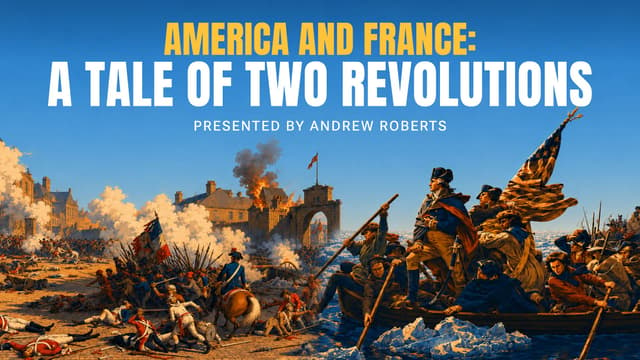
Comparing 1776 with 1789 — America and France: A Tale of Two Revolutions

 
Over at PragerU, Andrew Roberts compares 1776 with 1789 — America and France: A Tale of Two Revolutions.

Two revolutions reshaped the world in the late 18th century. The American Revolution gave birth to the most successful republic in history. The French Revolution gave birth to the guillotine. So what went right in America, and what went wrong in France? Renowned author and historian Andrew Roberts explains. 

Related: Bastille Day Scandal — Any Person, French or Foreign, Wishing to View the Champs-Élysées Parade Must Wear a QR Code; Deafening Silence from France's Media Outlets


Over at Youtube, this is one of the comments:

Monday, July 13, 2026

Bastille Day Scandal: Any Person, French or Foreign, Wishing to View the Champs-Élysées Parade Must Wear a QR Code; Deafening Silence from France's Media Outlets


Which French scandal is worst? The fact that the French authorities have decided to impose QR codes on all people, French as well as foreign tourists, who wish to attend Tuesday's Bastille Day parade on the Champs-Élysées? Or the fact that hardly any news outlet has seen fit to even mention the decision?  

That is the question asked by the Moranidini website as well as by CNews, the right-leaning TV news program regularly described as fascist and whose license is under constant threat by the authorities. 

For the first time ever, you cannot just wander over to the most famous street in Paris and simply join the crowd (the same, incidentally, is increasingly true of museums; a stroller cannot be spontaneous and just walk in; he has to sign in beforehand on the internet), something that is dubious foreign tourists have heard about. Or, for that matter (what with the medias' deafening silence), French people themselves.

 … for the first time, anyone wishing to attend the July 14th military parade on the Champs-Élysées will be required to register in advance. Access for the general public—excluding official guests—will be reserved exclusively for spectators holding a personalized QR code. Registration must be completed via an online platform managed by the Office of the President of the Republic.
… Detractors denounce a departure from the popular, free, and traditionally open nature of the Bastille Day parade. The authorities respond that a gathering bringing together tens of thousands of people and several heads of state now requires exceptional precautions.

Well, there you have it: Perhaps le président de la République simply wants to be spared from being booed, as happened during last year's 14 juillet, on what will be this Tuesday Emmanuel Macron's final Bastille Day parade. (Merci à Sarah pour l'Instalien.)

Related: Comparing 1776 with 1789 — America and France: A Tale of Two Revolutions

For half a decade, libertarians have been wondering what, following in the wake of the Covid lockdown, would be the next attempt on people's liberties — predicting it would be some sort of new disease (real or imagined); who could have foreseen that it would instead center on a military parade on the Champs-Élysées in Paris?

14 juillet : Le scandale des "QR code" obligatoires imposés par l'Elysée, pour la première fois, pour assister dans la foule au défilé militaire à Paris - Le silence assourdissant des médias - Vidéo

UPDATE:  On Monday, one day before the Bastille Day parade, according to France Soir, a judge shut down the QR system, telling police officers to cease and desist asking for QR codes and ID papers. But the following day, the police and gendarmes had not been informed thereof, not all of them anyway, as they were still seen to be verifying QR codes and IDs of people approaching the Champs-Élysées.

 
« On est en train de privatiser la Fête nationale ! On est en train d'enlever au peuple français ce qui lui appartient, c'est-à-dire la Fête nationale, par manque de courage face à l'insécurité. » 
— Kévin Bossuet, CNews, 11 juillet 2026.